

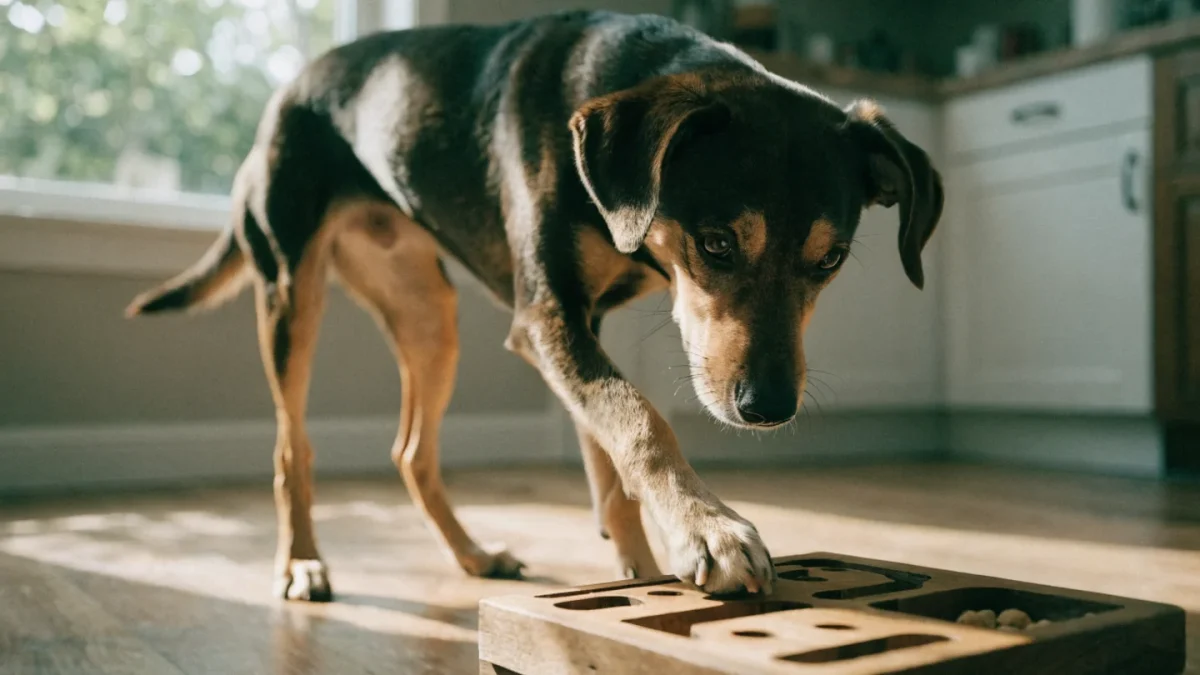
Most dogs don't need more exercise — they need more engagement. A one-hour walk can leave your dog still antsy. A fifteen-minute session of find-the-treat games can knock them out for two hours.
The brain works hard during active problem-solving. When a dog is searching, training, or figuring out a puzzle, they burn cognitive fuel the same way physical exercise burns physical fuel. The result is genuine satisfaction and rest — not just tired muscles.
Here are 15 games you can run at home, ranging from low prep to moderate setup.
No-Equipment Games (or Almost None)
1. Muffin Tin Game
Put kibble or small treats in the cups of a muffin tin. Cover each cup with a tennis ball. Let your dog figure out that removing the ball reveals food. Start with only a few cups covered if your dog struggles. Easy, cheap, and works with most dogs.
2. Which Hand
Close a treat in one fist. Present both fists to your dog. Reward when they nose or paw the correct hand. Over time, let them figure out from smell alone — don't shake both hands first or it becomes guesswork. This teaches the dog to work their nose, not randomly guess.
3. Find It (Scatter Feed)
Toss your dog's entire meal into the grass and tell them "find it." Watching a dog sniff through grass for every piece of kibble is oddly satisfying. It takes 10-15 minutes and they love it. Good on wet grass, bad on carpet unless you want vacuuming.
4. Box Mountain
Spread 5-10 cardboard boxes of different sizes on the floor. Put a treat in one. Let your dog search. This is the entry point for nose work and requires zero formal training to be engaging.
5. Three Cup Game
Put a treat under one of three cups. Move the cups around slowly (don't shuffle fast — that's unfair at this level). Let your dog find it by nosing the right cup. Works the nose and teaches pattern recognition.
Training-Based Games
6. 101 New Behaviors
Put a novel object on the floor — a cardboard tube, a plastic bottle, a traffic cone. Click and treat for any interaction. Don't tell the dog what to do. Watch them experiment. This is free shaping, and it's cognitively demanding in the best way.
7. New Trick Each Week
Pick one trick per week. Spend 5 minutes a day on it. By the end of a month, your dog has four new behaviors. By the end of six months, you have something remarkable. Trick training and puzzle feeders and enrichment toys are probably the two highest-impact investments you can make.
8. Name That Toy
Teach your dog the name of one specific toy by saying the name every time they pick it up and rewarding the pickup. Once they know one toy name, teach a second. Over time, ask them to fetch a specific toy by name — and don't reward if they bring the wrong one.
9. Heel Pattern Variations
If your dog knows basic heeling, vary the pattern: circles left, circles right, figure eights, random turns, backing up in heel position. The dog has to pay constant attention to where you're going. More mentally taxing than a straight heel.
10. Training Sequence Games
Chain three known behaviors together with a pause between each one. Dog has to remember the sequence and execute without being prompted after the first cue. Builds working memory and attention.
Puzzle and Foraging Games
11. Lick Mat with a Twist
Spread soft food (peanut butter, wet food, plain yogurt) on a silicone lick mat and freeze it. The extended licking session satisfies an oral fixation and has a calming effect. A frozen mat takes 3-5x longer than a fresh one. Impulse control games and foraging are complementary here.
12. Stuffed Hollow Toys
Fill a rubber hollow toy with layers of food — kibble, soft food, a plug of peanut butter at the end. Freeze overnight. The dog works for 15-30 minutes depending on size and how tightly it's packed.
13. Paper Roll Treat Bundle
Wrap kibble in paper towels or toilet paper rolls. Twist the ends. Let your dog unwrap and access the treats. Low-key, destructive in a sanctioned way, and easy to set up.
14. Snuffle Mat Search
Snuffle mats have dozens of fabric strips the dog noses through to find scattered treats. They work the nose, take time, and are usable indoors without mess. You can make one from a rubber sink mat and fleece strips.
15. Cardboard City
On a rainy afternoon: collect 10-15 cardboard boxes and containers of different sizes. Arrange them around a room. Hide treats in only some of them. Let your dog loose. This takes 20-40 minutes, requires no supervision once the dog understands the game, and leaves a dog genuinely satisfied.
How Much Is Enough?
For most dogs, 15-30 minutes of active mental engagement per day significantly improves their overall behavior and rest quality. That doesn't need to be one session — three 10-minute sessions spread through the day often works better than one long one.
Pick two or three games from this list that fit your schedule and rotate them. Keep it novel. A game your dog has done fifty times is easier than one they're figuring out for the first time — which means less brain fuel burned.
Dog sports and enrichment as a whole category opens much further — from formal nose work to agility to trick sports. These 15 games are the gateway.