
Puppy mouthing is expected and manageable. Adult dog mouthing — especially in larger breeds — is a problem that needs to actually be addressed.
I had a client whose 40kg labrador was still mouthing during greetings and play at two years old. The family had tolerated it through puppyhood. Now it was leaving bruises and the toddler had developed a fear of the dog. That's the trajectory if you let it go.
Why Adult Dogs Still Mouth
The most common reason: it was never consistently addressed during puppyhood. The family tolerated it, visitors thought it was cute when he was small, and the dog learned that mouthing people is just what you do. Now he's large and the mouthing is uncomfortable but the behavior is well-established.
Second reason: the "yelp and freeze" puppy method (which teaches bite inhibition through social feedback) doesn't work reliably on adult dogs who have already learned that mouthing is rewarding. Adult dog mouthing training is about removing the reward, not about teaching pressure control.
The Fix
Teeth on skin = interaction ends. No exceptions.
The moment the dog's mouth contacts skin:
- No "ow!" (reactive sounds can be stimulating)
- No eye contact
- Turn away or leave the room
- Wait 30-60 seconds before reengaging
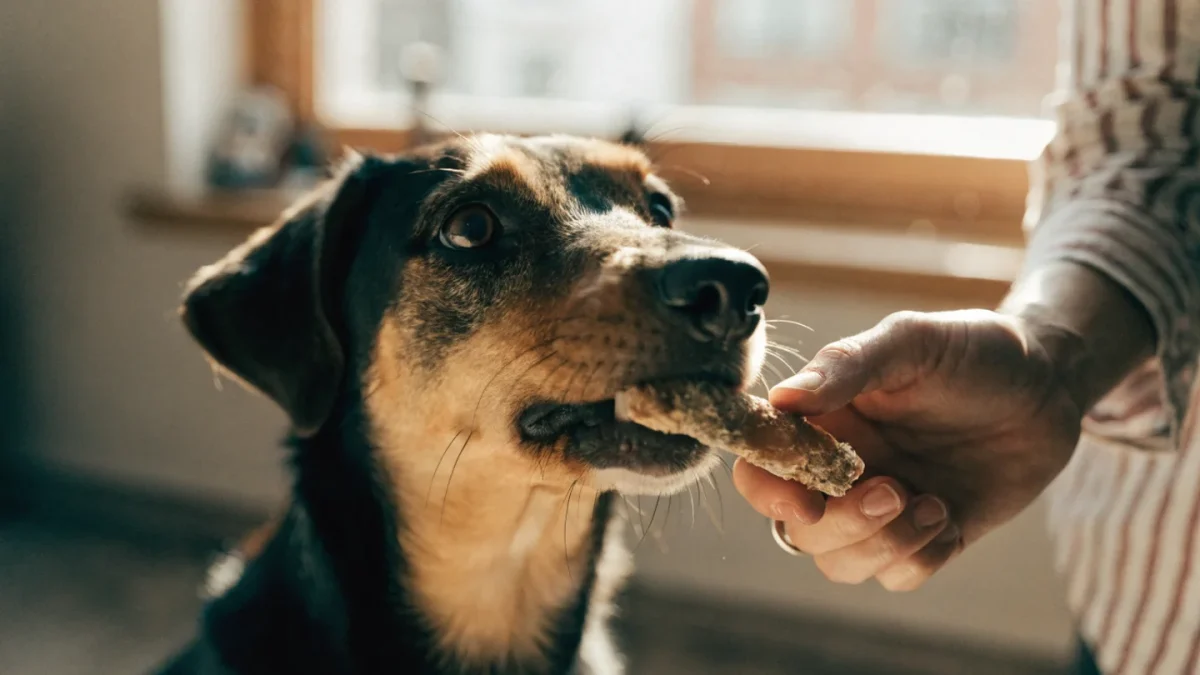
When you return: have a toy ready. Redirect the dog's energy to an appropriate chew item. Some dogs mouth from an intense need to use their mouths — redirecting to a toy gives them a legal outlet while you're present.
Consistency is non-negotiable. If mouthing gets a reaction — even "ow," even pulling your hand away quickly — the dog is getting something from the behavior. The goal is that touching skin produces absolute zero response.
When to Use Time-Outs
For dogs that are escalating rather than disengaging when you turn away, a brief removal from the social situation is warranted. Leave the room entirely for 30-60 seconds. This is a social consequence — you left — not a punishment. The dog learns that mouthing makes the social interaction disappear.
Redirects That Work
Keep a selection of appropriate mouth items available during high-arousal times (greetings, before walks, during excited play). The moment mouthing starts, present the appropriate item. Don't wait until the dog has already made contact with skin.
Over time the dog learns the pattern: social arousal → get a toy → interaction continues. This is a workable outcome for many mouthy dogs. (See also: bite inhibition training.)
When to Take It More Seriously
If the mouthing is hard and leaves marks, if the dog is escalating to more intense contact, or if there are children regularly interacting with the dog — this is more urgent than a minor annoyance. Hardness of contact matters. If the dog is mouthing with full pressure rather than gentle mouthing, that's territory for professional assessment rather than DIY management.
See stop dog mouthing during play for the play-specific context.