
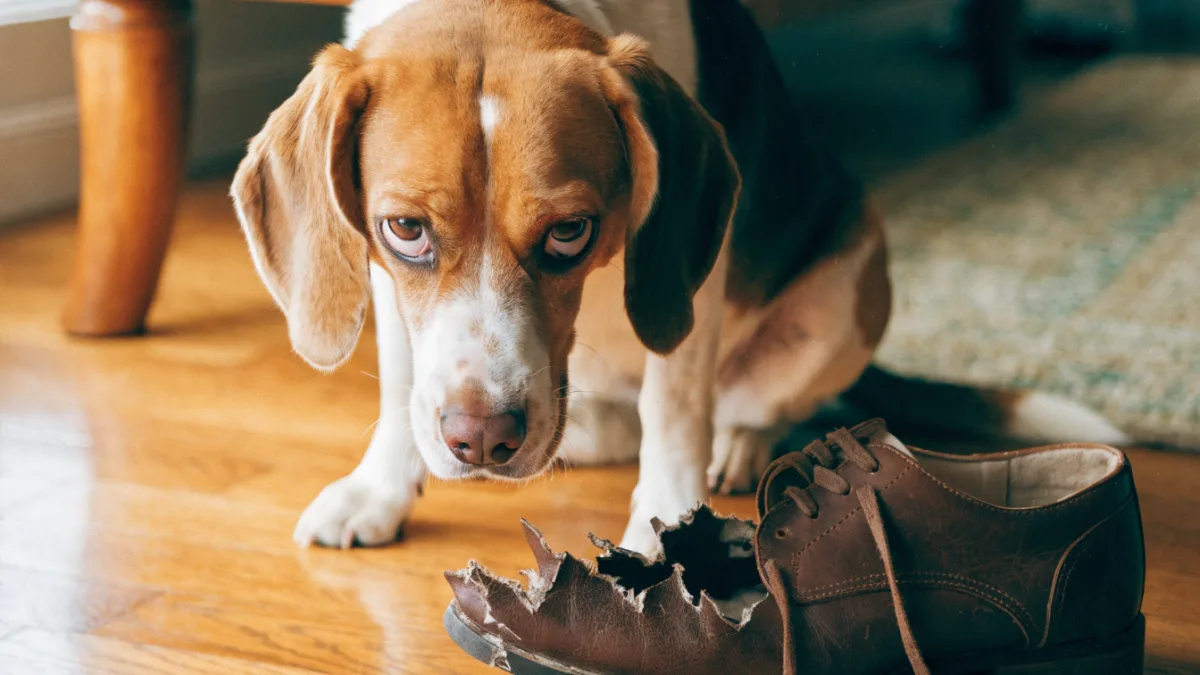
Let’s be real. We’ve all been there. You walk through the front door after a long day at work, and there it is: a mountain of shredded foam scattered across the living room rug. Maybe a favorite shoe is chewed to bits, or the kitchen trash can is overturned. You look over at your dog. They’re pressed against the wall, ears flat, giving you a heavy side-eye. They look absolutely mortified.
You sigh, point at the mess, and ask, “What did you do?”
I had a client a few years back, let’s call her Sarah, with a sweet but rambunctious Boxer named Rocky. Rocky had a habit of counter-surfing. One evening, Sarah came home to find a half-eaten loaf of bread on the floor. She immediately started scolding him. Rocky hit the floor, belly up, tail tucked, licking his lips frantically. Sarah was convinced he was apologizing for eating the bread.
She was wrong. And I don’t blame her for thinking that. We’ve all been conditioned to believe that our pets experience guilt the exact same way we do. But animal behavior science tells a completely different story.
The “Guilty Look” Is Actually Just Fear
When your dog gives you that classic “guilty” expression—cowering, avoiding eye contact, tucking their tail, or flattening their ears—they aren’t showing remorse. They are showing fear.
In the animal behavior world, these behaviors are known as appeasement or deference signals. Your dog isn’t saying, “I am so sorry I ate the sofa.” They are saying, “I see you are angry, your body language is terrifying, and I really wish you would stop yelling.”
If you,[1] you’ll find endless debates about whether dogs feel guilt. To prove they don’t, we can look at a famous 2009 study by animal behavior researcher Alexandra Horowitz. In her experiment, owners were told to tell their dogs not to eat a treat, and then they left the room. While the owners were gone, researchers either gave the treat to the dog or removed it.
But here is the kicker: sometimes the researchers told the owners that the dog ate the treat, even when the dog had actually left it alone.
When the owners came back into the room and scolded the dogs, the dogs showed the “guilty look” every single time they were scolded—whether they actually ate the treat or not. The dogs weren’t reacting to their own bad behavior. They were reacting to their owner’s angry tone and body language. The guilty look is simply a response to being yelled at.
Why Timing Is Everything (And Why Lectures Never Work)
One of the biggest mistakes I see pet owners make—and I used to do it too—is coming home to a mess and dragging the dog over to it to give them a piece of your mind.
Here is the problem with that: your dog or cat does not have the cognitive ability to connect a punishment to an action unless the consequence happens immediately. We are talking within seconds.
If you come home to a destroyed trash can and yell at your dog an hour after the crime was committed, your dog has absolutely no idea why you are angry. They don’t think, “Oh, she’s mad about the garbage.” They think, “My owner just walked in the door and turned into a terrifying monster for absolutely no reason.”
Associative Learning in Action
Dogs and cats learn through association. If you punish them after the fact, they don’t learn not to destroy the trash. They just learn to be afraid of you when you come home.
You’ll notice that eventually, your dog starts cowering the second you open the front door, even if they haven’t done anything wrong that day. That’s because they’ve associated your arrival with your unpredictable, angry temper. I used to get so frustrated when my own dog would slink away when I opened the door. I thought he was just a troublemaker who knew he was bad. Once I understood that he was just bracing himself for a potential scolding, I changed my approach completely. I stopped bringing him to the scene of the crime. If I didn’t catch him in the act, the moment for teaching had passed.
Dogs vs. Cats: Different Playbooks for De-escalation
You might have seen those viral comparison posts or.[2] making the rounds on social media. While it’s true they react differently to an angry human, neither of them is actually apologizing.
The Dog’s Approach: Active Appeasement
Dogs are highly social animals. When tension rises, their instinct is to diffuse it through active appeasement. They might roll onto their back, lick your hand, or avoid eye contact. It’s interesting to note that [3] In natural canine communication, they don’t use these specific deference behaviors for one another—they reserve them almost exclusively for humans. They’ve evolved to learn exactly what calms us down.
The Cat’s Approach: Avoidance
Cats take a completely different route. If a cat knocks a glass off the counter and you get mad, they aren’t going to cower and give you puppy dog eyes. A cat’s version of diffusing tension is usually avoidance. They will hide under the bed, freeze, or act aloof. They aren’t hiding because they feel guilty and know they did wrong. They are hiding because you are loud, unpredictable, and acting like a predator.
The Problem with “Dog Shaming”
If you spend five minutes on social media, you’ll find hundreds of “dog shaming” videos. Owners put handwritten signs around their dogs’ necks explaining their bad behavior, or they film themselves scolding the dog while the dog offers intense appeasement behaviors.
Look, I get it. Some of these videos are genuinely funny, and the owners usually love their pets to pieces. But as someone who deals with animal behavior every single day, I can’t stand them. Anthropomorphism—projecting human emotions onto animals—is a dangerous game.
When we believe our pets are capable of complex human emotions like guilt, shame, or spite, we hold them to an impossible moral standard. If you think your dog peed on the rug out of spite because you worked late, you’re going to treat them like a vengeful roommate. If you realize they just couldn’t hold it for twelve hours, you’ll adjust their schedule and buy a bigger bladder.
Animal welfare advocates are actively trying to dismantle the “guilty pet” myth because responding to fear with anger only damages the bond you have with your pet. It subjects them to unnecessary stress for a quick laugh or a fleeting moment of self-righteousness.
What to Do Instead of Getting Mad
So, what should you do when you find your house torn apart?
- Manage the environment. If your dog gets into the trash, buy a locking trash can or put it in a closet. If your cat scratches the couch, put double-sided tape on the corners. Prevent the behavior before it starts.
- Provide a better outlet. Dogs chew and dig because it’s in their DNA. Give them a durable, safe chew toy or a frozen rubber puzzle toy to keep them busy. Give your cat a sturdy scratching post placed right next to the furniture.
- Praise the good stuff. We are so quick to punish the bad, but we forget to reward the good. Catch your dog resting quietly on their bed and give them a treat. Reinforce the behaviors you actually want to see.
Ultimately, we have to meet our pets where they are. Dogs and cats don’t plot revenge, they don’t hold grudges, and they certainly don’t feel guilty. They just react to the world around them based on instinct and the consequences we provide. When we stop expecting them to act like furry humans and start appreciating them for the incredible, intelligent animals they are, everything gets a whole lot easier. Next time you come home to a mess, take a deep breath, skip the lecture, and remember: they aren’t sorry, but they definitely love you.
Sources
- scroll through online forums — reddit.com
- "dog apology vs. cat apology" letters — facebook.com
- dogs do not actually apologize to each other — facebook.com