

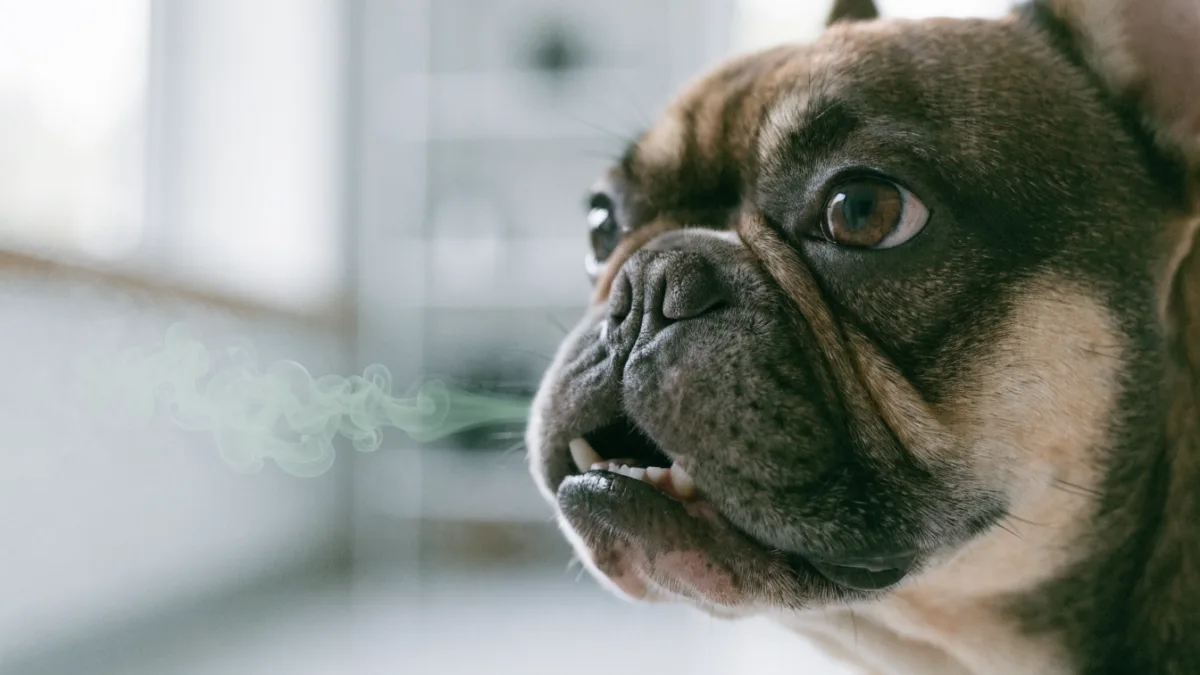
Picture Mrs. Henderson bringing her fourteen-year-old tabby, Whiskers, into a clinic, apologetic about the visit. “I hate to waste your time,” she says, settling the carrier on the exam table. “It’s probably nothing. But his breath has gotten so bad I can smell it from across the room.” One sniff and it’s clear this isn’t ordinary “kitty breath.” Behind that sharp, almost chemical odor was a kidney function problem, caught early enough to manage. That case is a good reminder of something worth repeating: your pet’s breath is one of the most honest messengers their body has. Bad breath — halitosis, in clinical terms — is never something to ignore or mask with treats and breath fresheners. It’s information, and learning to read it might just save your pet’s life.
The Myth of Normal “Doggy Breath”
Let me be direct about something I hear constantly in the exam room: there is no such thing as normal bad breath in a pet. I’ve lost count of how many owners have told me, “Oh, he’s always had stinky breath — I figured that’s just how dogs are.” It isn’t. Healthy animal breath has a mild scent, certainly, but it shouldn’t make you recoil or avoid cuddling.
Halitosis develops when bacteria in your pet’s mouth break down food particles, saliva proteins, and cellular debris. As these microorganisms feast and multiply, they produce volatile sulfur compounds — the same family of gases responsible for the smell of rotting eggs. The more bacteria present, the more intense the odor. So when you notice your dog or cat’s breath becoming genuinely foul, what you’re actually detecting is a bacterial population that has grown well beyond what’s healthy.
I used to think of bad breath as primarily a dental nuisance. I’ve changed my mind on this completely over the past decade. The research has become overwhelming: halitosis is a recognized clinical warning sign for a wide range of systemic diseases, from kidney dysfunction to liver disease to diabetes. Your pet’s mouth is, quite literally, a window into what’s happening throughout their body.
How Oral Bacteria Reaches the Organs
Here’s what happens when periodontal disease takes hold — and why it matters far beyond your pet’s teeth. When plaque and tartar accumulate along the gumline, they cause inflammation called gingivitis. Left untreated, that inflammation progresses to periodontitis, a deeper infection that destroys the ligaments and bone supporting the teeth.
But the real danger isn’t in the mouth itself. It’s what happens next. Inflamed, infected gums become porous and leaky. Every time your pet chews, bacteria from those infected pockets get squeezed into the bloodstream — a process called bacteremia. Once circulating, those oral bacteria travel to major organs: the heart, where they can colonize damaged valves; the kidneys, which filter small blood vessels vulnerable to bacterial damage; the liver, where they can trigger inflammatory responses.
I remember a case that drove this home for me. Buster, a seven-year-old Golden Retriever, came in for his annual exam. His owner mentioned some bad breath but otherwise thought Buster was thriving. On examination, I found severely inflamed gums and several loose molars. His bloodwork showed early-stage kidney values that were creeping upward. After we treated his dental disease with a comprehensive cleaning under anesthesia and extracted two infected teeth, his kidney values stabilized and have remained normal for two years since. The connection was unmistakable.
What Different Odors Tell Us About Organ Health
One of the most fascinating — and useful — aspects of halitosis is that different diseases produce characteristically different breath odors. I sometimes feel like a sommelier of halitosis, which sounds unglamorous but has genuinely helped me diagnose conditions early. Here’s what specific smells can indicate:
Rotten or Fishy Odors
This is the most common pattern I encounter, and it almost always points to active periodontal disease. The smell comes from those volatile sulfur compounds produced by bacteria breaking down proteins in trapped food and oral debris. If your pet’s breath smells like something died in their mouth, there’s a good chance something nearly has — the tissue supporting their teeth is under active bacterial attack.
Chemical or Ammonia-Like Odors
This was Whiskers’ breath. When kidneys aren’t filtering waste efficiently, compounds called uremic toxins — including urea — accumulate in the blood. These toxins are partially excreted through the salivary glands and lungs, producing a sharp, metallic smell reminiscent of cleaning ammonia. If you notice this odor, especially accompanied by increased drinking and urination, kidney disease needs to be investigated immediately with bloodwork and urinalysis.
Sweet or Fruity Odors
This one catches owners off guard because it doesn’t smell “bad” exactly — just unusual. A sweet, almost nail-polish-like scent can indicate diabetic ketoacidosis, a serious complication of uncontrolled diabetes where the body, unable to use glucose for energy, begins breaking down fat and producing acidic compounds called ketones. I had one client, a man with a five-year-old Miniature Poodle named CoCo, who mentioned her breath smelled “weirdly like Juicy Fruit gum.” CoCo was in early diabetic crisis. That sweet smell prompted immediate testing that confirmed diabetes, and she’s been stable on insulin ever since.
Foul, Necrotic Odors With Oral Lesions
If the breath is exceptionally putrid and accompanied by visible sores, growths, or areas of dead tissue in the mouth, we have to consider oral tumors, severe infections, or immune-mediated diseases. These cases need urgent biopsy and intervention.
Respiratory and Skin Connections
Not all bad breath originates in the teeth. The nasal passages, sinuses, and throat can all harbor infections or foreign material that produces odor detected on the breath. I once removed a grass awn — a small, barbed seed — from a Labrador’s nasal cavity after his owner reported weeks of progressively worsening breath. Additionally, skin infections around the lips and facial folds, particularly common in breeds like Bulldogs and Pugs, can contribute significantly to oral-area odors.
Why Anesthesia Matters for Proper Diagnosis
I want to address something that comes up regularly, because I understand the concern behind it. Many owners, worried about the risks and cost of anesthesia, ask about anesthesia-free dental cleanings. The impulse is completely understandable — nobody wants to put their beloved pet under sedation, and the price difference can be significant.
However, I have to be honest about what anesthesia-free cleaning can and cannot do. It can remove visible tartar from the crown of the tooth, the part you can see. What it absolutely cannot do is address what’s happening beneath the gumline — and that’s where the dangerous bacteria live and multiply. It cannot allow for dental radiographs, which are essential because a significant percentage of dental problems are invisible without X-rays. It cannot permit extraction of diseased teeth or thorough probing of periodontal pockets.
I’ve seen too many cases where pets had regular anesthesia-free cleanings but still developed severe, hidden infections that ultimately affected their organ health. Modern veterinary dentistry relies on digital dental radiographs to detect tooth root abscesses, bone loss, and other problems that would otherwise silently damage internal organs. True periodontal treatment requires anesthesia — it’s not a sales pitch, it’s a medical reality.
Prevention and Partnering With Your Veterinarian
The encouraging news is that you have enormous power to protect your pet’s oral and systemic health. Preventive oral care has become a major focus in veterinary medicine, and for good reason — it’s far easier and less expensive than treating advanced disease.
Look for products carrying the Veterinary Oral Health Council (VOHC) Seal of Acceptance. This certification means the product has met strict scientific standards for actually reducing plaque and tartar, not just freshening breath temporarily. Effective options include dental diets designed with texture that mechanically cleans teeth, VOHC-approved chews, water additives containing enzymes that help break down bacterial biofilm, and — the gold standard — regular tooth brushing with pet-safe toothpaste. Never use human toothpaste with pets, as the fluoride and xylitol content can be toxic.
Here’s a sensible baseline approach to aim for:
- Annual or biannual veterinary dental exams — more frequently for small breeds and senior pets who accumulate plaque faster
- Daily tooth brushing if possible, or at minimum several times per week
- VOHC-approved dental chews or diets as a supplement to brushing
- Watch for changes — if your pet’s breath odor changes noticeably or suddenly, schedule a veterinary visit rather than reaching for breath-freshening treats
- Professional cleanings under anesthesia as recommended by your veterinarian based on your pet’s individual needs
If your pet already has halitosis, please don’t try to address it with home remedies alone. I understand the appeal — I really do. Natural solutions feel safer and gentler. But bad breath signals active disease processes that require proper diagnosis. Treating the symptom without identifying the cause means valuable time lost, and in cases of kidney disease, liver dysfunction, or uncontrolled diabetes, time matters enormously.
Always consult with your veterinarian before starting any oral care regimen, especially if your pet has existing health conditions. Products that are safe for a healthy adult dog may not be appropriate for a senior cat with kidney disease or a dog with heart valve issues.
Listening to What Breath Tells Us
Whiskers, the tabby I mentioned at the beginning, is now sixteen and doing remarkably well on his kidney management plan. His owner brings him in for regular monitoring, and she’s become something of an evangelist among her friends about paying attention to pet breath. “I almost didn’t make that appointment,” she told me at his last visit. “I felt silly coming in just for bad breath.”
There was nothing silly about it. That appointment gave us the chance to intervene early, before irreversible kidney damage occurred. That’s the real message I want every pet owner to understand: halitosis isn’t a cosmetic problem or an inevitable part of aging. It’s communication. Your pet’s body is telling you something is wrong, and all you have to do is lean in and listen.
The next time your dog leans in for a kiss or your cat yawns in your face, take a moment to really notice the scent. If something seems off — rotten, chemical, sweet, or just overwhelmingly foul — don’t write it off as normal. That single observation could be the early warning sign that leads to treatment before a manageable condition becomes a crisis. In veterinary medicine, we’re fortunate that one of the most powerful diagnostic tools available is literally right under your pet’s nose — and yours.