

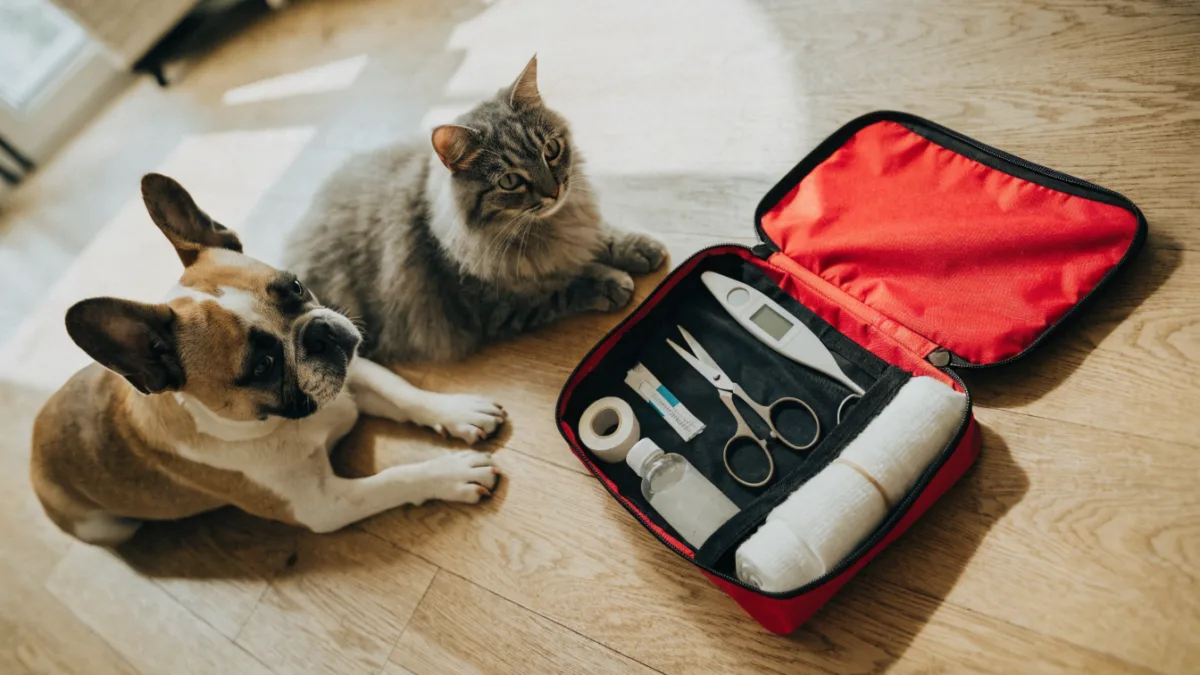
It was a sunny Saturday afternoon when Mark rushed into the clinic, carrying his four-year-old Golden Retriever, Cooper. Cooper had stepped on a piece of hidden glass at the local dog park, and his paw pad was bleeding heavily. Mark was visibly shaken but surprisingly composed. Why? Because he had a well-stocked first aid kit in his car. He used sterile gauze to apply firm pressure, wrapped the paw securely to protect it during transport, and got Cooper to me within twenty minutes. By the time they arrived, Cooper was stable, relaxed, and perfectly fine for me to suture the wound.
In veterinary medicine, we talk a lot about the “Golden Hour”—those critical first few minutes after an accident where proper stabilization can make all the difference. According to veterinary industry statistics, 1 in 3 pets will need emergency veterinary treatment every year. Whether it’s a sliced paw pad, a torn nail, or an unexpected allergic reaction, having a dedicated pet medicine cabinet is essential.
The Non-Negotiables: Wound Care and Bandaging
When you’re building your pet’s first aid kit, you can actually save money right off the bat. Roughly 70 to 80 percent of the items in a standard human first aid kit can be safely used for pets. The basics of wound care are nearly identical across species, but the way we apply them can vary slightly.
Your wound care stash should include:
- Gauze pads and rolls: These are the workhorses of any kit. You can use gauze rolls to wrap wounds, but they are also incredibly useful for creating a makeshift muzzle if you’re caught off guard without a proper one.
- Non-stick adhesive bandages and tape: Pets have fur and uniquely shaped limbs, so bandaging them takes practice. Non-stick pads ensure you don’t pull out hair or reopen a wound when you eventually remove the dressing.
- Cotton balls and swabs: These are perfect for gently applying ointments or cleaning out small scrapes and sensitive areas like the ears.
The “Pain Bite” Factor
Clinics see it all the time. A loving, well-socialized pet is brought in after an accident, and when the owner tries to move them, the pet lashes out and bites. It is not a reflection of the animal’s temperament.
Even the most gentle, well-trained dog or cat will instinctively bite when severely injured or frightened. It is a pure survival reflex.
Take Bella, for instance. She was a five-year-old Labradoodle who had never growled at a soul in her life. But when she fractured her leg in a fall, her owners tried to splint her in the backyard. Terrified and in pain, Bella bit her owner’s hand. That is why a soft, properly sized muzzle is a non-negotiable safety item for your pet medicine cabinet. It protects you, which in turn allows you to safely protect your pet.
Tools of the Trade: What to Actually Use
Beyond the bandages, a few specific tools will make your life infinitely easier during a crisis. Think practically about what you might need in a hurry.
- Blunt-tipped scissors: Pets wiggle, and using sharp scissors near a squirming animal is a recipe for disaster. Blunt-tipped scissors allow you to cut bandages or trim fur away from a wound without the risk of accidentally puncturing their skin.
- Tweezers: If you live in an area with ticks, foxtails, or bees, tweezers are crucial. They allow you to remove embedded pests, thorns, or stingers cleanly and completely.
- Nail clippers and styptic powder: I cannot count the number of late-night phone calls I get about torn or bleeding nails. A torn nail is incredibly painful and bleeds a surprising amount.
Take Luna, a three-year-old indoor calico who somehow managed to catch her dewclaw on the edge of a carpet and tore it halfway off. Her owner used styptic powder from her first aid kit to stop the active bleeding instantly before driving her in. While many people use home remedies like flour or a dry bar of soap to stop nail bleeding—and I understand the impulse to use what you have on hand—styptic powder is specifically formulated to contract the blood vessels quickly and safely, making it a far superior choice for your kit.
The Medicine Cabinet Debate: What to Leave OUT
There is an ongoing debate about whether to include human over-the-counter medications in pet first aid kits. I constantly have clients ask if they should keep Aspirin, Benadryl, or topical antibiotic ointments on hand for their dogs and cats.
The veterinary consensus is clear: do not include human medications unless your veterinarian has explicitly instructed you to do so for a specific condition. Common pain relievers like Tylenol (acetaminophen), Advil (ibuprofen), and Aleve (naproxen) are highly toxic to dogs and cats and can cause fatal kidney or liver failure. Even over-the-counter ointments can contain ingredients that are harmful if ingested, and cats in particular lack the liver enzymes to process many topical treatments safely. Always consult a veterinary professional before administering any dosage of medication.
The Hydrogen Peroxide Rule
I’ll be honest—I’ve changed my mind on this over the years as veterinary research evolved. Historically, pet owners were taught to keep hydrogen peroxide in their kits to induce vomiting if a dog ate something toxic.
Recent evidence has completely shifted how we handle this. The Pet Poison Helpline and veterinarians now strongly advise against using hydrogen peroxide. We now know that hydrogen peroxide can cause severe stomach ulcers, life-threatening hemorrhaging, and even brain damage in pets. If your pet ingests a toxin, do not try to induce vomiting at home. Let a professional handle it using safe, prescription medications that work quickly without the dangerous side effects.
Beyond the Bandages: Disaster Prep and Modern Tech
A medicine cabinet isn’t just for minor scrapes; it’s also your first line of defense during a natural disaster or sudden evacuation. In addition to your medical supplies, your kit should include a few disaster preparedness items. Keep a set of collapsible travel bowls, a backup supply of bottled water, and an extra leash and collar tucked into your kit.
Equally important is what I call the “Laminated Guide.” Cell service is often the first thing to fail during a hurricane, earthquake, or severe storm. Your kit needs a physical, laminated card that includes:
- The phone number and address of your nearest 24-hour emergency veterinary clinic.
- A physical, printed map to that clinic (vital if your GPS isn’t working).
- Your pet’s current vaccination records.
- A written list of any daily medications your pet takes, including dosages.
Modern technology has also revolutionized pet first aid. If you haven’t already, download a reputable pet poison control app so you can instantly cross-reference items in your home with pet toxicity levels in real-time. Furthermore, the American Red Cross recently updated their pet CPR guidelines, now recommending a ratio of 30 chest compressions to 2 rescue breaths to align more closely with human CPR. I highly recommend keeping a magnet on your kit with your login information for a veterinary telehealth service. This allows you to instantly video-call a licensed vet for triage advice while you are actively administering physical first aid, bridging the gap until you can reach a physical clinic.
While we usually focus on the medical well-being of our own dogs and cats, having these basic supplies and skills plays a surprising role in broader animal welfare. Many of these exact items—gauze, blunt scissors, antiseptics—are used daily by compassionate volunteers who care for feral and community cats through Trap-Neuter-Return (TNR) programs. By taking the time to understand pet first aid and build a proper medicine cabinet, you aren’t just preparing to be the best possible guardian for your own companion; you are cultivating a skill set that allows you to safely step in and help any animal in distress you might encounter.