

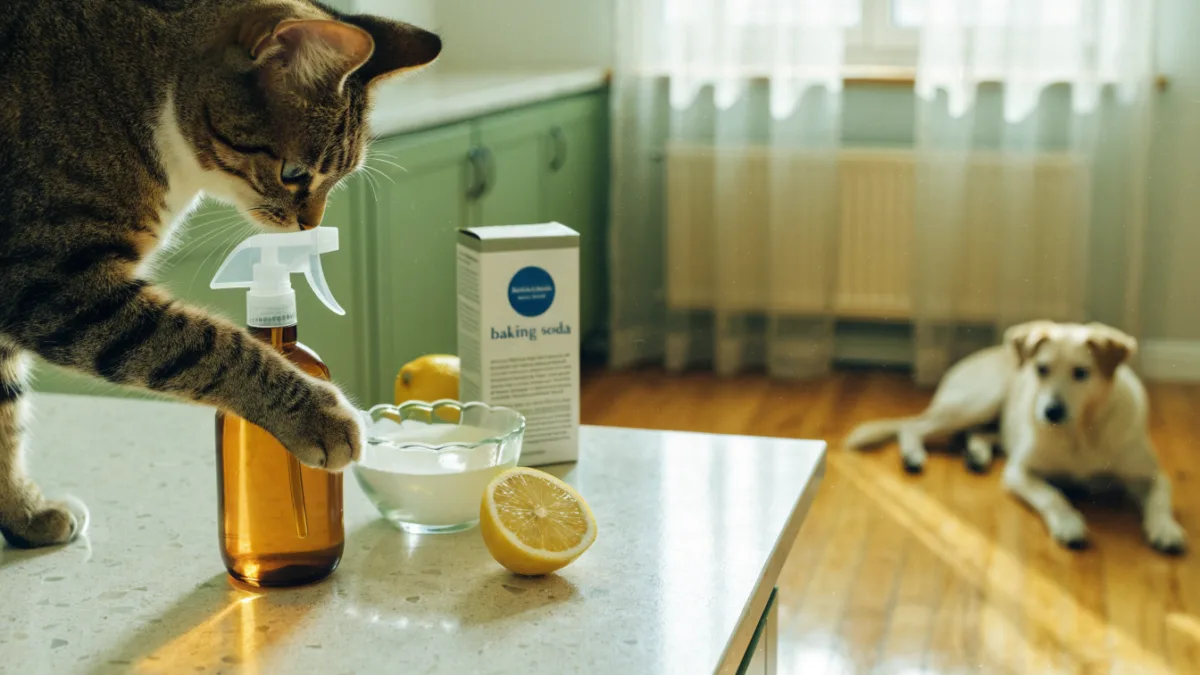
Just last month, I had a frantic phone call from a client named Maria. Her three-year-old indoor cat, Miso — a gorgeous gray tabby with a habit of grooming obsessively — had started drooling and stumbling within hours of Maria mopping the kitchen floor. The culprit? A popular pine-scented cleaner that Maria had used for years without a second thought. What Maria didn’t know is that pine oil contains phenols, compounds that cats’ livers simply cannot process. Miso spent three days in our ICU on IV fluids and liver protectants. She pulled through, but not every pet is that lucky. That experience reminded me how many loving pet owners unknowingly bring dangerous chemicals into their homes every single day.
Why Our Pets Are So Much More Vulnerable Than We Are
Most cleaning product labels are written with human safety in mind. The assumption is that you’ll spray the counter, wipe it down, wash your hands, and move on. But pets live fundamentally differently than we do, and their bodies process chemicals in ways that make them far more susceptible to harm.
The Feline Liver Problem
Cats are missing a crucial liver enzyme called glucuronyl transferase. I know that sounds like medical jargon, so let me translate: this enzyme is what allows most mammals — including humans and dogs — to break down certain chemical compounds and flush them out through urine. Without it, toxins like phenols essentially build up in a cat’s system with nowhere to go. The liver becomes overwhelmed, and the damage can be irreversible. This is exactly why toxic floor cleaners for cats are such a serious concern — a cat walks across a damp, freshly mopped floor, picks up residue on her paws, then licks herself clean during her afternoon grooming session. Every lick delivers a small dose straight into a body that cannot defend against it.
Paw Pads: The Unexpected Entry Point
I treated a Golden Retriever named Cooper last spring who came in licking his front paws relentlessly. His owner, James, thought it was seasonal allergies. When I examined Cooper’s paw pads, they were raw, cracked, and mildly blistered. James had been using a heavy-duty floor degreaser in the kitchen — the kind meant to cut through restaurant grime. Cooper had been walking through the damp residue every time he went to his water bowl. Dogs and cats both sweat through their paw pads, which means those pads are designed to absorb and release moisture. Unfortunately, they absorb cleaning chemicals just as readily as they absorb water.
Those Invisible Fumes
Volatile organic compounds, or VOCs, are gases emitted by countless household products — bleach, ammonia, air fresheners, and many aerosol sprays among them. A dog’s sense of smell is somewhere between 10,000 and 100,000 times more sensitive than ours. Imagine standing in a freshly bleached bathroom with your eyes watering and your throat burning. Now multiply that sensation by a few thousand. Pets exposed to high VOC levels can develop coughing, wheezing, asthma flare-ups, and chronic respiratory inflammation. Brachycephalic breeds — think Pugs, French Bulldogs, and Persian cats — are especially at risk because their airways are already compromised.
The Ingredients That Should Never Cross Your Threshold
I keep a mental checklist of ingredients I never want to see in a pet household. Here are the ones that make me wince every time I spot them on a label:
- Phenols and pine oil: Found in many pine-scented and “hospital-grade” disinfectants. That sharp, medicinal smell is your warning sign. For cats, even small amounts can trigger fatal liver failure.
- Ammonia: Common in glass cleaners and floor degreasers. It irritates mucous membranes and can cause respiratory distress in birds, cats, and dogs.
- Bleach (sodium hypochlorite): When mixed with even trace amounts of ammonia — say, from a pet’s urine — it creates chloramine gas, which is toxic to breathe.
- Formaldehyde: Sometimes hidden under names like “formalin” or “methylene glycol.” A known carcinogen that pets inhale or absorb through their skin.
- Phthalates: Used to make fragrances last longer. These endocrine disruptors have been linked to reproductive and developmental issues in animals.
- Cationic surfactants: Found in fabric softeners and some disinfecting wipes. Even small ingestions can cause drooling, vomiting, and oral ulcers.
When to Rush Them In: Recognizing Chemical Toxicity
I always tell my clients that early intervention saves lives. If you’ve recently used a cleaning product and notice any of the following, call your veterinarian or a pet poison helpline immediately:
- Excessive drooling or pawing at the mouth
- Vomiting or sudden loss of appetite
- Lethargy or unusual disorientation
- Difficulty breathing, coughing, or wheezing
- Redness, blistering, or peeling on paw pads and belly skin
- Squinting or watery eyes
Don’t wait to see if symptoms resolve on their own. With many of these chemicals — especially phenols — the damage compounds by the hour. I’d rather you call me and find out everything is fine than sit at home for six hours while your cat’s liver takes a hit it can’t recover from.
Safe, Simple DIY Alternatives You Can Make Today
Here’s the good news: some of the most effective cleaning products in my own home cost less than five dollars to make. I’ve gradually replaced almost every commercial product in my house with these simple alternatives, and honestly, they work just as well.
Vinegar and Water: The Workhorse
Mix equal parts white vinegar and water in a spray bottle. That’s it. Vinegar is naturally acidic, which makes it excellent for cutting through grease, cleaning glass and mirrors, and — critically for pet owners — neutralizing the alkaline compounds in urine that cause that stubborn lingering smell. I recommend it to clients constantly for accident cleanup on hard floors. One important caveat: vinegar is a fantastic cleaner, but it is not an EPA-registered disinfectant. For everyday grime, it’s perfect. If you’re dealing with something like Parvovirus or Salmonella — which is a real concern with puppies and rescue animals — you need something stronger. In those cases, I recommend properly diluted accelerated hydrogen peroxide, applied to a surface and allowed to dry completely before your pet has access.
Unscented Castile Soap
Castile soap is a plant-based, biodegradable soap that’s gentle enough to use directly on skin but effective enough to clean floors, countertops, and even pet toys. I keep a bottle of unscented liquid castile soap under my sink and add a splash to warm water for mopping. It cuts through kitchen grime without leaving any toxic residue. Look for varieties with no added essential oils or fragrances.
Baking Soda: The Stain and Odor Champion
For carpet stains and persistent odors, sprinkle baking soda generously, let it sit for 15 to 20 minutes, then vacuum thoroughly. For tougher stains, make a paste with a little water, apply it, let it dry, and vacuum it up. Baking soda is mildly abrasive, so it lifts stains without damaging fibers, and it absorbs odors rather than masking them.
Enzymatic Cleaners for Organic Messes
When you’re dealing with urine, feces, or vomit — and if you have a pet, you will be — enzymatic cleaners are genuinely revolutionary. They contain beneficial bacteria that produce enzymes which break down the organic matter at a molecular level. Instead of covering up the smell, they eliminate the source. I’ve seen enzymatic cleaners salvage carpets that owners were ready to rip out. Just avoid the ones with added fragrances, since those can irritate sensitive pets.
Navigating the Store: Choosing Commercial Dog Safe Disinfectants
I get it — sometimes you want to grab a bottle off the shelf and trust that it works. The cleaning product landscape has shifted dramatically in recent years, and there are now excellent options that are genuinely pet-friendly. But you have to know how to read a label.
Look for Certifications, Not Just Marketing Claims
The words “natural” and “green” on a label mean essentially nothing from a regulatory standpoint. Instead, look for certifications from recognized environmental or safety organizations — many countries have independent bodies that evaluate products for ingredient safety and environmental impact. If a product carries a legitimate third-party certification, it generally means the manufacturer had to prove their formula meets real standards.
Scent-Free Over Unscented
This is a distinction I learned the hard way with a patient named Daisy, a West Highland White Terrier who developed chronic ear infections. Her owner had switched to an “unscented” floor cleaner thinking she was doing right by Daisy’s allergies. It turned out “unscented” products often contain masking chemicals that neutralize the smell of other ingredients — they’re not actually free of fragrance compounds. Look for “scent-free” or “fragrance-free” on the label instead. Daisy’s ears cleared up within three weeks of making that switch.
The Essential Oil Trap
I’ll be honest — I’ve changed my mind on essential oils over the years. Early in my career, I recommended several “natural” cleaners that contained tea tree oil and citrus extracts, believing they were safe alternatives. The research has since made clear that many essential oils — including tea tree, eucalyptus, peppermint, citrus, pine, and clove — are toxic to both cats and dogs. Cats are particularly vulnerable because, again, their livers cannot metabolize these compounds. A product can be labeled “all-natural” and still make your pet desperately ill. If you see essential oils listed anywhere in the ingredients, skip it. There are plenty of effective cleaners that don’t rely on botanicals for their scent.
A Final Thought That Goes Beyond Your Living Room
Every time you choose a pet-safe cleaning product, you’re making a choice that ripples outward. The environmentally-friendly formulations that are safest for our dogs and cats are also the ones that keep phosphates, triclosan, and other persistent chemicals out of our waterways. When you mop your floor with vinegar and castile soap instead of a conventional chemical cocktail, whatever washes down your drain is far less likely to harm the fish, amphibians, and aquatic plants in your local watershed. I think about that sometimes when I’m cleaning up after my own mess of rescue animals — that doing right by the creatures in my home also happens to do right by the wild ones I’ll never meet. That’s a win I can feel good about.
Before switching cleaning products or trying any new formula around pets with known sensitivities, have a conversation with your veterinarian — especially if your pet has existing liver, kidney, or respiratory conditions. This article is educational and not a substitute for individualized veterinary advice.