

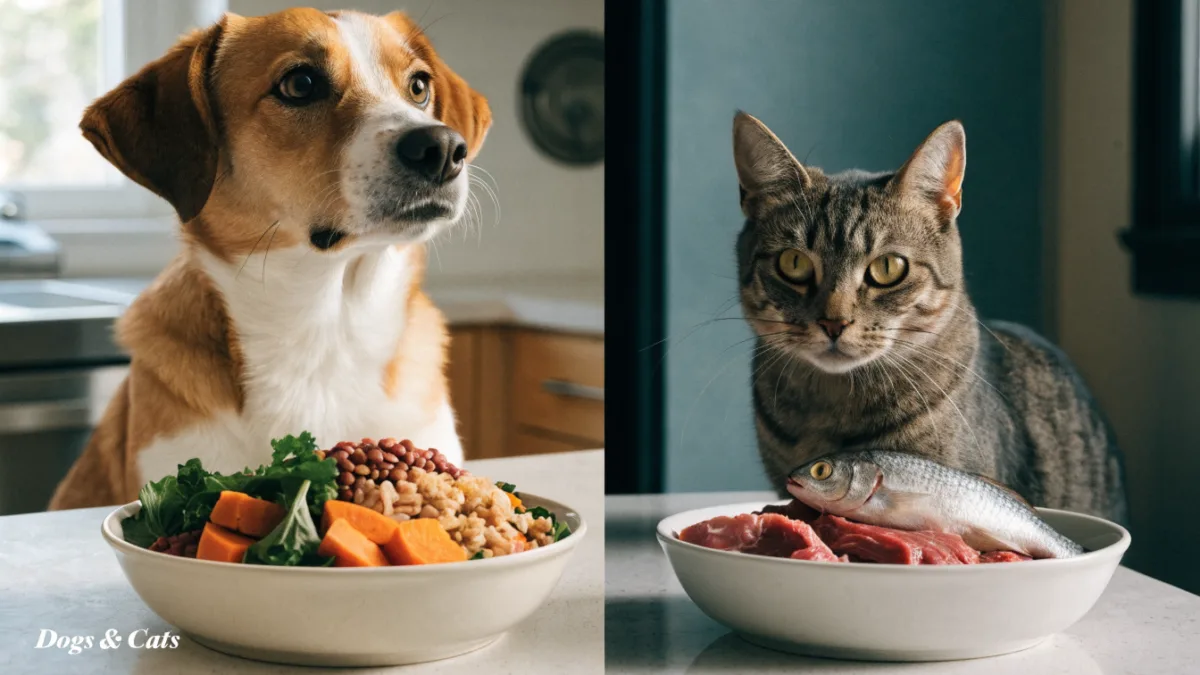
Last month, a regular client named Elena brought her dog, a sprightly five-year-old terrier mix named Pip, into the clinic. Elena is a strict vegan for deeply held ethical reasons, and she was wrestling with a heavy guilt trip. “I love animals, and I don’t want to support the factory farming industry,” she told me, holding Pip’s leash. “But I’m terrified I’m going to hurt him if I change his food. Can I just feed him what I eat?”
It’s a conversation I have in my exam room almost every week. When we share our lives with animals, it is entirely natural to want our daily choices—including what we put in our food bowls—to align with our morals. The ethical dilemma of feeding one animal the meat of another is a heavy burden for compassionate pet owners. But when we look at the biology of the animals sitting in our living rooms, we run into a hard evolutionary wall. The short answer to Elena’s question is yes, a carefully managed vegan dog diet is technically possible. But if Pip had been a cat, my answer would have been an absolute, unwavering no.
Understanding why these two species react so differently to plant-based diets requires looking closely at their evolutionary histories and their internal wiring.
The Evolutionary Split: Scavengers vs. Serial Hunters
To understand why a dog can process a sweet potato or a lentil, we have to look back at how they evolved alongside us. Over thousands of years hanging around human settlements, domestic dogs underwent significant genetic changes. Unlike their wolf ancestors, modern dogs developed the ability to digest complex carbohydrates and starches. They essentially evolved to survive on our agricultural scraps.
Because of this, dogs are biologically omnivores. Their digestive systems are surprisingly flexible, equipped to extract energy and nutrients from a wide variety of sources, including both animal meats and plant-based ingredients.
Cats, on the other hand, took a completely different evolutionary path. When we look at obligate carnivore cats, we are looking at an animal whose body is physically and genetically locked into a diet of animal tissue. Cats descended from desert predators that subsisted almost entirely on small prey like mice and birds. Because they evolved eating animals that already had perfectly balanced nutrition, feline bodies eventually lost the ability to manufacture certain vital nutrients on their own. They are absolute, strict carnivores. Their bodies are not designed to process plant matter in any meaningful way.
Navigating the Vegan Dog Diet
For a dog like Pip, removing meat from the equation isn’t a biological impossibility. Dogs have the digestive flexibility to synthesize certain nutrients, meaning they can convert specific plant-based amino acids into the building blocks they need to thrive.
However, before Elena rushed home to throw together a bowl of rice, beans, and spinach, I had to give her a strong dose of clinical caution. While a dog might survive on plants, doing it safely requires heavy lifting. Homemade plant-based diets carry immense risks. I’ve seen dogs come into the clinic suffering from inadequate total protein intake, severe imbalances of essential fatty acids, and dangerously low calcium levels simply because their owners meant well but didn’t understand canine nutrition.
I generally advise against unverified home recipes. If an owner is determined to transition their dog to a plant-based diet, it requires veterinary supervision and a commercially formulated product. When looking at commercial options, you must check for certifications from veterinary nutritionists. Look for a statement confirming the food meets established nutritional profiles, and ensure the ingredient list includes explicit, synthetic supplementation for essential amino acids like L-carnitine and taurine.
I also warned Elena about the FDA’s ongoing investigation into “boutique” diets. A few years ago, we started seeing a troubling spike in a heart condition called Dilated Cardiomyopathy (DCM)—a disease where the heart muscle stretches and loses its ability to pump blood effectively—in dogs eating grain-free, exotic, or boutique diets. While the exact cause is still being studied, it frequently overlaps with diets that remove traditional animal proteins. It reinforced for those of us in clinical practice that removing meat from a dog’s bowl shouldn’t be done casually.
The Feline Reality: Why Biology Overrides Ethics
While dogs are adaptable scavengers, cats are built to hunt. If you try to force a cat onto a plant-based diet, you are setting them up for severe, often irreversible organ failure. Cats lack the specific liver enzymes required to process plant-based proteins and convert them into the mammalian compounds their bodies demand.
Take Vitamin A, for instance. Humans and dogs can consume beta-carotene from plants—like the orange pigment in carrots—and our livers will happily convert it into active Vitamin A. Cats completely lack this ability. They require pre-formed Vitamin A, which is only found naturally in animal tissues.
Cats also require arachidonic acid, an essential fatty acid found solely in animal fats. Without it, their reproductive systems, immune responses, and skin health deteriorate rapidly. No amount of flaxseed oil or plant-based substitutes can correct this deficit.
The Silent Killer: Taurine Deficiency in Cats
Perhaps the most dangerous piece of feline biology involves an amino acid called taurine. This is the crux of why cats cannot be vegan. Dogs can synthesize taurine from other plant-based amino acids (like cysteine and methionine). Cats cannot synthesize it at all. They must consume it directly from animal meat, where it is abundant.
When cats do not get enough meat, they develop a severe taurine deficiency in cats, and the consequences are catastrophic.
I’ll never forget treating a young cat named Leo a few years back. His well-meaning owners had read online that cats could adapt to a plant-based lifestyle if they added a generic multivitamin to their food. Within eight months, Leo’s retinas began to degenerate. He started bumping into furniture in the dim light of the evenings. When he came to my clinic, his pupils were dilated and unresponsive. He had suffered feline central retinal degeneration, an irreversible condition that left him permanently blind.
Even worse, a lack of taurine causes a fatal heart condition called Dilated Cardiomyopathy (DCM). The heart muscles become weak and flabby, eventually leading to heart failure. While some commercial vegan cat foods attempt to add synthetic taurine to their formulas, relying on these supplements is a dangerous gamble with a cat’s life, especially given their simultaneous need for pre-formed Vitamin A and arachidonic acid.
Looking Forward: Cultivated Meat and Compromise
When I explained Leo’s story to Elena, the gravity of feline biology clicked for her. She realized that her ethics couldn’t override Pip’s canine biology, and definitely couldn’t change a cat’s nature. We designed a strict, commercially supplemented plant-based diet for Pip, backed by regular bloodwork to monitor his heart and organ function. He is doing wonderfully, and Elena feels comfortable with the compromise.
For owners who share their homes with cats, the future is looking brighter. Because of the intense ethical dilemma surrounding factory farming, one of the most exciting recent developments in the pet food industry is the rise of cultivated, or lab-grown, meat. Scientists are currently working on creating genuine animal meat for pets without the need to slaughter farm animals. This technology grows real animal cells in a controlled environment, producing the exact biological proteins and amino acids that obligate carnivores require, but without the agricultural footprint or moral weight of traditional meat production.
The Takeaway
When we choose to bring an animal into our homes, we are making a promise to honor their biology. It is entirely valid to want to reduce the suffering of farm animals. For dogs, a meticulously formulated, commercially produced vegan diet is a viable path forward. But for cats, we have to accept that they are the ultimate predators. Until cultivated meat becomes a widespread reality, keeping a cat healthy means accepting that they need other animals to survive. Respecting wildlife and nature means recognizing that biological realities are just as important as our ethical ideals.