
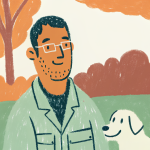

I’ll never forget the first time I worked with a nine-month-old Airedale Terrier who was terrified of his own shadow. The owner was in tears because the dog would panic every time someone walked down the sidewalk with a stroller. We spent three months doing careful counter-conditioning just to get him to walk past a park without shutting down completely.
When I asked about his history, the owner told me they had kept him quarantined in their apartment until he was five months old. They thought they were doing the right thing by keeping him safe from disease.
I used to give that same advice to owners. I was wrong.
Missing the critical developmental socialization window is the number one reason dogs develop severe, lifelong behavioral issues. But here is something that might surprise you: dogs actually have a much more forgiving window than cats. If you want to understand why your puppy turns into a fearful mess at six months old—or why your adult cat hides under the bed when you have guests—you have to understand the neuroscience of early exposure.
The Race Against Time: Puppies vs. Kittens
People often assume that because dogs and cats are both domesticated companion animals, their developmental timelines look the same. They don’t. The biological clocks ticking inside a growing puppy and a growing kitten are set to completely different speeds.
The Compressed Feline Window
If you are bringing home a kitten, you are basically working with a ticking time bomb of socialization. According to a comprehensive,[1] the feline socialization window slams shut incredibly early. To get maximum benefit from early exposure, a kitten must be introduced to people, other animals, and novel environments by nine weeks of age.
That means by the time most people adopt a kitten at ten or twelve weeks old, that primary window is already closed. If the foster home or shelter didn’t handle the kitten constantly and expose them to normal household noises before they hit two months old, you are likely going to end up with a cat who is permanently skittish. Cats don’t miss the window because they are stubborn; they miss it because their brains develop at a drastically accelerated rate compared to dogs.
The Forgiving Canine Window
Puppies, on the other hand, catch a bit of a break. The ideal time to begin socializing a puppy is between three and fourteen weeks of age. This gives us a much wider runway to work with.
But it isn’t just one long phase. The canine socialization period is actually broken down into two distinct chunks. The first phase happens from three to seven weeks of age. At this point, the puppy is usually still with the breeder or rescue. This is when they learn bite inhibition from their littermates and figure out what a dog is. The second phase happens from eight to twelve weeks. This is when you bring them home, and it is your job to teach them what the human world is.
Rewiring the Brain: It’s Not Just About “Manners”
I hear it all the time: “I just want my dog to learn how to say hi to other dogs politely.” But socialization isn’t about teaching manners. It is about preventative behavioral healthcare.
A [2] proved something that completely shifted how we view puppyhood. Puppies exposed to early stimulation and socialization don’t just behave better. Their actual physiology changes. Early exposure permanently alters how a dog’s brain and endocrine system process stress.
When you safely expose a puppy to a new texture, a loud noise, or a weirdly dressed human during that critical window, you are literally wiring their nervous system to recover from surprises later in life. These dogs develop physiological benefits that make them significantly more resilient to stress as adults. You aren’t just giving them an experience; you are giving them emotional armor.
Across both species, early socialization within these critical developmental periods has been clinically shown to decrease the likelihood of fear, aggression, and anxiety toward new people and unfamiliar environments later in life.
Defining “Novelty”: What Really Counts as Socialization?
Most owners drastically misunderstand what socialization actually means. Dropping your eight-week-old puppy into a chaotic dog park to get jumped on by older dogs is not socialization. That is flooding, and it creates trauma.
Proper [3] in a controlled, positive way. Here is what you actually need to be checking off your list before that 14-week window closes:
- Surfaces: Grass, concrete, gravel, wood floors, wet sidewalks, and sand.
- Sounds: Vacuums, blenders, doorbells, traffic, and different volumes of music.
- People: Men with beards, people wearing hats, individuals in bulky coats, kids on skateboards, and people with walking canes. Dogs don’t generalize well. A dog might be totally fine with a clean-shaven man in a t-shirt, but completely terrified of a man in a winter hat and sunglasses.
- Objects: Umbrellas opening, cardboard boxes, and rolling trash bins.
I remember working with an Aussie Shepherd who hadn’t encountered a person wearing a backpack until she was five months old. The first time she saw me walk in with a hiking pack, she hit the end of her leash barking defensively. She hadn’t been abused. She simply hadn’t seen a backpack during her socialization window. Her brain categorized it as a threat.
The Great Vaccination Debate: Risk vs. Reward
This brings us to the biggest controversy in veterinary medicine today. If you have a puppy, you know that the eight-to-twelve-week window is exactly when they are undergoing their core vaccination series for diseases like Parvovirus and Distemper.
For decades, traditional veterinary advice told owners to keep their puppies isolated indoors until they were fully vaccinated at around sixteen weeks. The logic was simple: disease is deadly, so avoid all risk. But modern veterinary behaviorists are screaming from the rooftops that this advice is deeply flawed.
Here is the problem: if you wait until sixteen weeks to introduce your puppy to the world, you have missed the critical socialization window entirely. The behavioral risk of waiting far outweighs the risk of disease, provided you use your brain about it.
The Rise of “Puppy Parties”
We are seeing a massive, positive shift in how the industry handles this dilemma. Clinics and trainers are increasingly hosting what are known as “puppy parties” or puppy kindergarten classes.
These are structured, early-age socialization classes specifically designed to safely facilitate stimulation before vaccines are fully complete. They capitalize on that eight-to-twelve-week window to build canine confidence. How do they keep the dogs safe? By controlling the environment.
A well-run puppy party happens in a sanitized room. All attending puppies must have a clean bill of health and be on track with their current vaccines. You aren’t taking your unvaccinated puppy to sniff the local pet store floor where a sick dog might have walked yesterday. You are bringing them into a clean, controlled space to learn and explore safely.
The Bottom Line on Early Exposure
Behavioral issues—including fear, anxiety, and aggression—are the leading cause of pet relinquishment to shelters. Dogs aren’t surrendered because they don’t know how to sit. They are surrendered because they bite the neighbor, or they panic every time a car door slams.
We have the power to prevent this. Whether you are a breeder, a foster parent, or someone bringing a new animal into your home, you have to prioritize early exposure. Play the radio. Let the puppy walk on bubble wrap. Invite your friends over to hand-feed your kitten.
Protecting our pets isn’t just about keeping them physically safe behind closed doors. It is about giving them the tools they need to exist confidently in our loud, chaotic, unpredictable world. Their lifelong mental health depends on what we show them in those very first, fleeting weeks.
Sources
- literature review by the American Veterinary Medical Association (AVMA) — avma.org
- highly cited 2015 study led by Howell and colleagues — pmc.ncbi.nlm.nih.gov
- early socialization is about exposing your animal to novelty — purepawsvet.com