

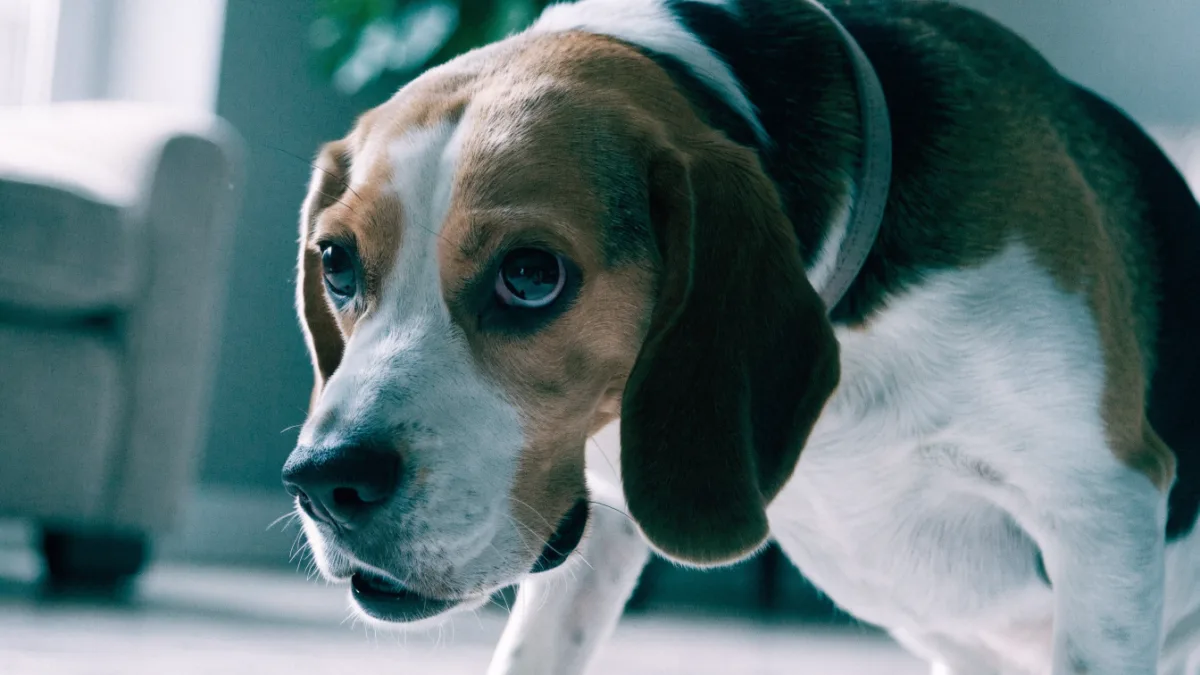
I’ll never forget the night a frantic client rushed a four-year-old Beagle named Copper into my clinic. Copper was standing on the exam table, his elbows locked, neck extended, and making a sound like a freight train trying to inhale a goose. It was a loud, violent, rattling honk. His owner was in tears, absolutely convinced Copper was having a severe asthma attack or choking on a foreign object.
I walked over, calmly placed my hand on Copper’s side, and waited. Within about twenty seconds, the spasm passed. Copper gave a big swallow, licked my hand, and his tail started wagging as if nothing had happened.
What Copper experienced is clinically known as paroxysmal respiration, but most of us just call it reverse sneezing. And if you’ve never seen it before, it is absolutely terrifying. But I’m here to tell you that in the vast majority of cases, that alarming honk is completely harmless.
Let’s break down exactly what is happening inside your pet’s head, why both dogs and cats do it, and how you can help them when an episode strikes.
The Mechanics of the Honk: What is a Reverse Sneeze?
To understand a reverse sneeze, it helps to think about a regular sneeze. When your body wants to clear an irritant from your nasal passages, it forces air violently out through the nose. A reverse sneeze is the exact opposite. It is a rapid, forceful intake of air through the nose.
Biologically, this reflex is triggered by.[1]—meaning something has tickled or irritated the soft palate (the fleshy part at the back of the roof of the mouth) or the back of the throat. The spasm is your pet’s body trying to clear that specific area.
During an episode, your pet will usually stand still, extend their neck, and make a loud snorting or honking sound. It often looks like they are struggling to breathe, but the reality is that air is moving freely—they are just making a lot of dramatic noise in the process.
Why Does It Happen? Common Triggers
Just like we might sneeze when we walk into a dusty room or smell strong perfume, our pets reverse sneeze when their sensitive upper airways get annoyed.
Common triggers include:
- Allergies: Pollen, grass, and mold can cause inflammation in the nasal passages.
- Environmental Irritants: Dust from a vacuum cleaner, scented candles, household cleaners, or perfumes.
- Temperature changes: Stepping from a warm house into cold winter air.
- Overexcitement: Pulling hard on a leash or getting too worked up during play.
I recently saw a lovely Domestic Shorthair cat named Luna whose owner noticed she only honked right after the owner did a deep clean of the bathroom. We traced the reaction to the aerosolized cleaning spray. Once the owner switched to unscented wipes and opened the window, Luna’s episodes stopped entirely.
Dogs vs. Cats: Does It Look Different?
When we talk about reverse sneezing, we almost exclusively talk about dogs. And it’s true that dogs are far more prone to it. Brachycephalic, or flat-faced, breeds like Pugs, French Bulldogs, and Shih Tzus are highly susceptible because their elongated soft palates and compressed nasal passages naturally crowd their airways.
However, [2] The mechanism is exactly the same, though it is much less frequently diagnosed in felines.
In dogs, an episode can sometimes last for a minute or more, which feels like an eternity to an anxious owner. Cats, in my experience, tend to have much shorter, more discrete bursts. A cat might do two or three quick inward snorts, sit back on their haunches, and be done with it. Because cats are so good at hiding vulnerabilities, you might not even witness the episode—they might just leave the room, have a quick spasm, and return to their nap.
When to Worry: The Red Flags
Historically, veterinary medicine largely dismissed reverse sneezing as a harmless, anecdotal quirk. But I’ve changed my mind on this over the years, and the science is starting to catch up. A [3] specifically examined 30 cases of reverse sneezing, highlighting a recent shift in veterinary medicine toward studying this phenomenon more closely rather than just brushing it off.
The debate in the clinic isn’t whether reverse sneezing is bad—it usually isn’t. The debate is about frequency and context. An isolated incident is totally fine. But if your pet is reverse sneezing multiple times a day, or if the episodes are lasting for several minutes, we have to consider that it’s a symptom of an underlying disease.
Respiratory sounds can overlap, and it can be incredibly difficult to tell the difference between a reverse sneeze, a true cough, or a gag. Here are the red flags that mean it’s time to skip the internet research and call your vet:
- Nasal Discharge: If you see blood or thick, yellow/green mucus coming from the nose.
- Lethargy: If your pet seems exhausted, refuses to eat, or is generally “off” after an episode.
- Labored Breathing: If your pet’s chest is heaving, their gums are turning pale or blue, or they cannot catch their breath after the honking stops.
- Facial Swelling: This can indicate a severe allergic reaction or an infected tooth root that is draining into the nasal cavity.
Chronic honking, coughing, and wheezing can be early warning signs of respiratory infections, nasal mites, or even anatomical abnormalities that require surgical correction.
How to Help Your Pet During a Spasm
Watching your dog or cat go into a reverse sneezing fit is stressful, but you are not powerless. There are several gentle techniques you can use to help break the spasm and clear the irritant.
1. The Throat Massage
Approach your pet calmly and gently place your fingers on their throat, right below their jaw. Stroke downward in a firm but gentle motion. This helps to relax the muscles in the pharynx (the back of the throat) and encourages them to swallow, which usually resets the reflex.
2. The Brief Nose Cover
Because a reverse sneeze is an inward spasm, you can sometimes stop it by forcing a swallow. Gently place your thumb and forefinger over your pet’s nostrils for just two or three seconds. When they realize they can’t inhale, they will naturally swallow to clear their throat. That swallow pulls the soft palate back into its normal position, stopping the honk. Just remember to let go quickly so they can breathe!
3. Fresh Air
If the episode was triggered by a household irritant like dust or perfume, pick up your small dog (or encourage your larger dog or cat) to follow you to an open window or door. A few breaths of fresh air can work wonders to soothe inflamed nasal passages.
A Note on Home Remedies
I often have clients ask me if they should give their pets over-the-counter antihistamines or use essential oils to stop the sneezing. I understand the impulse to find a quick fix, but I always redirect owners to evidence-based veterinary care. Human medications can be dangerous without the correct dosage, and essential oils can actually cause severe respiratory distress or toxicity in pets—especially cats. If your pet’s sneezing is severe enough to warrant medication, it’s severe enough to warrant a veterinary consultation first.
Ultimately, the sound of a reverse sneeze is enough to stop any loving pet parent’s heart. But armed with the knowledge of what that reflex is doing—protecting your pet’s airways—you can approach the situation with calm confidence. By paying attention to triggers, learning to soothe the spasm, and knowing exactly when to call your vet, you are doing exactly what Copper’s owner did: stepping up to advocate for the health and well-being of the animals who rely on us.
Sources
- nasopharyngeal irritation — vet.cornell.edu
- cats reverse sneeze too — lovelandregional.com
- 2022 observational study by researcher J. Talavera — petmd.com