


The first twelve months of a puppy's or kitten's life contain more medical milestones than any other comparable period. More vet visits, more interventions, more physiological change — and more opportunity to establish foundations that will influence their health for the next decade or more.
I've done countless first-year wellness appointments, and the questions I hear most often are the same: When do they need their shots? When should I worry about the sneezing or the soft stool? When is too young to spay? What does normal look like, and what doesn't?
This guide addresses all of those questions. It's organized around the actual sequence of the first year — what needs to happen, when, and why.
The First 8 Weeks: Before They Come Home
Most puppies and kittens arrive in their new homes between 8 and 12 weeks of age. The period before that — in the nest or litter — establishes the baseline of their immune status and parasite burden.
Maternal antibodies: Puppies and kittens receive antibodies from their mother's first milk (colostrum). These passive antibodies provide temporary protection against many infectious diseases but also interfere with vaccine responses. This is why early vaccines need to be given as a series — not because individual shots are ineffective, but because we can't predict exactly when maternal antibody levels drop low enough to allow the immune system to mount its own response. The series covers the window.
Deworming before you get them: Roundworm (Toxocara species) transmission from mother to offspring is essentially universal in puppies and common in kittens. Responsible breeders and shelters begin deworming at two weeks of age. Ask whether this has been done before you bring your pet home. If the history is unclear, a deworming course should begin immediately on arrival.
Early socialization: This isn't medical care in the strictest sense, but it has profound health implications. Kittens have a critical socialization window from roughly 2–7 weeks; puppies from approximately 3–12 weeks. Adequate positive exposure to handling, different people, sounds, and environments during these windows significantly reduces fear and anxiety-based problems throughout the animal's life — the AVMA's own literature review confirms that inadequate socialization during this period can lead to irreversible fearfulness and anxiety-based behavior problems in adulthood. Animals raised in isolation or understimulating environments often develop chronic stress responses that affect their health long-term.
The First Vet Visit: What to Expect
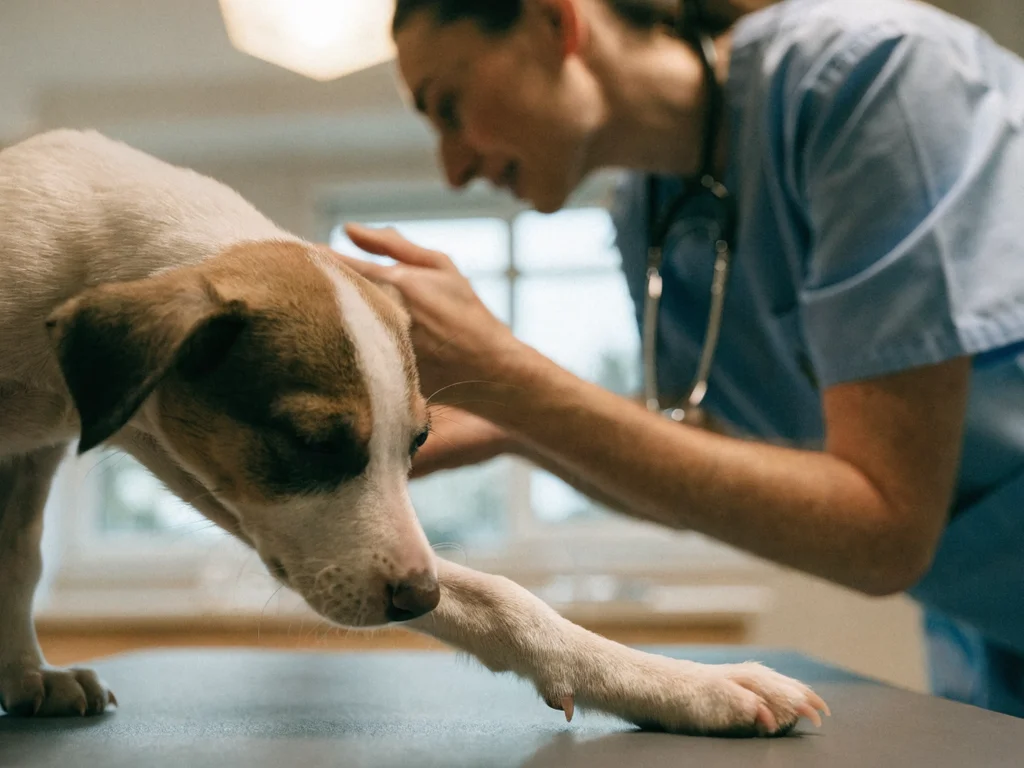
Your first veterinary appointment — ideally within a few days of bringing your new pet home — accomplishes several things at once. Understanding what happens at your puppy's or kitten's first vet visit beforehand helps you make the most of it.
Physical examination: Head to tail assessment. Eyes, ears, mouth, heart, lungs, abdomen, skin, lymph nodes, genitals, limbs. This baseline exam identifies congenital abnormalities (heart murmurs, umbilical hernias, undescended testicles, cleft palates) that may not have been apparent at birth, and detects any illness present on arrival.
Fecal parasitology: A stool sample checked under the microscope for intestinal parasites. Even with prior deworming, some parasites survive or require specific treatments. Giardia, coccidia, and hookworm are common findings in young animals and need targeted treatment beyond standard dewormers.
First vaccines: Depending on age, the first vaccines in the core series will be given.
Microchipping: Can be done at any age; many veterinarians recommend doing this at the first visit.
Nutrition and feeding guidance: First appointments are a good time to confirm you're feeding an appropriate diet. The requirements for puppies and kittens differ significantly from adults — both in nutrient composition and in feeding frequency.
Vaccination: The Core Series
Vaccination is the most time-sensitive aspect of first-year care. The core schedule for puppies and kittens differs somewhat, though the underlying principles are the same.
Puppy Vaccinations
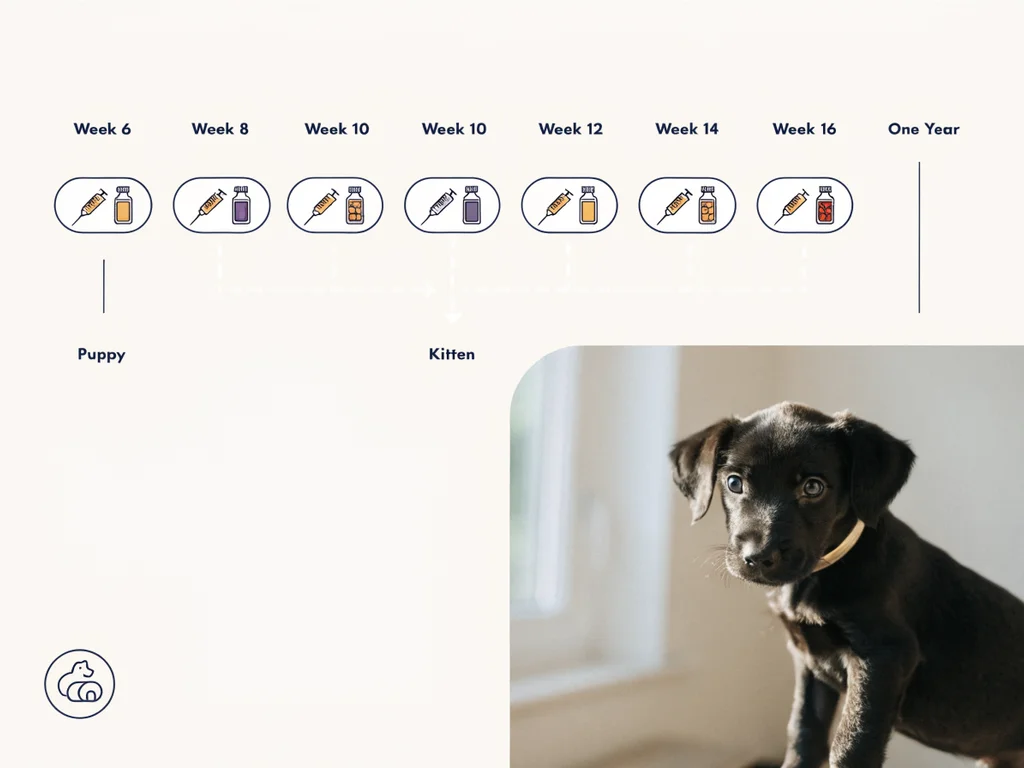
Core puppy vaccines protect against distemper, parvovirus, and adenovirus — given as a combined injection — along with rabies. The distemper/parvovirus/adenovirus combination (often called DA2PP or DHPP) is given:
- 8 weeks: First combination vaccine
- 12 weeks: Second combination vaccine
- 16 weeks: Third combination vaccine; rabies vaccine also given at this visit or earlier depending on local requirements
Booster one year after the puppy series is complete, then boosters on a schedule based on vaccine type and local guidelines.
Non-core vaccines (for Bordetella, Leptospirosis, Lyme disease, and others) are recommended based on your dog's lifestyle and geographic risk. Your vet will advise which are relevant.
Kitten Vaccinations
Core kitten vaccines target panleukopenia (feline distemper), herpesvirus, and calicivirus — given as a combination — along with rabies. The schedule:
- 8 weeks: First FVRCP combination vaccine
- 12 weeks: Second FVRCP
- 16 weeks: Third FVRCP; rabies vaccine
- Booster at one year
Feline leukemia virus (FeLV) vaccine is strongly recommended for kittens with any outdoor access or exposure to other cats of unknown status. FIV (feline immunodeficiency virus) vaccine availability varies by region.
The full schedules for puppy vaccination and kitten vaccination are covered in detail in dedicated articles.
Deworming in the First Year
Intestinal parasites are nearly universal in young animals. The standard deworming protocol:
- Every 2 weeks from 2 to 8 weeks of age (should have been started by the breeder or shelter)
- Monthly from 2 to 6 months of age
- Then based on regular fecal testing
Standard dewormers cover roundworms and hookworms but not all parasites. Giardia requires specific antiprotozoal treatment. Tapeworms require a different drug class. Regular fecal testing (rather than just treating empirically) identifies what's actually present.
Heartworm prevention is introduced during the first year in regions where heartworm is endemic. Your vet will advise on timing and products appropriate for your area and lifestyle.
Growth Milestones: What Normal Looks Like
Puppies and kittens grow at rates that can be surprising to first-time owners. Week-by-week developmental milestones for young pets are covered in full detail, but here's the broad picture:
Puppies: Most breeds reach 50% of their adult weight by 4 months. Small breeds tend to reach adult size by 8–10 months; large and giant breeds continue growing until 18–24 months. Weight gain should be steady and proportional — rapid weight gain, especially in large breeds, increases risk of developmental bone disease.
Kittens: Kittens gain roughly 100 grams per week in early life and typically reach adult weight between 8 and 12 months. Maine Coons and other large breeds continue filling out until 3–4 years.
Baby teeth to adult teeth: Puppies and kittens begin losing their baby teeth at around 12 weeks, with adult teeth fully erupted by 6–7 months. Retained baby teeth (where an adult tooth erupts beside an un-shed baby tooth) are common, especially in small dog breeds, and usually require extraction.
First heat cycle (unspayed females): Kittens can go into their first heat as early as 4–5 months. Small-breed dogs from around 6 months; large breeds typically 12–18 months. This is relevant to timing of spay surgery.
Common Illnesses in the First Year
Young animals have immune systems that are still maturing, making them more vulnerable to infectious disease than adults. Illnesses that commonly affect puppies and kittens are covered in depth, but key conditions to know:
Parvovirus in puppies: A life-threatening viral infection causing severe vomiting, hemorrhagic diarrhea, and collapse. Highly contagious. Not fully vaccine-protected until the puppy series is complete — so limiting exposure to unknown dogs before vaccination is complete is important.
Feline panleukopenia in kittens: The feline equivalent of parvovirus. Equally serious, equally vaccine-preventable. Can also be transmitted through contaminated environments.
Upper respiratory infections (kittens): Very common, especially in shelter-raised kittens. Usually caused by herpesvirus or calicivirus. Presents as sneezing, eye discharge, and nasal congestion. Often self-limiting but sometimes requires treatment, particularly in young kittens who stop eating.
Kennel cough (puppies): Bordetella and parainfluenza complex causing a characteristic honking cough. Usually self-limiting in healthy puppies; more serious in very young or debilitated animals.
Hypoglycemia in small-breed puppies: Blood sugar drops in toy and small-breed puppies can be rapid and dangerous, especially under stress or when feeding is delayed. Signs include weakness, trembling, and in severe cases seizures.
Any illness in a puppy or kitten under 12 weeks warrants prompt veterinary attention — deterioration can be rapid, and conditions that a healthy adult dog would handle easily can be life-threatening in a very young animal.
Spay and Neuter: Timing Considerations
The question of when to spay or neuter is more nuanced than it was a decade ago. The traditional recommendation of six months is still appropriate for cats and small-breed dogs. For large and giant-breed dogs, research from UC Davis on Golden Retrievers, Labrador Retrievers, German Shepherds, and Vizslas has found that early neutering (before 12 months) is associated with higher rates of joint disorders like hip dysplasia and cranial cruciate ligament tears, as well as certain cancers in some breeds — suggesting that delaying gonadectomy until physical maturity may reduce orthopedic disease risk in these breeds.
The topic involves balancing population control, behavioral considerations, cancer risk profiles, and orthopedic development. There is no universal answer — discuss your specific breed and situation with your veterinarian.
Nutrition in the First Year
Puppies and kittens need diets specifically formulated for growth — higher in protein, certain minerals (particularly calcium and phosphorus, which must be in appropriate ratios), and total caloric density than adult maintenance diets. Feeding an adult diet to a growing animal, or feeding an all-life-stages diet in amounts calibrated for an adult, can compromise development.
Key points:
- Feed a diet labeled for "puppies" or "kittens" or "all life stages" (not "adult maintenance")
- Frequency: 3–4 meals daily for very young animals (under 12 weeks), transitioning to twice daily as they mature
- Avoid calcium supplementation on top of a complete diet — calcium-phosphorus imbalance causes bone disease, particularly in large-breed puppies
Large-breed puppies specifically benefit from large-breed puppy formulas, which are calibrated to support slower, more even skeletal development.
When to Call Your Vet Immediately
Some findings in a puppy or kitten require same-day or emergency attention:
- Not eating for more than 24 hours (12 hours for kittens under 8 weeks)
- Bloody diarrhea or vomit
- Repeated vomiting (more than 2–3 times in a day)
- Pale or white gums
- Labored breathing or persistent rapid breathing
- Seizures
- Severe lethargy — can't or won't stand
- Suspected toxin ingestion
With very young animals, err toward calling earlier rather than waiting. Their physiological reserves are smaller, and what looks minor in the morning can be a crisis by evening.
Annual Visit at One Year
The one-year appointment marks the transition to adult protocols. This visit typically includes:
- Final booster in the puppy/kitten vaccine series (or first adult booster)
- Heartworm test (dogs in endemic regions)
- Fecal parasite check
- Spay/neuter discussion if not yet done
- Transitioning to adult food (or large-breed adult formula)
- Dental assessment (many dogs and cats already show early tartar accumulation at one year)
- Baseline physical examination as an adult
Building a relationship with your veterinarian during the first year also means they know your animal's normal — their typical weight, heart rate, and behavior — making it easier to identify deviations later.
FAQ
When can my puppy or kitten go outside and socialize?
Socialization should begin as early as possible — ideally before vaccination is complete — because the socialization window closes young. This doesn't mean exposure to unknown dogs in high-traffic areas (dog parks, pet stores) before vaccination is complete. It means exposure to your own home, your own yard, known and vaccinated animals, and handling by various people. The risk of behavioral problems from missed socialization is real and lifelong; parvovirus exposure from a controlled visit to a vaccinated friend's dog is low.
My puppy has diarrhea — is that normal?
Mild soft stool is common during diet transitions or periods of stress. Watery diarrhea, bloody diarrhea, or diarrhea that persists more than 48 hours warrants a vet call. Intestinal parasites are a common cause of puppy and kitten diarrhea and are easily diagnosed and treated.
How do I know if my kitten is gaining weight appropriately?
Kittens should gain roughly 100 grams per week in early life. If you have a kitchen scale, weighing weekly and tracking the number is a useful exercise. A kitten who loses weight over any week, or gains nothing for two consecutive weeks, should be evaluated by a vet.
Is it normal for my puppy or kitten to sleep so much?
Young animals sleep a lot — up to 18–20 hours per day is normal for newborns and very young animals. Even at 8–12 weeks, significant sleep is expected and healthy. The concern is lethargy — a lack of normal alertness or responsiveness during waking periods, or the inability to be roused — which is distinct from simply being a heavy sleeper.
Should I brush my puppy or kitten's teeth?
Yes — and the earlier you start, the better. Daily tooth brushing with pet-safe toothpaste reduces tartar accumulation and dental disease. Starting at 8–10 weeks when their mouths are used to being handled makes the process significantly easier. Dental disease is the most common disease in adult pets, and early habits make a measurable difference.