

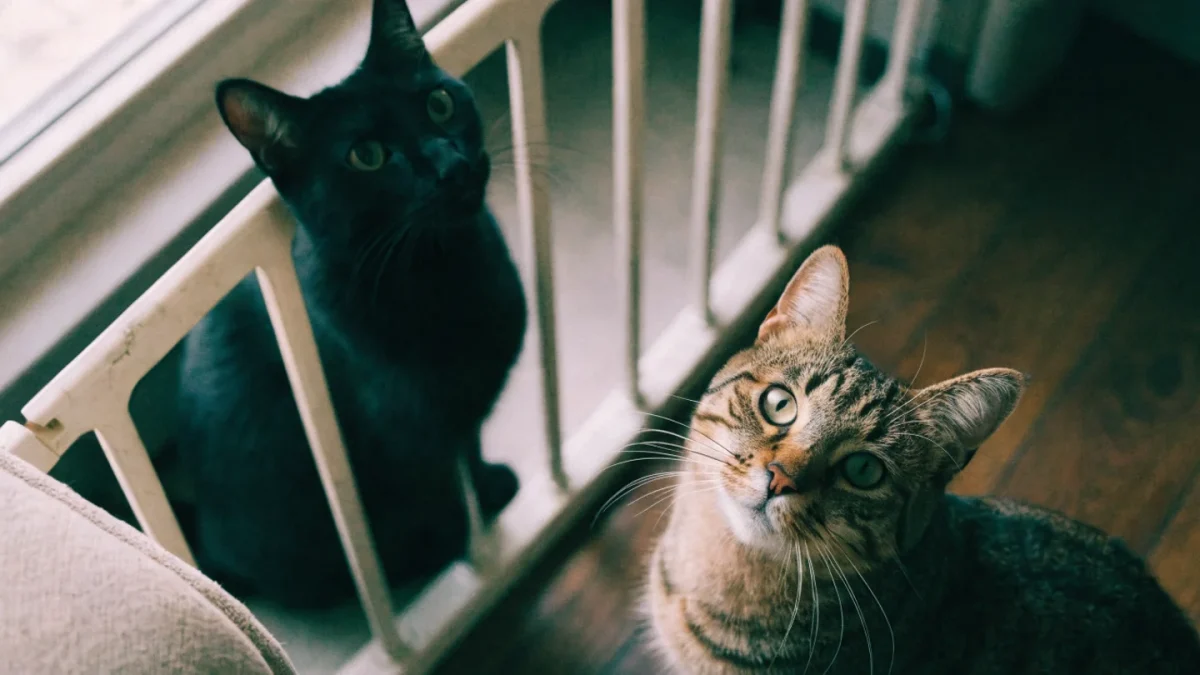
A few years back, a couple brought in their newly adopted cat — a friendly, healthy-looking tabby they'd fallen for at a shelter. For more about common cat health problems, see our detailed guide. Routine intake testing came back with a positive result for feline leukemia virus. They were devastated, ready to return him.
I spent some time that afternoon explaining what the diagnosis actually meant. Not the worst-case scenario they'd already mapped out in their heads, but what it meant practically — for how they'd care for him, what precautions made sense, and what his life could look like with appropriate management.
That conversation happens more often than it should, which tells me there's a knowledge gap worth closing. Infectious diseases in cats carry a weight of fear that's sometimes disproportionate to the clinical reality. Understanding them clearly makes for better decisions.
Feline Immunodeficiency Virus (FIV)
FIV is a lentivirus — in the same family as human HIV, though it doesn't infect people and poses no zoonotic risk. It attacks the immune system over time, leaving affected cats more vulnerable to secondary infections.
How It Spreads
The primary transmission route is bite wounds — deep puncture bites from infected cats. This is why intact male cats who roam outdoors are the highest-risk population. Casual contact — sharing food bowls, mutual grooming, living in the same household — is not an efficient transmission route. Cornell University's Feline Health Center notes that cats in stable households where housemates don't fight are at low risk of picking up the virus, even when a housemate is FIV-positive.
This distinction matters enormously for management. An FIV-positive cat living with other cats who don't fight is a very different situation from a cat who is actively biting housemates.
What FIV Actually Does
FIV progresses through phases over years — sometimes decades. Many FIV-positive cats go through a long asymptomatic period during which they appear and feel entirely normal. The concern is an eventual immunocompromised state that makes secondary infections harder to resolve.
FIV-positive cats who are kept indoors, well-nourished, and receive regular veterinary monitoring — including prompt treatment of secondary infections — often live normal or near-normal lifespans. The diagnosis is not a time limit on a good life.
Testing and Diagnosis
Testing for FIV uses a rapid antibody test, typically done during wellness visits or at adoption. A positive result should always be confirmed with a more specific test, because false positives occur — particularly in kittens who may carry maternal antibodies without being truly infected. Kittens testing positive should be retested after six months of age.
For a thorough discussion of management, see FIV in cats and what a positive test actually means.
Feline Leukemia Virus (FeLV)
FeLV is a retrovirus that integrates into a cat's DNA, affecting immune function and increasing susceptibility to several serious conditions including lymphoma, anemia, and opportunistic infections. It is more contagious than FIV and carries a more guarded long-term prognosis.
How It Spreads
FeLV spreads through close, sustained contact — shared saliva, mutual grooming, shared food and water bowls, and mother to kitten during nursing. Unlike FIV, it doesn't require bite wounds. Cats living closely together in multi-cat environments can transmit it relatively easily.
This is why FeLV testing is standard practice before introducing a new cat into a household with existing cats, and why all cats with outdoor access or shelter exposure should be tested.
Categories of FeLV Infection
Not all cats who are exposed to FeLV become persistently infected:
- Regressive infection: The cat's immune system suppresses viral replication. The virus remains latent and detectable with sensitive tests, but the cat may never develop FeLV-associated disease. These cats can occasionally reactivate under severe stress.
- Progressive infection: Viral replication continues. These cats are the ones at highest risk for FeLV-related disease and are persistently contagious to other cats.
Distinguishing between these categories sometimes requires additional testing beyond a standard rapid test.
Prognosis and Management
Cats with progressive FeLV infection have a shorter median survival than FIV-positive cats. However, "shorter" still means years in many cases — not days or weeks. These cats need close monitoring, prompt treatment of secondary infections, and appropriate nutrition and stress management.
Vaccination against FeLV is available and recommended for cats with exposure risk — outdoor cats, cats in multi-cat households where FeLV status isn't confirmed for all residents, and cats in shelter environments.
Upper Respiratory Infections
Upper respiratory infections are among the most common conditions I see in cats, particularly in young cats, newly adopted cats, and shelter animals. They're the feline equivalent of the common cold, and like human colds, the vast majority resolve with supportive care.
The Primary Culprits
Two viruses cause most feline URIs:
Feline herpesvirus-1 (FHV-1): The more common of the two. Causes sneezing, nasal discharge, conjunctivitis (eye discharge and redness), and occasionally corneal ulcers. Nearly all cats are exposed at some point — serological analyses estimate up to 97% of cats show seropositivity against FHV-1, with over 80% of infected cats remaining persistently infected throughout their lifespan (per multiple prevalence studies including work published in Virology Journal and PMC). FHV-1 is never fully cleared from the body; it retreats into nervous tissue and can reactivate during stress, illness, or immunosuppression.
Feline calicivirus (FCV): Causes sneezing, nasal discharge, and notably, oral ulcers — sores on the tongue and in the mouth that can make eating painful. FCV is more variable in severity than FHV-1, and some strains are particularly aggressive.
Bacterial pathogens, including Bordetella bronchiseptica and Chlamydophila felis, can cause primary infections or secondary complications. Secondary bacterial infections are common after viral URIs and may require antibiotic treatment.
Recognizing a URI
Signs to watch for:
- Sneezing, particularly repeated fits of sneezing
- Clear or colored nasal discharge (colored discharge suggests bacterial involvement)
- Watery or purulent eye discharge; red, squinting eyes
- Reduced appetite (often because the cat can't smell food well)
- Mild fever and lethargy in moderate to severe cases
- Oral ulcers in calicivirus infections
Home Care and When to Call the Vet
Most healthy adult cats with mild URIs can be managed at home with supportive care: warm, moist food to encourage eating, gentle cleaning of eye and nose discharge, and a stress-free environment.
The cats who need prompt veterinary attention are those who stop eating entirely, show labored breathing, develop thick colored discharge, or are very young, very old, or immunocompromised. URIs in kittens under eight weeks can progress quickly to pneumonia.
For a detailed breakdown of home care and treatment options, see upper respiratory infections in cats.
Vaccination
Core vaccines for cats include protection against both FHV-1 and FCV. These vaccines don't completely prevent infection but significantly reduce the severity of disease when exposure occurs. They're an important part of preventive care for cats of all ages and lifestyles.
What These Diseases Share
FIV, FeLV, and upper respiratory infections are transmitted differently and require different management, but they share an important commonality: outcomes improve dramatically with good information, prompt diagnosis, and consistent veterinary care.
The cat owners I see navigate these diagnoses best are the ones who understand what they're actually dealing with — not the worst-case scenario, but the realistic trajectory. A cat with FIV who is indoor-only, well-monitored, and well-fed has a genuinely good prognosis. A cat with recurring URIs managed with appropriate nutritional support and stress reduction can live a comfortable life.
Infectious disease in a cat doesn't define the life the cat has. Management does.
Frequently Asked Questions
Can FIV or FeLV be transmitted to humans?
No. FIV and FeLV are species-specific retroviruses. They cannot infect humans or other non-feline species. They pose no zoonotic risk.
Should I vaccinate my indoor cat against FeLV?
Vaccination recommendations vary by an individual cat's risk level. Fully indoor cats with no outdoor access and no exposure to new or untested cats have lower exposure risk. Discuss your cat's specific situation with your vet — the decision involves weighing the probability of exposure against the benefits and minor risks of vaccination.
Can cats recover from upper respiratory infections without medication?
Many cats with mild URIs do recover with supportive home care alone. However, bacterial secondary infections often require antibiotics, and cats who aren't eating, have colored discharge, or aren't improving within five to seven days should be evaluated by a vet.
Is it safe to adopt a cat that has tested positive for FIV or FeLV?
For FIV-positive cats: yes, in most household situations — particularly if they'll live as indoor-only cats and won't be fighting with other cats. For FeLV-positive cats: it requires more careful thought, particularly if other cats are in the home. Discussing the specifics with your veterinarian helps make a well-informed decision for your particular situation.