

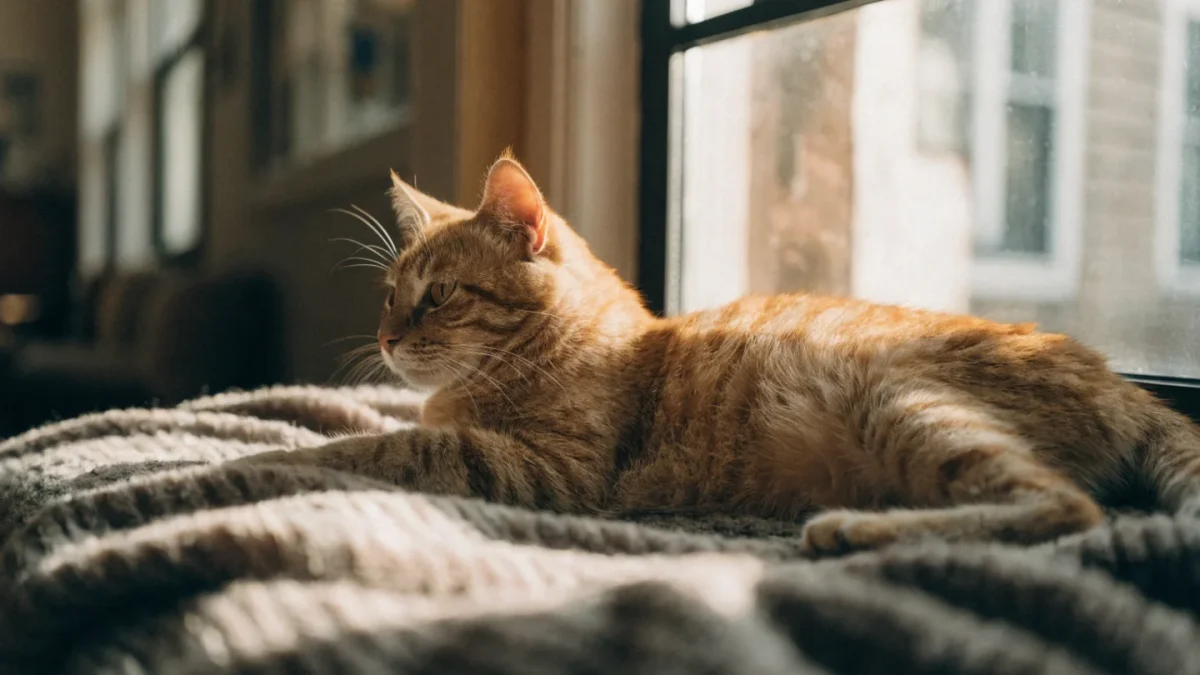
The phrase "chronic disease" tends to land heavily — for people and pets alike. Read our guide to common cat health problems for detailed information. In my experience, when I tell a cat owner their companion has kidney disease or hyperthyroidism, the initial reaction is often fear. What I want to say first, and what I'll say here, is that the three most common chronic diseases in cats are all manageable conditions. Not curable in most cases, but manageable. Cats diagnosed early and followed properly regularly live years of comfortable, good-quality life.
The challenge is that chronic diseases in cats develop slowly, and cats are experts at concealing discomfort. Understanding what to watch for can make the difference between catching something early and discovering it in a crisis.
Chronic Kidney Disease
Chronic kidney disease (CKD) is the condition I diagnose most frequently in cats over ten. The kidneys' job is to filter waste products from the blood, regulate fluid balance, and produce hormones involved in red blood cell production and blood pressure. In CKD, kidney tissue progressively loses function — usually due to fibrosis, inflammation, or age-related changes — and the kidneys can no longer do their job adequately.
What makes CKD difficult to catch is that cats have considerable kidney reserve. A cat can lose over half of functional kidney capacity before blood values deviate from the normal range. By the time the classic symptoms appear — increased thirst, increased urination, weight loss, reduced appetite, and lethargy — significant damage has already occurred.
Stages of CKD
Veterinarians classify CKD into stages (typically 1 through 4, sometimes using the International Renal Interest Society system) based on creatinine levels, phosphorus, blood pressure, and urine protein loss. This staging guides treatment intensity.
- Stage 1-2: Often asymptomatic. Detected on routine bloodwork. This is the ideal time to intervene.
- Stage 3: Symptoms become noticeable. Weight loss, coat changes, and some lethargy appear.
- Stage 4: Significant kidney failure. May involve vomiting, oral ulcers, severe lethargy, and crisis presentation.
Managing CKD
The cornerstone of CKD management is diet. Phosphorus restriction is particularly important because high phosphorus accelerates kidney deterioration. Veterinary prescription kidney diets have been specifically formulated to reduce phosphorus while maintaining adequate protein and palatability.
Hydration is equally critical. Cats with CKD need to process more fluid to excrete waste. Wet food dramatically increases fluid intake compared to dry food. Some cats with advanced CKD receive subcutaneous fluids administered at home — a technique that sounds daunting but most owners master quickly and that makes a real difference in how the cat feels.
Regular monitoring — typically bloodwork and urinalysis every three to six months — allows us to track progression and adjust management before a crisis develops. Learn more about kidney disease in cats including early warning signs and how to slow progression.
Hyperthyroidism
Hyperthyroidism has become almost epidemic in cats over the past few decades — it's now one of the most common disorders I see in middle-aged and senior cats. The cause is almost always a benign growth (adenoma) on one or both thyroid lobes, causing the gland to produce thyroid hormone continuously at excessive levels.
Thyroid hormone regulates metabolic rate. Too much of it sends the body into overdrive.
What Hyperthyroidism Looks Like
The classic presentation is a paradox: a cat that's eating voraciously but losing weight. Owners often think a cat who's eating well must be fine. But hyperthyroid cats are burning through calories faster than they can consume them.
Other common signs include:
- Restlessness, vocalizing at night, or seeming agitated
- Increased heart rate and sometimes a heart murmur (hyperthyroidism can cause secondary heart disease)
- Increased thirst and urination
- Vomiting or diarrhea
- Unkempt coat, sometimes greasy feeling
- Weight loss despite good appetite
Diagnosing hyperthyroidism is straightforward — a blood test measuring total T4 (the primary thyroid hormone) is usually sufficient. Occasionally the test is done twice to catch borderline cases.
Treatment Options
Four main approaches exist, and the right one depends on the cat and the owner's situation:
-
Daily medication (methimazole or carbimazole): Controls thyroid hormone production. Effective and widely used. Requires once or twice daily dosing for the rest of the cat's life, which works well for some owners and is difficult for others.
-
Transdermal medication: The same medication in a gel applied to the inner ear. Easier to administer for difficult-to-pill cats, though absorption is somewhat less reliable.
-
Prescription iodine-restricted diet: Thyroid hormone production depends on dietary iodine. A strictly iodine-controlled diet reduces hormone production. Works only if the cat eats exclusively this food — no treats, no other food. Can be effective but requires complete dietary compliance.
-
Radioactive iodine therapy: A single injection of radioactive iodine that selectively destroys abnormal thyroid tissue. Curative in the vast majority of cases. Requires a short hospital stay while radioactivity clears. Long-term, this is often the most cost-effective and medically simple option.
One important caution: hyperthyroidism can mask underlying kidney disease. Elevated thyroid hormone increases blood flow to the kidneys, artificially improving kidney function readings. When hyperthyroidism is treated, kidney function may decrease — not because treatment harmed the kidneys, but because the masking effect was removed. This is why post-treatment kidney monitoring is essential. More on hyperthyroidism in cats including what to watch for after treatment.
Feline Diabetes Mellitus
Diabetes in cats resembles type 2 diabetes in humans more than type 1. Insulin resistance — often driven by obesity — is the predominant mechanism, though pancreatic insufficiency plays a role in some cats. Certain genetic lines appear more susceptible, and neutered males are overrepresented in diabetic cat populations — an association documented in multiple large retrospective studies including a 2024 review of laboratory submissions from over 129,000 cats in Germany (JFMS Open Reports).
Recognizing Diabetes
The four classic signs are:
- Polyuria (increased urination) — large clumps in the litter box, or accidents outside it
- Polydipsia (increased thirst) — noticeably drinking more water than usual
- Weight loss — often dramatic, despite eating well
- Weakness in the hind limbs — a distinctive sign called plantigrade stance, where the cat walks on its hocks rather than its toes, caused by diabetic neuropathy
Diagnosis requires demonstrating persistently elevated blood glucose and glucose in the urine, along with appropriate clinical signs. A single high blood glucose reading isn't sufficient — cats can experience stress hyperglycemia from the vet visit itself, which is why fructosamine levels (a longer-term glucose marker) are often measured alongside.
Managing Diabetes: The Remission Goal
This is where feline diabetes differs most from human type 2 diabetes. In cats, aggressive early treatment — insulin therapy combined with a high-protein, low-carbohydrate diet — can sometimes achieve remission. The cat's blood glucose normalizes without ongoing insulin.
Remission is not guaranteed, but it happens often enough that it should be the explicit goal of early management. The window for achieving remission appears widest in the first few months after diagnosis, which is another reason why acting promptly and committing to treatment matters.
Monitoring at home using a glucose meter (many owners learn to test blood from the inner ear or paw pad) allows dose adjustments and helps detect hypoglycemia — low blood sugar from too much insulin — which is the primary risk of insulin therapy.
What Connects All Three
Chronic kidney disease, hyperthyroidism, and diabetes share several important features: they're most common in middle-aged to senior cats, they develop gradually, they're detectable with routine bloodwork before symptoms appear, and they're all significantly more manageable when caught early.
This is the strongest argument I can make for annual wellness exams and baseline bloodwork — not to find something to worry about, but to catch something treatable before it becomes difficult. A senior cat's annual visit isn't just a wellness check. For many of them, it's the appointment that changes the course of the next few years.
Frequently Asked Questions
Can a cat have more than one chronic disease at the same time?
Yes, and this is common in senior cats. Hyperthyroidism and kidney disease frequently coexist. Diabetes and obesity-related conditions often appear together. Managing multiple concurrent conditions requires careful coordination and regular monitoring, but is entirely possible.
How long can a cat live with chronic kidney disease?
With appropriate management, many cats with CKD live for years after diagnosis. Stage 1-2 cats caught on routine bloodwork may have a near-normal lifespan. Even stage 3 cats often do well for two to four years with proper dietary management, hydration support, and monitoring.
Is hyperthyroidism painful for cats?
Hyperthyroidism itself isn't directly painful, but the secondary effects — elevated heart rate, elevated blood pressure, restlessness, and potential cardiac changes — affect quality of life significantly. Treated cats typically become calmer, regain weight, and appear more comfortable within weeks.
What diet is best for a diabetic cat?
High-protein, low-carbohydrate wet food is the dietary cornerstone of feline diabetes management. Dry food tends to be high in carbohydrates, which raises blood glucose. Transitioning a diabetic cat to wet food often reduces insulin requirements substantially. Specific dietary choices should be made with veterinary guidance based on the individual cat.