

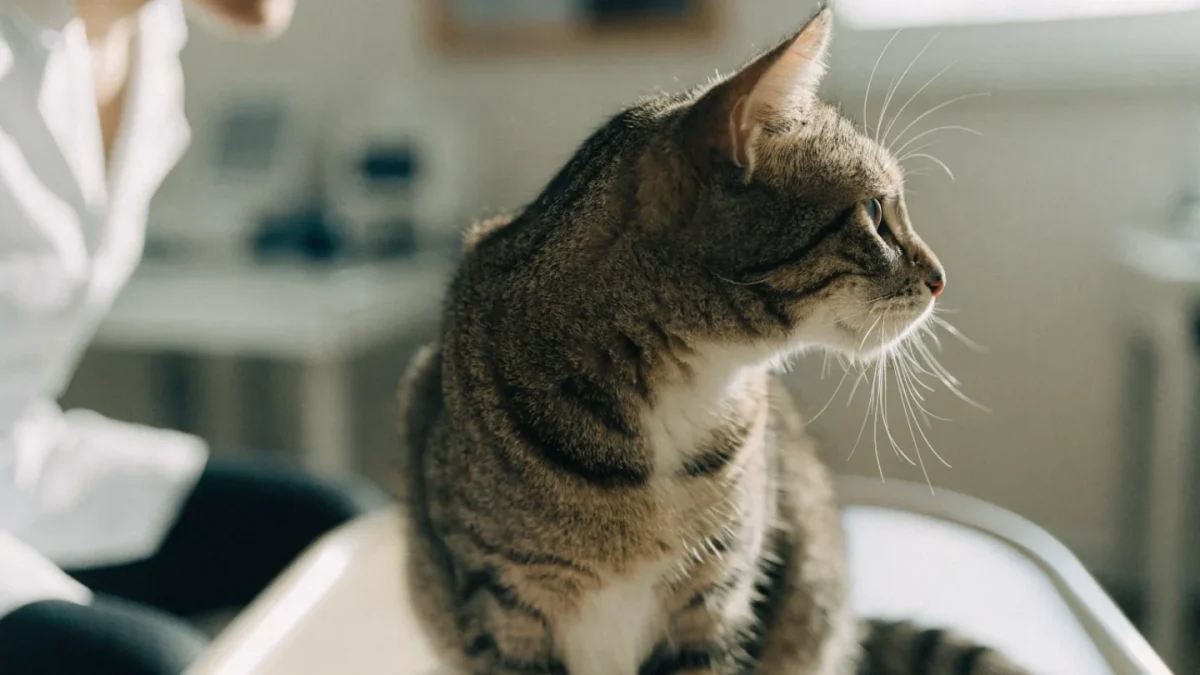
Cats are often the animals whose vaccine conversations are most nuanced — not because feline diseases are less serious, but because the indoor-outdoor lifestyle split makes risk assessment more variable. A cat who never goes outside, never encounters other cats, and lives in a single-pet household has genuinely different exposure risks than a barn cat or a cat who roams outdoors.
The core vs. non-core framework helps clarify where the universal baseline sits and where individual circumstances take over.
Core Vaccines for Cats
Core vaccines are those recommended for all cats regardless of lifestyle. The universality of the recommendation comes from the fact that these diseases are either widespread enough that exposure risk is nearly universal, severe enough that protection is always warranted, or legally required.
FVRCP: The Feline Core Combination
The FVRCP vaccine is the cornerstone of feline vaccination. The acronym refers to:
- FVR — Feline Viral Rhinotracheitis (Feline Herpesvirus Type 1)
- C — Calicivirus
- P — Panleukopenia (Feline Parvovirus)
Together, these three pathogens cause the most common and serious infectious diseases of domestic cats. For the full clinical breakdown of each disease and how the vaccine provides protection, what the FVRCP vaccine protects against covers the mechanisms in detail.
Herpesvirus: Feline herpesvirus causes upper respiratory disease — sneezing, nasal discharge, eye inflammation — and establishes lifelong latent infection. The virus reactivates during stress or immunosuppression, causing recurrent symptoms throughout the cat's life. Vaccination doesn't prevent infection entirely but significantly reduces disease severity and viral shedding.
Calicivirus: Another major cause of upper respiratory and oral disease in cats. Multiple strains circulate; the vaccine provides protection against the most common and virulent strains. Chronic carrier cats can spread calicivirus to unvaccinated animals.
Panleukopenia: Feline panleukopenia virus (feline parvovirus) is closely related to canine parvovirus and causes similar destruction of the intestinal lining and bone marrow. In kittens, mortality can be very high without treatment. The vaccine is highly effective.
Vaccination schedule:
- Kitten series: doses at 6–8, 10–12, and 14–16 weeks
- First adult booster: one year after completing the kitten series
- Ongoing adult boosters: every three years for low-risk adult cats, as per current WSAVA and FelineVMA (formerly AAFP) guidelines. The triennial schedule reflects evidence that core FVRCP vaccines provide protection lasting at least three years in adult cats.
Rabies
Rabies vaccination is legally required for cats in many jurisdictions, and is a core recommendation in feline vaccination guidelines globally. Cats are among the most frequently reported domestic animals with rabies in some countries.
The recommendation to use non-adjuvanted rabies vaccines in cats deserves emphasis. Vaccine-associated sarcoma — a locally invasive, often aggressive tumor — can develop at injection sites in cats, and adjuvanted vaccines have historically been associated with higher risk. Non-adjuvanted recombinant rabies vaccines are now available and are strongly preferred in feline medicine due to this safer profile.
Timing and booster schedules vary by product and local regulation, but typically follow a pattern of:
- Initial vaccine at 12–16 weeks
- Booster at one year
- Subsequent boosters annually or every three years depending on product and legal requirements
The Indoor Cat Question
Many indoor cat owners ask whether their cat really needs vaccines if she never goes outside. The honest answer is: mostly yes, with some nuance.
For FVRCP: even indoor cats can be exposed. Herpesvirus and calicivirus are shed in respiratory secretions and can survive briefly on surfaces. A visit from a friend whose cat has calicivirus, an indoor/outdoor visitor cat, or even contaminated shoes from walking through an area with feral cats can introduce respiratory pathogens to an indoor cat. Panleukopenia virus is environmentally robust enough that exposure through indirect contact is plausible.
For rabies: legal requirements often apply regardless of indoor/outdoor status. A bat inside a home — which happens more commonly than most people expect — is a genuine rabies exposure risk even for a fully indoor cat.
There are genuine arguments for reducing booster frequency in completely isolated, older indoor cats with documented vaccination histories. This is a conversation worth having with your vet, not a unilateral decision.
Non-Core Vaccines for Cats
Feline Leukemia Virus (FeLV)
FeLV is a retrovirus spread primarily through close contact — grooming, sharing food bowls, bite wounds, and from mother to kittens. It causes immunosuppression, lymphoma, and anemia, and is ultimately fatal in most persistently infected cats.
Current FelineVMA (formerly AAFP) guidelines consider FeLV vaccination core for all kittens under one year, because young cats have high social exposure and their adult lifestyle may not be established yet at the time vaccination decisions are made. For adult cats, FeLV vaccine is recommended for those with outdoor access or exposure to cats of unknown FeLV status.
Testing for FeLV before vaccination is recommended, as vaccination of already-infected cats doesn't provide benefit.
Duration of immunity: one to three years depending on the product; most cats with outdoor exposure receive annual vaccination.
Feline Immunodeficiency Virus (FIV)
FIV is spread primarily through bite wounds between cats — intact males who fight are the highest-risk population. An FIV vaccine exists in some markets, but its use is complicated by a significant practical problem: vaccinated cats test positive on standard FIV antibody tests, making it difficult to determine whether a positive result reflects vaccination or true infection.
For this reason, many feline medicine specialists recommend against routine FIV vaccination except in very specific, well-defined high-risk scenarios, and prefer management through neutering (to reduce fighting) and keeping cats indoors.
Bordetella and Chlamydophila
Bordetella bronchiseptica and Chlamydophila felis can both contribute to feline upper respiratory disease. Vaccines exist for both and are primarily recommended in:
- Multi-cat households or catteries with active respiratory disease problems
- Shelters
- Cats who board frequently
These are not routine vaccines for single-cat or low-exposure households.
Vaccine-Associated Sarcoma in Cats
Injection-site sarcoma deserves explicit mention in any discussion of feline vaccination. These are locally aggressive, malignant tumors that develop at vaccine injection sites in a small proportion of cats. Current estimates of incidence range from approximately 1 in 1,000 to 1 in 10,000 vaccine doses, with higher risk associated with adjuvanted vaccines compared to non-adjuvanted or recombinant products.
Because of this risk:
- Non-adjuvanted vaccines are preferred where available
- Injection sites are standardized (distal limb or lateral body wall rather than interscapular space) to allow surgical excision if needed
- Any lump persisting more than a month at an injection site should be evaluated by a vet
The risk does not negate the benefit of vaccination for most cats — the diseases prevented are severe. But it's a real consideration that justifies using non-adjuvanted products and appropriate injection site practices.
For the full context on managing vaccine reactions and what to watch for, vaccine reactions and side effects in cats covers everything from mild soreness to injection-site sarcoma monitoring. And the complete pet vaccination guide covers both dogs and cats for owners with multi-species households.