

A nine-year-old beagle named Pepper came in last fall because her owner noticed she'd started coughing every night around 2 a.m. Not during walks, not during meals — just in the quiet hours when everyone was sleeping. Her owner almost dismissed it as "something she ate." Three weeks later, Pepper was diagnosed with early-stage congestive heart failure, and that nighttime cough was the only warning sign.
Breathing problems in pets span a huge range — from the harmless reverse sneeze that sounds like your dog is choking on air to genuine emergencies where every second counts. The tricky part is that pets are remarkably good at hiding respiratory distress until they can't compensate anymore. By the time a cat is open-mouth breathing or a dog refuses to lie down because it can't catch a breath, you're often dealing with something that's been building for weeks or months.
I've spent a lot of my career paying attention to how animals breathe. It sounds simple, but respiratory rate and effort tell me more about a patient's overall status than almost any other single observation.
How Normal Breathing Actually Looks
Before you can spot a problem, you need a baseline. A healthy dog at rest breathes 15 to 30 times per minute. Cats fall in a similar range, roughly 20 to 30. Panting in dogs after exercise or on warm days is normal. Panting in cats is almost never normal — and that distinction matters enormously.
Normal breathing is quiet and effortless. The chest expands gently, the abdomen doesn't heave, and the nostrils don't flare. I ask clients to count their pet's resting respiratory rate while the animal is asleep — it removes the anxiety variable and gives a true baseline. If your dog or cat consistently breathes over 40 times per minute at rest, that's worth investigating even if they seem fine otherwise.
One thing I've learned to watch for: the pause between breaths. Healthy animals have a rhythmic, relaxed pattern. When that rhythm gets interrupted — short gasps, long pauses, irregular cadence — something is off even if the rate itself looks normal.
Upper Respiratory Problems
Upper respiratory issues affect the nose, throat, sinuses, and trachea. They're the pet equivalent of a head cold in many cases, though they can be more serious.
Dogs commonly present with kennel cough (infectious tracheobronchitis), which produces a harsh, honking cough that sounds worse than it usually is. Most cases resolve on their own within a couple of weeks, but I've seen straightforward kennel cough turn into pneumonia in puppies and senior dogs with weakened immune systems. Nasal discharge — clear, yellow, green, or bloody — always warrants a closer look, because the cause could be anything from a foxtail stuck up the nose to a nasal tumor.
Cats are upper respiratory infection magnets, especially in shelters and multi-cat environments. Feline herpesvirus and calicivirus account for the vast majority of cases. Sneezing, watery eyes, nasal congestion, and loss of appetite are the classic signs. Most cats bounce back, but chronic infections can develop, and I've treated cats that never fully shook their herpesvirus symptoms. One particular orange tabby, Felix, had been sneezing daily for six years by the time his owner brought him to me — turns out he had chronic rhinitis secondary to a calicivirus infection he'd picked up as a kitten.
Lower Respiratory Disease
Lower respiratory problems involve the bronchi, lungs, and pleural space. These tend to be more serious than upper respiratory issues and often require diagnostic imaging to sort out.
Pneumonia — bacterial, viral, fungal, or aspiration — causes rapid breathing, fever, lethargy, and sometimes coughing up colored mucus. Aspiration pneumonia deserves special mention because it happens when food, water, or vomit enters the lungs. Dogs with megaesophagus, those under anesthesia recovery, and brachycephalic breeds are at higher risk. I've seen aspiration pneumonia develop within hours of a dog vomiting while sedated, and it can progress from mild breathing changes to critical in a day.
Feline asthma affects an estimated 1 to 5 percent of cats and looks a lot like human asthma — wheezing, coughing (which in cats often looks like they're trying to hack up a hairball), and episodic breathing difficulty. Read our guide to common cat health problems for detailed information. It's a condition I diagnose fairly often, and the confusion between "just hairballs" and actual asthma episodes delays treatment more than I'd like.
Pleural effusion — fluid accumulating around the lungs — is one of the more dramatic presentations. A cat or dog with significant pleural effusion can't expand their lungs fully, so they breathe rapidly and shallowly, often with an anxious expression. The underlying causes range from heart failure to cancer to infections, and identifying the type of fluid is critical for determining treatment.
Brachycephalic Breeds: A Special Category
Flat-faced breeds — Bulldogs, Pugs, French Bulldogs, Persian cats, Himalayans — live with some degree of respiratory compromise their entire lives. Brachycephalic airway syndrome encompasses elongated soft palates, stenotic nares (narrowed nostrils), everted laryngeal saccules, and sometimes a hypoplastic trachea.
I won't pretend I don't have strong feelings about this. Many of these dogs snore, snort, and struggle to regulate their body temperature, and a significant portion need surgical correction to breathe adequately. The sound that many owners describe as "cute snoring" is often the sound of a partially obstructed airway.
That said, I work with brachycephalic breeds constantly, and the goal isn't to guilt owners — it's to recognize the signs of worsening obstruction and intervene before an emergency. Heat, exercise, stress, and weight gain all make brachycephalic airway problems worse. I had a client whose English Bulldog collapsed at a backyard barbecue last July — the combination of heat, excitement, and moderate obesity pushed a manageable condition into a crisis.
When Breathing Changes Signal an Emergency
Some respiratory signs demand immediate veterinary attention. Not tomorrow morning, not after a wait-and-see period. Now.
Open-mouth breathing in cats is the one I emphasize most with cat owners. Cats don't pant like dogs. A cat breathing with its mouth open, sides heaving, is in distress. I don't care if it just happened once — call your vet.
Blue or purple-tinged gums (cyanosis) mean oxygen isn't getting where it needs to go. If you lift your pet's lip and the gums look blue-gray instead of pink, you're dealing with severe oxygen deprivation.
Extended neck posture is another red flag. Dogs and cats that stretch their neck forward and brace their front legs apart are trying to open their airway as much as possible. It's an instinctive posture that says breathing is difficult.
Sudden collapse with breathing difficulty — whether from a traumatic injury, an allergic reaction, or an internal emergency like a diaphragmatic hernia — needs triage immediately. Don't try to diagnose this at home.
Rapid, shallow breathing at rest that doesn't resolve within a few minutes, especially in a pet that was fine an hour ago, should prompt at least a phone call to your veterinary clinic. I'd rather get a call that turns out to be nothing than miss the early window on something like congestive heart failure or a pneumothorax.
Diagnostic Tools Your Vet Will Use
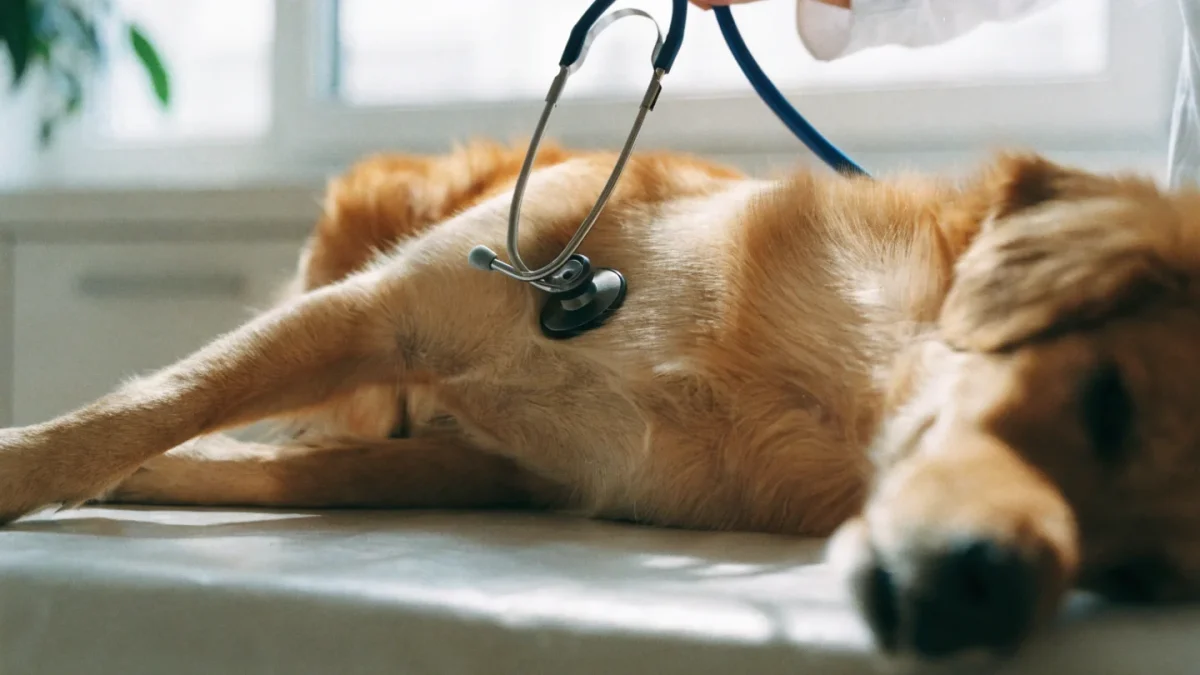
When a pet comes in with breathing problems, I'm simultaneously assessing severity and working through a mental diagnostic tree. The first thing I do is listen — auscultation with a stethoscope tells me whether lung sounds are normal, diminished, harsh, or accompanied by crackles and wheezes. Where abnormal sounds are located matters just as much as what they sound like.
Chest X-rays are the workhorse of respiratory diagnostics. They reveal fluid, masses, heart enlargement, pneumonia patterns, and tracheal abnormalities. I've had cases where the X-ray completely changed my differential list — a dog I suspected had bronchitis turned out to have a large mediastinal mass.
Blood work, including a complete blood count and chemistry panel, helps identify infection, inflammation, and organ involvement. Arterial blood gas analysis measures oxygen and carbon dioxide levels directly, though it's more commonly used in emergency and critical care settings.
Advanced diagnostics — CT scans, bronchoscopy, transtracheal washes, and thoracocentesis (drawing fluid from the chest) — come into play when initial testing doesn't provide clear answers or when specific sampling is needed for treatment planning.
Living With a Pet Who Has Chronic Respiratory Issues
Some respiratory conditions are curable. Many are manageable. A few are progressive. Knowing which category your pet falls into shapes everything from daily routines to long-term expectations.
Cats with well-controlled asthma can live normal lifespans with inhaled corticosteroids. Dogs with mild tracheal collapse often do fine with weight management, cough suppressants as needed, and harness use instead of neck collars. Brachycephalic breeds that undergo corrective surgery often have dramatically improved quality of life.
The monitoring piece is where owners make the biggest difference. I teach clients to count resting respiratory rates at home — it's the single most useful thing you can do between vet visits. Any sustained increase over your pet's normal baseline is worth reporting. And keeping a log of coughing episodes, including time of day, triggers, and severity, gives me far more useful information than "she coughs sometimes."
Weight management comes up in nearly every respiratory case I handle. Extra weight around the chest and abdomen makes breathing harder. Period. A dog or cat that loses even a modest amount of excess weight often shows measurable improvement in respiratory effort.
Frequently Asked Questions
Why does my dog cough after drinking water?
Post-drinking cough is common in dogs with tracheal sensitivity — tracheal collapse, tracheitis, or even just an overly enthusiastic drinking style that splashes water toward the windpipe. If it happens occasionally and resolves in a few seconds, I'm not worried. If every drink triggers a coughing fit, especially in a small or toy breed, I want to evaluate the trachea.
My cat sounds congested but is eating fine. Should I worry?
Chronic nasal congestion in cats is surprisingly common, especially in cats that had upper respiratory infections as kittens. If your cat is eating, active, and the discharge is clear, it may be a chronic condition that doesn't require aggressive treatment. But if the discharge turns yellow or green, if appetite drops, or if you notice mouth breathing, get them checked. I've seen "just a stuffy nose" turn out to be a nasal polyp or even a nasal lymphoma in older cats.
Is reverse sneezing dangerous?
In the vast majority of cases, no. Reverse sneezing is a spasmodic episode where the dog rapidly inhales through the nose, producing a snorting or honking sound that can last 10 to 30 seconds. It looks alarming but resolves on its own. Gently covering one nostril or offering water can sometimes shorten an episode. That said, if reverse sneezing becomes very frequent — multiple times daily — I want to rule out nasal mites, allergies, or nasal masses.
Can secondhand smoke affect my pet's lungs?
Yes, and the data on this has gotten harder to ignore. Studies published in the American Journal of Epidemiology found that cats living with smokers were more than three times as likely to develop malignant lymphoma, and they also face elevated risk of oral squamous cell carcinoma. In dogs, research has linked smoking household exposure to increased rates of nasal and sinus cancer in long-muzzled breeds and lung cancer in short-muzzled breeds. Birds are extremely sensitive to airborne irritants and can develop severe respiratory distress from smoke exposure.
How can I tell if my pet is breathing too fast at rest?
Count the number of times your pet's chest rises and falls in 15 seconds while they're sleeping, then multiply by four. That gives you breaths per minute. For dogs, anything consistently above 30 at rest is worth noting. For cats, above 30 to 36. If you're getting counts above 40 to 50 in a sleeping pet, contact your vet — this can be an early indicator of heart disease, fluid accumulation, or pain.