

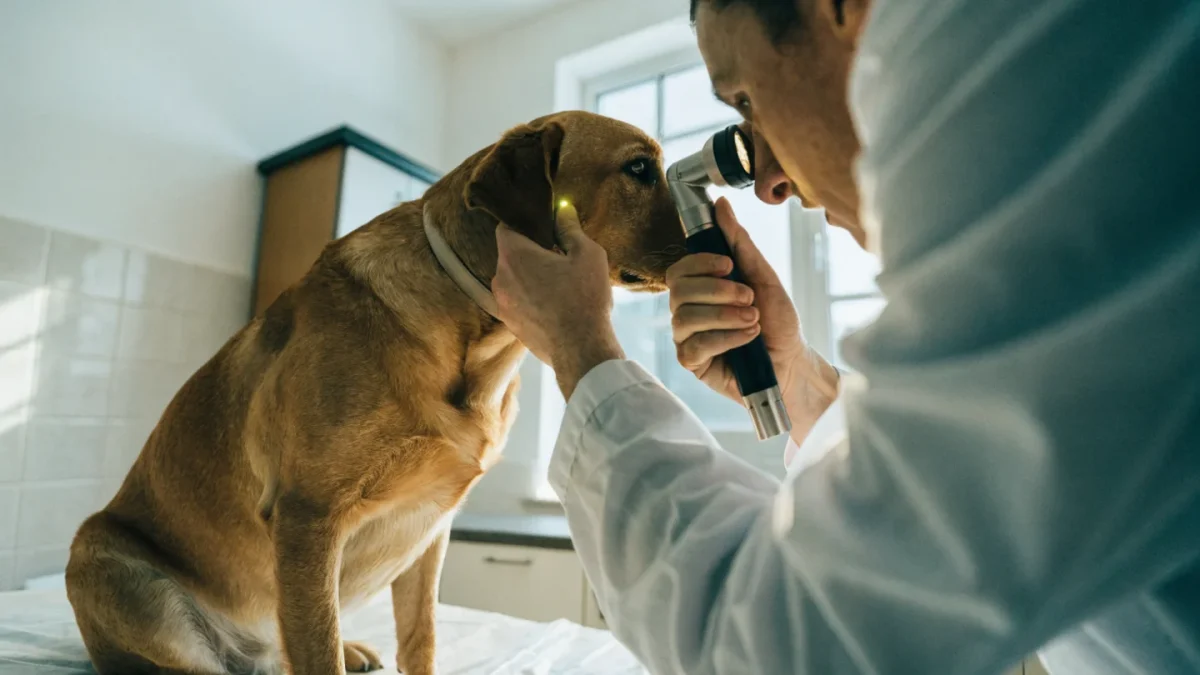
Ear problems are one of the most common reasons dogs visit the vet, and they're not rare in cats either. Head shaking, scratching, an unpleasant smell, brown discharge — these are familiar signs to many pet owners. What's less familiar to most owners is why ear infections keep coming back, and what actually determines whether the treatment sticks.
The answer almost always has to do with the underlying cause.
How the Ear Canal Works — and Why It Gets Infected
The ear canal in dogs and cats runs first vertically downward from the ear opening, then turns at roughly a right angle to run horizontally toward the eardrum. This L-shaped configuration creates a warm, humid environment that's difficult to ventilate — particularly in dogs with pendulous (floppy) ear flaps.
Healthy ear canals have a natural self-cleaning mechanism through wax migration and a mildly acidic environment that discourages microbial growth. When this balance is disrupted — by moisture, by anatomy that restricts airflow, by allergic inflammation, or by physical damage — bacteria and yeast proliferate.
This is why treatment alone rarely solves chronic ear problems. The environment that allowed the infection to develop in the first place is still there.
Otitis Externa: The Most Common Ear Problem in Dogs
Otitis externa is inflammation and infection of the outer ear canal. It's one of the top five reasons dogs come in, particularly during certain seasons.
Signs
- Head shaking or tilting
- Scratching at the ear or pawing at the face
- Odor from the ear (can range from musty to distinctly foul)
- Discharge: color and consistency vary (dark brown waxy material, yellow or green purulent discharge)
- Redness and swelling of the ear canal opening
- Pain when the ear is touched — some dogs cry out or snap when the ear is handled
- Behavioral changes: less willing to be petted around the head
One or both ears may be affected. In dogs with chronic problems, the ear canal lining can become thickened over time (hyperplasia), narrowing the canal and making it more difficult to treat.
What Causes Otitis Externa
Infections don't appear spontaneously — they occur because something created conditions for them. Identifying the predisposing factor is essential.
Allergies are the single most common underlying cause of recurrent ear infections in dogs. Both food allergies and environmental (atopic) allergies cause inflammation in the ear canal lining, disrupting the normal protective environment. A dog that comes in with its third ear infection in a year almost certainly has an allergy driving it.
Anatomical predisposition includes pendulous ear flaps (restricts airflow), narrow ear canals (some small breeds), and excess hair in the canal.
Moisture — from bathing, swimming, or humid environments — raises canal humidity and disrupts the pH balance.
Foreign bodies — grass seeds particularly — can lodge deep in the canal, cause intense pain, and drive infection. These require physical removal under sedation in many cases.
Ear mites in cats, and occasionally dogs, cause intense inflammation that predisposes to secondary infection.
Treatment
Treatment involves cleaning the ear canal to remove debris and discharge (which inactivates topical medications if not cleared first), followed by topical medications targeting the specific organisms present. Ear swabs examined under a microscope help identify whether bacteria (rods or cocci), yeast (Malassezia), or a combination is present — this guides medication choice.
Severe or chronic cases may require systemic antibiotics or antifungals. Deep ear infections with significant canal thickening may benefit from a corticosteroid component to reduce inflammation.
Ear Infections in Cats
Cats develop ear infections less often than dogs. When they do, the cause profile differs.
Ear mites account for a substantial proportion of feline ear disease, particularly in young outdoor cats. The dark, crumbly discharge and intense itching are characteristic. For a detailed look at ear mites in cats and dogs, including how to treat all pets in the household simultaneously, see the dedicated article.
Bacterial and yeast otitis in cats does occur, often secondary to allergies or as a complication of a chronic polyp or foreign body. Cats with otitis can be more difficult to examine and treat than dogs — they're less tolerant of ear handling, and the underlying causes can be less straightforward.
Otitis Media and Interna: When It Goes Deeper
When infection progresses through the eardrum into the middle ear (otitis media) and beyond to the inner ear (otitis interna), the clinical picture changes significantly.
Signs of middle and inner ear involvement include:
- Head tilt (tilting toward the affected side)
- Loss of balance or falling/circling
- Abnormal eye movements (nystagmus — the eyes rapidly flick back and forth)
- Nausea or vomiting
- Facial nerve paralysis in some cases (drooping of one side of the face)
This is a more serious condition requiring systemic antibiotics (often for four to eight weeks), and in some cases surgical intervention. Vestibular signs can be distressing for both the pet and their owner, but many animals improve substantially with treatment.
Knowing the difference between how to tell ear mites from an ear infection is a useful starting point — but any time vestibular signs are present, veterinary assessment is urgent.
Ear Hematomas
An aural hematoma is a collection of blood between the skin and cartilage of the ear flap, caused by rupture of blood vessels — usually from vigorous and repeated head shaking or ear scratching. The ear pinna becomes swollen, soft, and fluctuant (fluid-filled). It looks alarming but is not immediately dangerous.
Treatment involves draining the hematoma and either suturing the ear flat to prevent re-accumulation, or placing a drain. Most importantly, the underlying cause of the head shaking — almost always an ear problem — must be treated simultaneously, or the hematoma will recur.
Untreated hematomas gradually fibrose and can cause permanent "cauliflower ear" deformity of the pinna.
Chronic Ear Disease
Some dogs develop chronic, recurrent, or treatment-resistant ear disease. This represents a significant challenge and usually requires a systematic approach:
- Cytology at each visit to track what organisms are present and whether the infection type changes over time
- Culture and sensitivity testing when organisms don't respond to standard treatments
- Deep ear investigation — visual inspection under sedation, and sometimes imaging — to rule out polyps, foreign bodies, tumors, or middle ear involvement
- Allergy investigation — skin testing or elimination diet trials to identify the underlying allergic driver
- Long-term management planning — some dogs require regular professional ear cleaning rather than home management alone
In very severe refractory cases, total ear canal ablation (TECA) surgery is sometimes performed, removing the diseased canal entirely. This resolves the infection problem but affects hearing. It's a last resort.
When to See Your Vet
See a vet for any ear problem involving:
- Visible redness, discharge, or odor
- Head shaking for more than a day or two
- Any sign of pain when the ear is touched
- Head tilt or balance problems (urgent)
- A swollen ear flap
Home treatment without a diagnosis — including using leftover ear medication from a previous infection — risks masking the condition and allowing it to worsen. For an overview of the broader eye and ear health in pets picture, including what normal looks like and prevention strategies, see the comprehensive pillar guide.
Frequently Asked Questions
Why does my dog keep getting ear infections?
Recurring ear infections almost always have an underlying cause — most often allergies. If your dog has had two or more ear infections in a year, it's worth asking your vet specifically about allergy testing or an elimination diet trial. Treating each infection in isolation without addressing the underlying cause is a cycle most dogs never escape.
Can I use human ear drops for my dog's ear infection?
No. Human ear formulations are not tested or approved for the veterinary ear canal, and some ingredients may be harmful. Several commonly available human ear drops contain components that can damage the inner ear if the eardrum has been perforated — which often can't be confirmed without a veterinary examination.
How do I know if my cat's head tilt is from an ear infection or something neurological?
In most cases, a head tilt with ear discharge or scratching has an ear cause. A sudden head tilt with no ear symptoms, severe imbalance, or rapid eye flickering (nystagmus) can indicate vestibular disease or a neurological problem. Both warrant prompt veterinary attention — the distinction requires examination and sometimes imaging.
Should I clean my dog's ears regularly even if there's no problem?
For most dogs with healthy ears and no history of infections, routine cleaning is unnecessary and may actually be counterproductive by removing the natural protective wax layer. Dogs that are prone to infections, have floppy ears, or swim frequently may benefit from regular cleaning — ask your vet for a specific recommendation based on your dog's history and anatomy.