

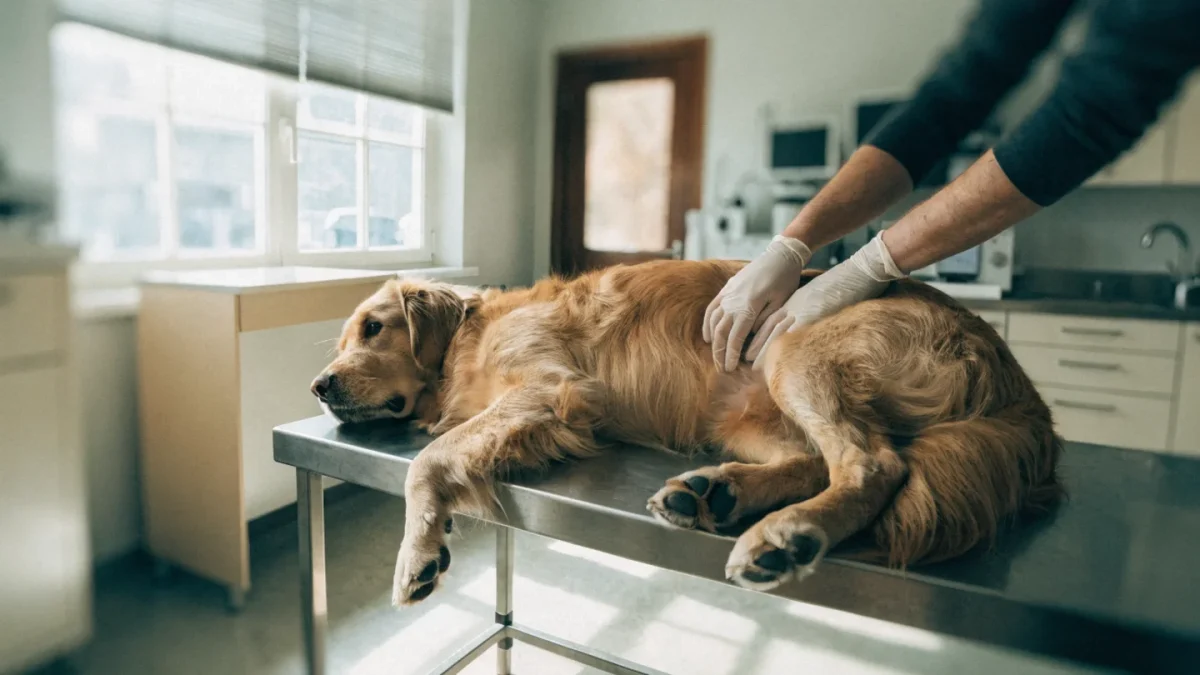
A client came in recently with a seven-year-old Labrador — a dog she'd owned since puppyhood and described as "always healthy." He'd been drinking more water than usual for about three weeks. She'd noticed but chalked it up to the warmer weather. By the time she brought him in, he had early-stage diabetes. We caught it in time to manage well, but the delay cost him. She felt terrible about it. I told her what I tell every owner: dogs can't tell us when something's wrong. We have to know what to look for.
The most common dog health problems include ear infections, skin allergies, dental disease, obesity, and arthritis. More serious conditions like bloat, diabetes, and hip dysplasia are also frequently diagnosed. Catching problems early — before symptoms become severe — is the most important thing an owner can do.
This guide walks through the conditions I see most often in practice, what the warning signs look like, and what tends to happen if they're left untreated. Think of it as a reference you can come back to, not a replacement for hands-on veterinary care.
Ear Infections
Ear infections (otitis externa) rank among the top reasons dogs visit veterinary clinics. Dogs have an L-shaped ear canal that traps moisture, debris, and wax — an ideal environment for bacteria and yeast to thrive.
Warning signs: Head shaking, scratching at one or both ears, odor from the ear canal, dark or reddish-brown discharge, and visible redness when you look inside. Some dogs become head-shy — reluctant to be touched around the face — when their ears hurt.
Which dogs are most affected: Floppy-eared breeds (Cocker Spaniels, Basset Hounds, Poodles) and dogs who swim frequently are at higher risk. Allergies — particularly food sensitivities — are a significant underlying cause that gets missed. If a dog is having recurrent ear infections, I always ask about diet.
What happens without treatment: Chronic infections can damage the ear canal and lead to permanent narrowing (stenosis). Severe untreated cases sometimes require surgical intervention. This is a condition where early treatment pays off enormously.
Dental Disease
By age three, most dogs have some degree of periodontal disease. That's not a scare statistic — it's the clinical reality. Plaque accumulates on teeth, hardens into tartar, and progressively damages the gum tissue and bone that anchor the teeth.
Warning signs: Owners often notice bad breath first. Other signs include drooling more than usual, dropping food while eating, favoring one side of the mouth, and reluctance to chew hard food or toys. Visible brown or yellow buildup on the teeth is tartar, not just staining.
The systemic risk: Periodontal bacteria don't stay in the mouth. A 2019 study in The Veterinary Journal found that for each square centimeter of periodontal disease burden, dogs had a 1.4 times higher likelihood of greater heart valve changes, and 1.2 and 1.4 times higher likelihood of liver and kidney pathology respectively. The exact mechanisms are still being studied, but bacteremia — bacteria traveling through the bloodstream — appears to drive much of the organ damage. This is why regular dental cleanings under anesthesia matter beyond just fresh breath.
At home: Daily tooth brushing with a pet-safe toothpaste is the gold standard for prevention. Even a few times a week makes a meaningful difference. Dental chews can supplement but shouldn't replace mechanical brushing.
Skin Allergies and Dermatitis
Allergies are among the most frustrating conditions I manage in practice — frustrating for owners, frustrating for dogs, and honestly sometimes frustrating for me. Unlike humans who typically sneeze and get watery eyes, dogs usually express allergies through their skin: itching, redness, recurrent hot spots, and chronic ear and paw infections.
Triggers fall into three categories:
- Environmental allergens — pollen, dust mites, mold spores (atopic dermatitis)
- Food sensitivities — often proteins like chicken, beef, or dairy, though any ingredient can trigger a reaction
- Contact allergens — less common, typically from plants, cleaning products, or bedding materials
For a deeper look at the different triggers and how they're diagnosed, the section on chronic conditions like allergies and obesity covers this in much more detail.
Diagnosis takes time: Food allergies require an elimination diet trial lasting 8 to 12 weeks — no shortcuts. Environmental allergies are diagnosed by ruling out other causes and, sometimes, via intradermal (skin prick) testing. Many dogs need long-term management rather than a cure.
Obesity
This is the health problem I see most in general practice, and it's largely preventable. The 2022 Pet Obesity Prevalence Survey found that 59% of dogs seen in veterinary practice were classified as overweight or having obesity — up from 56% in earlier surveys. The numbers vary somewhat by study methodology, but the trend is consistent and concerning.
What it causes: Excess weight accelerates joint degeneration (particularly in dogs already predisposed to hip dysplasia), worsens breathing problems in brachycephalic breeds, increases the risk of diabetes, and strains the heart and kidneys. An overweight dog is not a healthy dog, however much they might be a loved one.
Assessing body condition: Run your hands along your dog's ribcage. You should be able to feel the ribs without pressing hard, but they shouldn't be visible. A healthy dog viewed from above has a visible waist — a narrowing between the ribs and hips. If there's no waist and the ribs are buried under fat, the dog is overweight.
The fix is simple, the execution isn't: Measured portions (not free feeding), reduced treats, and consistent exercise. Your vet can calculate a target caloric intake based on your dog's ideal body weight, not their current weight.
Arthritis and Joint Disease
Osteoarthritis is a degenerative condition and one of the most common causes of chronic pain in older dogs. It develops when the cartilage cushioning joint surfaces breaks down, leading to bone-on-bone friction, inflammation, and pain. Most dogs over seven have some degree of it, though the severity varies enormously.
Warning signs owners often miss: Slowing down on walks, reluctance to use stairs, difficulty getting up from lying down, stiffness after rest, and irritability when touched around the hips or back legs. Dogs rarely limp dramatically until pain is severe — they compensate by shifting weight subtly.
Breed predispositions: Large breeds and those with known structural issues (German Shepherds, Labrador Retrievers, Rottweilers) are at higher risk, but small breeds develop arthritis too — particularly in their stifles (knees) and spines.
Management: There's no reversing osteoarthritis, but it's highly manageable. Weight control is the single most impactful intervention. Veterinary-prescribed anti-inflammatory medications provide meaningful pain relief. Physical therapy, hydrotherapy, and joint supplements (look for evidence-based ingredients like omega-3 fatty acids) add further quality of life.
Gastrointestinal Problems
Vomiting and diarrhea are the veterinary equivalent of a common cold — extremely common, usually self-limiting, occasionally the sign of something serious. The challenge is knowing which you're dealing with.
Acute, self-limiting GI upset: A single vomiting episode after a dog eats something inappropriate, or a day of loose stools after a diet change, usually resolves on its own with a brief bland diet (plain cooked protein with plain cooked rice or plain boiled potato). Most otherwise healthy adult dogs bounce back within 24 to 48 hours.
When to worry: Blood in vomit or stool, vomiting more than twice in 12 hours, lethargy alongside GI symptoms, a distended or obviously painful abdomen, or any GI symptoms in a puppy or elderly dog. These warrant a veterinary call the same day.
Chronic GI issues — intermittent vomiting, loose stools that never fully normalize, weight loss despite eating — suggest conditions like inflammatory bowel disease, food intolerance, or parasites. These need workup, not waiting.
Metabolic Conditions: Diabetes, Cushing's, and Hypothyroidism
These three conditions share something important: they're all manageable with the right diagnosis, and they're all frequently missed because their early signs look like "just getting older."
Diabetes: Increased thirst and urination, increased appetite, weight loss despite eating, cloudy eyes (cataracts develop quickly in diabetic dogs). Diabetes requires daily insulin injections and dietary management — it's a commitment, but most families do it successfully.
Cushing's disease (hyperadrenocorticism): Caused by the body producing excess cortisol, usually from a pituitary or adrenal tumor. Signs include increased thirst, urination, and appetite, a pot-bellied appearance, thinning skin, hair loss, and muscle weakness. It's gradual and easy to attribute to aging.
Hypothyroidism: An underactive thyroid gland that slows metabolism. Dogs gain weight without eating more, become lethargic, intolerant of cold, and often develop a dull, dry coat. Hypothyroidism is more common in certain breeds — Dobermans, Golden Retrievers, Boxers — and is readily managed with daily oral medication.
For owners who want to understand these three conditions in depth, the article on dog metabolic conditions covers diagnosis and management in detail.
Acute Emergencies
Some conditions require emergency veterinary care within hours — not the next available appointment. Every dog owner should know what these look like.
Bloat (Gastric Dilatation-Volvulus): The stomach fills with gas and can twist on itself, cutting off blood supply. It can kill within hours. Signs include a distended belly, unproductive retching (trying to vomit but nothing comes up), restlessness, and rapid deterioration. This is a surgical emergency.
Severe pancreatitis: Inflammation of the pancreas that causes intense abdominal pain, vomiting, lethargy, and loss of appetite. High-fat meals are a common trigger. Dogs need IV fluids and pain management.
Urinary obstruction: More common in males, characterized by straining to urinate with little or no output, crying when trying to urinate, and licking at the urinary area. A complete blockage is life-threatening within 24 to 48 hours.
The article on acute emergencies including bloat and pancreatitis covers what to do and how to recognize these situations clearly.
Pain: The Hidden Problem
Dogs hide pain. This is not mythology — it's an evolutionary survival mechanism. A dog showing obvious weakness in the wild is a target. That instinct doesn't disappear in domestic dogs.
The signs of pain in dogs are often behavioral rather than physical: withdrawal from interaction, reluctance to be touched in specific areas, changes in facial expression (a furrowed brow, squinting, pulled-back ears), changes in posture, and reduced activity. The subtle signs that a dog is in pain is one of the most important things an owner can learn to recognize.
Preventive Care: The Foundation
Most of the conditions above are either prevented by good routine care or caught early enough to manage well when owners stay on top of annual (or biannual, for senior dogs) veterinary visits.
Core preventive measures:
- Annual wellness exams — the vet catches things owners don't
- Parasite prevention — fleas, ticks, heartworm, intestinal worms
- Vaccinations — core vaccines protect against serious infectious diseases
- Dental hygiene — daily or frequent brushing
- Weight management — the highest-impact single intervention
- Age-appropriate bloodwork — baseline values help detect changes early
After age seven, I recommend twice-yearly exams for most dogs. Things change faster than people expect, and early detection is the difference between managing a condition and crisis care.
FAQ
What are the first signs a dog is getting sick?
Changes in behavior are often the earliest indicator — a normally social dog becoming withdrawn, reduced appetite, or drinking more or less water than usual. Physical signs like lethargy, changes in coat quality, and altered bathroom habits follow. Any significant change from a dog's normal baseline is worth noting.
How do I know if my dog's health problem is serious or minor?
Severity markers include: complete loss of appetite lasting more than 24 hours, inability to keep water down, bloody vomit or diarrhea, obvious pain or distress, difficulty breathing, collapse, or a dog who seems "just not right" in a way you can't pinpoint but can't shake. When in doubt, call your vet — that's what they're there for.
Which dog breeds are most prone to health problems?
Breeds with extreme conformations (flat-faced breeds like Bulldogs and Pugs, giant breeds like Great Danes, and heavily folded skin breeds like Shar-Peis) carry higher baseline health risks. Mixed-breed dogs sometimes have lower rates of inherited conditions, though this varies considerably. Any responsible breeder should screen for the conditions known to affect their breed.
At what age do dogs start having health problems?
This varies by breed and size. Giant breeds age faster — a seven-year-old Great Dane is geriatric. Small breeds are often spry until 10 or older. Joint disease, dental disease, and metabolic conditions tend to emerge in middle age (5-8 for large breeds, 7-10 for small breeds). Puppies have their own vulnerabilities: parvovirus, parasites, and developmental orthopedic conditions.
How much do common dog health problems cost to treat?
Costs vary enormously by condition, location, and whether the problem is caught early. Ear infections might cost the price of a vet visit and medication. Bloat surgery can run into thousands. Pet insurance is worth considering early — most policies exclude pre-existing conditions, so coverage is most comprehensive when you start before problems develop.
When to see your vet: Any significant change in your dog's behavior, appetite, water intake, or bathroom habits that persists more than 24 hours warrants a call. Emergencies — unproductive retching, difficulty breathing, collapse, obvious severe pain — require a same-day or emergency visit. Don't wait to see if it resolves.