

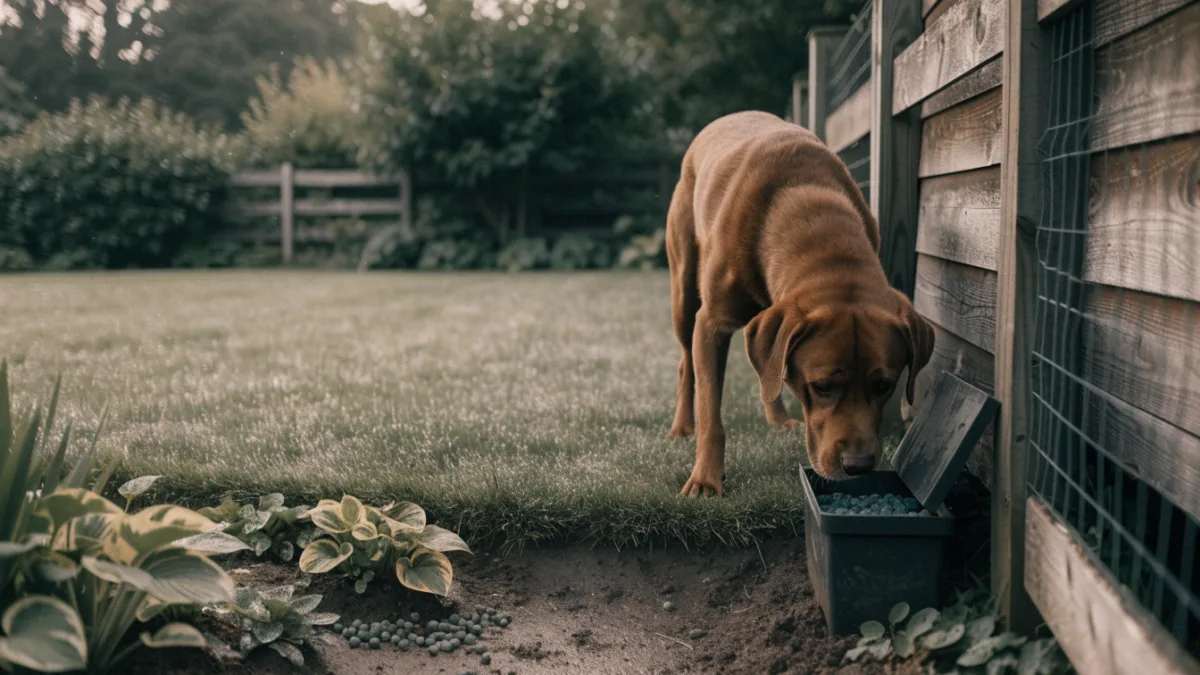
Moose, a three-year-old Labrador with a bottomless appetite and zero discernment about what went into it, came to see me on a Friday looking like he’d run a marathon he didn’t remember starting. His gums were pale, he could barely lift his head, and a bruise had spread across his belly for no reason his owner could find. She kept repeating the same thing: “The rat bait is locked in the shed. He never touched it.” And she was right — he never did. But five days earlier, Moose had proudly trotted up to her carrying a dying rat he’d found behind the compost bin, and he’d crunched it down before she could stop him. That rat was carrying a dose of second-generation anticoagulant rodenticide — poison that builds up in body tissue instead of breaking down. Moose never ate the bait. The rat was the bait.
Your Pet Never Has to Touch the Bait
Secondary poisoning — being poisoned by eating a poisoned animal rather than the poison itself — is the part of this story most owners have never heard. It works because of a quirk in the newer “second-generation” anticoagulants (chemicals like brodifacoum, bromadiolone, and difethialone). These block vitamin K, which your pet’s body needs to manufacture clotting factors — think of vitamin K as the factory that produces internal band-aids. Shut the factory down, and an animal bleeds quietly from the inside over days.
Here’s what makes them so dangerous up the food chain: instead of degrading quickly, these chemicals persist in tissue for weeks. A rat that has fed on bait repeatedly can be carrying many times a lethal dose by the time it dies. And because anticoagulants kill slowly, over three to ten days, poisoned rodents become sluggish and disoriented. They stumble into open spaces in broad daylight — precisely where a dog finds them on a morning sniff and a cat spots them from a fence line. Dogs are usually exposed by scavenging; cats, by hunting.
This isn’t a fringe risk. Warnings about dying rodents showing up in suburban yards circulate constantly in,[1] and wildlife data confirms the food chain is saturated: in some regions, anticoagulant residues have turned up in 80 to 90 percent of hawks and owls tested, and in roughly 90 percent of mountain lions sampled in California. The dying rat you never see becomes the great horned owl that hunts your field at dusk.
Know What’s Actually in the Box
The four rodenticide families
If you ever have to call a vet about bait, the type matters enormously, because the four chemical classes act completely differently:
- Anticoagulants (warfarin, diphacinone, brodifacoum, bromadiolone, difethialone): symptoms are delayed two to five days or more — lethargy, pale gums, bruising, nosebleeds, blood in urine or stool, coughing from bleeding into the chest, sudden collapse. There’s an antidote: vitamin K1 therapy, which for second-generation products can run 30 days or longer.
- Bromethalin: attacks the nervous system by causing brain swelling. Signs — tremors, seizures, wobbliness, hind-limb paralysis — can appear within hours to a week. No antidote exists, and cats are especially sensitive.
- Cholecalciferol (vitamin D3): floods the body with calcium, causing fatal kidney failure. Vomiting and extreme thirst show up in one to three days. No antidote, and treatment can run into thousands of dollars.
- Zinc phosphide: releases toxic phosphine gas in the stomach. Signs appear within minutes to hours.
One bitter irony I make a point of explaining to clients: when regulators restricted consumer access to the second-generation anticoagulants, many manufacturers simply switched to bromethalin and cholecalciferol — poisons with no antidote at all. From a treatment standpoint, that made things harder, not safer.
Slug pellets: faster, and no less ugly
Metaldehyde slug and snail pellets deserve their own warning, because the timeline is brutally short. Pepper, a ten-month-old Cocker Spaniel I treated, got into a vegetable bed where pellets had been scattered under lettuce leaves. They’re made with bran and molasses and look uncannily like kibble — that’s not an accident; the flavorings that attract slugs attract dogs too. Within forty minutes she was drooling, pacing, and panting, and by the time she reached us she was tremoring with a body temperature of 106°F (41°C).:[2] signs start in as little as 30 minutes to three hours, the tremors and seizures drive life-threatening hyperthermia, and death from respiratory failure can occur within 4 to 24 hours. There is no antidote — only cooling, muscle relaxants, and round-the-clock intensive care.
The Delay That Kills
The single biggest mistake I see isn’t failing to act — it’s waiting to act. With anticoagulants, your dog can seem completely fine for two, three, even five days while their clotting factors quietly run out. By the time they’re lethargic or bleeding, treatment is harder and more expensive, routinely reaching $2,000 to $5,000 once plasma transfusions and hospitalization enter the picture. So here’s the rule I give every client: if your pet eats a rodent — dead, dying, or merely suspicious-looking — or any bait, call a vet or a poison hotline immediately, even if they’re showing nothing. If you’re in the United States, ASPCA Animal Poison Control (888-426-4435) and Pet Poison Helpline (855-764-7661) answer around the clock for a consultation fee that’s worth every cent. Elsewhere, ask your vet which hotline serves your area and save the number in your phone now, before you need it. And bring the packaging or a photo of it — the registration number tells us exactly which chemical we’re fighting. If you only saw remnants, even the color helps; many baits are dyed teal-green.
What Actually Works Instead
Rats and mice
I’ll be honest about my own evolution here: for years, I told clients that a locked, tamper-resistant bait station was a reasonable compromise. I’ve changed my mind. Rats drag bait out of stations through the exit holes, neighbors use bait you’ll never know about, and none of it stops a dog from finding the carcass. What works is integrated pest management — making your property unattractive first, then killing the remainder selectively:
- Secure trash lids, never leave pet food outdoors, and seal compost.
- Close gaps bigger than about half an inch (1 cm) in sheds, foundations, and garages.
- Use snap traps or electronic kill traps placed inside a box or under a crate with a rodent-sized entry, so only rodents can reach them.
- For rural properties, self-resetting traps and professional pest controllers who advertise integrated pest management — not a monthly bait contract.
Slugs and snails
It’s telling that the loudest calls to quit slug pellets now come from gardeners themselves — [3] read as pleas from people who’ve watched pets and wildlife suffer. The vet-sanctioned playbook: if you must use a pellet, look for iron phosphate as the sole active ingredient — far less toxic than metaldehyde, though “less toxic” is not “toxic-free,” and some versions add a second insecticide that carries its own risks to bees, so read the whole label, not just the front. Better still: hand-pick slugs at dusk with a headlamp, ring pots and beds with copper tape, water in the morning so the soil surface dries by nightfall, remove daytime refuges like boards and dense mulch, or try slug nematodes, which are widely available in some countries. And about that classic home remedy, the dish of beer — it genuinely works on slugs, but alcohol is toxic to pets too, so use a covered design or fence it off.
Whatever you use, store it in a locked shed, follow the label exactly, and keep pets inside during application.
Here’s the thought I’d leave you with. The line of poison doesn’t stop at your fence. It runs from the bait station to the rat to whatever finds the rat — your dog, the neighbor’s cat, the red-tailed hawk on the utility pole, the barn owl raising owlets in the old oak. Anticoagulant residues have been documented in bald and golden eagles, bobcats, and endangered San Joaquin kit foxes, and in the UK, hedgehogs — now classified as vulnerable to extinction — eat the poisoned slugs our gardens leave behind. The same decision that protects your dog from a Monday-morning emergency protects an owl you’ll never meet. That’s rare, in pet care: one choice, two lives saved, and a food web left whole.
Sources
- neighborhood and community groups — facebook.com
- Emergency vets consistently rank metaldehyde among the most dramatic poisonings they see — animalemergencyservice.com.au
- threads like this one — reddit.com