

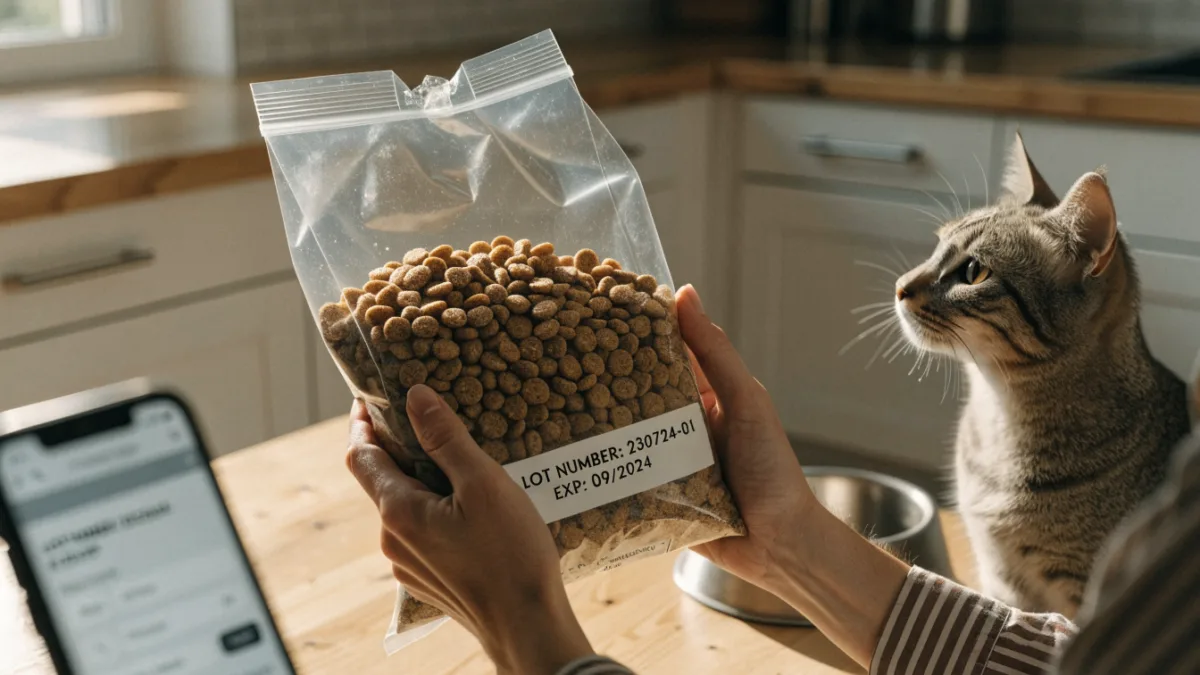
Last March, a client named Rachel brought her three-year-old Border Collie, Maisie, into the clinic with unexplained vomiting and lethargy. Maisie had been perfectly healthy the day before. As I ran diagnostics, Rachel mentioned almost as an afterthought that she’d heard something about a recall on the grain-free kibble she’d been feeding. “But I threw the bag away months ago,” she told me, gesturing helplessly. “I keep the food in one of those nice sealed bins in the pantry. I have no idea what the lot number was.” That detail turned out to be critical. Maisie recovered fully with supportive care, but the experience stuck with me — and it’s exactly why I talk about pet food recalls differently than most veterinarians used to. Knowing how to track, verify, and respond to a recall isn’t paranoia. It’s one of the most practical safety skills a pet owner can develop.
Why Lot Numbers Matter More Than Brand Names
When a recall announcement hits the news, it usually names a brand and maybe a product line. But that’s only part of the picture. Recalls almost always apply to specific batches — not every bag of that food ever produced. The only way to know whether the kibble sitting in your pantry is affected is to match the lot number, batch number, and expiration date printed on your specific package against the official recall notice.
The:[1] save your pet food lot number. It’s the single piece of information that connects your individual bag or can to a recall. Without it, you’re left guessing — and guessing isn’t great medicine.
I remember a phone call from a panicked client who’d seen a recall alert for her cat’s food brand. She was ready to throw out three unopened bags. I walked her through finding the lot codes on the side of each bag. Turned out none of her batches were affected. She saved roughly $120 and a trip to the pet store. That’s the difference between reacting to a headline and responding to the actual risk.
“Best By” Versus Expiration Dates: What You’re Actually Reading
One thing that trips people up constantly is the date printed on pet food packaging. A “best by” date tells you when the food is at peak freshness and nutritional quality. It’s not a hard safety deadline. An expiration date, on the other hand, refers to whether the product is still considered safe to consume. Both are tracked during recalls, and they mean different things. A recall might affect products with a “best by” date spanning several months, or it might zero in on a very specific expiration window. When you read a recall notice, look for the exact date format it specifies — don’t assume.
The Storage Mistake I See Every Single Week
If I had a dollar for every client who proudly showed me their aesthetic pet food storage setup — a ceramic canister on the counter, a decorative bin by the dog bowls, a glass jar on the shelf — I’d have funded a nice continuing education trip by now. These setups look great. They keep food fresh. And they make recall tracking nearly impossible if done wrong.
Here’s the issue: when you dump kibble directly into a storage container and toss the original bag, you’ve stripped away every piece of identifying information. No lot number. No batch code. No expiration date. No UPC. If that food gets recalled three months later, you have no way to verify whether yours is part of the affected batch.
I’ll admit I used to be more relaxed about this. Early in my career, I’d nod approvingly when clients mentioned transferring food to bins. It seemed practical. Then I watched several families struggle through recalls with no way to confirm whether their pets had been exposed, and I changed my approach entirely.
The fix is simple. You have two options:
- Keep the food in its original bag inside your storage container. The bag acts as an inner liner, and all the critical identifiers stay with the food. Bonus: the original packaging is also designed to protect the food’s nutritional integrity and prevent fat from seeping into plastic, which can cause rancidity.
- Cut the lot number, batch code, and expiration date directly out of the bag and tape or staple it to the outside of your storage container. Update it every time you open a new bag.
I use the cut-and-tape method at home for my own dogs. It takes about ten seconds, and it means I’ll never be in the position Rachel was with Maisie.
The Six-Step Recall Response Plan
When a recall does affect a food you’re feeding, the worst thing you can do is panic. The second worst thing is to do nothing. What works is a calm, systematic response. Here’s the protocol I walk my clients through:
1. Stop Feeding the Product Immediately
Don’t finish the bag first. Don’t “see how your pet does.” The moment you confirm your lot number matches a recall notice, switch to a safe alternative food. If you don’t have a backup on hand, feed a simple, bland diet temporarily — boiled chicken and white rice works for most dogs — until you can get a replacement.
2. Verify the Details
Read the official recall notice carefully. [2] on your package to the ones listed in the notice. Not all packages of a recalled product are affected — only the specific batches named.
3. Secure the Food Properly
Follow the recall notice’s instructions for returns or disposal. Some companies issue refunds when you return the product to the retailer. Others ask you to dispose of it and provide proof of purchase. If you’re discarding the food, make sure it’s completely inaccessible to your pets, neighborhood animals, and local wildlife. Double-bag it, seal it, and put it in a secure trash container. Wildlife getting into contaminated pet food is an entirely avoidable problem.
4. Sanitize Your Hands
This step gets skipped constantly, and it matters. Contaminated pet food can pose health risks to you, not just your pet. Bacteria like Salmonella can transfer from kibble to skin to kitchen surfaces. Wash your hands thoroughly with soap and warm water after handling any recalled food, packaging, or containers.
5. Clean Everything That Touched It
Food bowls, measuring scoops, storage containers, even the mat underneath the bowls — all of it needs to be washed with hot, soapy water and then sanitized. If your storage container held recalled food and it’s plastic or porous, you may want to replace it entirely. I’ve seen clients meticulously clean their bowls but forget the measuring cup they’d been dipping into contaminated kibble twice a day.
6. Monitor Your Pet Closely
Even if your pet seems fine, watch for subtle changes: decreased appetite, lethargy, vomiting, diarrhea, increased thirst, or anything unusual. Some contaminants take days to produce symptoms. [3] if anything seems off, and mention the recall exposure directly so they can factor it into their assessment.
Staying Ahead: How to Get Recall Information Before It Becomes a Crisis
Pet food safety has come a long way in terms of transparency. You no longer have to rely on catching a segment on the evening news. Government agencies like the FDA maintain Recalls & Withdrawals archives that are updated in real time and searchable by product type. Many of these portals also allow you to report adverse events directly. If your pet gets sick and you suspect the food is responsible, filing a report helps regulators identify problems faster — potentially protecting other animals before a full recall is issued.
I encourage every client to set up some form of recall notification. Many veterinary associations, pet food safety organizations, and regulatory bodies offer free email or text alerts. You can also bookmark the recall page relevant to your country’s regulatory agency and check it periodically, especially if you buy food in bulk.
And speaking of bulk buying — recalls can affect products with very long shelf lives. A food with an expiration date well into the following year might be recalled months after you purchased it. That bulk deal isn’t saving you money if you can’t track whether it’s been flagged.
Make Label Reading a Habit
I tell clients to treat pet food labels the way they’d treat ingredient labels on their own food. Before you start a new bag, take five seconds to glance at the lot number and expiration date. Get familiar with where that information lives on the packaging for the brands you use regularly. During active recall periods, this quick check should become second nature — especially if you’ve purchased food recently or switched to a new product.
One last point that I think doesn’t get enough attention: if you feed raw, freeze-dried, or home-prepared diets, the tracking principles are the same, but the risks can be different. Raw diets in particular have higher baseline bacterial contamination rates, so hygiene and recall awareness are even more critical. If you prepare food at home, document your ingredient sources. If one of those sources faces a recall, you need to know.
Pet food recalls feel scary, but they’re actually evidence of a safety system working — identifying problems and pulling products before more animals get sick. Your job as a pet owner isn’t to prevent recalls (you can’t), but to be positioned to respond to them quickly and confidently. Save your lot numbers. Keep food in its original packaging. Clean thoroughly when something goes wrong. These are small habits that add up to real protection. And if you ever find yourself unsure whether your pet’s food is safe, call your vet. That’s exactly what we’re here for — not just for emergencies, but for the “is this actually something I need to worry about?” conversations that keep emergencies from happening in the first place.
Sources
- FDA puts it bluntly — fda.gov
- Match the lot number, batch code, and expiration date — usatoday.com
- Contact your veterinarian promptly — petstoriesdaily.com