

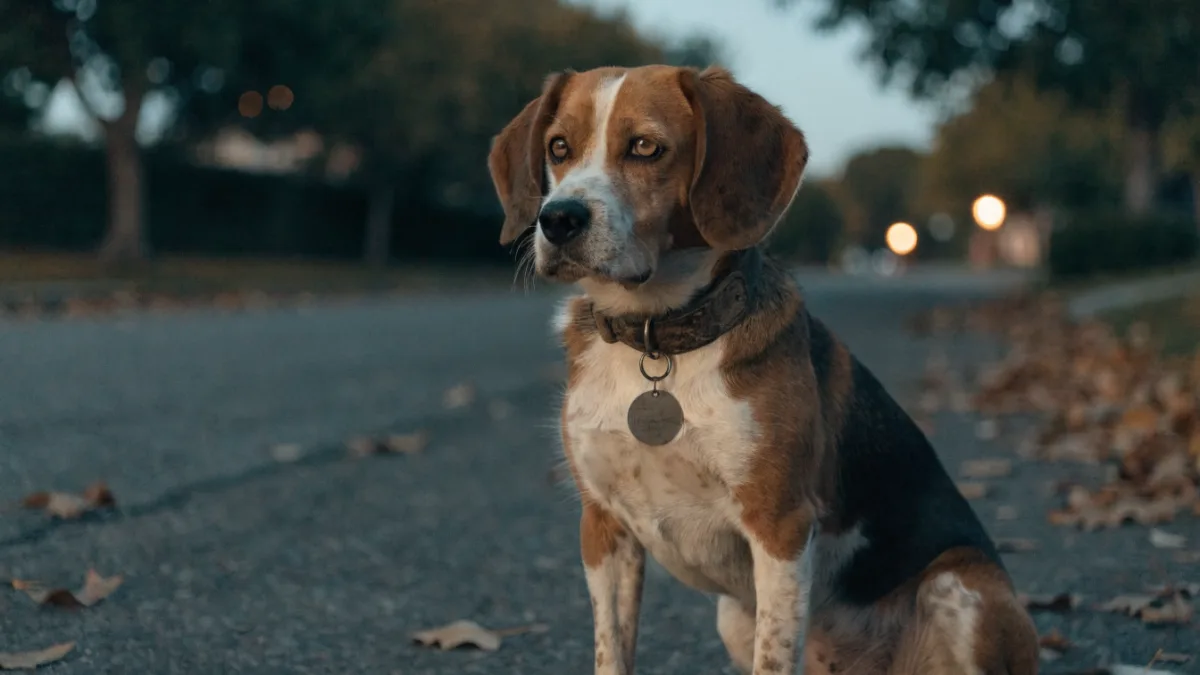
Just last month, a terrified golden retriever named Rosie landed on my exam table. She’d been found wandering a busy highway off-ramp by a good Samaritan who scooped her up and brought her straight to our clinic. Rosie was wearing a collar — a nice leather one, actually — but the ID tag had worn smooth years ago. No phone number, no address, just a faint outline of what might have once been a bone shape. I scanned her for a microchip and felt that familiar flutter of relief when the reader beeped. She had a chip. But when I looked up the number in the registry, it was still tied to a breeder in another state, three owners and seven years ago. No current contact information. No way to reach anyone who knew Rosie. We eventually tracked down her family through a lost pet Facebook group, but it took four anxious days. That’s four days a properly registered microchip could have collapsed into a twenty-minute phone call.
The Collar Illusion: Why Tags Aren’t Enough
I love a good ID tag. I really do. Every pet in my household wears one, and I recommend them to every client who walks through my door. But here’s what I’ve learned after fifteen years of seeing lost pets come through my clinic: ID tags are a first line of defense, not a complete strategy. They fade, they snag on branches, they fall off when a collar clip breaks. I’ve seen dogs slip out of collars entirely — greyhounds and whippets are notorious for this with their narrow heads, but I’ve watched a startled labrador back right out of a seemingly snug collar in my own lobby.
Then there are the situations that are harder to think about. If your pet is stolen, the first thing that disappears is the collar and tags. If your cat gets caught on something while wearing a breakaway collar (which they absolutely should be wearing for safety), the collar does its job and releases — but now your cat has no identification at all. Tags are visible and immediate, and that’s their strength. Anyone who finds your pet can read a tag and call you without needing special equipment. But visibility is also their vulnerability. They exist on the outside of your pet’s body, exposed to everything the world throws at them.
A microchip is different. It’s a tiny transponder — about the size of a grain of rice — implanted just under the skin between your pet’s shoulder blades. It has no battery, no moving parts, nothing to charge or replace. The material is biocompatible glass, meaning it won’t react with your pet’s tissue or cause inflammation. Once it’s in, it’s in for life. That permanence is exactly what makes it such a powerful backup to external identification.
How Microchips Actually Work (And What They Don’t Do)
It’s Not a GPS
If I had a dollar for every time a client told me they wanted to “track their dog with the microchip,” I could retire early. This is probably the single most common misconception I encounter, and I completely understand why people think this. The word “chip” sounds like something out of a spy movie — surely it can beam your pet’s location to your phone, right?
Unfortunately, no. A microchip is what’s called a passive RFID transponder. “Passive” means it doesn’t emit any signal on its own. It sits silently under your pet’s skin doing absolutely nothing until a special scanner is passed over it. The scanner emits a low-frequency radio wave that briefly powers the chip, allowing it to transmit its unique identification number to the scanner’s screen. That’s it. That number is then looked up in a database to find your contact information. There’s no satellite involved, no app to check, no little blinking dot on a map. If you want real-time location tracking, that’s a separate GPS collar device — and those come with their own limitations, including battery life and the need for cellular coverage.
The Procedure Is Quick and Low-Risk
I’ve had clients delay microchipping because they were worried it would hurt their pet. I appreciate that concern — it means they’re paying attention. But in practice, the procedure is genuinely quick. The chip comes preloaded in a sterile applicator, and the needle is slightly larger than the one used for routine vaccinations. Most dogs react about the same way they do to any shot: a quick flinch, maybe a small yelp, and then they’re back to sniffing the exam room floor. Cats often don’t react at all. I’ve chipped puppies and kittens as young as eight weeks during their initial vaccine series without issue.
Complications are rare. Occasionally I’ll see minor tenderness at the implant site for a day or two, similar to how you might feel sore after a flu shot. In extremely uncommon cases, a chip can migrate slightly from its original placement — which is why we scan the whole body, not just between the shoulder blades, when we’re looking for one. The risk of a serious adverse reaction is very low, and the benefit of permanent identification far outweighs that minimal risk in virtually every case.
The Registration Gap: Where the System Breaks Down
Here’s where I need to get a little fired up. Remember Rosie, the golden retriever I mentioned? Her microchip worked perfectly. The scanner read it clearly. The number was right there in the database. The problem was that no one had ever updated the registration with her current owner’s information. And Rosie is not an unusual case — not by a long shot.
The gap between “microchipped” and “properly registered” is one of the most frustrating problems in veterinary medicine and shelter work. Pets arrive at shelters with functional microchips every single day, but a startling number of those chips lead nowhere. Sometimes the chip was never registered at all — the owner assumed the vet’s office handled it (sometimes we do, sometimes we don’t, and that miscommunication is a problem worth fixing). Sometimes the chip was registered years ago, but the owner has moved, changed phone numbers, or rehomed the pet without updating the information.
A microchip is only as good as the information attached to it. Think of it this way: if someone hands you a phone with no contacts saved in it, that phone is useless for reaching anyone. The microchip is the phone. The registration database is your contacts list. Without accurate, current contact information, that chip is just a tiny glass capsule doing nothing under your pet’s skin.
Registering Your Pet: A Step-by-Step Guide
The good news is that registering a microchip is straightforward, and maintaining it takes almost no time at all. Here’s what the process typically looks like:
- Get your pet chipped. Your veterinarian implants the chip during a routine visit. The whole thing takes seconds. Your vet will scan the chip immediately to confirm it’s working and give you the unique identification number. Write this number down. Take a photo of it. Save it somewhere you’ll remember.
- Find the right registry. Your chip came from a specific manufacturer, and most have their own online databases. But here’s something many people don’t know: you can also register your chip with a universal database that works regardless of brand. Some of these are free, while others charge a small one-time or annual fee. If you’re unsure which registry to use, your vet can point you in the right direction, or you can use a universal lookup tool to find where your chip’s number is currently registered.
- Fill in your details completely. Include your name, current address, primary phone number, and an alternate contact — a trusted friend or family member who could reach you if your own phone isn’t working. If your registry allows it, add your veterinarian’s contact information as a backup.
- Set a reminder to check it annually. This is the step almost everyone skips. Add a recurring calendar event — maybe on your pet’s birthday, or when you do their annual heartworm test — to log into the registry and confirm everything is still current. If you’ve moved, changed jobs, gotten a new phone number, or traveled with your pet, update the registry before you forget.
- Keep your documentation accessible. Store your pet’s microchip number in your phone’s notes, in a cloud document, or even taped inside a cabinet door. If your pet goes missing, you don’t want to be rifling through paperwork while panicking.
The Combo Strategy: Why You Need Both
I sometimes hear pet owners debate whether tags or chips are “better,” as if we’re choosing between two competing technologies. This is a false choice, and it’s one that can cost you your pet if the worst happens. The smartest approach isn’t either-or. It’s both, working together as a layered system.
Here’s why the combination matters. An ID tag is your pet’s fastest possible ticket home. If your neighbor finds your dog lounging on their porch, they can read the tag and call you in under a minute. No vet visit required, no scanner needed. But if that tag is missing, damaged, or illegible — and if the collar has come off entirely — the microchip becomes your safety net. Shelters, animal control officers, and virtually all veterinary clinics now use universal scanners that can read any brand of microchip regardless of frequency. That standardization has dramatically improved the odds of a successful reunion, but only if the chip is registered and current.
I recommend that every pet wear a collar with at least two pieces of information: your phone number and an indication that the pet is microchipped. Some owners add “I’m chipped — please scan me” directly on the tag. That simple prompt can encourage a finder to take the pet somewhere with a scanner rather than assuming the pet is a stray.
Beyond Dogs and Cats
One more myth worth busting: microchips aren’t just for dogs. I’ve chipped cats (both indoor and outdoor — indoor cats escape more often than you’d think), ferrets, horses, and even birds. If your municipality or local regulations require licensing for certain species, a microchip is often the accepted form of permanent identification. If you’re unsure whether your exotic pet can be chipped, ask your vet — the technology is more versatile than most people realize.
And while we’re talking about identification and safety, let me zoom out for a moment. The same impulse that drives us to microchip our pets — the desire to protect them, to keep them connected to us, to ensure they can find their way home — is part of a much larger picture of responsible stewardship. When we take identification seriously, we reduce the burden on overcrowded shelters, free up resources for animals truly in need, and model the kind of care that strengthens the bond between humans and animals everywhere. That’s not just good pet parenting. That’s good citizenship in the community of living beings we share this planet with.
So check your pet’s chip today. Log into your registry, confirm your phone number, and make sure that tiny grain of glass under their skin is doing the job you got it to do. It takes five minutes. And those five minutes could be the difference between a happy reunion and a search that stretches into days, weeks, or worse. I’d rather you never need to rely on it. But if you do, you’ll be grateful it’s there — and that it actually works.