

Last Tuesday, a frantic client named Meg rushed her three-year-old Siamese cat, Cleo, into my clinic. Cleo had been patrolling the kitchen when she spotted a stink bug on the windowsill. One swift paw-swipe later, the bug was in her mouth — and within minutes, Cleo was drooling excessively, pawing at her face, and retching. Meg was terrified. “She eats flies all the time and never has a problem,” she told me. “What made this bug different?” It’s a great question, and one I hear almost weekly. The truth is, our dogs and cats are natural-born hunters, and the indoor bug chase is a deeply ingrained instinct that’s usually harmless — sometimes even beneficial. But not all bugs are created equal, and knowing the difference can save you a midnight trip to the emergency vet.
The Call of the Wild — Inside Your Living Room
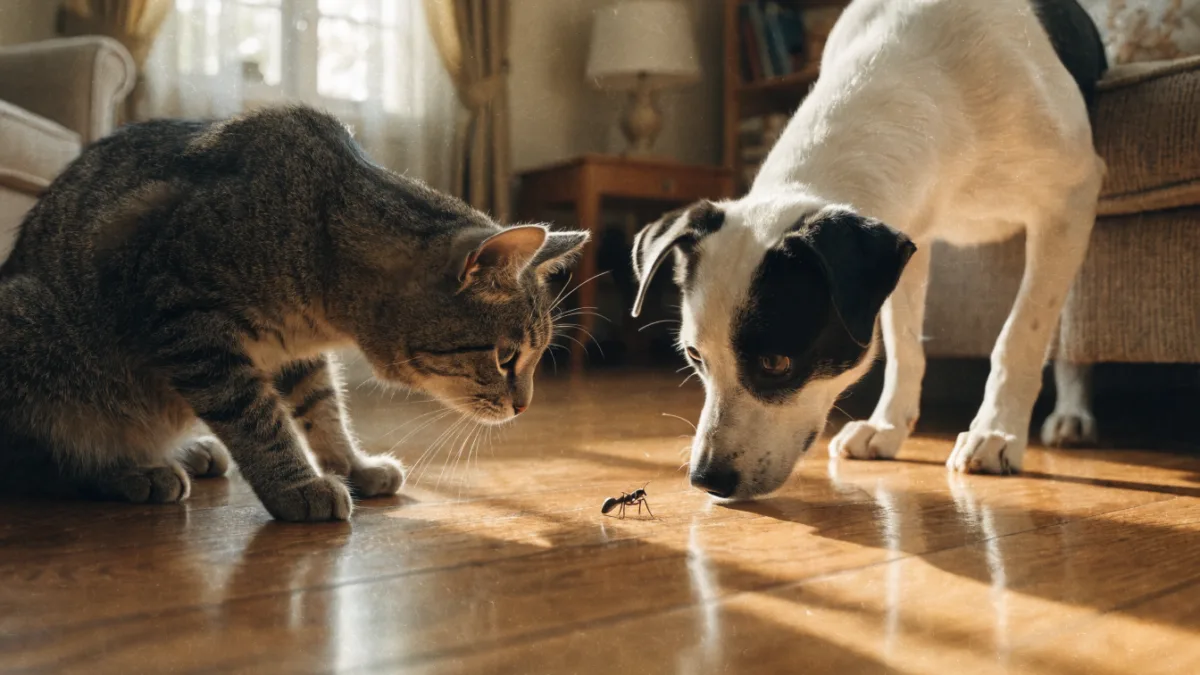
If you’ve ever watched your cat become absolutely transfixed by a fly buzzing against the window, or your dog snap at a moth circling the porch light, you’ve witnessed something ancient. Cats, in particular, are biologically wired for this kind of hunting. Their senses are extraordinarily tuned to detect the soft, high-frequency sounds and sudden, erratic movements that insects make. A fly’s wingbeat, the skitter of a cockroach across tile — these trigger a predatory sequence in your pet’s brain that’s virtually identical to the one a wildcat experiences when spotting prey on the savanna.
Dogs are no different, though their motivation tends to be a bit more, shall we say, enthusiastic. My own golden retriever, Biscuit, treats every moth in the house like it’s personally insulted her. She’ll leap, snap, and sometimes eat the evidence before I can intervene.
For both species, bug-hunting provides genuine mental stimulation and physical exercise. The full hunting sequence — stalking, chasing, catching, and consuming — engages their brain and body in a way that few indoor activities can replicate. It’s enrichment, plain and simple. And honestly, I’d rather see a cat stalking a housefly than staring blankly at a wall.
When Your Pet Brings You a “Gift”
One behavioral quirk that catches many owners off guard is the presentation of caught bugs. Cats, and occasionally dogs, will carry their prize — dead or still half-alive — and deposit it at your feet, on your pillow, or directly into your shoe. I had a client last year whose tabby, Miso, consistently left dead crickets on the bathroom mat every morning. The owner, Marisol, found it revolting and would immediately sweep them away while making a face.
Here’s the thing, though: to your pet, this is a gift. A highly prized one. In their minds, they’re sharing their best catch with a beloved (if somewhat incompetent) family member. When you react with disgust or quickly dispose of it, it can actually cause confusion and even hurt their feelings. I told Marisol to quietly thank Miso, then discreetly relocate the cricket once the cat had moved on. The daily offerings continued, but the dynamic between them became much warmer.
The Safe List: Bugs That Are Basically Protein Snacks
From a nutritional standpoint, many common household insects are essentially pure, harmless protein. In fact, the veterinary nutrition industry has recently embraced this concept with a surge of sustainable, insect-based pet foods using ingredients like black soldier fly larvae and crickets. These products validate what nature already knew: insects are a highly digestible protein source for companion animals.
The key distinction, of course, is that commercially raised insects are produced in sterile, controlled environments. The random fly on your windowsill has lived a somewhat less sanitary life. But in small quantities, the following common bugs are generally safe for both dogs and cats:
- Houseflies: Annoying to us, irresistible to pets, and largely harmless when eaten. The ick factor is real, but the medical risk is minimal.
- Gnats and fruit flies: These tiny insects pose virtually no threat and are often swallowed whole without a second thought.
- Moths: Most common household moths are non-toxic. I’ve watched dogs catch them mid-air with a satisfying snap.
- Common ants: A few ants here and there won’t cause problems, though I’d discourage letting your pet feast on an entire colony.
- Crickets: Nutrient-dense and generally safe — though, as I’ll explain shortly, there’s a parasitic caveat.
I always tell clients: if your pet catches the occasional fly or moth, don’t panic. It’s natural behavior, and the protein content, while minimal, isn’t going to hurt them.
The Danger List: When Bugs Bite Back
Now we get to the important part. Not all insects are benign snacks, and some can cause serious harm. Let me walk you through the ones I see most commonly in practice.
Stink Bugs
Remember Cleo from the beginning of this article? Stink bugs secrete a defensive compound that tastes absolutely awful and irritates the mucous membranes of the mouth and gastrointestinal tract. Symptoms typically include profuse drooling, retching, vomiting, and sometimes diarrhea. It’s rarely life-threatening, but it’s deeply unpleasant for your pet — and expensive for you if after-hours treatment is needed.
Caterpillars
Some caterpillars are covered in microscopic hairs or spines that can cause severe oral and dermal irritation. I once treated a Jack Russell terrier named Pete who licked a fuzzy caterpillar on the patio. His tongue and gums swelled so dramatically that he couldn’t close his mouth for almost six hours. We managed it with antihistamines and supportive care, but Pete’s owner learned to scan the garden before letting him out.
Asian Lady Beetles
These look deceptively similar to harmless ladybugs, but Asian lady beetles secrete a yellowish fluid called hemolymph when threatened. This substance can cause chemical burns in the mouth, on the gums, and along the esophagus. If your pet is drooling, pawing at the mouth, or refusing to eat after you’ve seen these beetles around, call your veterinarian promptly.
Bees and Wasps
The obvious risk here is the sting. For most pets, a single sting causes localized swelling and discomfort. But just like people, some animals are allergic. A patient of mine — a sweet nine-year-old beagle named Cooper — went into facial swelling and respiratory distress after snapping at a wasp. We treated him with epinephrine and steroids, and he recovered fully, but it was a sobering reminder that stinging insects are never a safe snack.
Venomous Spiders
Depending on where you live, venomous spiders like widows or recluses can pose a genuine medical emergency. If you suspect your pet has bitten into or been bitten by a venomous spider, don’t wait for symptoms to develop. Seek veterinary care immediately.
The Hidden Risk: Parasites and Pesticides
Even if a bug isn’t toxic, it can still carry risks that aren’t immediately obvious. Two categories deserve special attention.
Parasitic Hitchhikers
Cockroaches, beetles, and crickets can serve as intermediate hosts for internal parasites — particularly Physaloptera species, which are stomach worms, and certain tapeworms. When your pet eats the infected insect, the parasite lifecycle continues inside them. I diagnosed a case last spring in a young border collie named Dash who had been happily hunting crickets in the basement. His owner couldn’t figure out why he was losing weight despite a good appetite. A fecal test revealed stomach worms, traced back to his insect-heavy diet downstairs.
Regular deworming and consistent [1] significantly reduce this risk, so talk to your veterinarian about a protocol that fits your pet’s lifestyle.
Pesticide Toxicity
This is the concern that’s grown most in my mind over the past few years. I’ve actually changed my advice on this topic as the data has evolved. Even if a bug is inherently harmless to your pet, eating one that has recently been sprayed with commercial pesticides can cause severe neurological or gastrointestinal toxicity. Signs can include tremors, seizures, excessive salivation, vomiting, and collapse. If you use any chemical pest control in your home — whether professional treatments or over-the-counter sprays — ask your exterminator or the product manufacturer about pet-safe re-entry times, and keep your animals away from treated areas until it’s absolutely safe.
The Bigger Picture: Indoor Hunting as Conservation
There’s a broader reason I’m actually a fan of the indoor bug hunt. The debate about whether cats should roam freely outdoors is one where the data is overwhelmingly clear: indoor cats live vastly safer, longer lives. They’re not hit by cars, they’re not attacked by stray dogs or coyotes, and they don’t ingest poisoned rodents or toxic plants. But the environmental case is equally compelling. Domestic cats are recognized globally as invasive predators when allowed outdoors, and their hunting capacity is staggering. Free-roaming cats and dogs contribute significantly to the decline of native bird populations, small mammals, and beneficial insects.
When you redirect that hunting instinct indoors — letting your cat chase flies or your dog snap at moths — you’re giving them a safe, satisfying outlet for a drive they can’t simply turn off. You’re also keeping local wildlife where it belongs: alive and in the ecosystem. It’s a conservation compromise that genuinely works.
So the next time your cat deposits a dead moth on your favorite chair, or your dog looks profoundly proud after swallowing a gnat whole, take a breath. Thank them for the gift. Check that it wasn’t something from the danger list. And maybe — just maybe — appreciate that the ancient predator sharing your sofa still answers the call of the wild, even if the wild is just a housefly on a Tuesday afternoon.
Sources
- parasite prevention — petmd.com