

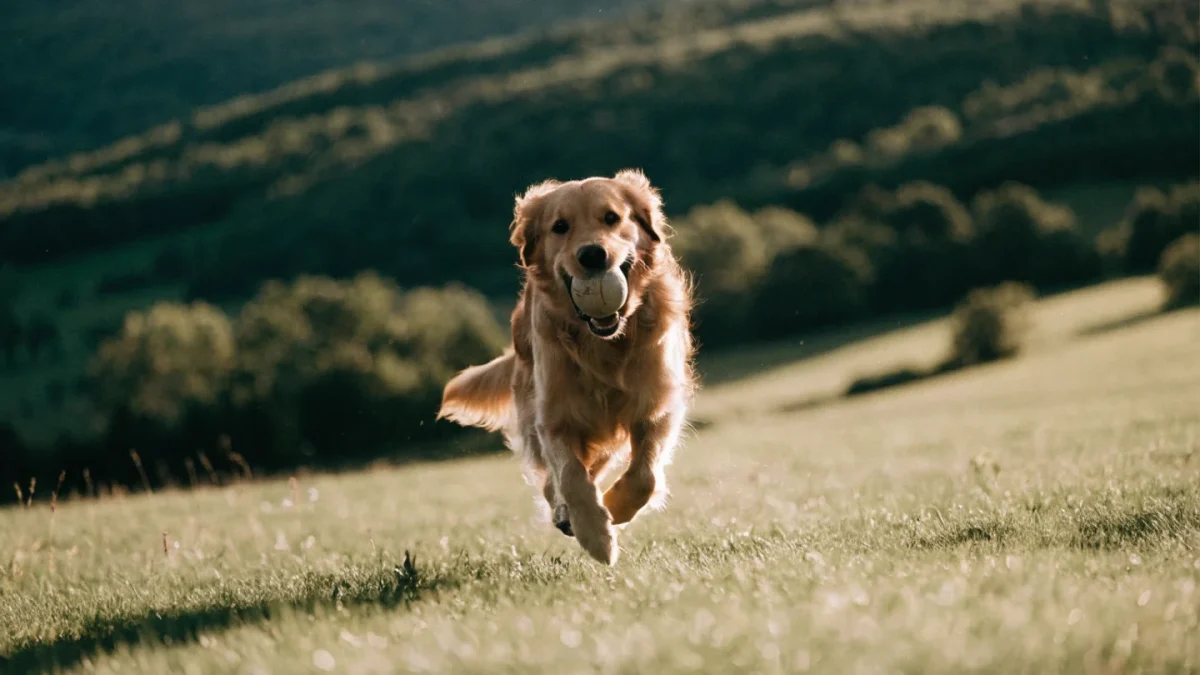
People think fetch is just something dogs either do or don't do. Golden retrievers fetch. Labs fetch. Border collies sometimes fetch the ball and then stand there staring at you about twelve feet away. Terriers chase, pick it up, and run in the opposite direction with it.
The truth is that fetch is a chain of three behaviors — chase, retrieve, and return — and most dogs that "won't fetch" are missing one specific link, not the whole thing.
Breaking Down the Retrieve
Chase: Moving toward the thrown object. Most dogs will do this instinctively with novel moving objects, but some need encouragement. If your dog doesn't chase, start with a toy they already show interest in and throw it just a foot away initially.
Pickup: Actually putting the object in their mouth and holding it. Some dogs touch the ball with their nose but won't pick it up. Others pick up certain textures but not others. Experiment with toys of different sizes, textures, and weights to find what your dog is willing to carry.
Return: Coming back to you with the object in their mouth. This is where most retrieves break down. The dog gets the ball and either drops it immediately, runs off with it, or starts playing keep-away.
Figure out which step is missing for your dog. Then train from there.
Building the Return (The Most Important Piece)
Teaching the return before doing full throws is counterintuitive but effective.
Step 1: Two-ball retrieve
Have two identical toys. Throw toy #1. When your dog picks it up, produce toy #2 enthusiastically. Dog comes back to you to investigate #2. The moment they drop #1, throw #2. Now you have a self-reinforcing cycle: coming back to you delivers a new throw.
Step 2: Run-away recall
When your dog picks up the ball, turn and run in the opposite direction. Most dogs will chase you. Reward when they catch up — you've created a chase game where chasing you is the fun part. This builds drive back to you even when the dog is holding something exciting.
Step 3: Reward the hold
When your dog returns with the ball, resist immediately reaching for it. Praise them while they hold it. Pet them. Make the return feel like the win, not just a transaction. Then ask for drop it. Teaching drop it is essential here — a dog that won't release ruins fetch faster than anything else.
For Dogs That Won't Chase
If the issue is lack of chase drive, make the object more interesting. Use a toy with feathers, squeakers, or erratic movement. Roll it along the ground instead of throwing it through the air. Tie a string to the toy and drag it away from the dog before releasing it — moving away from the dog activates chase more reliably than throwing.
Some dogs with low chase drive do better with scent-based retrieve: put a piece of high-value food inside or on the toy before throwing. The combination of chase instinct and nose drive gets reluctant dogs moving.
For Dogs That Pick It Up But Won't Bring It Back
The keep-away dog is usually one that's learned the toy disappears when they come to you. Teach a different association: being near you means the game continues, not ends.
Don't chase the dog. Chasing is more fun than returning and it teaches them to run from you. Instead, produce a second toy, squat down, turn away, make yourself interesting. Make coming to you more appealing than holding the toy at a distance.
Building Full Fetch
Once all three pieces are solid:
- Throw
- Dog chases and picks up
- Dog returns — you praise generously
- Ask for drop it — release with another throw
Start with short throws (10-15 feet). The longer the throw, the more likely the dog is to disengage before completing the chain. Add distance only after the short-distance retrieve is automatic.
The advanced directed retrieve uses these same mechanics in a structured sport context — if your dog loves retrieving, it's worth exploring.
Fetch is not a genetic lottery. It's a skill chain, and every link can be built.