

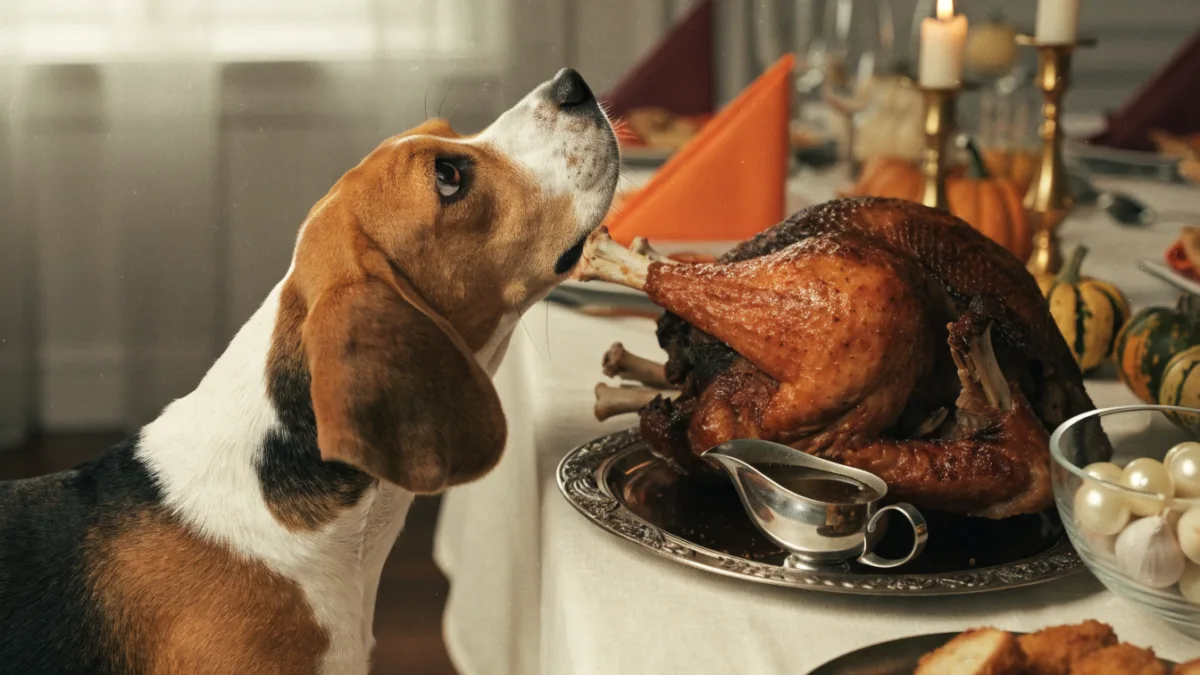
I’ll never forget the Thanksgiving night when a frantic owner rushed a four-year-old Beagle named Gus into my clinic. Gus had been “helping” clean up after dinner and managed to pull the carved turkey carcass out of an unsecured trash bag. His owner was horrified, and Gus was in tremendous pain. We spent the entire night in emergency surgery removing sharp bone fragments that had punctured his digestive tract. Thanksgiving is a beautiful holiday centered around gratitude, family, and an abundance of food. But for those of us in the emergency veterinary clinic, it is historically one of the busiest days of the year. Let’s talk about how to enjoy your holiday feast without putting your pets at risk.
The Big Question: Can Dogs Eat Turkey?
Every November, my clients ask me the same thing: can dogs eat turkey? The short answer is yes, but the longer answer is that it requires extreme caution. The turkey itself isn’t the enemy; it’s how we prepare it that causes problems.
Dogs can absolutely enjoy a bite of plain, fully cooked, boneless, and skinless white meat. However, the dark meat and the skin are entirely different stories. Turkey skin and the fatty trimmings are incredibly rich. When a dog consumes a large amount of dietary fat all at once, it can trigger acute pancreatitis—an agonizing and potentially life-threatening inflammation of the pancreas. I’ve changed my mind on this over the years. Early in my career, I used to tell owners that a little piece of skin wouldn’t hurt. But after seeing too many dogs like Winston, a sweet Schnauzer who spent four days in our ICU on IV fluids after eating a handful of fatty trimmings, I now firmly advise against it. The risk simply isn’t worth it.
White Meat vs. Dark Meat
There is a bit of a debate among pet owners about giving pets dark meat or turkey necks for a protein boost. I strongly advise against this. Dark meat is significantly higher in fat than white breast meat, which dramatically increases the risk of pancreatitis. And as for those necks? We will get to why bones are so dangerous in just a moment.
The Triple Threat Hidden in the Gravy
If turkey skin is a risk, gravy is an absolute disaster waiting to happen. I often see well-meaning owners pour a generous splash of gravy over their dog’s kibble as a holiday treat. I completely understand the impulse—we want our pets to enjoy the feast right alongside us. But traditional gravy is what I call a “triple threat” to pets.
- It is too fatty: Gravy is made from pan drippings, which are essentially pure, concentrated animal fat. Just like turkey skin, this fat overload can trigger severe gastrointestinal distress or pancreatitis.
- It is too salty: Humans might love the salty, savory umami flavor of pan drippings, but that level of sodium is dangerous for pets and can lead to sodium ion poisoning, causing extreme thirst, vomiting, and even neurological issues.
- It often contains toxic seasonings: This is the most dangerous part. Most gravies, stuffings, and casseroles are loaded with onions, garlic, or rich seasonings.
Vegetables in the Allium family—which includes onions, garlic, leeks, and chives—are highly toxic to both dogs and cats. These ingredients cause severe oxidative damage to your pet’s red blood cells, causing the cells to rupture. This leads to a dangerous condition called hemolytic anemia, where the blood can no longer carry enough oxygen to the body’s organs. According to resources like the.[1] nutrition guides, even small amounts of concentrated alliums, like the garlic powder in your stuffing, can be incredibly dangerous.
I often hear owners say they rely on a little garlic to naturally repel fleas. While that is a popular home remedy, clinical research has consistently shown that garlic does not effectively repel parasites, and regular ingestion can actually accumulate in your pet’s system and cause real harm. It is always best to skip the garlic entirely.
The Pantry Peril: Why Cooked Bones Splinter
Let’s go back to Gus the Beagle and that turkey carcass. There is a massive difference between the raw bones a wolf might eat in the wild and the cooked bones sitting on your Thanksgiving table. When poultry bones are cooked, the high heat drains the moisture from them, making them incredibly dry and brittle.
When a dog or cat chews on a cooked turkey bone, it doesn’t just crumble—it shatters into sharp, needle-like fragments. These splinters are extraordinarily dangerous. They can puncture the roof of the mouth, get lodged in the throat, or worst of all, perforate the stomach or intestinal lining. This internal bleeding is silent, rapid, and fatal if not treated immediately. Even if the bones don’t puncture anything, they can clump together and form a dense, life-threatening blockage in the digestive tract that requires emergency surgical removal.
If you catch your pet eating a cooked bone, do not wait for symptoms to appear. Call your veterinarian or an emergency clinic immediately for guidance, as detailed by experts like [2] We can often induce vomiting safely if you act fast, but if you wait, the bones will move into the intestines where the danger multiplies.
Crafting the Perfect Pet-Safe Plate
You don’t have to leave your pets out of the holiday fun! With a little bit of preparation, you can safely include them. While veterinary organizations like the [3] warn against traditional table scraps, you can easily build a safe, pet-friendly plate by setting a few ingredients aside before you season them.
Safe Holiday Additions
- Plain White Meat Turkey: A few bite-sized pieces of unseasoned, fully cooked turkey breast are a fantastic, lean protein source.
- Plain Green Beans: Raw or plain steamed green beans are an excellent, low-calorie snack that most dogs absolutely love. Just ensure they are not cooked in butter or onion soup mix.
- Plain Sweet Potato: A spoonful of plain, steamed, or baked sweet potato is a great source of fiber and vitamins. Never offer them the sweet potato casserole, which is loaded with butter, sugar, and often toxic pecans or marshmallows.
- Plain Pumpkin: A couple of spoonfuls of 100% pure pumpkin puree (not the spiced pie filling!) is fantastic for a dog’s digestion.
Recently, I’ve been thrilled to see a cultural shift where pet owners want to safely include their pets without taking risks. There has been a fantastic rise in commercially available, pet-safe “Thanksgiving dinners” sold in cans, pouches, or as frozen dog treats. If you don’t have time to prep a safe plate from scratch, looking for these complete, balanced alternatives is a wonderful way to celebrate. When introducing any of these safe foods, always mix a small amount into their regular kibble rather than offering a massive meal, which can still cause an upset stomach.
Securing the Leftovers
Finally, the danger doesn’t end when dinner is over. Pets are notorious scavengers, and their noses are remarkably powerful. The most common emergency we see isn’t actually from food handed directly to the pet—it’s from pets pulling leftovers out of the garbage can or catching drippings in the sink.
Take a lesson from Gus’s owner: invest in a pet-proof trash can, or better yet, take your garbage out to the garage or a secure outdoor bin the moment you are done clearing the table. Wipe down counters to remove butter residue, and make sure your sink strainer is cleared of dangerous trimmings.
A Holiday Takeaway
Our pets are family, and it is entirely natural to want to share our most cherished traditions with them. But the best way to show our love this Thanksgiving isn’t by sharing our heavily seasoned, fatty human food. It is by protecting their health so they can stay by our sides for many more holidays to come. By knowing which toxic holiday foods to avoid and practicing mindful Thanksgiving pet safety, you are giving your pet the greatest gift of all: a safe, healthy, and happy holiday season.
Sources
- Small Door Veterinary — smalldoorvet.com
- Adamson Veterinary Services — adamsonveterinaryservices.com
- ASPCA Animal Poison Control Center — facebook.com