

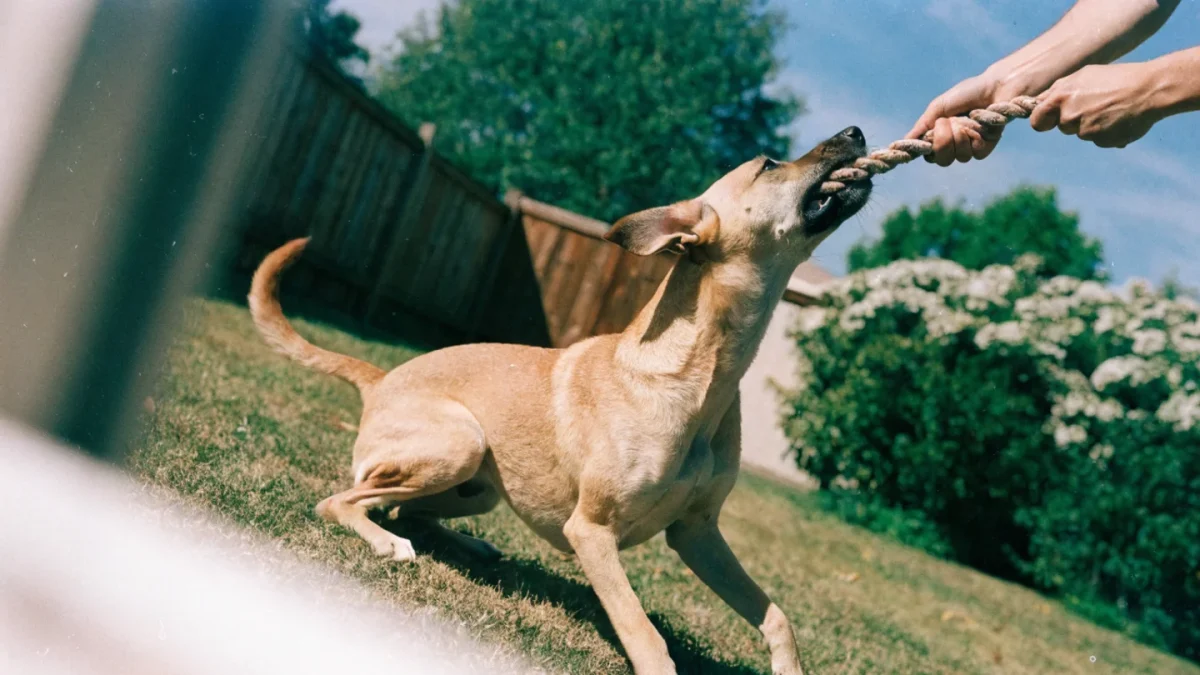
I've been telling clients for years: tug isn't the problem. Unstructured tug with no rules is the problem. And "your dog will get dominant if you play tug" isn't something the research supports — it's old dominance theory that didn't hold up.
A dog that plays tug with clear rules is getting exercise, engagement, and a powerful reward you can use in training. A dog that plays tug with no rules is practicing snatching things from your hand and ignoring "drop it" whenever it suits them.
The rules are the difference.
Why the Old Advice Was Wrong
The idea that tug makes dogs aggressive or dominant came from outdated wolf hierarchy theories that have since been revised significantly. A study by researchers at the University of Bristol examining tug-of-war games found the game had no significant impact on aggression directed at family members or strangers, and that dogs who played tug had more confident, positive interactions with their owners — not more dominant ones.
What does cause problems is unstructured play without impulse control: a dog that grabs the toy without permission, won't drop on cue, escalates arousal without a stop mechanism, and gets inadvertently rewarded for pushy behavior.
That's a training problem, not a tug problem.
The Rules That Make Tug Safe and Useful
Rule 1: Tug starts on your cue
Keep the tug toy out of sight between sessions. When you bring it out, the dog must be in a sit or calm posture before you offer it. You present the toy and say "take it" (or "get it," whatever you use). The dog learns: the toy is yours to offer, not theirs to demand.
Rule 2: Drop it ends the round
Before the dog is going to lose interest, ask for "drop it." If they release, immediately re-offer the toy with your start cue. The dog learns: dropping it makes the game continue. This is the most important piece — a reliable drop it is what turns tug from a contest into a cooperative game.
Teaching drop it has to happen outside of tug sessions first, with lower-value items, so the behavior is solid before the high-arousal context.
Rule 3: "Oops" if teeth touch skin
If the dog's teeth make contact with your hand, let the toy go completely and turn away. Complete social withdrawal. No yelling, no knee to the chest — just disappearance of the game. Most dogs understand this signal quickly and become more careful.
Rule 4: You control the end
When you're done, say "done" or "all done," collect the toy, and put it away out of reach. The dog may still be fired up. That's okay — they'll settle. What you're building is a dog that accepts "this game is over" without escalation.
Rule 5: Match intensity to your dog
Some dogs play tug gently. Some dogs are intensely physical — pulling hard, growling, whipping their head. Growling during tug is normal for most dogs and not a warning sign unless combined with resource-guarding behavior outside the game. That said, keep arousal at a level you can regulate. Managing over-arousal in play is a related skill worth building.
Using Tug as a Training Reward
For many dogs, especially working and sport breeds, a tug toy is a higher-value reward than any food. Once tug has clear structure, you can start using brief tug sessions as rewards in training.
Example: dog executes a perfect recall at a distracting park. Instead of giving a food treat, you produce the tug toy and run a 10-second tug session. For a drive-motivated dog, that's a jackpot.
This requires that the dog can redirect from the training behavior into tug instantly and can come right back down from tug into focused work. Dog sports and enrichment at advanced levels (agility, protection sports, competition obedience) use tug as the primary reward precisely for this reason.
Toy Selection
Tug toys for regular play:
- Rope toys with long sections that keep hands well away from teeth
- Rubber tug with two handles for better control
- Fleece braided tugs — soft on dog's teeth and mouth
Avoid toys where your hands are close to the dog's mouth during use. Some dogs, especially young or excited ones, have poor mouth precision during play. Distance from teeth equals safer hands.
Length matters more than most people think. A short stubby toy means your hands are always near the dog's mouth. A tug that's 16-24 inches long lets you hold one end while the dog has the other with space between you.
Get one good tug, keep it special, and use the rules. Your dog gets exercise, engagement, and a powerful reward. You get impulse control in a high-arousal context. That's a win on both ends of the rope.