

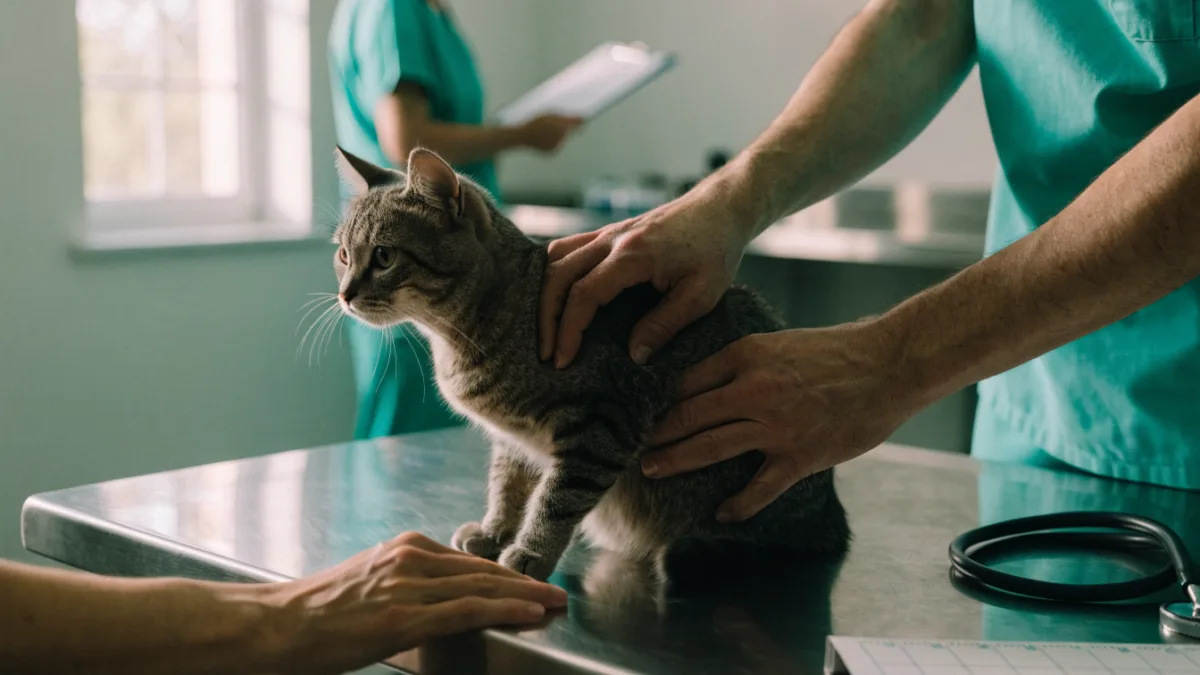
Three weeks ago, a client named Ellen called my clinic in a quiet panic. Her nine-year-old tabby, Pepper, had started drinking water like it was going out of style, and Ellen knew — because she’s an attentive owner — that something was off. I had a spot open the next morning, and it turned out Pepper was developing early kidney disease we could actually manage. The part that stuck with me came afterward, when Ellen mentioned she’d called two other clinics before mine. The earliest either could take a new patient was seven weeks out. That’s not a scheduling hiccup. Vet appointment wait times that used to be measured in days are now measured in weeks, and in some communities, months. It’s the visible edge of a veterinary shortage that is quietly restructuring how, when, and whether our pets get care at all.
The Shortage, by the Numbers
If you want to understand why the phone keeps ringing with no answer, start with two projections that get passed around every veterinary conference I’ve attended recently. Workforce analyses estimate the profession needs roughly 41,000 additional veterinarians by 2030 to keep pace with pet care demand — and we are demonstrably not on track to train and retain them. Follow that math to its conclusion and you get the second number: by 2030, an estimated 75 million pets could lose access to veterinary care.
“Losing access” sounds abstract, so let me make it concrete, because I watch it happen. It means a practice stops accepting new patients. It means the nearest clinic that will see your dog is now a 90-minute drive instead of fifteen minutes. It means the appointment you can actually get is a limited-service visit — a vaccine boost and a weight check — rather than the full workup your pet needs. Animal welfare organizations have been sounding this alarm for a while, and the,[1] not a temporary rough patch after the pandemic.
This isn’t confined to one country or region, either. The dynamics driving it — aging practitioners, rising demand, rising costs — are showing up across the developed world wherever pets have become family members with corresponding medical expectations.
Why Vets Are Quitting
People ask me this constantly, usually with genuine bewilderment: don’t people love this job? They do. That’s rather the point. When I graduated, most of my classmates planned to practice into their sixties. Several have already left clinical medicine, and understanding why vets are quitting explains almost everything about the access crisis.
Burnout and compassion fatigue
Burnout is exhaustion plus cynicism plus the feeling that nothing you do matters. Compassion fatigue is its cousin — the cumulative toll of absorbing other people’s grief and fear all day, every day. A general practitioner like me might manage several euthanasias in a single week, then be expected to walk into the next room smiling for a puppy’s first visit. Layer on moral distress — the anguish of knowing a treatment would work but the owner can’t afford it — and you have a profession with a well-documented mental health problem it is still learning to talk about honestly.
The economics never added up
Veterinary school takes as long as medical school, most graduates carry six-figure student debt, and starting salaries have historically lagged far behind other doctorate-level professions. When a young vet is paying off loans that resemble a mortgage, the choice to leave for a industry job with regular hours and no on-call becomes less a betrayal and more arithmetic.
A wave of retirements and nobody to buy the practice
A large share of practice owners are at or near retirement age, and many small clinics are simply closing when they hang up the stethoscope because no buyer steps forward. Owners in some areas — parts of New Jersey, for example — describe watching nearly every independent small-animal practice in their town shut its doors, leaving only 24-hour emergency hospitals. And I’ll admit something here: I’ve changed my mind about corporate consolidation. Early in my career, I assumed corporate buyers were the villains of this story. The picture is messier. In some communities, a corporate network is the only reason a rural clinic survived its owner’s retirement at all. In others, consolidation has reduced appointment availability and pushed prices up. The honest answer is that it cuts both ways.
One fair counterpoint deserves airtime: part of this is a distribution problem, not purely a headcount problem. Rural areas and food-animal medicine go begging while some metro markets approach saturation. That nuance matters for policy solutions, but it’s cold comfort if your local clinic can’t see your cat until November.
When Daytime Clinics Close, Emergency Rooms Absorb the Shock
Here’s the mechanism that turns an inconvenience into a genuine safety issue. When daytime practices restrict services or close, pet owners with an urgent-but-not-catastrophic problem — a limping dog, a cat that skipped two meals, an ear infection that exploded overnight — get funneled into 24-hour emergency hospitals. Those hospitals have to staff around the clock, which is enormously expensive, and they must triage, meaning your stable-but-uncomfortable dog waits behind the hit-by-a-car cases. Costs rise. Waits lengthen. Tempers fray.
In online pet-owner communities, the frustration is raw. One owner, describing her area after the local clinics closed, put it bluntly: the only option left was a 24-hour emergency hospital that charged “insane money.” Even [2] — and the answers are pouring in.
The strain lands hardest on the safety net. A [3] — the shelters, low-cost clinics, and community programs that low-income families and shelter animals depend on. These groups were already operating on shoestrings; now they’re absorbing demand that private practice can’t take, while competing for the same shrinking pool of veterinarians and technicians. The equity question keeps me up at night: when care gets scarce, the pets who lose access first are the ones whose owners can least afford alternatives.
How to Adapt When Care Is Scarce
You can’t fix the shortage from your living room, but you can position your pet to weather it. Here’s what I tell my own clients:
- Establish a relationship before you need one. If you’ve just moved or adopted, book a new-patient wellness exam now, while your pet is healthy. Clinics prioritize established patients; a file with history, vaccines, and baseline bloodwork is worth its weight in gold during a crisis.
- Book preventive visits the moment you’re allowed. Annual exams, dental cleanings, chronic-condition rechecks — schedule at checkout for the maximum advance window, and ask to be on the cancellation waitlist. People cancel constantly; the flexible get seen.
- Scout emergency options before an emergency. Know where the nearest 24-hour hospital is, its hours, and its payment policies. Driving in circles at 2 a.m. while your dog struggles to breathe is the failure mode we’re trying to avoid.
- Keep your pet’s records portable. A simple photo folder on your phone of vaccine history, medications, and recent labwork speeds up any emergency visit and makes telehealth triage (where it’s offered in your area) far more useful.
- Use the whole team. Many practices now route nail trims, weight checks, and some follow-ups to veterinary technicians and nurses, where local regulations allow. That keeps doctor appointments free for pets who truly need them.
- Insure early or save deliberately. Whether that’s a pet insurance policy purchased while your animal is young and healthy (read the fine print on pre-existing conditions and hereditary exclusions) or a dedicated savings account, emergency care is where costs concentrate.
- Invest in prevention. Keeping your pet lean, brushing teeth, and staying current on parasite prevention per your vet’s guidance are the cheapest ways to avoid the expensive 2 a.m. visit.
- Be kind to the people at the desk. I mean this sincerely. Staff rudeness and online abuse are a documented driver of attrition. Every receptionist who stays in the job is part of your pet’s future care team.
The Takeaway
I want to leave you with something better than dread, because dread doesn’t help Pepper or anyone else. The profession is adapting — new veterinary schools are opening, technician roles are expanding, telehealth is maturing — but those fixes move in years, while the shortage is moving in weeks. Until the math balances, the advantage belongs to owners who plan like the system is fragile: care established early, records in hand, emergencies mapped, money set aside. The bond between people and animals has never depended on convenience; it depends on showing up prepared. The pets who will fare best through this decade aren’t the luckiest ones — they’re the ones whose people saw the shortage coming and quietly got ready. Be that person, and if you’re able, support the nonprofit clinics and shelters holding the safety net together. They’re going to need all of us.
Sources
- situation is increasingly described as a genuine crisis of veterinary care — humanepro.org
- Dr. Marty Becker is publicly asking owners how the shortage is affecting them — facebook.com
- 2024 peer-reviewed study documented the critical impact of workforce shortages on nonprofit veterinary organizations — jsmcah.org