

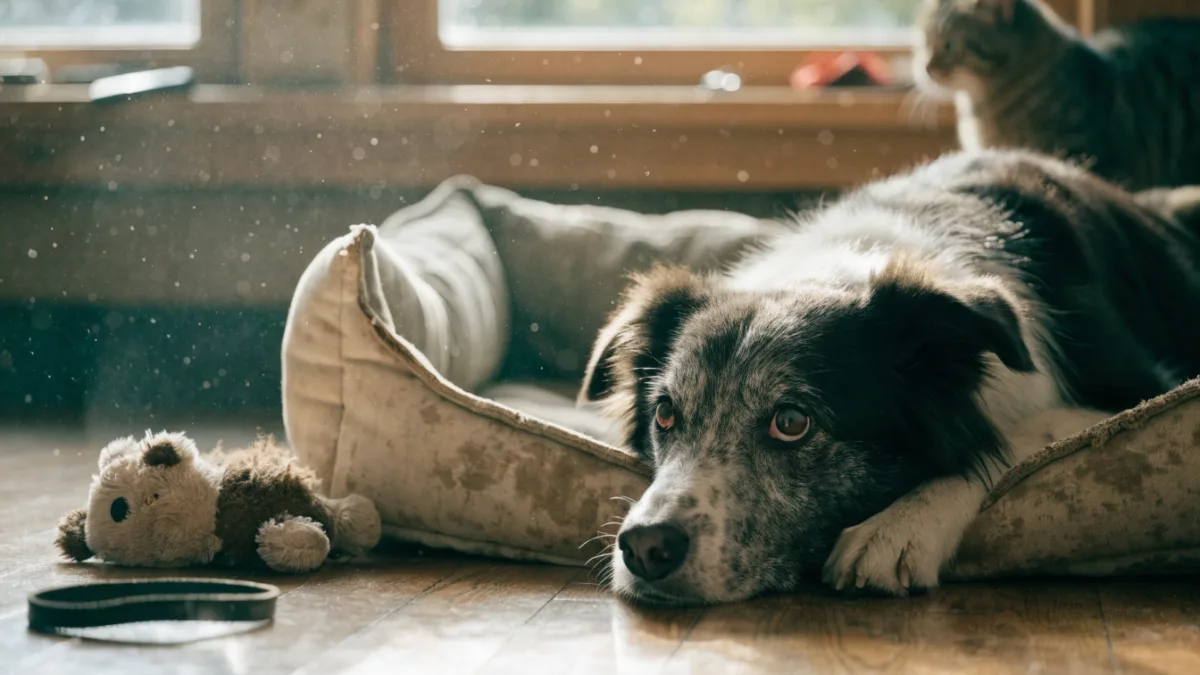
When my older cat Mabel died last spring, I spent three days crying on the kitchen floor. What I didn’t expect was that her younger housemate, Biscuit, would spend those same three days pacing from room to room, pausing at every doorway Mabel used to nap in, letting out a low sound I’d never heard him make before. Not quite a meow. Not quite a cry. Something in between that made my chest ache all over again.
If you’ve ever watched a surviving pet search for a companion who isn’t coming back, you already know the look. That far-off scanning. The sniffing of beds and blankets. The way they seem to wait by a favorite spot, ears rotating toward sounds that aren’t there. For a long time, we’ve told ourselves these were just behavioral quirks. Adjustments to a new routine. But anyone who has lived with animals knows the truth runs deeper than habit disruption — and now the science finally agrees.
Yes, Animal Grief Is Real
For decades, a stubborn debate rumbled through behavioral science circles: do animals actually grieve, or are they simply reacting to changes in their environment? The absence of a familiar scent. A shift in their human’s emotional state. A disruption in feeding schedules. Skeptics argued we were,[1] — projecting complex human emotions onto creatures who might just be confused by an altered routine.
That argument is losing ground fast. Recent studies, including a landmark [2] have pushed the veterinary world to formally recognize companion animal grief as a genuine emotional response. The data is striking: more than 50% of dogs and cats demonstrate at least four behavioral changes after losing an animal companion. And here’s the part that really stayed with me — approximately 60% of grieving pets became noticeably clingier with their human owners after the loss.
That’s not confusion. That’s seeking comfort. That’s reaching for the one reliable source of love that remains.
When Dogs Lose Their Pack
Dogs are, at their core, social creatures built around relationships. When a canine housemate dies, the surviving dog isn’t just losing a playmate — they’re losing a member of their perceived family unit. The disruption can be profound.
The [3] process often looks like searching. You might notice your dog checking the usual napping spots, lingering at doorways, or suddenly becoming your shadow — following you from kitchen to bathroom to bedroom as if terrified you might disappear too. Some dogs change their guarding behaviors, becoming either unusually protective or oddly withdrawn. Others vocalize more, whining at windows or letting out barks that seem to call for someone who isn’t answering.
I’ve known dogs who refused to sleep in a shared bed after their companion passed. I’ve known others who carried the deceased dog’s favorite toy around for weeks, dropping it at their owner’s feet like an offering. These behaviors can look startlingly human because, in many ways, the emotional architecture underneath them is similar. Dogs form attachment bonds. When those bonds break, something has to process the absence.
They aren’t just reacting to an empty corner of the couch. They’re feeling the weight of someone missing.
Common Signs Your Dog Is Mourning
- Searching behavior — checking favorite spots, pacing, waiting at doors
- Increased clinginess — following you room to room, seeking constant physical contact
- Appetite changes — eating less, showing disinterest in favorite treats
- Vocalization shifts — more whining, barking, or unusual sounds
- Sleep pattern disruption — sleeping more than usual or struggling to settle at night
- Lethargy — temporary loss of interest in walks, play, or activities they usually love
The Truth About Cats and Grief
Let’s deal with the elephant in the room: the myth that cats are solitary, aloof creatures who barely notice when another animal leaves the household. I cannot roll my eyes hard enough at this one.
Current research actively disputes the “solitary cat” narrative. Cats form deep, socially dependent bonds with other animals in the home — and yes, that includes dogs. The cat grieving process is real, observable, and sometimes heartbreaking in its intensity. When Biscuit lost Mabel, he stopped eating his favorite treats for four days. He slept in her spot on the radiator. He became startlingly affectionate with me in a way he had never been before, pressing his head under my chin every time I sat down.
Cats who are mourning might hide more than usual. They might yowl — not their typical demand-for-dinner meow, but something longer and more mournful that seems to echo through the house at odd hours. They might stop grooming properly, or conversely, over-groom to the point of creating bare patches. Some cats change their litter box habits when distressed, which is worth noting because it can also signal medical issues that need attention.
And here’s something that genuinely surprised researchers: cats don’t just grieve other cats. They have been [2] too. That interspecies bond — the cat who slept on top of the golden retriever, the tabby who groomed the family poodle’s ears — those connections run deeper than we’ve historically given cats credit for.
How to Help Your Surviving Pet
If you’re reading this, there’s a decent chance you’re in the middle of this yourself. You might be grieving a loss of your own while simultaneously trying to support a confused animal who doesn’t understand where their friend went. That dual grief is heavy. It’s also, oddly, one of the most profound bonds you’ll ever share with a pet — because now you’re both holding the same absence.
There’s no timeline for this. There’s no five-step program that works for every animal. But there are gentle, practical things you can do to help your surviving pet feel safe while they navigate the loss.
Hold the Routine Steady
When everything feels unstable, predictability becomes a lifeline. Try to keep feeding times consistent. Walk routes familiar. Bedtime rituals intact. Cats especially rely on environmental predictability — when their social structure shifts, having the rest of their world remain recognizable helps them feel anchored.
This matters even more if you’re grieving deeply yourself and struggling to keep up with normal activities. The routine doesn’t have to be elaborate. It just has to be there.
Let Them Cling
That 60% statistic — the pets who became more attached to their humans after a loss — tells us something important. Your surviving pet needs you right now, possibly more than they ever have. Let them follow you. Let them sleep on your lap during a show they’d usually ignore. Offer extra petting, extra gentle playtime, extra presence.
And if you’re a senior living alone with a surviving pet, this part can be genuinely healing for both of you. The cat pressed against your side isn’t just seeking comfort — they’re offering it. That warmth matters.
Watch the Food Bowl
Reduced appetite is common during grief and usually resolves within a few days to a week. But here’s where I’ll put on my cautious hat: if your pet refuses food entirely for more than 24 hours, call your vet. Cats, in particular, can develop serious complications from going without eating — even a brief period of fasting can trigger hepatic issues. This isn’t about being alarmist. It’s about knowing when grief might be crossing into something that needs medical attention.
Similarly, watch for other physical changes — vomiting, diarrhea, dramatic weight shifts, refusal to drink water. Your vet would rather field a call that turns out to be nothing than miss something that needs intervention.
Don’t Rush to Replace
Older veterinary advice sometimes suggested getting a new pet quickly to ease the surviving animal’s loneliness. Modern animal psychology takes a more nuanced view. Rushing to introduce a new companion can actually increase stress for a pet who is still processing the loss. They need time to understand that their companion is gone before they can form a new bond.
Focus instead on increasing your interaction with the surviving pet. More play sessions. Enrichment activities. Time spent together that reinforces your existing bond. When and whether to add a new animal to the household is a deeply personal decision — one that should wait until both you and your surviving pet have found your footing.
Healing Isn’t Linear — For Any of Us
Here’s what I want you to know if you’re in the thick of this right now: the sadness you’re seeing in your pet is evidence of something beautiful. It means they loved. They formed a connection real enough to leave a hole when it’s gone. That capacity for attachment — in creatures we once dismissed as operating on instinct alone — is nothing short of remarkable.
Biscuit eventually started eating his treats again. He stopped searching the radiator spot after a few weeks, though he still sleeps there most nights. The grief didn’t vanish. It just softened into something he could carry. And honestly? Watching him find his way through it helped me find my way through it too. We held the loss together, and slowly, that shared weight became bearable.
If your surviving pet is showing signs of mourning, don’t try to fix it. Don’t rush them through it. Just stay close. Keep the routine. Offer the hand. They’ll tell you when they’re ready to come back to themselves — and when they do, you’ll both have learned something profound about the animals who share our homes and our hearts.
The most important takeaway from the emerging science on pet grief is also the simplest: our animals feel deeply, bond genuinely, and mourn authentically. Recognizing that truth — and honoring it with patience and presence — is perhaps the most meaningful thing we can offer them in return for a lifetime of companionship.
Sources
- anthropomorphizing — vcahospitals.com
- survey from New Zealand — mypetsanimalhospital.com
- dog mourning companion — facebook.com