

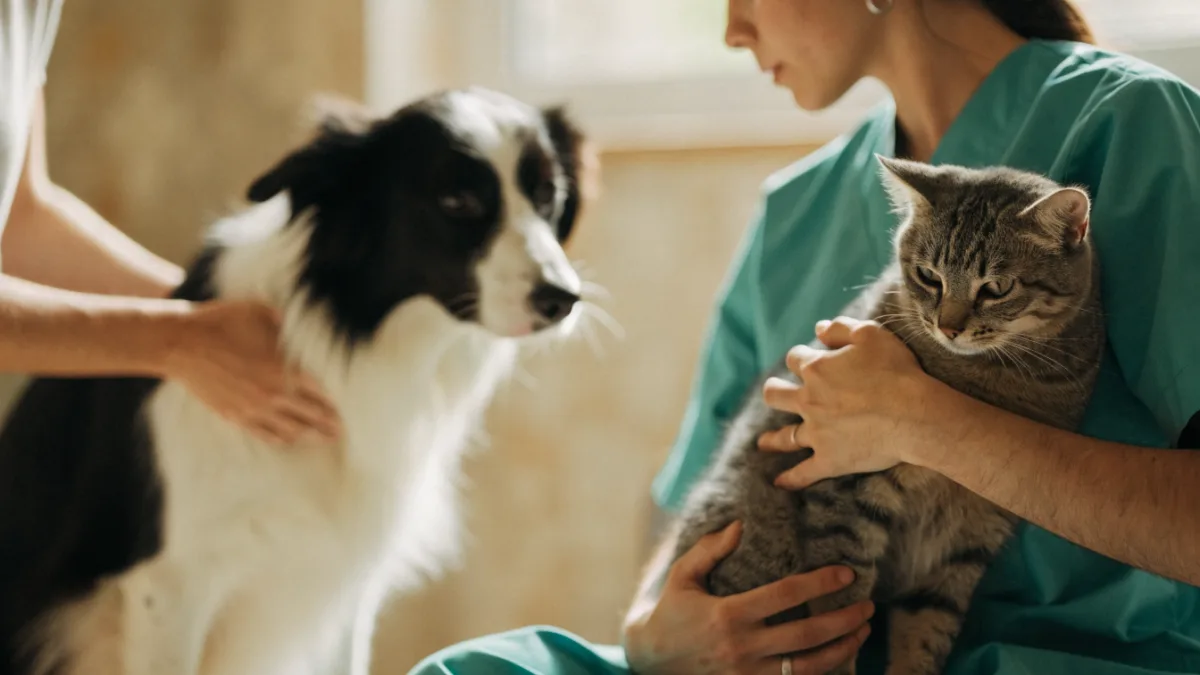
I often see videos circulating on social media showing people lifting their cats by the back of the neck. The hashtags usually feature phrases like cats being held by scruff, should I hold my boy cat by his scruff, or picking up a cat by their scruff. In these clips, the cats usually go completely limp. The comment sections inevitably fill up with people claiming the cat looks “so relaxed” or is experiencing a comforting memory of their mother’s grip. I completely understand the appeal of these videos, and I get why pet owners believe this is a harmless, natural way to handle their pets. But in clinical practice, the reality of scruffing adult animals is entirely different. Let’s talk about why the “mother’s grip” is actually a myth that causes physical injury and lasting psychological trauma to our adult dogs and cats.
The “Mother’s Grip” Fallacy
It is undeniably true that mother dogs and cats carry their offspring by the scruff. However, they only do this when their babies are neonates or very young. At this early stage of life, the little ones weigh just a few ounces. Their loose skin—specifically designed to support their tiny body weight—is highly elastic. As mammals grow into adulthood, their body weight increases drastically, but the elasticity and structural support of that neck skin do not keep pace.
Take my patient, Olive, a four-year-old calico cat who weighs about twelve pounds. Her owner was trying to get her into a carrier to bring her to the clinic, and in a moment of frustration, grabbed Olive by the scruff and lifted her front half off the ground. Olive yelped, thrashed, and subsequently spent the next three weeks recovering from a strained trapezius muscle and a bruised cervical spine.
When you lift an adult animal by the back of the neck, you are suspending a heavy body from a relatively small piece of skin and the underlying soft tissues. This action can cause severe physical damage, including skin tearing, painful muscle sprains, and even spinal injuries. The delicate soft tissues in the neck simply aren’t biologically built to bear the weight of a fully grown dog or cat.
The “Alpha” Dominance Myth and Behavioral Fallout
Another reason people scruff their pets is rooted in the outdated “alpha dog” or “pack leader” training theories that gained popularity decades ago. These theories popularized scruffing and physical pinning as a way to “show the animal who is boss.”
I will be the first to admit that I’ve changed my mind on this. Early in my career, the veterinary community still heavily relied on dominance theory. We were taught that forceful handling was sometimes necessary for safety and control. But modern behavioral science has thoroughly debunked dominance theory. Studies of wild canines show that they do not form rigid, aggressive dominance hierarchies the way we once thought, and domestic dogs certainly do not view their human owners as rival pack members that need to be physically subdued.
When we scruff an adult dog to establish “dominance,” we don’t earn their respect—we destroy their trust. This forceful handling removes the animal’s sense of control and agency, leading to high anxiety, panic, and lasting psychological trauma. I saw this clearly with a patient named Cooper, a two-year-old Australian Shepherd. His owners had been advised to scruff and shake him when he jumped on guests. Instead of stopping the jumping, Cooper developed severe fear-based aggression and began snapping at hands reaching toward his head. He wasn’t a bad dog; he was terrified. A significant percentage of pet aggression and biting incidents toward humans and veterinary staff are rooted in exactly this kind of fear-based handling.
Why Scruffing Cats Isn’t Actually Relaxing
This brings us back to those viral videos of cats going limp when they are scruffed. For a long time, people believed this meant the cat was “soothed” by the memory of their mother. Traditionalists argued that the cat was experiencing a state of pure relaxation.
Modern feline behaviorists and veterinary professionals recognize this limpness as something entirely different: Pinch-Induced Behavioral Inhibition (PIBI). While it might look like relaxation, PIBI is actually a state of tonic immobility. Essentially, it is a fear-induced freeze response, much like an opossum playing dead or a person freezing in a terrifying situation. The cat is not calm; they are shutting down because they are overwhelmed and terrified.
Leading animal welfare organizations, such as the American Association of Feline Practitioners (AAFP) and the American Veterinary Medical Association (AVMA), strongly discourage the routine scruffing of adult cats. When you grab a cat by the scruff, you trigger their sympathetic nervous system—their fight-or-flight response. Their cortisol (stress hormone) levels spike. Over time, this sensitization makes routine handling, grooming, and veterinary visits incredibly difficult, as the cat learns to associate human touch with pain and panic.
Fear-Free Alternatives for Handling Your Pet
There is a massive, positive shift happening right now in the veterinary and pet-care industry. Over the last decade, there has been a huge movement toward “Fear-Free” and “Low-Stress Handling” certifications. These programs specifically train veterinary professionals, technicians, and groomers to abandon scruffing in favor of behavioral modification, pheromone use, and gentle physical support. While there is still an ongoing transition in the industry, the evidence is clear: fear-free methods make pets easier to handle over time because they prevent the escalation of stress and aggression.
You can apply these exact same principles at home. Here is what you should do instead of reaching for the scruff.
Humane Handling for Canines
If you need to lift a dog, always support their weight properly. For small dogs, I recommend using a secure chest harness or employing what we call a “modified football hold.” You support the dog’s chest with one arm wrapped securely under their ribcage, and use your other arm to support their hindquarters. This distributes their weight evenly, makes them feel physically secure, and prevents painful spinal injuries.
For larger dogs, focus on cooperative care training. Use positive reinforcement—like high-value treats—to reward them for standing quietly while you handle their paws, check their ears, or guide them by a leash attached to a secure harness. If you need to gain control of an overexcited dog, simply step on their leash so they cannot jump up, and wait for them to offer a sit on their own, which you then reward. This teaches them self-control without you having to lay a heavy hand on them.
The “Kitty Burrito” and Other Feline Techniques
For our feline friends, we need a technique that provides gentle, full-body pressure, which is naturally soothing to cats, without causing pain or triggering a fear-freeze. Enter the towel wrap, affectionately known in veterinary clinics as the “Kitty Burrito.”
To do this, place a large, soft towel on a flat surface, set your cat in the middle, and wrap the towel gently but firmly around their body, enclosing all four legs. This mimics the feeling of being in a small, dark, secure space. It naturally lowers their heart rate and reduces stress, giving you safe access to administer medication or examine them without risking a bite or a scratch.
If you just need to move your cat from one room to another, instead of grabbing their neck, place one hand under their chest just behind their front legs, and use your other hand to scoop up their hindquarters, keeping their body fully supported against your torso.
The bond we share with our pets is built on mutual trust, and trust is easily broken the moment we use force. Discarding outdated myths like the “mother’s grip” or the “alpha roll” is one of the most powerful ways we can advocate for our pets’ well-being. When we look to wildlife conservation, the ultimate goal is to respect animals in their natural habitats without imposing undue stress or altering their natural behaviors. We can bring that exact same philosophy into our own homes. By respecting the biology and psychological boundaries of our domestic dogs and cats, we don’t just prevent physical injuries—we create a sanctuary where they can truly thrive, confident that the hands reaching for them are bringing comfort, not fear.