

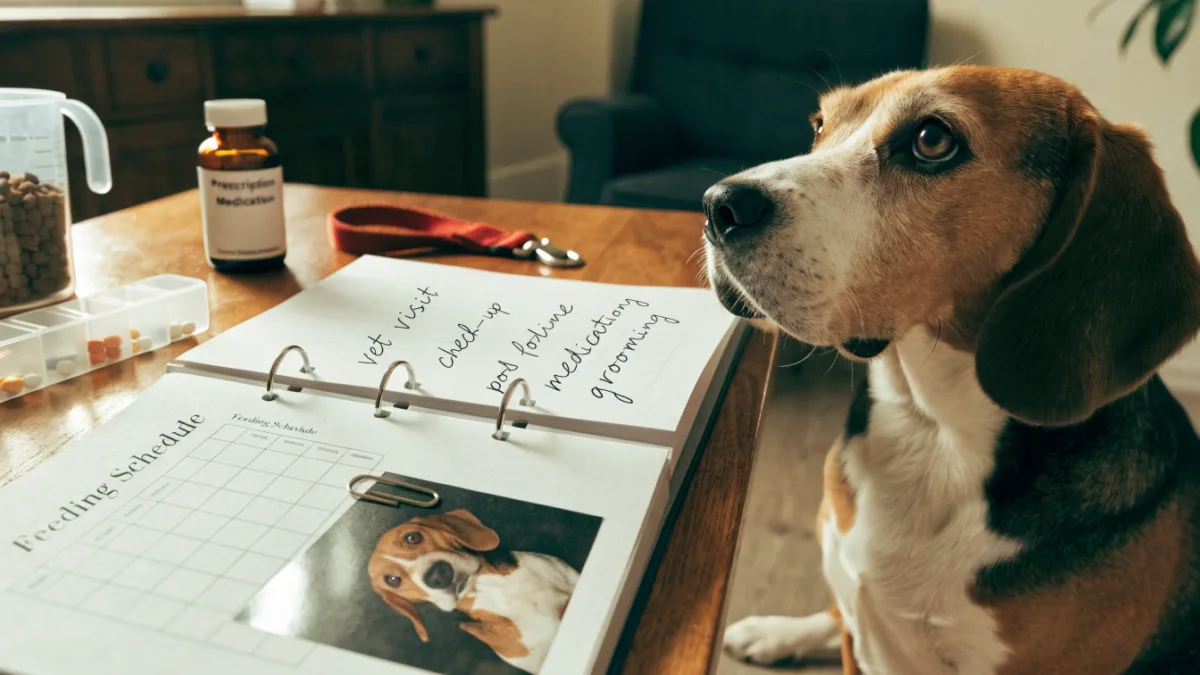
When Margaret dropped off her ten-year-old Border Collie mix, Benny, with a new sitter before flying to her daughter’s wedding in Seattle, she left behind something she called “the binder.” Fourteen pages of feeding schedules, medication lists, vet contacts, and even a hand-drawn diagram of Benny’s favorite walking route through the neighborhood. The sitter, a college student named Keely, later told me she thought it was overkill — until Benny refused his dinner on night two and she remembered the note about how he sometimes skips meals when thunderstorms are coming. She checked the forecast, saw the storm rolling in, and knew exactly what to do. That binder, Margaret later admitted to me with a laugh, probably took her six hours to put together. It might have saved Benny from an unnecessary emergency vet visit.
In my twenty-plus years of clinical practice, I’ve seen what happens when owners leave for vacation without leaving behind crucial medical and behavioral information — and I’ve seen what happens when they do. The difference can be life-altering. So let me walk you through exactly what your pet sitter needs to know, whether you’re heading out for a long weekend or a three-week international trip.
Start With a Thorough Pet Profile
This is the foundation. Before a sitter can recognize when something is wrong, they need a crystal-clear picture of what “normal” looks like for your pet. Behavioral baselines — the everyday patterns and personality quirks that define your animal — are absolutely essential for detecting early signs of illness or distress.
Your profile should include the basics: age, breed or mix, weight, physical description (especially helpful if your sitter will be walking multiple dogs), microchip number, and recent photos. But it also needs personality context. Is your dog nervous around strangers for the first thirty minutes, then a total cuddle bug? Does your cat hide under the bed until 11 PM every night and then suddenly demand attention? These aren’t trivial details — they’re the reference points your sitter will use to gauge whether your pet is thriving or struggling.
I remember a case from a few years ago — a sweet Golden Retriever named Sadie whose owners went to Europe for two weeks. The sitter was experienced and thorough, but the owners hadn’t mentioned that Sadie had a habit of licking her front left paw for five minutes every night before falling asleep. Completely benign behavior she’d done since puppyhood. When the sitter noticed it, she panicked, thinking it was an allergic reaction or injury, and rushed Sadie to an emergency clinic at midnight. Eight hundred dollars later, the verdict was: “She just does this.” A single sentence in the handbook would have prevented the whole ordeal.
Include Body Language Translation
Here’s something many owners overlook: your pet’s body language may not mean what a sitter assumes it means. A yawn in your dog might signal stress, not sleepiness — or it might genuinely mean they’re tired. You know which. Your sitter doesn’t. I always encourage owners to include a brief “body language decoder” in their handbook. Things like: “When Max’s ears go flat and he licks his lips, he’s anxious — give him space.” Or “If Cleo’s tail is puffed up but she’s purring, she’s overstimulated, not happy.”
Document Daily Routines Down to the Detail
Dogs and cats are creatures of habit in ways that genuinely affect their physiological well-being. Changes in routine — feeding times, walking schedules, even the timing of bedtime — can trigger stress responses that manifest as digestive upset, behavioral regression, or anxiety-related behaviors like destructive chewing or inappropriate elimination.
Be specific. Instead of “feed morning and evening,” write: “Breakfast at 7 AM — half cup dry kibble plus one tablespoon of wet food, served in the blue bowl in the kitchen. Dinner at 6 PM — same portions.” Note water bowl locations, treat allowances (and limits), and any food preparation rituals your pet expects.
For dogs, document walking routes, typical duration, leash behavior expectations, and potty schedules. For cats, note litter box locations, cleaning frequency, and indoor-only status. If your pet has a bedtime ritual — and many do — spell it out. One of my clients has a Labradoodle who will not settle for the night without a specific chew toy placed in his crate. Without that toy, he cries for hours.
Medical Needs: Medications, Allergies, and Chronic Conditions
This section demands precision. According to the,[1] incomplete medical information is one of the most common and dangerous gaps in pet-sitting arrangements.
List every medication your pet currently takes, including:
- The exact name of the medication (generic and brand name if applicable)
- Dosage in milligrams or units — not “one pill,” because pill strengths vary
- Administration method: with food, on an empty stomach, wrapped in cheese, directly into the mouth
- Frequency and exact timing
- What to do if a dose is missed or vomited back up
- Where the medication is stored in your home
For pets with chronic conditions — diabetes, epilepsy, heart disease, Cushing’s disease — provide a brief description of what a normal day looks like and what constitutes a warning sign. If your diabetic cat is on insulin, your sitter needs to know the symptoms of hypoglycemia (low blood sugar): lethargy, wobbliness, tremors, disorientation, seizures. They also need to know what to do if they see those signs — honey rubbed on the gums, then call the vet immediately.
Document all known allergies, including food sensitivities and environmental reactions. Note what a reaction looked like last time — hives, facial swelling, vomiting, difficulty breathing — and how it was treated. If your pet has a history of severe allergic reactions and you have an epinephrine auto-injector prescribed, make sure your sitter knows how to use it.
The Telehealth Question
Something I’ve started recommending in the last couple of years — and honestly, I’ve changed my mind on this as virtual veterinary services have improved — is leaving telehealth login information for your sitter. Many veterinary practices and dedicated platforms now offer video consultations that can triage whether a situation is truly an emergency or can wait until morning. For a sitter who might otherwise rush to an emergency clinic at 2 AM over something manageable, a quick virtual consult can save significant stress and expense. Ask your vet whether they offer this service and whether they’d recommend it for your pet’s specific situation.
Behavioral Issues, Triggers, and Training Methods
This is where pet handbooks often fall short, and it’s where sitters need the most guidance. Start with fears and phobias: thunderstorms, fireworks, vacuum cleaners, doorbells, strangers in hats, bicycles, skateboards. Document what the fear looks like and what strategies help your pet cope — whether that’s a Thundershirt, a quiet dark room, white noise, or simply being left alone in their safe space.
Be honest about aggression history. I know it’s uncomfortable to write down “my dog has snapped at someone who touched his paws,” but that information protects everyone — your sitter, your pet, and any other animals or people they might encounter. The [2] and most major veterinary organizations emphasize that clear documentation of bite triggers is one of the most effective bite prevention tools available.
Include leash reactivity details, resource guarding behaviors (food, toys, sleeping spots), fence-jumping tendencies, and any history of escaping or darting through doors. If your dog should never be let off-leash outside a fenced area, state that explicitly — no ambiguity.
And here’s something that causes real friction between owners and sitters: training philosophy. If you use positive reinforcement methods, you probably don’t want a sitter using corrective tools or harsh verbal discipline. The [3] all emphasize this — mismatched training approaches cause confusion and can set back months of behavioral progress. Spell out what’s acceptable and what isn’t. If you’re working with a trainer on specific behaviors, include their contact information and note which cues your dog responds to reliably.
Emergency Protocols: Who, Where, How Much
This section needs to be foolproof. Your emergency contacts should include:
- Your primary veterinary clinic — address, phone number, and after-hours instructions
- The nearest emergency veterinary hospital (which may be different from your regular vet)
- A backup emergency contact — a trusted friend, family member, or neighbor who knows your pet
- Your own contact information, including where you’re staying and time zone differences
Now, the uncomfortable conversation: emergency financial authorization. Who pays if your pet needs urgent care and you’re unreachable? I’ve seen situations where sitters were left with a credit card and no spending limit, and situations where they had no financial access at all. Both scenarios create problems. The cleanest solution is a signed document authorizing your sitter to approve emergency treatment up to a specific dollar amount — say, $1,500 to $3,000 — with the understanding that you’ll be reimbursing them or that charges will go to a card you’ve left on file. Discuss this directly with your sitter beforehand. Put the agreement in writing.
One more thing: consider a letter authorizing your sitter to make medical decisions on your behalf if you cannot be reached. Some veterinary clinics require this documentation before treating an animal brought in by someone other than the registered owner. Your vet can advise you on what form this should take.
Going Digital — With a Backup
The shift toward digital pet care profiles has been significant. Platforms and apps now allow you to update feeding amounts, medication dosages, and behavioral notes in real time, and your sitter receives the changes instantly. This is genuinely useful — if your vet adjusts a medication dose the day before your trip, you can update it from your phone rather than trying to rewrite a printed note.
But here’s my advice: always have a physical backup. Phones die. Wi-Fi goes out. Apps crash. Print the critical pages — emergency contacts, medication schedule, and veterinary information — and leave them somewhere obvious. The refrigerator door is cliché, but it works because it’s where sitters naturally look.
Taking the time to build a comprehensive handbook for your pet sitter isn’t just about logistics or liability — it’s an act of care for an animal who can’t speak for themselves. You’re giving your pet a voice when you can’t be there to advocate for them directly. Every detail you provide, every quirk you document, every warning sign you describe is a small investment in their safety and well-being. And in my experience, the owners who put in that effort are the ones who come home to happy, healthy pets — not emergency vet bills and traumatized sitters. Your pet deserves nothing less than your most thorough preparation, and honestly, so does the person you’ve entrusted with their care.
Sources
- American Animal Hospital Association (AAHA) — aaha.org
- American Veterinary Medical Association — hpanimalhospital.com
- pet sitting guides I've reviewed — prime100.com