

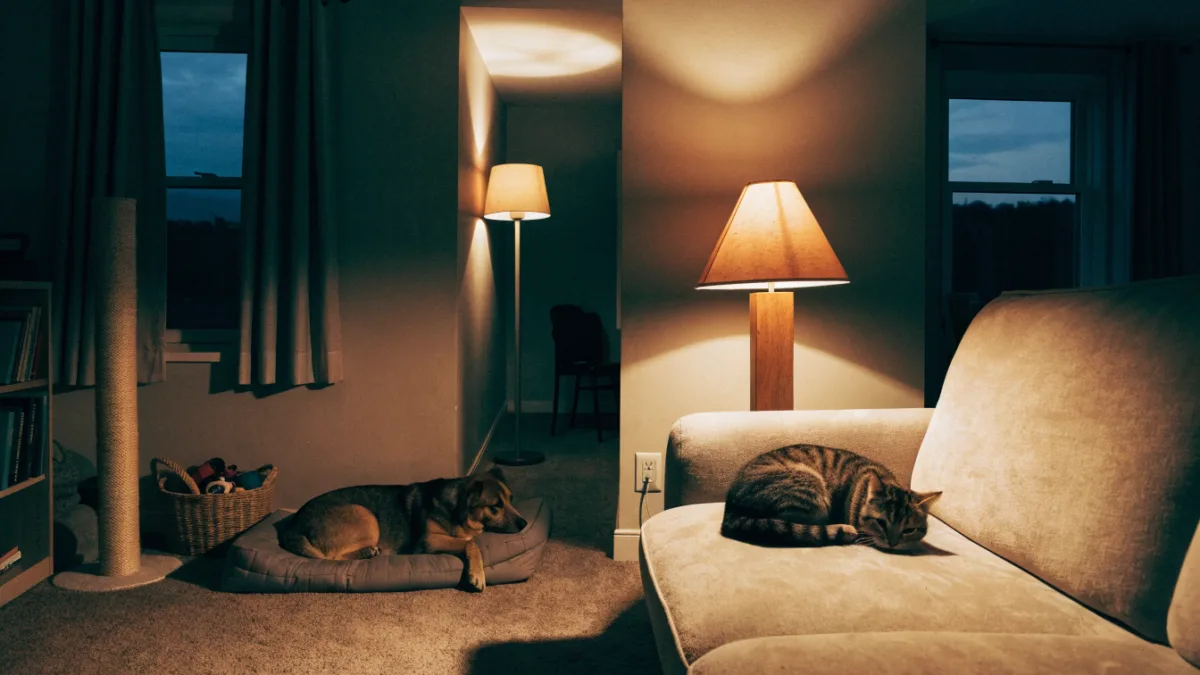
I spent $200 on a tiny plug-in device that promised to make my cat Mochi stop treating the living room rug like her personal nemesis. Three weeks later, the rug was still getting peed on, but I’d noticed something odd — Mochi was sleeping more soundly and had stopped hissing at the mail carrier through the window. Was the diffuser actually doing something, or was I just desperate enough to see progress where none existed? After diving into the research, I can tell you the answer is complicated in a way that actually makes sense once you understand what pheromones are — and what they absolutely are not.
What Pheromones Actually Do (And Don’t Do)
Here’s the thing that took me way too long to understand: pheromones aren’t magic calm juice. They’re chemical signals that animals naturally produce to communicate with members of their own species. Mother dogs and cats produce specific pheromones that tell their newborns “you’re safe, I’m here, everything is fine.” Synthetic pheromone products attempt to recreate those signals and broadcast them into your home environment like a tiny, invisible “it’s all good” radio station.
The key word there is attempt. And the second key word — which nobody at the pet store mentioned to me — is species-specific. A canine pheromone diffuser does literally nothing for your cat. A feline pheromone diffuser does nothing for your dog. And neither one does anything to you, which I mention because I spent the first week feeling oddly relaxed around Mochi’s diffuser and had to remind myself that the placebo effect is alive and well in pet parenting.
What pheromones do is create an environment that feels less threatening. What they don’t do is erase the underlying trigger.
Think of it like background music at a restaurant. The right soundtrack can make the whole room feel warmer and more inviting, but it won’t fix a burnt steak. Pheromones lower the volume on anxiety — they don’t eliminate the source.
The Science: Dogs Have Data, Cats Are Getting There
Canine Pheromones: The Stronger Evidence
When it comes to dogs, researchers have actually done the homework. There are at least five solid studies demonstrating that synthetic canine pheromones — typically recreations of the Dog Appeasing Pheromone (DAP) that nursing mothers produce — can meaningfully reduce anxiety behaviors. This isn’t fringe science. Veterinary behaviorists reference this research, and the data covers situations ranging from separation anxiety to noise phobias during fireworks.
My neighbor’s golden retriever, Biscuit, used to claw through drywall during thunderstorms. After her vet suggested combining a pheromone collar with behavioral modification work, the destruction stopped. The pheromone wasn’t the whole solution — Biscuit also went through a careful desensitization program — but it created enough baseline calm that the training could actually take hold.
Feline Pheromones: Promising But Younger
Cat pheromone research is the teenage version of dog pheromone research — full of potential, showing real promise, but not yet carrying the same weight of evidence. Current studies indicate that synthetic feline facial pheromones (the ones cats deposit when they rub their cheeks on your furniture, your legs, and unfortunately your clean laundry) can help reduce stress behaviors like urine marking, scratching, and inter-cat conflict. But the veterinary community readily admits this research is still in earlier stages compared to the canine side.
This doesn’t mean cat pheromones don’t work. With Mochi, I genuinely believe the diffuser took the edge off her territorial anxiety about the neighbor’s cat visiting our porch. What it means is that we should hold the claims a little more loosely and pay attention to whether our individual animal is actually responding.
And yes — some skeptics argue that cat pheromone results are just owners projecting calm onto their pets. I get the skepticism. But I’ve watched Mochi go from flattened ears and a swishing tail to a relaxed loaf position in the same room as her diffuser, and I don’t think she’s faking it for my benefit.
Choosing Your Format: Plug-Ins, Sprays, and Collars
The pheromone delivery system you pick actually matters quite a bit, and I learned this the expensive way after buying the wrong format for the wrong problem.
- Plug-in diffusers are the workhorses for home-based anxiety. You plug them into a wall outlet, and they continuously release pheromones into a room. Coverage is typically limited to one room per diffuser — maybe two if you have an open floor plan. These are best for ongoing stressors like a new pet in the household, territorial issues with outdoor animals visible through windows, or general household tension between pets.
- Sprays are your portable option. You can mist them on bedding, carriers, or car interiors before vet visits or travel. They’re also useful for spot-application — like spraying the inside of a crate before a car ride. The effect is shorter-lived than a diffuser, so think of sprays as targeted intervention rather than constant coverage.
- Pheromone collars travel with your pet, which makes them ideal for dogs with separation anxiety or cats who roam the whole house (though collar acceptance varies wildly by individual animal — some cats will spend their entire existence trying to remove one).
What matters most is matching the format to the problem. A diffuser won’t help with car anxiety because your dog isn’t home. A spray won’t solve round-the-clock territorial stress because it wears off. And no format will work if you accidentally buy a dog product for your cat, which I realize sounds obvious until you’re standing in a pet store aisle at 7 PM trying to read tiny packaging.
Essential Oils Are NOT Pheromones — Please Don’t Confuse Them
This is where I need to get serious for a minute, especially for my fellow cat people. There are products on the market — often essential oil blends — that are marketed as calming alternatives to pheromone diffusers. These are fundamentally different things, and that difference matters enormously.
Pheromones are species-specific chemical signals. Essential oils are plant extracts. Some essential oil products are marketed for topical use on pets, and while I’m not here to debate every individual product’s merits, I will say this loudly: many essential oils are toxic to cats.
Cats have highly sensitive respiratory and hepatic systems. Their livers lack certain enzymes that other animals (including dogs and humans) use to process compounds found in many essential oils. Diffusing tea tree oil, citrus oils, pine oils, or eucalyptus around a cat can cause serious health problems — respiratory distress, liver damage, the kind of emergency vet visit that haunts your bank statement and your memory.
When you see a product marketed as a “calming blend” for pets, check whether it contains synthetic pheromones (species-specific, well-tolerated, backed by at least some research) or essential oils (plant-based, potentially dangerous especially to cats, with a different safety profile entirely). If you’re unsure whether something is safe for your specific animal — especially a cat, an older pet, or an animal with existing health conditions — talk to your vet before plugging anything into your walls or applying anything to their skin.
When Pheromones Make Sense (And When They Don’t)
According to veterinary behavior experts like Dr. Valarie Tynes, pheromone products can be useful in virtually any situation that triggers anxiety: moving to a new home, fireworks season, separation, veterinary visits, introducing a new pet or family member, or even changes in routine like returning to work after months at home.
But I want to be honest about what pheromones don’t do, because I spent months expecting more than they could deliver. Pheromones won’t:
- Cure an underlying medical issue that’s causing behavioral changes (always rule out pain, illness, or cognitive decline first, especially in older animals)
- Replace behavioral modification or training for serious anxiety disorders
- Work instantly — most products take 2-4 weeks of continuous use to show meaningful results
- Solve problems alone in severe cases — they’re often most effective as part of a broader approach that might include environmental management, behavioral work, and in some cases, medication prescribed by a veterinarian
For Mochi’s situation, the diffuser helped take the edge off her anxiety, but the real breakthrough came when I combined it with blocking her view of the porch where the neighbor’s cat kept appearing. The pheromone lowered her baseline stress; the environmental change removed the trigger. Together, they worked. Separately, neither was enough.
With dogs, I’ll defer to behaviorists and trainers for the actual modification work — that’s outside my lane and I know it. But I can tell you that the dog owners I know who’ve had the most success with pheromones used them as one tool in a larger kit, not as a standalone solution.
If you’re dealing with a pet whose anxiety is significantly impacting their quality of life — or yours — please don’t expect any single product to be the answer. Talk to your veterinarian, who can help you figure out whether pheromones are worth trying, whether something else might be going on, and what combination of approaches makes sense for your particular animal in your particular situation.
The most important takeaway I can offer after going down this rabbit hole (with a cat who would like me to know that rabbits are beneath her notice): approach your pet’s anxiety the same way you’d approach a friend going through a hard time. Offer support from multiple angles. Be patient with the timeline. And don’t believe any product — pheromone or otherwise — that promises a quick fix. Real calm, the kind that actually changes how an animal experiences the world, takes time, attention, and usually more than one strategy working together.