

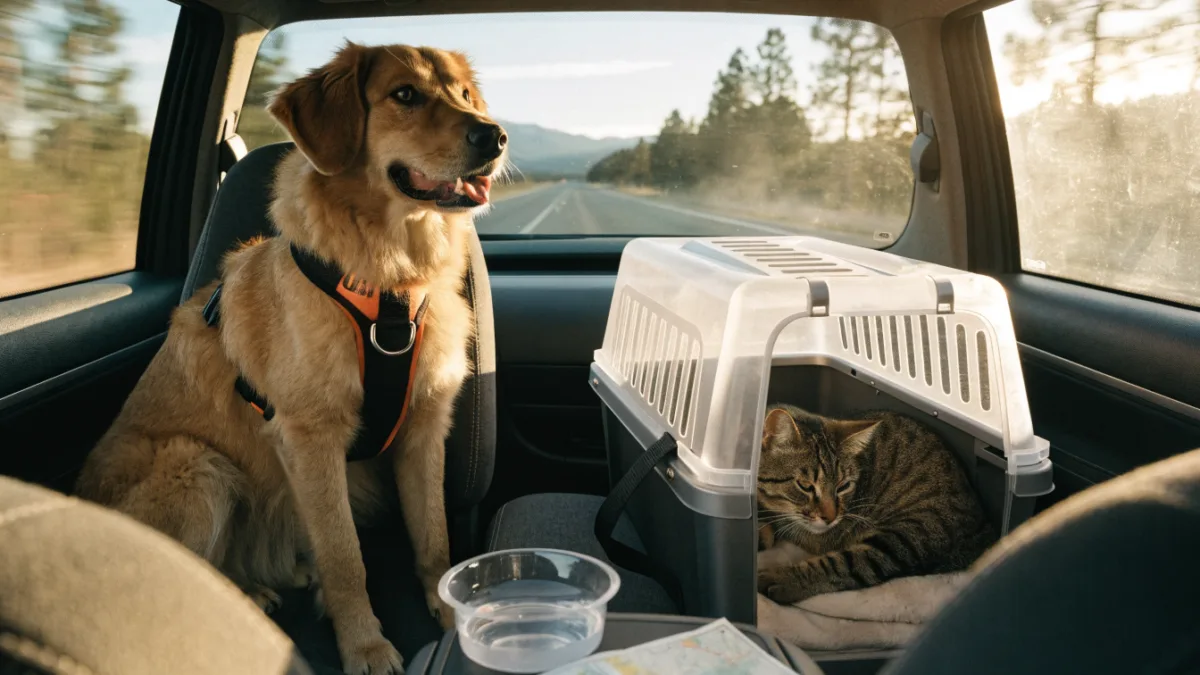
The first time I drove more than an hour with my cat Miso, she produced a sound best described as a smoke detector with grievances. By hour two she’d gone hoarse. By hour three, I was considering pulling over and apologizing to her in person. That trip taught me the thing I now tell everyone who asks about long car rides with pets: they don’t fail because pets are bad travelers. They fail because we treat a multi-day drive like a routine trip to the vet and back. Whether you’re planning a family vacation, migrating south for the winter, or relocating a home office plus two animals, the gap between nightmare and genuine adventure is almost entirely about preparation.
Rehearse Before You Roll Out
Never let departure day be your pet’s first real experience of the car. A few weeks of short practice drives, with treats handed out for calm, quiet observation, does more than any product you can buy — the [1] makes this the cornerstone of its travel advice, and I can confirm it works. My partner Jake handles the actual training in our house, but the travel version is simple: calm and quiet earns a treat, whining earns nothing. Jake’s dog Gus would happily ride to the mailbox and back all day. Miso, meanwhile, required three weeks of eating breakfast next to her carrier before she stopped treating it like a trap.
Cats need a longer runway
Dogs mostly come around to car travel with repetition. Cats are a different project entirely. Weeks before a trip, start feeding your cat near the carrier, then inside it, then take a few short rides. And accept the fundamental truth of car travel with cats: they’re individuals, and they’d like you to know that. Some of the usual tips will apply to your cat, some won’t, and a few will backfire spectacularly. Motion sickness, for what it’s worth, is most common in puppies and young dogs (their inner ears are still developing) and often improves with age.
Paperwork and the packing pile
Schedule a vet visit a few weeks out. Confirm vaccinations, update microchip registration, and put your cell number on the ID tag — the one you’ll actually have with you. If you’re crossing borders, you’ll likely need a health certificate and rabies documentation, and if you’re bringing a dog into the United States, the CDC’s tightened import rules (in effect since August 2024) require a microchip, rabies vaccination, and a completed import form. Rules change, so verify current requirements before you leave.
- Your pet’s usual food, pre-measured into daily bags
- Jugs of water from home — sudden water changes are a classic cause of travel diarrhea
- Medications, harness, leash, waste bags
- Litter and a disposable litter box for cats
- Familiar bedding that smells like home
- Photos of vaccination records on your phone, plus a first-aid kit
- A GPS tracker for the collar, because escapes happen at the worst possible moments
The Restraint Conversation Nobody Wants to Have
Here’s the statistic that should end every “he’s fine loose, he just lies there” argument: roughly 84% of dog owners travel with their dogs unrestrained. And the physics are unforgiving — in a crash at 50 mph, a 10-pound dog exerts around 500 pounds of force. An 80-pound dog at just 30 mph hits with roughly 2,400 pounds. That’s not a pet anymore; that’s a cannonball, and everyone in the car is in its path. Distraction matters too: in surveys, more than half of drivers admit to petting their dog while driving, and nearly one in five lets the dog ride in their lap.
The fix is a crash-tested harness, a secured hard-sided carrier, or a properly anchored travel crate — and here’s where I’ll get opinionated: not all gear labeled “tested” actually protects. The Center for Pet Safety’s independent crash testing found that many popular harnesses and carriers fail badly in collisions, and certification is voluntary. Look for published, third-party crash-test results, not marketing language.
For cats, the rule is non-negotiable: hard-sided carrier, seatbelted into the back seat, ideally top-loading so you can get a reluctant cat in without a wrestling match. Some people swear their cat is calmer loose in the car, and maybe it’s true — right up until a panic stop turns that cat into a projectile or it parks itself under your brake pedal. A loose cat in a moving car isn’t a personality quirk. It’s a crash in progress. Same verdict for heads out the window (debris, eye and ear injuries) and riding loose in truck beds.
One more pre-drive decision: food. Offer a light meal three to four hours before departure, and skip it entirely for pets prone to motion sickness. If nausea or anxiety is a known issue, talk to your vet well before the trip — there’s now an FDA-approved anti-nausea medication for dogs, and anti-anxiety options exist too. But never sedate a pet without veterinary guidance, especially flat-faced breeds like Pugs, Bulldogs, and Persians, whose breathing and temperature regulation can be compromised by sedation.
Rest Stops: The Two-to-Three-Hour Rhythm
A road trip with a dog runs on a simple clock: a break every two to three hours for a bathroom stop, water, and a proper sniff. Build your route around rest areas with designated pet sections and identify 24-hour veterinary clinics along the way. You will almost certainly never need that vet list, and that’s exactly the point.
The rest-stop rule that matters most: leash goes on before the door opens, every single time. Even a reliably obedient dog can bolt in unfamiliar territory, and escape at highway rest areas is one of the leading causes of lost pets on trips. Keep noses away from antifreeze puddles, toxic plants, and anything dropped in a parking lot — rest areas collect things you don’t want your dog finding.
And the cat?
Never open a carrier outdoors in an unsecured area. A startled cat can clear a parking lot in seconds and you will not win that footrace. Your options are a harness-trained cat (a months-long project, not a rest-stop experiment) or the in-car litter break: safely parked, disposable litter box lined with a pee pad, back seat, some privacy. On Miso’s two-day relocation drive, she used it exactly once and judged me thoroughly for the arrangement, but it worked.
And never, ever leave a pet alone in the car — not for a “quick” stop. On an 85°F day, the interior hits about 102°F within ten minutes and roughly 120°F within half an hour, and cracking the windows does essentially nothing. A growing number of places now criminalize it or legally protect bystanders who intervene.
Hotel Nights: Where Good Trips Go Sideways
Book pet-friendly rooms in advance using a directory or pet-travel app, then call the actual property to confirm the fee, weight limits, pet-count caps, and whether pets can be left unattended. Policies vary even within the same chain, because franchises write their own rules — the brand on the sign means less than the person at the front desk.
Pace the drive like a human trip, not a delivery run. Six to ten hours of driving per day with a hotel night in between beats one fourteen-hour marathon, and even twelve hours is the upper limit for a well-conditioned dog — a recent [2] reads like a support group, and the consensus is: split it. At check-in, tire everyone out first with a long walk, put the familiar bedding down, keep mealtimes consistent, and don’t leave a stressed pet loose and alone in a strange room. Housekeeping opens doors. Stressed animals bolt. Miso, for her part, claimed my suitcase as sovereign territory within four minutes and spent the evening judging the wallpaper from it.
Keeping Anxiety Manageable Over Multiple Days
The best anxiety tool on a multi-day drive is boring and free: routine. Same food, same feeding times, same blanket that smells like home appearing in every hotel room. Layer on the extras as needed — pheromone sprays and collars, a compression vest for dogs, a partially covered carrier for cats, white noise or quiet music, or a rubber chew toy stuffed with something soft and frozen for the road. Be skeptical of the booming calming-supplement market, though: it’s lightly regulated and the evidence is thin, especially for CBD. If your pet’s travel anxiety is severe, that’s a conversation to have with your vet weeks before departure, not in a hotel parking lot. More [3] are worth a read if you want a second checklist to compare against mine.
One last thing, and it’s bigger than it sounds: rest stops sit at the edge of wild habitat, especially along the snowbird corridors of the Southwest. The scrub outside that gas station may be home to rattlesnakes, coyotes, raptors, and desert tortoises, so keeping your dog leashed and your cat contained protects far more than your own pets — it protects the animals who live at every off-ramp. That’s the real takeaway from all of this. Plan for your pet instead of around them, and a long drive stops being an ordeal to survive and becomes what it actually is: the rare kind of trip where the whole family, opinionated cats included, gets to come along. Miso now sleeps through hotel nights. Or at least judges them quietly, which I’ve learned to count as a win.
Sources
- Animal Humane Society — animalhumanesociety.org
- Reddit thread on twelve-hour drives with dogs — reddit.com
- safety and travel tips — chewy.com