

There’s a moment I had recently where I found myself standing in my living room, holding a cat harness in one hand and my phone in the other, googling whether the harness color “complemented my apartment’s accent wall.” I wish I were joking. Mochi—my 12-pound tortoiseshell with the personality of a disgraced Victorian duchess—stared at me from the couch with what I can only describe as pure, undiluted judgment. And honestly? She had a point.
We’ve entered a strange and wonderful era where pet accessories aren’t just accessories anymore. They’re lifestyle statements. The global pet accessory market just hit $9.97 billion, and it’s not because we’re all suddenly buying more basic nylon leashes. We’re buying curated pet wardrobes. We’re buying scratching posts that look like mid-century modern sculptures. And somewhere along the way, Vogue started publishing editor-curated lists of dog essentials alongside their spring fashion previews.
Yes. Vogue. The fashion bible. Now officially in the pet space.
The “Dog-Walking Wardrobe” Is Real, and It’s Spectacular
Let’s talk about what’s happening with dogs first, because the canine gear market has fundamentally transformed.
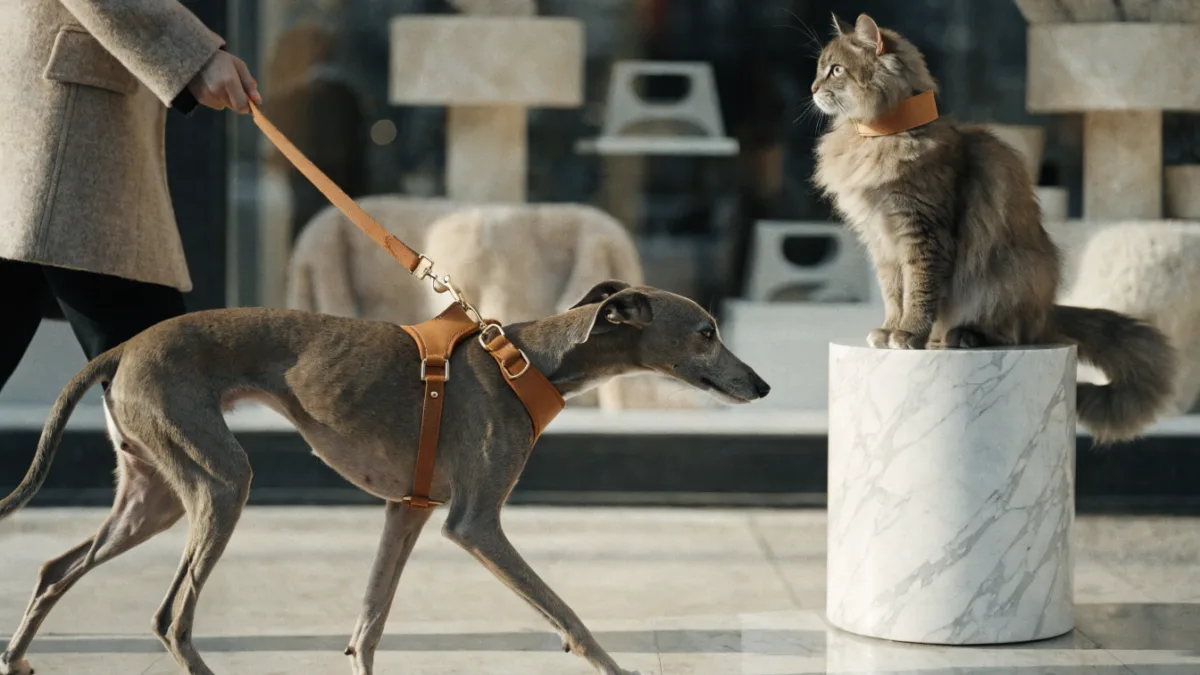
Remember when a dog leash was just a dog leash? Nylon, maybe some reflective stitching if you were fancy, and you bought it once and used it until it smelled like a swamp? Those days are gone. The concept of the “dog-walking wardrobe” has officially arrived, and it means owners are now curating complete coordinated looks built specifically around the daily walk. Harnesses, leashes, waste bag holders, jackets, booties, bandanas—the works.
Major retailers have noticed. Petco recently partnered with Draper James to launch exclusive collections they explicitly described as “trend-forward and culturally relevant.” That’s fashion industry language being applied to dog gear. The vocabulary shift matters—it tells you exactly how these companies now view their customers.
My friend Jake—who actually knows what he’s talking about when it comes to dogs, unlike me—walks his rescue shepherd mix in what I can only describe as an athleisure aesthetic. Matching harness and leash in muted earth tones. A jacket that somehow looks tailored. The dog looks better dressed than I do on most days, and I’m not even embarrassed to admit it anymore.
Here’s the thing though: the functional side of this trend actually makes sense. Dogs need gear. They go outside. They encounter weather, terrain, other animals. A well-designed harness isn’t just fashion—it’s safety, comfort, and control. The rise of functional canine gear means we’re finally getting harnesses with proper weight distribution, weather-resistant leashes that don’t freeze your hands in winter, and jackets that actually keep short-coated breeds warm. The aesthetics are a bonus layered on top of real utility.
When Vogue Says It, It’s Official
Vogue recently published a piece where nine—nine—editors shared the dog essentials they and their four-legged companions “can’t live without.” Grooming tools, premium treats, specific toys. The message was unmistakable: high-quality pet gear is no longer a luxury category. It’s a baseline expectation for the modern pet owner.
When a fashion authority starts treating dog grooming brushes the way they treat skincare recommendations, you know the cultural shift is complete. Pet care has officially merged with personal style, and there’s no going back.
Meanwhile, Cats Are Getting the Full Interior Design Treatment
Now here’s where the market gets genuinely fascinating—and where I’ll admit my biases openly, because Mochi deserves aesthetic representation.
While dog gear has gone full functional fashion, cat accessories have taken a completely different path. Cats don’t need outdoor gear in the same way dogs do. They’re indoor creatures by nature in most homes, which means the accessory market for cats has evolved toward something else entirely: home aesthetics.
The cat accessory boom isn’t about leashes and harnesses. It’s about:
- Scratching posts that don’t look like scratching posts—sleek, modern, sometimes architectural, designed to blend into your living room like they belong there
- Designer toys that look like objets d’art until your cat is batting them across the floor at 3 AM
- Beds and loungers with clean lines and materials chosen to complement contemporary furniture rather than clash with it
- Litter box furniture—yes, that’s an entire category now—disguising the most unglamorous pet essential behind cabinetry that looks like it belongs in a design showroom
The industry language around cat products is telling. Brands are explicitly designing items to “fit seamlessly into contemporary homes.” Consumers want clean lines, modern aesthetics, and what marketers call “functional details.” Translation: I want my cat’s stuff to look like it was chosen by an interior designer, not grabbed from a clearance bin.
And look—I get it. I’ve spent more time than I’ll publicly admit choosing a cat tree color that works with my living space. Mochi doesn’t care. She would be equally delighted with a cardboard box from the recycling pile. But I care, and apparently millions of other cat owners do too, because this segment of the market is absolutely thriving.
The Instagram Effect
Let’s be honest about something: a lot of this trend is driven by social media. Aesthetic cat accessories photograph beautifully. A sleek ceramic water fountain looks better on your feed than a plastic one. A modern scratching post says something about your taste that a carpet-covered monstrosity never could. The “pet humanization” trend—where owners increasingly view and treat their pets as genuine family members—means we’re investing in our animals’ environments the same way we’d invest in a nursery for a child. The emotional logic tracks, even if the price tags sometimes don’t.
But Does It Actually Work? The Fashion-Function Debate
Here’s where I’ll put on my slightly skeptical hat, because not everything that looks gorgeous performs gorgeously.
The tension in this market—and it’s a real debate worth having—is what happens when aesthetics start compromising function. A leash that looks stunning but isn’t weather-resistant. A harness that photographs beautifully but restricts shoulder movement. A cat bed that’s a sculptural masterpiece but provides zero insulation or support.
Jake and I have had this conversation more times than I can count. He’s seen dogs come into training with expensive, gorgeous gear that doesn’t fit properly or creates pressure points. I’ve watched Mochi completely ignore an objectively beautiful bed because the material was too slippery for her to get comfortable on. She slept on the shipping box instead. For three weeks.
The best pet accessory in the world is one your pet actually uses. The second-best is one that also looks good in your home. But never reverse that order.
That’s my opinion, and I’m holding firm on it. The brands getting this right are the ones starting with function—durability, comfort, safety, appropriate materials—and then layering aesthetics on top. The ones getting it wrong are designing for the Instagram photo first and the animal second.
What to Actually Look For
Since I won’t name specific brands (what works for Mochi might not work for your cat, and what works for Jake’s shepherd mix definitely won’t work for your terrier), here’s what I’d focus on instead:
- For dogs: Harnesses with padded chest plates and multiple adjustment points for proper fit. Leashes with hardware that won’t corrode or freeze. Materials that can handle actual weather—not just look good in product photos.
- For cats: Scratching surfaces made from materials cats actually want to scratch—sisal, corrugated cardboard, natural wood. Beds with washable covers. Toys that engage real hunting instincts, not just your aesthetic sensibilities.
- For both: Products from companies that clearly understand animal behavior, not just design trends. If a brand can’t tell you why their product works for the animal, that’s a red flag.
What This All Actually Means
The fact that we’re collectively spending nearly $10 billion globally on pet accessories—and that Vogue is treating this as a legitimate lifestyle category—says something kind of beautiful about our relationship with animals. We want them integrated into our lives fully. Not just existing in our homes, but woven into our spaces, our routines, our personal expression.
The dog-walking wardrobe phenomenon exists because walks are a daily ritual, and we want that ritual to feel intentional. The cat aesthetic movement exists because our cats share our living spaces, and we want those spaces to feel cohesive. Neither impulse is silly. Both come from a place of genuine care.
But I’ll offer this gentle reminder, forged in the crucible of Mochi’s disappointed stares: your pet doesn’t care about aesthetics. They care about comfort, safety, enrichment, and you. The accessories are for us—and that’s completely fine—but they should always serve the animal first.
The best version of this trend isn’t fashion or function. It’s the growing market of products that refuse to choose between them. That’s the real revolution happening here: we’re finally demanding that pet gear be beautiful and built right. When the fashion world and the pet care world start holding each other to higher standards, everybody wins—especially the four-legged family members who have absolutely no idea their harness was featured in a magazine.
Though honestly? Mochi would probably insist she knew all along.