

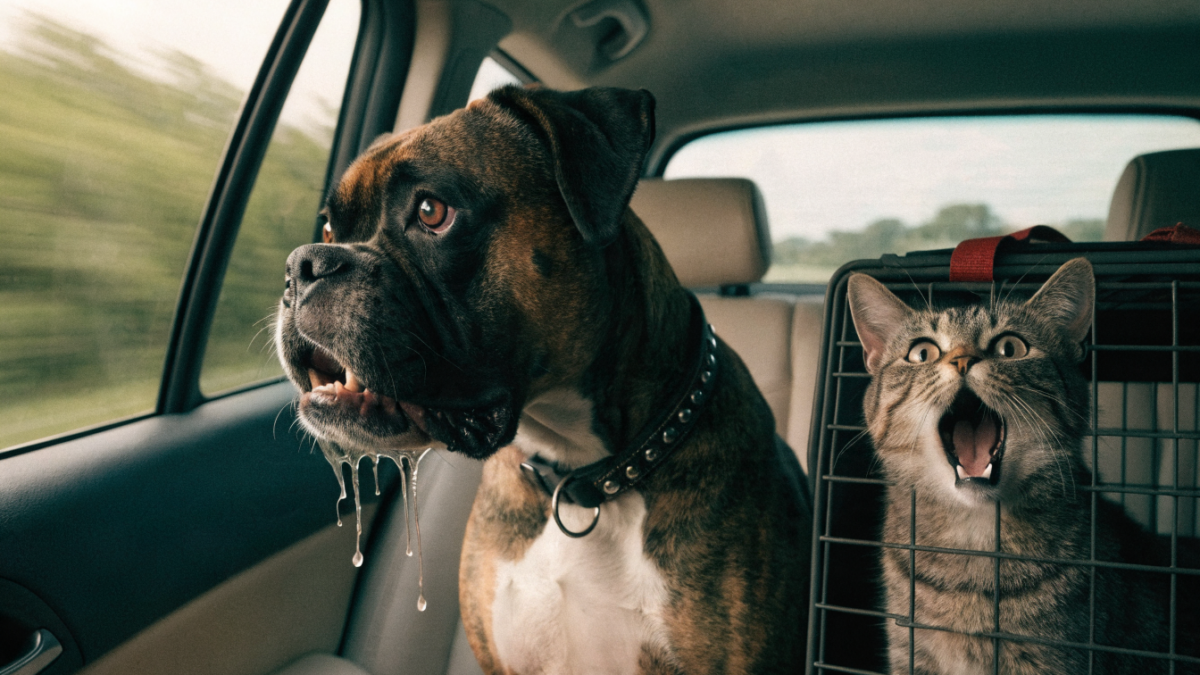
There is a very specific kind of chaos that happens when you try to put a reluctant pet into a car. On one hand, you have the dog who turns into a mobile sprinkler system the second you pull out of the driveway. On the other, you have the cat who suddenly believes they are the star of a tragic opera, howling like a banshee for the entire duration of a ten-minute drive to the vet.
I have lived both realities. My dog, Barnaby, used to leave entire lakes of drool on my backseat, while my cat, Olive, treats every car ride like a kidnapping. For the longest time, I just assumed this was the price of having pets. You buy the compact car, you accept the auditory and fluid-based consequences, right?
Well, it turns out I was completely wrong. The whole drooling-and-howling spectacle isn’t just a quirky personality trait. It’s a massive communication breakdown, and our pets are actually trying to tell us that they are deeply, profoundly miserable.
The Great Debate: Is It Physical or Psychological?
When it comes to car ride meltdowns, there are two primary culprits: motion sickness and anxiety. The frustrating part? They look almost identical, which is why so many of us struggle to fix the problem.
Motion sickness is a strictly physical response. Just like humans, pets have inner ears that sense balance and movement. When their eyes say they are sitting still, but their inner ears say they are hurtling through space at sixty miles an hour, the brain gets confused. The body’s natural response to this sensory mismatch is nausea. This is why puppies—say, around five months old—are incredibly prone to getting sick in the car. Their vestibular systems aren’t fully developed yet, making them extra sensitive to the physics of a moving vehicle.
Anxiety, on the other hand, is psychological. Your pet has decided that the inside of your Honda Civic is a terrifying metal box of doom. But here is where it gets tricky: the physical symptoms of anxiety look exactly like the symptoms of nausea.
Because nausea and fear are so deeply intertwined in the animal brain, a pet who is anxious will often act physically sick, and a pet who is motion sick will often act terrified. To figure out which beast you are dealing with, you have to pay incredibly close attention to the subtle cues they are giving you long before you ever hit the gas pedal.
The “Pre-Ride” Drool: Timing is Everything
If you want to crack the code of your pet’s car ride distress, you have to play detective. The absolute best indicator of what is bothering your pet is when the symptoms start.
I’ll use Barnaby as an example. For a long time, I thought he just got carsick. But one day, I stopped to really watch him. I grabbed my keys, walked him to the car, and opened the back door. Before he even jumped inside—before the engine had so much as coughed to life—he was already slipping in a puddle of his own spit.
If your dog starts drooling, lip-smacking, panting, or whining before the car is even moving, you are almost certainly dealing with psychological anxiety, not physical motion sickness.
Think about it from their perspective. If you only ever put your dog or cat in the car to go to the vet or the groomer, they have created a negative association. The car itself has become the trigger. They see the vehicle, their anxiety spikes, and the drool faucet turns on. This anticipatory anxiety means they are already in a state of panic before the physical motion of the car even has a chance to make them sick.
If, however, your pet is completely fine getting into the car, happy as a clam, but starts drooling or vomiting exactly twelve minutes into your road trip, you are looking at genuine motion sickness. See the difference? The timeline of the drool tells the whole story.
The Feline Opera: Why Your Cat Howls
While dogs often express their car-ride misery through bodily fluids, cats tend to express it through volume. Olive, my senior tabby, has a vocal range that could rival a Broadway understudy. The moment her carrier goes into the car, she starts a mournful, unbroken howl that lasts until the engine turns off.
Cats suffer from the exact same motion sickness and travel anxiety as dogs, but they process and express it differently. For a creature that demands total control over its environment, being locked in a moving box is the ultimate nightmare.
When a cat howls in the car, they are essentially vocalizing the same distress that a dog expresses by drooling. They are overwhelmed by the sensory input of the motion, or they are terrified of the destination they are speeding toward. Combine the physical nausea of motion sickness with the psychological horror of losing all territory and control, and you get the feline opera of doom.
You Do Not Have to Live Like This
For years, I just bought more paper towels and accepted my fate. But the modern consensus in veterinary medicine is loud and clear: travel-related distress is highly treatable. You don’t have to let your pet suffer through every car ride, and you don’t have to dread taking them places.
When to Call the Vet
If your pet is getting physically sick or severely distressed, your first stop should be the vet. I used to feel silly bringing up car drool at a check-up, but veterinarians see this all the time, and they don’t judge.
There are excellent veterinary interventions available today. Depending on whether your pet is dealing with physical nausea, psychological anxiety, or a messy combination of both, your vet can prescribe specific medications to help. Anti-nausea medications can settle their stomachs, while anti-anxiety medications can take the edge off their panic. There is zero shame in using modern medicine to make sure your pet doesn’t feel like they are fighting for their life on the way to the park.
Changing the Narrative
If your pet is dealing with anticipatory anxiety—the dreaded pre-ride drool—you can also work on changing how they feel about the car itself.
This isn’t my area of expertise, so I defer to professional dog trainers for the heavy lifting here. But the general concept is desensitization. You want to make the car a boring, safe place that isn’t always linked to a thermometer in an uncomfortable place. Leave the car doors open in the garage. Sit in the backseat with your dog and feed them high-value treats without ever turning the car on. Do this for weeks. Eventually, start the engine but don’t move. The goal is to teach them that the car is just another place where good things happen.
For cats, ensuring they are in a secure, covered, and well-anchored carrier can make a massive difference. Covering the carrier with a light blanket blocks the terrifying visual stimulus of trees whipping past the window, which can help lower their anxiety.
Ultimately, our pets don’t drool, pant, or howl in the car because they want to annoy us. They are doing it because they are genuinely uncomfortable, physically or emotionally. We ask a lot of our companion animals. We ask them to adapt to our human schedules, our loud environments, and our fast-moving metal machines. The least we can do is listen when they tell us—in the only ways they know how—that the ride is too rough.
So, if your dog is drooling or your cat is howling, don’t just roll down the windows and hope for the best. Take notes on their timing, talk to your vet, and consider calling a trainer. Helping them travel comfortably isn’t just about saving your upholstery; it’s about honoring the bond we have with them and making sure they feel safe in our fast-paced world.