

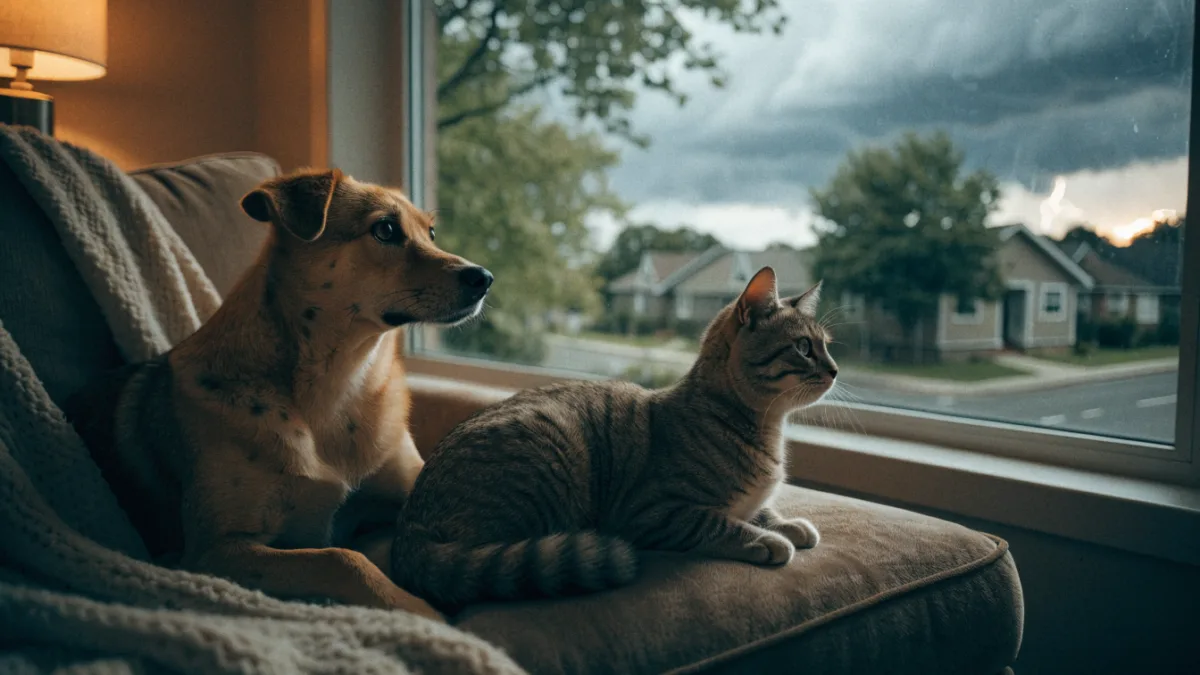
I have a habit of checking the weather app obsessively during the summer, mostly because my cat, Mochi, turns into a vibrating fuzzball of anxiety hours before the first raindrop even falls. I’ll be working at my desk, and suddenly, she starts pacing, meowing at walls, and trying to squeeze her 12-pound body behind the heaviest piece of furniture in the apartment. The sky outside is perfectly blue. My weather app cheerfully reports a zero percent chance of rain. Yet, without fail, within a couple of hours, the dark clouds roll in and the thunder starts.
It turns out Mochi isn’t psychic. She’s just a living, breathing barometer. Dogs and cats are incredibly sensitive to changes in atmospheric conditions, particularly rapid drops in barometric pressure. They can physically feel a storm coming long before our modern radar technology catches up. If you live in a storm-prone area, understanding how your barometric pressure pets process the world can completely change how you support them when the sky starts to rumble.
The Science of Living Barometers: Why They Know Before We Do
To understand why our pets freak out about the weather, we have to look at the world through their highly attuned senses. When a thunderstorm approaches, the,[1]—the actual weight of the atmosphere—drops rapidly. Humans don’t typically feel this change unless we’re flying in an airplane or driving up a steep mountain. But for dogs and cats, their inner ears are highly sensitive to these atmospheric shifts. That pressure drop is physically disorienting, and sometimes outright painful, for them.
And they aren’t just relying on their ears. A storm is a full multi-sensory assault for an animal. Their acute hearing allows them to detect the low-frequency rumbles of distant thunder long before we can hear a thing. Their intense sense of smell lets them pick up on ozone—the distinct, metallic scent produced by lightning strikes—as well as subtle chemical changes in the air. According to [2] pets can often sense an incoming storm a staggering 12 to 24 hours before it actually hits. For them, it’s not about the exact numerical reading on a weather gauge; the rate of change—that rapid drop in pressure—is what sets off their internal alarm system.
What Pre-Storm Panic Actually Looks Like
Once you know what you’re looking for, spotting dog thunderstorm anxiety is usually pretty straightforward. Veterinary behaviorists estimate that up to 30% of dogs suffer from some form of noise or storm anxiety. A dog might pace frantically, pant heavily even when the house is perfectly air-conditioned, whine, drool excessively, or become intensely clingy. I once watched my neighbor’s golden retriever try to literally climb into a kitchen cabinet with me. They follow you from room to room like they’re convinced the floor is about to disappear.
Cat storm fear, on the other hand, can be a bit more subtle—or at least, easier to dismiss. Cats are wired to hide their vulnerabilities, so instead of clinging to you, they might just vanish. A cat experiencing pre-storm panic will often hide in small, enclosed spaces, like under beds, deep inside closets, or behind the washing machine. They might refuse their favorite treats, groom themselves obsessively, or become unusually vocal. If your normally independent cat suddenly turns into a furnace-seeking missile hiding under your duvet, there’s a good chance a weather front is moving in.
The Great Bathtub Debate: Static Electricity vs. Pressure
While experts agree that barometric pressure plays a massive role in storm panic, there is an ongoing debate in the veterinary community about how much static electricity contributes to the drama. Some behaviorists believe that dogs and cats actually feel painful static shocks building up in their fur prior to a lightning strike. This theory perfectly explains a bizarre behavior: pets who suddenly jump into porcelain sinks or bathtubs right before a storm. Porcelain is grounded, and curling up in a tub might actually insulate them from those uncomfortable static charges in the air.
Creating a Game Plan: Calming the Chaos
When your pet is experiencing a multi-sensory assault, telling them to “just relax” isn’t going to cut it. You have to actively manage their environment. Here is what actually helps when the pressure drops.
Build an Invincible Safe Space
If your pet wants to hide, let them—but make that hiding spot as comfortable and secure as possible. The best safe spaces are interior, windowless rooms like a closet or a bathroom. This helps muffle the deafening sound of thunder and blocks out the disorienting flashes of lightning. Fill the space with their favorite blankets, a worn t-shirt that smells like you, and some high-value treats. If your cat likes hiding under the bed, consider sliding a soft crate or a covered cat bed into that dark space so she has a plush, secure fort to retreat to.
Sensory Distraction and Desensitization
You can fight the storm’s noise with better noise. White noise machines, a loudly playing classical music station, or even just leaving the TV on can drown out the low-frequency rumbles that trigger your pet’s anxiety. I usually turn on a fan and a podcast for Mochi; the steady human chatter seems to ground her when the house feels too quiet and tense.
For long-term management, you might also try desensitization. My partner Jake, who handles all the actual dog training in our house because I do not have the patience for it, swears by this. You play recordings of storm sounds at a very low volume while giving your pet high-value treats or playing their favorite game. Over the course of several months, you slowly increase the volume. The goal is to teach your pet that the sound of thunder means good things are happening, helping to rewire that initial panic response.
Pressure Wraps and Pheromones
For many dogs, wearing a snug-fitting anxiety wrap works wonders. These garments apply gentle, constant pressure to the dog’s torso, similar to swaddling a baby or giving a firm hug, which can calm an overstimulated nervous system. You can also look into synthetic pheromone diffusers. These plug into your wall and mimic the natural calming pheromones that mother dogs and cats produce, creating a drug-free sense of security in the environment.
The “Reinforcing Fear” Myth: Why Comforting Your Pet is a Good Thing
There is an outdated, persistent rumor that if you comfort your pet during a storm, you are “reinforcing” their fearful behavior. Historically, some trainers argued that petting a panicking dog would teach them that acting afraid gets them attention. Modern veterinary behaviorists largely agree that this is absolute garbage.
You cannot reinforce an emotion like panic. If your dog is terrified, comforting him won’t make him “more terrified” next time. Panic is not a behavior; it’s an autonomic nervous system response. If your cat wants to sit on your lap and be stroked, do it. The only caveat is to remain calm yourself—pets are masters at reading our body language and energy. If you’re frantically reassuring them, they might assume there really is something to worry about. Offer gentle, quiet comfort, but if they prefer to retreat to their safe space under the bed, respect their boundaries and let them ride out the storm in peace.
When Nature Calls for Backup: Vet Interventions and Tech
Sometimes, environmental changes and hugs simply aren’t enough, especially for severe cases of dog thunderstorm anxiety. If your dog is destroying drywall or your cat has stopped eating entirely during storm season, it’s time to talk to your vet. In recent years, the FDA has approved specific, fast-acting medications designed to treat noise aversion. These medications dampen the specific fear response without fully sedating your pet, allowing them to remain functional and calm when the thunder rolls in.
We’ve also seen a fascinating rise in smart pet tech that helps us manage this anxiety. Wearable biometric collars can now track a dog’s heart rate and resting patterns. You can look at your dog’s app and see a sudden, unexplained spike in their heart rate, confirming that they are reacting to an unseen barometric drop before the storm is even on the horizon. It gives you a head start to close the blinds, turn on the white noise, and get them settled before the full panic sets in.
Sharing a home with animals means accepting that they experience the world in ways we can barely comprehend. Their hearing, smell, and sensitivity to atmospheric pressure put our human senses to shame. Instead of getting frustrated when they pace, drool, or hide on a perfectly sunny afternoon, we can choose to appreciate their incredible biology. By tuning into their signals, we not only become better, more empathetic advocates for their mental health, but we also gain a deeper respect for the wild instincts that our domesticated companions still carry inside them.
Sources
- barometric pressure — drruthroberts.com
- weather experts — weather.com
- "Sometimes they are very sensitive to changes in barometric pressure. If your pet is acting strange, it might be because a storm is on the way." — facebook.com