

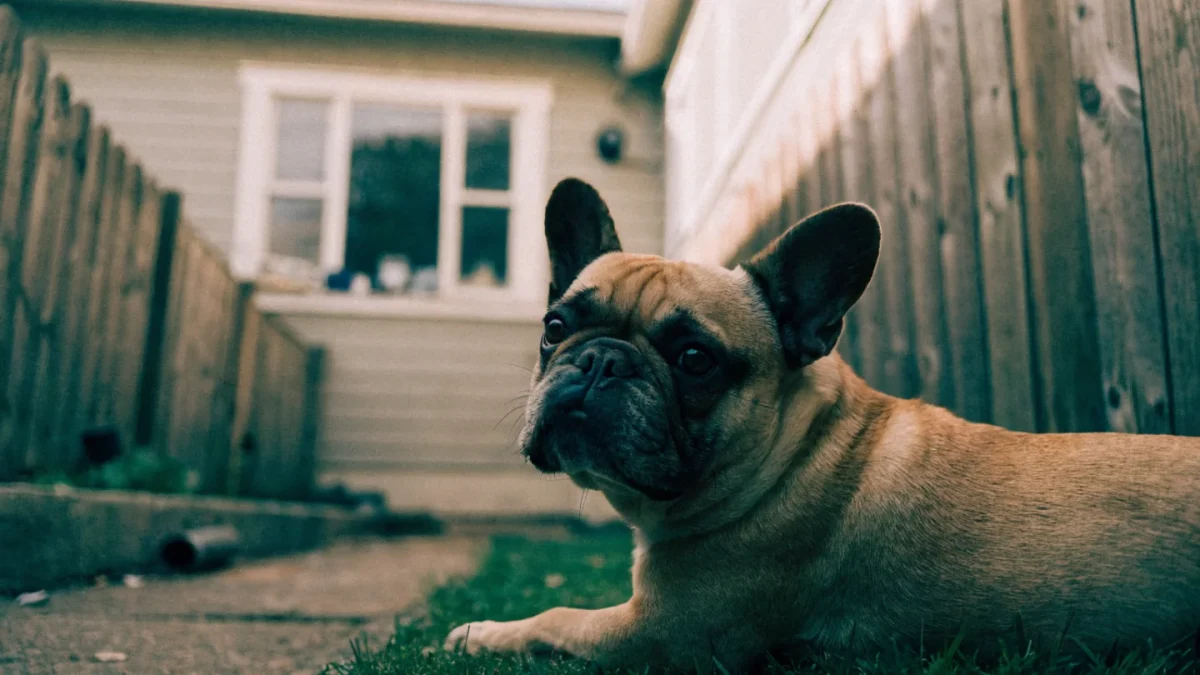
Small house, small yard — but you want a dog. The good news is that square footage matters less than most people think. A small house with a committed owner and a small yard is a better home for most dogs than a mansion with an absent one. The question isn't whether your house is big enough. It's whether the dog's indoor behavior, noise level, and exercise needs fit what your space and schedule can provide.
The advantage of a small yard over no yard (as in an apartment) is that your dog has independent outdoor access for bathroom breaks, quick play sessions, and fresh air without requiring you to leash up every time. That convenience opens the door to some moderately active breeds that wouldn't work as well in a true apartment. For apartment-compatible breeds without any yard at all, the selection narrows further.
Start with choosing the right breed for your living situation and work from there.
1. French Bulldog
At 10 to 13 kg, the Frenchie's compact build and low exercise needs make it a natural fit for smaller homes. They're calm indoors, content with short play sessions in the yard, and their exercise needs top out at about 20 to 30 minutes of moderate activity daily. For the complete breed profile covering health, temperament, and history, see the French Bulldog complete breed guide.
Why they fit: French bulldogs don't need space to pace or run inside. They settle quickly, don't bark excessively, and use a small yard happily for pottering and bathroom breaks.
The tradeoff: Brachycephalic health issues are significant. Temperature regulation is poor — a small house without air conditioning in warm climates is problematic. Veterinary costs trend higher than average.
2. Cavalier King Charles Spaniel
Cavaliers adapt to their environment with remarkable flexibility. In a small house with a yard, they get the best of both worlds — a calm indoor companion with easy outdoor access for their modest exercise needs of 30 to 45 minutes daily.
Why they fit: Cavaliers are quiet, non-destructive indoors, and use a small yard for gentle play without needing vast space. They're social enough to appreciate visitors without becoming overstimulated by the close quarters of a smaller home.
The tradeoff: Cardiac health concerns (mitral valve disease) are a breed reality requiring ongoing veterinary monitoring and potential expense.
3. Whippet
At 8 to 14 kg, whippets are the sprinters of the sighthound world — explosive in short bursts, then profoundly lazy. A small yard gives them space for a few zoomies, and the house becomes their sleeping territory.
Why they fit: Whippets have among the lowest indoor energy levels of any breed. They curl up on furniture and stay there for hours. A small yard satisfies their need for brief, intense bursts of speed. Total exercise needs are moderate — 30 to 40 minutes daily with some opportunity to run.
The tradeoff: Prey drive is high. A small yard needs secure fencing — whippets can clear surprising heights when motivated. They're thin-skinned and cold-sensitive, needing extra warmth in winter.
4. Cocker Spaniel
Cockers are adaptable medium-sized dogs (12 to 16 kg) that do well in compact homes because their energy is moderate and they're content with structured walks plus yard time. They're cheerful without being hyperactive indoors.
Why they fit: A cocker's exercise needs (40 to 60 minutes) can be split between yard play and a daily walk. They're social, manageable in size, and don't dominate a small living space the way larger sporting breeds would.
The tradeoff: Ear infections are a chronic management issue. The coat needs regular grooming. Some lines have documented behavioral concerns — sourcing from temperament-tested backgrounds matters.
5. Miniature Poodle
At 5 to 9 kg, the miniature poodle brings intelligence, low shedding, and athletic capability into a compact package. They're active enough to enjoy a small yard but adaptable enough to be calm indoors.
Why they fit: Miniature poodles are trainable, clean, and appropriately sized for smaller spaces. Their exercise needs (30 to 45 minutes) are satisfied with a daily walk and yard play. They shed minimally, keeping a small home cleaner.
The tradeoff: Professional grooming every 4 to 6 weeks is a recurring expense. They're intelligent enough to become bored — destructive boredom in a small house is noticeable.
6. Shetland Sheepdog
Shelties are miniature herding dogs (6 to 12 kg) with more energy than most breeds on this list, but their responsive trainability and adaptable nature make them work in small homes with yards. They're one of the few herding breeds whose size and temperament fit compact living.
Why they fit: A small yard gives Shelties space for fetch and play that satisfies their herding-dog need for activity. They're excellent at learning house rules and respecting boundaries. Their exercise needs (40 to 60 minutes) are manageable with a daily walk plus yard time.
The tradeoff: Shelties bark. It's a herding breed trait — they alert to everything. In a small house with shared walls (townhouses, duplexes), this can be a serious issue. Their double coat sheds heavily twice a year and moderately year-round.
Making Small Spaces Work
Beyond breed selection, three habits make small-home dog ownership successful: rotating toys and enrichment to prevent boredom in limited space, establishing clear "settle" zones where the dog knows to relax indoors, and using the yard strategically for quick energy burns rather than relying on it as the sole exercise source. Even a small yard supplements — it doesn't replace — daily walks and structured exercise.