

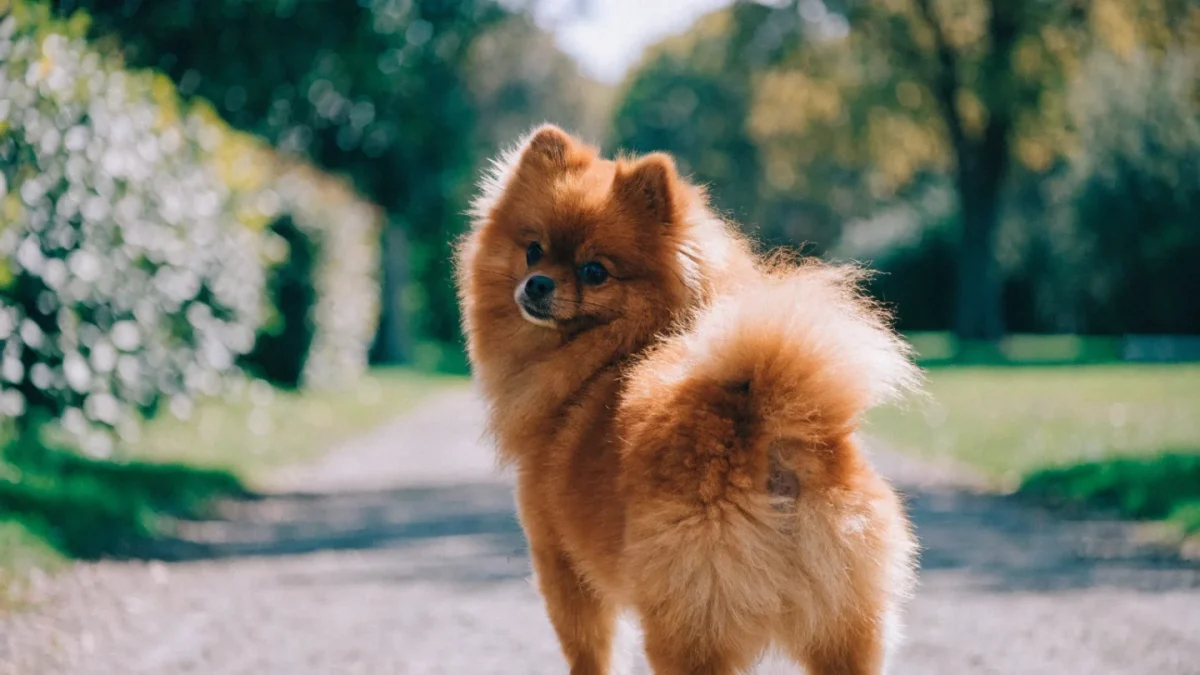
Pomeranians are one of the most photographed, most shared, and most misrepresented dog breeds on the internet. The social media version of this breed — fluffy, tiny, perpetually adorable — has generated a set of assumptions about what Pomeranians are actually like to live with. Some of those assumptions are merely wrong. Others lead directly to dogs being surrendered when the reality doesn't match the marketing.
Here are five misconceptions that I encounter repeatedly, examined against what the breed actually demands.
1. Pomeranians Are Low-Maintenance Lap Dogs
This myth does more damage than any other, because it's the reason most people choose the breed in the first place — and it's wrong in every practical dimension.
The coat alone requires brushing three or more times per week with seasonal blowouts that demand daily attention. The breed's extreme susceptibility to dental disease means tooth brushing multiple times per week and professional cleanings under anesthesia on a regular schedule. Training needs to be ongoing because the breed's boldness and vocal tendencies require active management, not passive acceptance.
The complete breed guide covers these demands in detail. The summary: a Pomeranian requires more daily hands-on maintenance than many medium-sized breeds. The small body does not translate to small commitment. People who acquire Pomeranians expecting a decorative companion that mostly takes care of itself discover within weeks that they've signed up for a grooming-intensive, training-demanding, medically particular animal that needs consistent attention.
2. They're Too Fragile to Be Real Dogs
The opposite myth from the first, and almost as harmful. Yes, Pomeranians are small. Yes, they can be injured by falls, rough handling, and interactions with larger animals. But "fragile" as a blanket descriptor leads owners to treat them like porcelain figures rather than actual dogs — carrying them everywhere, never letting them walk, never exposing them to normal canine experiences.
Pomeranians are spitz dogs. Their ancestors pulled sleds and herded livestock. The breed is structurally compact, reasonably sturdy for its size, and fully capable of walking, playing, exploring, and interacting with the world on its own four feet. They need 30 to 45 minutes of daily exercise. They benefit from socialization with other dogs of appropriate size. They are happier and healthier when they're allowed to be dogs rather than accessories.
Over-protecting a Pomeranian — never letting it navigate stairs, encounter new environments, or walk on its own — produces an anxious, under-socialized animal that panics at normal stimuli. The breed's natural temperament is bold and confident. Smothering that confidence with excessive coddling doesn't keep the dog safe. It makes the dog neurotic.
Physical precautions are appropriate — harnesses instead of collars, ramps for furniture, supervised interactions with larger dogs. But treating the dog as unable to function independently is a disservice to an animal that is, at its genetic core, a working breed in miniature.
3. Shaving the Coat Keeps Them Cool in Summer
This one comes from good intentions and produces bad outcomes.
The Pomeranian double coat is an insulation system that works in both directions. The dense undercoat traps air close to the body, creating a thermal buffer. The harsh outer coat deflects direct sunlight and wind. Together, they regulate temperature more effectively than exposed skin alone. Shaving removes this system entirely.
The consequences go beyond reduced thermoregulation. A shaved Pomeranian coat frequently grows back damaged. The undercoat, which grows faster than the outer coat, may dominate — producing a soft, cottony texture that mats readily and lacks the outer coat's weather resistance. In some cases, the outer coat doesn't fully return at all. This condition, sometimes confused with alopecia X, can leave the dog with a permanently altered coat texture.
The appropriate approach to summer heat is managing the dog's exposure: limiting outdoor time during peak heat, providing shade and fresh water, using cooling mats, and keeping the coat well-brushed to remove dead undercoat that traps excess warmth. A properly maintained coat in full condition handles moderate heat better than a shaved coat. In extreme heat, the answer is air conditioning, not clippers.
4. They're Just Yappy and Nothing Can Be Done
This myth has two halves, and one is more true than the other.
Pomeranians are vocal. That part is accurate. The barking is inherited from centuries of spitz breeding that valued alert, vocal dogs. It's wired deep, it activates at a low threshold, and it's a defining breed trait that no amount of training will fully eliminate.
The second half — that nothing can be done — is defeatist and inaccurate. Training can significantly reduce barking frequency, duration, and the range of triggers. Teaching a "quiet" command with consistent positive reinforcement, managing the environment to reduce triggers (closing blinds, using background noise), avoiding inadvertent reinforcement (responding to barking with attention), and ensuring adequate exercise and mental stimulation all make measurable differences.
The owners who throw up their hands and accept nonstop barking are typically the same owners who never attempted structured bark management. The owners who work on it consistently — and accept that "reduced" is the realistic goal, not "eliminated" — live with dogs whose vocal tendencies are contained to reasonable levels.
The breed will always bark more than a Cavalier King Charles Spaniel. It will never bark as little as a Basenji. The realistic middle ground is a dog that alerts to genuine stimuli and can be redirected when the alert becomes prolonged — and reaching that middle ground requires effort.
5. "Teacup" Pomeranians Are a Special, Desirable Variety
No breed registry recognizes "teacup" as a legitimate size classification. The term is a marketing invention applied to undersized dogs — typically those expected to mature under 1.5 kilograms — to justify premium pricing on animals that carry premium health risks.
Extremely small Pomeranians face elevated rates of hypoglycemia, open fontanels, liver shunts, fragile bone structure, and dental pathology even more severe than the breed's already concerning baseline. Their lifespans tend to be shorter. Their veterinary costs tend to be higher. The breeding practices that produce them often prioritize extreme size reduction over every other health and structural consideration.
The historical irony is pointed. Queen Victoria's miniaturization of the Pomeranian in the 1890s was already one of the most aggressive size reductions in breed history, taking the dog from roughly 14 kilograms to under 3.5 kilograms in a matter of decades. The "teacup" market pushes that reduction further, into territory where the biological costs become increasingly severe.
A Pomeranian within the breed standard — 1.8 to 3.2 kilograms — is already a very small dog. Seeking something even smaller doesn't produce a better Pomeranian. It produces a more fragile, more medically vulnerable animal whose diminished size is a liability, not a feature.
The Right Owner for This Breed
Every one of these misconceptions circles back to the same root error: projecting expectations based on the Pomeranian's appearance rather than its nature. The fluffy coat, the small size, and the photogenic face suggest simplicity. The reality — a high-maintenance, strong-willed, vocal spitz that requires grooming, training, and genuine engagement — is considerably more complex.
The owners who do well with Pomeranians are the ones who knew all of this going in. The ones who didn't are the ones whose dogs end up in rescue organizations, accompanied by surrender notes that invariably mention the barking, the grooming, or the gap between what they expected and what they got. The honest self-assessment question is whether a Pomeranian is right for you based on your actual life — not an idealized version of it.