

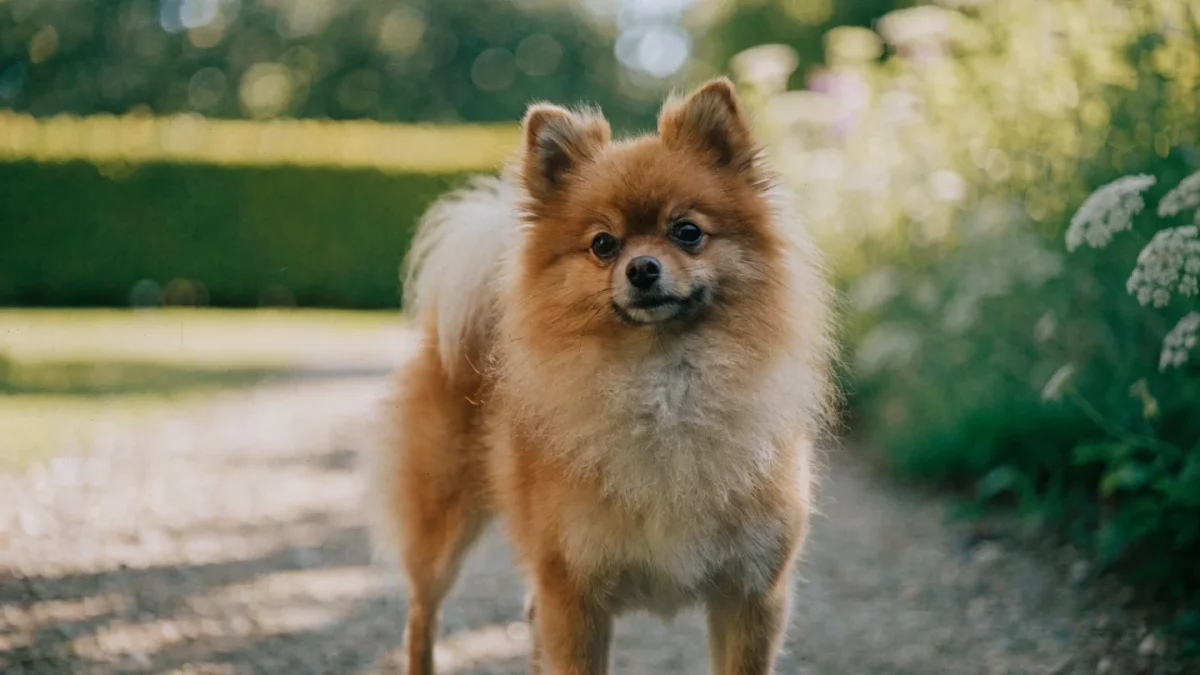
The Pomeranian's ancestors pulled sleds across Arctic ice. That fact tends to get a double-take, because the modern breed rarely tips the scale past 3 kilograms and fits comfortably inside a handbag. But the genetic line is direct. Today's Pomeranian descends from the German Spitz, which in turn traces back to large sled-pulling dogs of Iceland and Lapland — animals that weighed 14 to 23 kilograms and hauled loads through snow for a living. The transformation from working Arctic dog to toy companion happened over roughly two centuries, and it remains one of the most dramatic size reductions in the history of selective breeding.
If you're looking for a pomeranian breed guide that goes beyond the cute-factor and covers what this breed actually demands, what its health realities look like, and whether it fits your life, you're in the right place. Pomeranians are among the most misunderstood toy breeds. People see the fluffy coat and the small size and assume "easy." That's the first mistake.
Origins and History
The breed takes its name from Pomerania, a historical region along the Baltic Sea coast spanning parts of modern-day Germany and Poland. Spitz-type dogs were common working animals throughout the region by the 1700s, used for herding, guarding, and draft work. These dogs were considerably larger than today's Pomeranians — most weighed between 9 and 14 kilograms, and some specimens exceeded 20 kilograms.
English breeders began importing German Spitz dogs in the mid-1700s. Early records describe them as white or cream dogs of medium size, popular among the aristocracy as companions. But the breed's trajectory changed permanently in 1888 when Queen Victoria visited Florence, Italy, and acquired a small red sable Pomeranian named Marco — reportedly weighing around 5.4 kilograms, significantly smaller than the breed standard of the era.
Victoria didn't just own Pomeranians. She bred them, showed them, and drove demand for smaller and smaller specimens. Between 1888 and her death in 1901, the average size of the Pomeranian dropped by an estimated 50 percent. That's an extraordinary rate of change for any breed, and it happened largely because one influential breeder preferred a smaller dog and had the resources to shape the market.
The breed was recognized in 1898 by kennel authorities and quickly established itself as a toy breed rather than the mid-size spitz it had been just decades earlier. By the early 1900s, the transition was essentially complete. The Pomeranian had been engineered from a sturdy working dog into the smallest member of the spitz family.
Physical Characteristics
Size and Build
Modern Pomeranians weigh between 1.8 and 3.2 kilograms. Height at the shoulder is typically 18 to 24 centimeters. Despite the toy classification, the body is compact and sturdy — short-backed, with well-sprung ribs and a level topline. The overall silhouette should be balanced, neither leggy nor cobby. When you look past the coat, the underlying structure is that of a miniaturized working dog, not a fragile ornamental breed.
There's notable size variation in practice. Some Pomeranians from show lines weigh closer to 2 kilograms, while pet-line dogs frequently exceed the breed standard at 4 to 5 kilograms. Dogs at the higher weight range are sometimes marketed as "throwback Pomeranians," which is just a marketing term for dogs that express the breed's larger ancestral size more strongly.
The Coat
The coat is the breed's visual signature. It's a double coat — a dense, short, soft undercoat beneath a long, straight, harsh-textured outer coat that stands off the body. The profuse ruff around the neck and shoulders creates the characteristic "mane," and the heavily plumed tail curls tightly over the back. The overall effect is a dog that appears roughly twice its actual body size.
Pomeranians come in more recognized colors than almost any other breed. Orange and red are the most common, but the breed standard accepts black, white, cream, blue, sable, chocolate, beaver, merle, brindle, and various parti-color patterns. The genetics behind this range are complex and involve at least six major color loci.
The Fox Face
The head should be wedge-shaped with a moderately short muzzle, dark almond-shaped eyes, and small, erect ears set high on the skull. The expression is alert and almost sharp — the "fox face" that distinguishes well-bred Pomeranians from the rounder, flatter "teddy bear" faces that have become popular in pet markets. The fox face is the breed standard. The teddy bear look, produced by selecting for shorter muzzles, brings the breed closer to the brachycephalic issues that plague flat-faced breeds.
Temperament and Behavior
If the Golden Retriever is the friendly valedictorian who volunteers at the animal shelter, the Pomeranian is the tiny sophomore who walks into a room like they own it and somehow convinces everyone they do. This breed does not know it's small. That's not a cute saying — it's a legitimate behavioral trait that shapes how Pomeranians interact with the world and gets them into trouble with alarming regularity.
What Most People Get Wrong About This Breed
The most damaging misconception about Pomeranians is that they're decorative. Lapdogs. Accessories. The kind of dog you carry around and doesn't need much in terms of mental engagement or boundaries.
In reality, Pomeranians are spitz dogs. That classification carries behavioral expectations: alertness, independence, territorial instincts, a tendency toward vocalization, and a confidence level that is wildly disproportionate to their physical size. They were bred from dogs that guarded property, herded livestock, and worked alongside humans in harsh environments. Shrinking the body didn't delete the behavioral software.
A Pomeranian that receives no training, no mental stimulation, and no boundaries will become a barking, snapping, resource-guarding liability that controls the entire household through noise and attitude. "Small dog syndrome" isn't a real clinical term, but the behavioral pattern it describes — a tiny dog ruling the house because no one bothered to set limits — is real, and Pomeranians are among the breeds most prone to developing it.
For a deeper look at what drives these behaviors, the Pomeranian temperament article covers the personality profile in detail.
Social Dynamics
Pomeranians bond tightly to their primary person, often to an intense degree. They're affectionate, attentive, and prefer to be within arm's reach of their chosen human at all times. With other family members, they're typically friendly but clearly have a favorite.
With strangers, the default Pomeranian response is suspicion followed by assessment. They are natural watchdogs — alert to every sound, every visitor, every squirrel passing the window. The problem is that their alerting mechanism is their bark, and they use it liberally. A Pomeranian will announce the mail carrier, a passing car, a leaf blowing across the yard, and the general existence of the outside world.
With other dogs, Pomeranians can be problematic. They tend to approach larger dogs with the same confidence they bring to everything else, which creates dangerous size mismatches. A Pomeranian that challenges a dog ten times its size is not being brave — it's being a liability. Early socialization helps, but the underlying boldness is breed-typical and requires management throughout the dog's life.
Intelligence
Pomeranians are smart. They learn quickly, they remember patterns, and they are skilled at training their owners to do what they want. This cuts both ways. A Pomeranian that is actively trained and mentally engaged is a delightful, responsive companion. One that figures out that barking produces results — attention, doors opening, food — will bark with the relentless efficiency of a dog that has optimized its environment.
Health Profile
Pomeranians are generally long-lived for a purebred dog, but "long-lived" doesn't mean "problem-free." The breed carries several health predispositions that prospective owners need to understand clearly.
Luxating Patella
This is the breed's most prevalent orthopedic condition. The kneecap slips out of its normal groove in the femur, causing intermittent lameness. Grades range from I (occasional slip that self-corrects) to IV (permanent dislocation). Grades III and IV typically require surgical correction. Prevalence estimates vary widely depending on the population studied — a U.K. primary-care veterinary study found a diagnosis rate of roughly 6.5 percent, while screening studies in other regions have reported substantially higher rates.
Tracheal Collapse
The trachea (windpipe) in small breeds can weaken over time, causing the cartilage rings to flatten and the airway to narrow. Symptoms include a characteristic "goose honk" cough, exercise intolerance, and respiratory distress in severe cases. Tracheal collapse is managed rather than cured — weight management and harness use (never a collar that puts pressure on the throat) are essential preventive measures.
Alopecia X
Also called "black skin disease," this is a condition where the dog progressively loses coat, typically starting on the trunk and thighs while sparing the head and legs. The exposed skin darkens. The condition is poorly understood — it appears to involve adrenal hormone imbalances, but the exact mechanism isn't fully established. It's cosmetic rather than painful, but it's distressing to owners and the treatment options are inconsistent in their effectiveness.
Other Health Concerns
- Dental disease: The small jaw creates crowding. Teeth overlap, trap food debris, and develop periodontal disease at rates significantly higher than larger breeds. Dental care in Pomeranians isn't optional — it's a primary health maintenance task.
- Hypoglycemia: Particularly in puppies and very small adults. Low blood sugar causes lethargy, trembling, and in severe cases, seizures. Regular small meals prevent episodes.
- Patent ductus arteriosus (PDA): A congenital heart defect where a fetal blood vessel fails to close after birth. Treatable if caught early.
- Hypothyroidism: Underactive thyroid, manageable with daily medication.
- Eye problems: Distichiasis (eyelashes growing in abnormal positions) and cataracts occur at elevated rates.
Lifespan
The average Pomeranian lifespan is 12 to 16 years, making it one of the longer-lived breeds. Many Pomeranians remain active and healthy well into their teens. The longevity is a genuine advantage, but it also means committing to 15 or more years of grooming, dental care, and veterinary monitoring.
Grooming Requirements
This is where many Pomeranian owners underestimate the commitment. That spectacular double coat doesn't maintain itself.
Coat Maintenance
Brush the coat thoroughly at least three times per week. During seasonal shedding — which happens roughly twice a year and is dramatic — daily brushing is necessary to prevent the undercoat from matting against the skin. A slicker brush removes loose outer coat, while a metal comb works through the dense undercoat. Pay particular attention behind the ears, under the legs, and around the hindquarters where mats form fastest.
Bathing every three to four weeks is typical. Overbathing strips the coat's natural oils. The coat should be blown dry completely after bathing — a damp Pomeranian undercoat is a matting disaster waiting to happen.
The Shaving Myth
Never shave a Pomeranian's coat. The double coat insulates against both heat and cold, and shaving disrupts the entire thermoregulation system. Worse, the coat often grows back damaged — the undercoat may dominate, producing a cottony texture that mats faster and lacks the outer coat's protective qualities. In some cases, the outer coat doesn't fully return at all. This is not a cosmetic preference. It's a structural issue with real consequences for the dog's comfort.
Dental Care
Given the breed's extreme susceptibility to dental disease, brushing teeth daily — or at minimum several times per week — is essential. Professional dental cleanings under anesthesia will likely be needed periodically throughout the dog's life. Small jaws, crowded teeth, and retained baby teeth (common in the breed) create an environment where periodontal disease progresses rapidly without intervention.
Exercise and Activity Needs
Pomeranians need less exercise than most people familiar with larger breeds expect, but more than most people who chose a toy breed want to provide.
A healthy adult Pomeranian needs 30 to 45 minutes of daily exercise, split between walks and play sessions. Short walks of 15 to 20 minutes twice daily, supplemented with indoor play and training, meet the physical requirements for most individuals.
The mental exercise component matters more than distance. Pomeranians are intelligent and curious. Puzzle toys, short training sessions (they respond well to trick training), and varied walking routes that provide new environmental stimulation keep the brain engaged. A Pomeranian with nothing to do will invent entertainment, and that entertainment usually involves barking at things.
Avoid high-impact exercise — jumping from heights, rough play with larger dogs, or extended running on hard surfaces. The breed's small joints and potential for luxating patella make impact management important.
Nutrition Fundamentals
Pomeranians need calorie-dense, appropriately portioned meals. An adult Pomeranian at a healthy weight typically needs roughly 200 to 300 calories per day, depending on activity level and metabolism. That's a narrow margin, and overfeeding by even a small amount produces rapid weight gain in a dog this size.
Feed measured meals — two to three per day for adults. Free-feeding is a reliable path to an overweight Pomeranian. Puppies need three to four small meals daily to maintain blood sugar levels and support growth.
Dental kibble or food that encourages chewing can provide incidental dental cleaning benefit, but it's no substitute for actual tooth brushing. Treats count toward daily calories — a single large biscuit might represent 10 to 15 percent of a Pomeranian's daily caloric needs.
Living Situation Compatibility
Pomeranians adapt well to apartments, small homes, and urban environments. Their size makes them genuinely portable, and their exercise needs can be met without a yard. This is one of the breed's real practical advantages.
The challenge is noise. Pomeranians bark. They bark at visitors, at sounds outside, at other animals, at things that may or may not actually exist. In a detached house, this is manageable. In an apartment with shared walls, it becomes a neighbor-relations issue that requires active training and management from day one.
Temperature sensitivity goes both ways. The double coat provides reasonable cold tolerance for the breed's size, but extreme cold is still dangerous for a dog this small. Heat is a concern — the dense coat combined with the breed's small body mass makes overheating a risk during hot weather. Air conditioning isn't a luxury for Pomeranians in warm climates; it's a necessity.
Choosing a Pomeranian
Whether you're purchasing from a breeding program or adopting, evaluating whether this breed actually fits your life should come before evaluating individual dogs.
Health Screening
Parent dogs should have patellar evaluations, cardiac examinations, and ophthalmologist evaluations at minimum. DNA testing for conditions prevalent in the breed is increasingly available. Ask for documentation and walk away from any source that can't or won't provide it.
Red Flags
- Dogs sold as "teacup Pomeranians" — there is no such recognized variety, and the label typically means deliberately undersized dogs with elevated health risks
- Puppies available before eight weeks
- No health documentation for parent dogs
- Claims of "rare" colors sold at inflated prices
- No questions asked about your living situation or experience
Adoption
Pomeranians appear in breed-specific rescues and general shelters more often than people expect. Surrenders frequently involve owners who underestimated the grooming needs, the barking, or the breed's general intensity. Adult Pomeranians from rescue come with known temperaments and are past the fragile puppy stage.
The Right Owner for This Breed
A Pomeranian is the right dog for you if:
- You want a small dog with a big personality and you're prepared to manage that personality with actual training
- You can commit to regular grooming — not occasionally, but multiple times per week for the life of the dog
- You're willing to address barking proactively rather than just accepting it or ignoring it
- You understand that dental care in this breed is a serious, ongoing health requirement
- You can provide 30 to 45 minutes of daily exercise and mental stimulation
- You're looking for a long-term companion — 12 to 16 years is a real commitment
A Pomeranian is the wrong dog for you if:
- You want a quiet, easygoing lap dog that requires minimal management
- You live in a shared-wall apartment and can't dedicate time to bark training
- You're not willing to brush a dog multiple times per week
- You expect a toy breed to be low-maintenance because it's small
- You want a dog that loves everyone equally and instantly
- You plan to let children handle the dog without close supervision — Pomeranians at 2 to 3 kilograms are fragile, and a fall or squeeze from a toddler can cause serious injury
Pomeranians are extraordinary companions for the right person. That person is someone who respects the breed for what it is — a working spitz in miniature — rather than what it looks like. Treat it like a real dog, train it like a real dog, and you'll get a companion whose loyalty and personality will fill a space far larger than its body.
Frequently Asked Questions
How much do Pomeranians bark compared to other toy breeds?
More than most. Pomeranians are consistently rated among the most vocal toy breeds, and the barking is rooted in their spitz heritage — these are dogs descended from alert, watchdog-type animals. They bark at sounds, at movement, at visitors, and sometimes at nothing identifiable. Training can reduce the frequency and teach an "enough" command, but eliminating barking entirely isn't realistic for this breed. Managing triggers and providing adequate mental stimulation are the most effective strategies.
Can Pomeranians live with larger dogs safely?
With careful management, yes. The primary risk is accidental injury — a larger dog playing normally can harm a 2-to-3-kilogram Pomeranian without any aggressive intent. Supervised introductions, matched play styles, and teaching the Pomeranian that it cannot challenge dogs five times its size all matter. Many Pomeranians live successfully in multi-dog households, but the size disparity requires ongoing awareness, not just a one-time introduction.
Are Pomeranians good for first-time dog owners?
They can be, but they're not the easiest starting point. The grooming demands, the barking management, the dental care requirements, and the need for consistent training mean there's a steeper learning curve than with some other toy breeds. A first-time owner who researches the breed thoroughly, commits to training from day one, and establishes grooming routines early will do fine. Someone expecting a low-maintenance starter dog will struggle.
Why do some Pomeranians look so different from each other?
The variation comes from two sources: the wide range of accepted coat colors and patterns, and differences in breeding emphasis. Show-bred Pomeranians tend to have more profuse coats, foxier faces, and smaller frames. Pet-bred Pomeranians frequently have less coat volume, rounder faces, and larger body size. "Teddy bear" and "baby doll" face types have been popularized in social media but deviate from the breed standard, and extreme shortening of the muzzle can introduce respiratory concerns.
What's the difference between a Pomeranian and a German Spitz?
The Pomeranian is technically a variety of the German Spitz — specifically, the smallest version. In some countries, Pomeranians are still classified under the German Spitz umbrella rather than as a separate breed. The practical differences are size (Pomeranians are the toy variant, while German Spitz varieties range from klein to giant) and coat profusion (Pomeranians have been bred for maximal coat volume). Temperamentally, the breeds share spitz characteristics: alertness, independence, vocal tendencies, and strong bonds with their primary handler.