

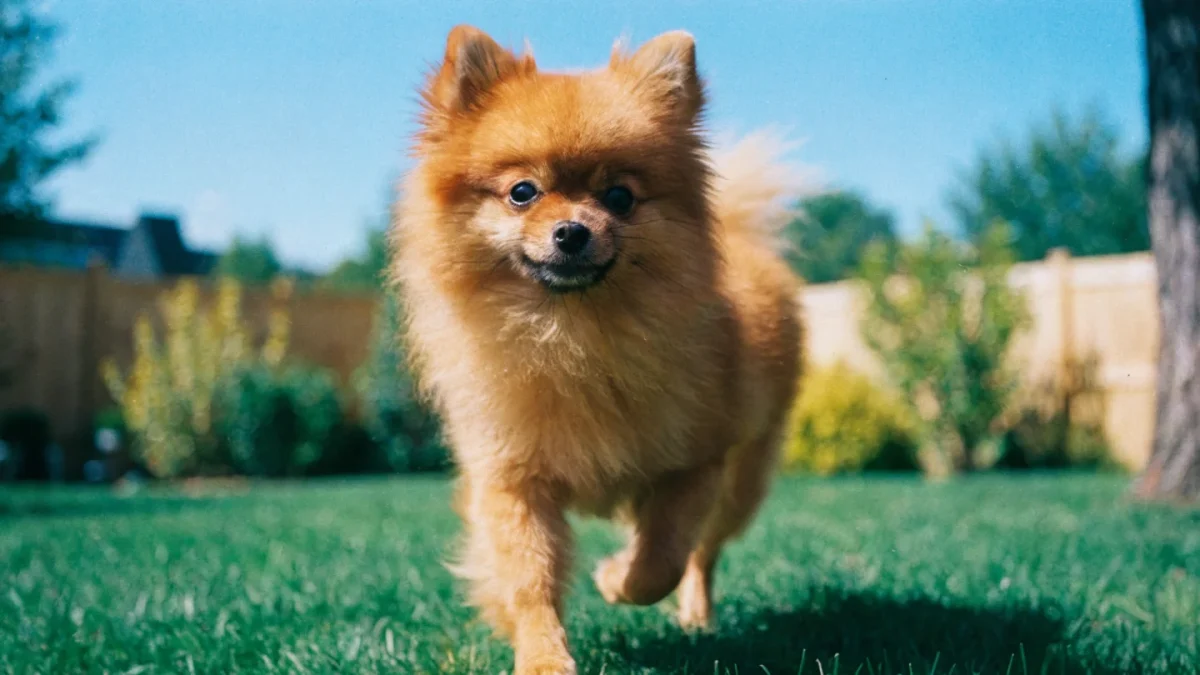
The Pomeranian's ancestors covered serious ground. The large spitz-type dogs that eventually became today's 2-to-3-kilogram companion were working animals — sled pullers, herders, perimeter patrollers — that could sustain activity for hours in subzero conditions. Nobody expects a modern Pomeranian to replicate that workload. But understanding the athletic baseline the breed descends from explains why a dog this small still needs real exercise rather than the occasional stroll to the mailbox and back.
Pomeranian exercise needs sit in a middle ground that surprises people coming from both directions. Owners of large, active breeds underestimate what a toy dog requires. Owners who chose a Pomeranian specifically because they wanted a low-exercise breed overestimate how sedentary the dog will actually tolerate being. The reality is a dog that needs modest but consistent daily activity — and, critically, mental engagement that matters as much as movement.
The Numbers
A healthy adult Pomeranian needs 30 to 45 minutes of daily exercise. That's the minimum for a dog at a healthy weight with no orthopedic issues. Split it across at least two sessions — a morning walk and an afternoon play period, or two shorter walks with indoor training woven in. Single marathon sessions work less effectively than distributed activity because Pomeranians are short-burst dogs, not endurance athletes.
Puppies under a year need shorter sessions with more frequency. Five minutes of structured exercise per month of age, twice daily, is a reasonable guideline — a four-month-old puppy gets about 20 minutes per session. Puppies have energy that appears limitless, but their developing joints and growth plates are vulnerable. Let them set the pace during free play and avoid repetitive high-impact activities.
Senior Pomeranians — roughly nine years and older — often remain surprisingly active, though the pace slows. Most still benefit from 20 to 30 minutes of daily movement. Reducing exercise entirely accelerates age-related stiffness and weight gain.
Why Distance Doesn't Matter as Much as You Think
A 15-minute walk that includes sniffing, environmental exploration, and a few short training exercises will produce a more satisfied Pomeranian than a 30-minute power walk at human pace. The breed's small legs cover far less ground per stride, and what looks like a casual stroll to you is a legitimate workout for a dog with an 18-centimeter inseam.
More importantly, Pomeranians are cognitively active dogs. Their spitz heritage wired them for environmental monitoring — scanning for threats, tracking changes, processing sensory input. A walk that provides novel smells, different surfaces, and occasional interactions with the outside world exercises their brain alongside their body. A monotonous loop around the same block on the same schedule becomes routine, and a bored Pomeranian is a barking Pomeranian.
Vary the routes. Let the dog sniff. Pause and practice a trick at a park bench. That combination of physical movement and mental input is what actually tires a Pomeranian out — and a tired Pomeranian is a quieter Pomeranian.
Effective Exercise Options
Walks
Two walks of 15 to 20 minutes each, on a harness rather than a collar. The harness distinction matters — Pomeranians are predisposed to tracheal collapse, and any device that puts pressure directly on the throat increases risk. A well-fitted Y-shaped or step-in harness distributes force across the chest and shoulders.
Keep walks on moderate surfaces. Pavement in summer heat burns small paw pads quickly, and rough terrain can stress joints already susceptible to patellar luxation. Grass, packed earth, and shaded paths are ideal.
Indoor Play
Indoor play sessions are genuinely useful exercise for Pomeranians, not just a substitute for walks. Short games of fetch down a hallway, tug with an appropriately sized toy, or hide-and-seek (hide a treat or yourself and let the dog find the target) all engage the body and brain simultaneously.
Puzzle feeders and snuffle mats serve double duty — mental stimulation and slowed eating. Pomeranians that inhale meals benefit from feeders that require problem-solving to access the food.
Trick Training
Pomeranians are natural trick dogs. They learn quickly, enjoy the attention that comes with performing, and respond well to short, positive training sessions. Trick training is exercise — the focus, the physical movements, and the cognitive processing involved in learning and executing tricks deplete energy effectively. Five to ten minutes of active training is the Pomeranian equivalent of a lengthy walk in terms of settling the dog afterward.
The complete breed guide covers the breed's intelligence in context, but the practical application here is simple: use that brain. A Pomeranian whose daily routine includes training will be calmer, more responsive, and less inclined to fill the cognitive void with barking.
Socialized Play
Play dates with other small dogs of compatible temperament provide exercise and socialization simultaneously. The key qualifier is "compatible temperament" — a Pomeranian playing with a similarly-sized dog that matches its energy level and respects its space is productive. A Pomeranian in an uncontrolled dog park, posturing at a dog ten times its size, is a trip to the emergency veterinarian waiting to happen.
As the temperament article details, Pomeranians tend toward boldness with larger dogs. Supervised, size-appropriate play groups are a much safer option than open dog parks for this breed.
What to Avoid
Jumping from heights. Pomeranians on furniture, beds, and car seats face a persistent fall risk. A jump that a Labrador wouldn't register can fracture a Pomeranian's leg or exacerbate luxating patella. Ramps or pet stairs for regular access points reduce this risk.
Extended running on hard surfaces. The breed's small joints aren't built for sustained impact. Jogging with a Pomeranian is neither necessary nor advisable.
Rough play with larger dogs. This isn't exercise — it's a size mismatch that regularly results in injury.
Temperature extremes. Despite the double coat, Pomeranians are vulnerable in both directions. Heat exhaustion comes faster in a dog this small, and despite decent cold insulation from the coat, the small body mass means core temperature drops rapidly in wet or windy cold. Monitor closely and cut outdoor time short when conditions warrant.
Signs of Insufficient Exercise
A Pomeranian that isn't getting enough activity will tell you — loudly. Increased barking is the most common first signal. Destructive behavior (shredding paper, chewing objects, digging at carpet) follows. Restless pacing, especially in the evening, indicates a dog that still has energy to burn.
Weight gain is the slower consequence. At 2 to 3 kilograms, even 200 grams of excess weight is proportionally significant and adds stress to joints already vulnerable to patellar issues.
The Right Routine
The simplest effective daily routine for an adult Pomeranian: a morning walk of 15 to 20 minutes with environmental exploration and a few training cues practiced along the way, an afternoon indoor play or training session of 10 to 15 minutes, and a puzzle feeder for at least one daily meal. On days when weather or schedule limits outdoor time, longer indoor training sessions and enrichment activities fill the gap adequately.
The owners who get this right treat Pomeranian exercise as a daily habit, not an occasional effort. Thirty to forty-five minutes, split across the day, with variety in both the physical and mental components. It's a modest commitment by any measure — but it's the commitment that separates a content, well-adjusted Pomeranian from one that's climbing the walls and letting the neighborhood know about it. If you're still deciding, the guide on whether a Pomeranian fits your lifestyle puts the exercise requirement in context alongside grooming, noise, and the other daily realities of the breed.