

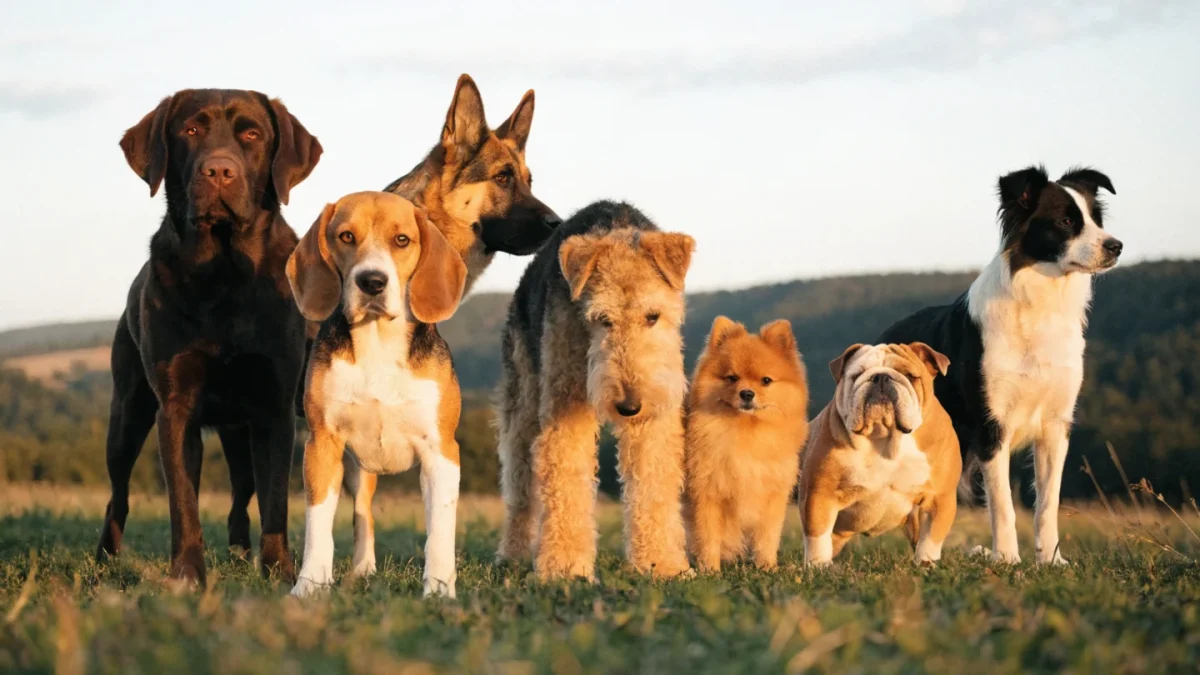
Before there were breed groups, there was chaos. In 1878, the first Westminster Kennel Club show lumped every competing dog into a single catch-all category. A 130-pound Mastiff shared a ring with a 6-pound toy spaniel, and judges somehow had to compare them. It didn't work. Within six years, the newly formed American Kennel Club began dividing breeds into groups based on original function — a system that has shaped how we understand dogs for over 140 years.
Today, the seven breed groups serve as the most widely used framework for organizing the roughly 200 recognized purebred dogs into categories that reflect what they were selectively bred to do. These groups are not arbitrary. Each one traces back to a specific set of jobs humans needed dogs to perform, and those centuries-old purposes still echo through modern breed behavior in ways that matter to anyone choosing a dog.
Understanding breed groups won't tell you everything about an individual dog, but it will tell you something powerful: what that dog's ancestors were built for, and what instinctive drives are probably running beneath the surface.
Why Breed Groups Exist
The classification of dogs into functional groups is older than formal kennel clubs. Hunters in medieval Europe distinguished between coursing hounds, scenthounds, bird dogs, and earth dogs centuries before anyone kept a stud book. What modern kennel organizations did was formalize these ancient functional categories into a standardized system.
The AKC recognizes seven groups. The FCI — the international federation governing kennel clubs in over 90 countries — uses ten groups with a different organizational logic. The UK Kennel Club uses seven groups that overlap with but don't perfectly match the AKC structure. These systems reflect genuine differences in breed history and emphasis, not arbitrary bureaucratic disagreement. A Dachshund, for instance, sits in the AKC Hound Group, the FCI Group 4 (Dachshunds — they get their own group), and the UK Kennel Club Hound Group. Same dog, different organizational frameworks.
The point remains consistent across all systems: breeds developed for similar work share predictable physical traits, behavioral tendencies, energy levels, and health patterns. Those shared characteristics make group classification genuinely useful for prospective owners — not just a show ring technicality.
The Sporting Group: Partners in the Field
The Sporting Group contains breeds developed to work alongside hunters of upland game and waterfowl. This group splits into four functional subtypes: retrievers (Golden Retriever, Labrador Retriever), spaniels (Cocker Spaniel, English Springer Spaniel), setters (Irish Setter, English Setter), and pointers (German Shorthaired Pointer, Vizsla).
What unites every sporting breed is a cooperative working style. These dogs were bred to take direction from a handler while maintaining enough initiative to locate and handle game independently. That balance of biddability and drive is the group's defining behavioral signature. They want to work with you — not for you, not despite you.
Physically, sporting breeds tend toward athletic, balanced builds with weather-resistant coats. Many are strong swimmers with webbed feet and water-repellent fur. Energy levels run moderate to high, and the need for daily structured exercise is non-negotiable in most sporting breeds.
Health patterns across the group include higher-than-average rates of hip dysplasia, ear infections (those floppy ears trap moisture), and certain cancers — particularly in retrievers. Eye conditions like progressive retinal atrophy appear across several sporting breeds with enough frequency to warrant routine screening.
The Hound Group: Noses and Speed
The Hound Group is built on two fundamentally different hunting strategies: scent and sight. Scenthounds — Beagles, Bloodhounds, Basset Hounds — track quarry by following airborne or ground scent trails, sometimes for miles, sometimes for days. Sighthounds — Greyhounds, Whippets, Salukis — locate prey by vision and pursue it at extraordinary speed.
This split makes hounds perhaps the most internally diverse group. A Bloodhound tracking a scent with its nose plastered to the ground has almost nothing in common, physically or behaviorally, with a Greyhound exploding from a standstill to 40 miles per hour. Yet both are hound breeds because both hunt independently of a handler — they were bred to find and pursue quarry without constant human direction.
That independence is the group's shared behavioral thread, and it's the reason hounds have a reputation for being "stubborn." They aren't stubborn. They're doing what they were designed to do: make autonomous hunting decisions. Training a hound requires working with that independence rather than against it.
Scenthounds tend toward sturdy, low-slung builds with long ears (the ears help channel scent particles toward the nose) and deep, baying voices developed to alert distant hunters. Sighthounds are aerodynamic — deep-chested, narrow-waisted, long-legged, and built for explosive sprinting. Health concerns diverge along similar lines: scenthounds face obesity and ear infections; sighthounds deal with sensitivity to anesthesia, bloat risk, and orthopedic issues.
The Working Group: Power and Purpose
Working dogs were bred for jobs that demand size, strength, endurance, and protective instinct: guarding livestock, pulling sleds, performing water rescues, and protecting property. Breeds like the Rottweiler, Siberian Husky, Bernese Mountain Dog, Great Dane, and Boxer represent an enormous range of working specializations, but they share a common thread: these dogs were bred to do serious physical labor and to make independent decisions under pressure.
Working breeds tend to be large to giant, with substantial bone structure and muscular builds. They're typically intelligent, confident, and somewhat reserved with strangers — traits that made them effective at their original jobs. That confidence can translate into a dog that needs firm, consistent guidance from an experienced handler. First-time owners who choose a working breed without understanding what they're getting into often find themselves outmatched.
Health concerns across the working group reflect their size: hip and elbow dysplasia, bloat (gastric dilatation-volvulus), cardiac issues, and shortened lifespans compared to smaller breeds. Giant working breeds like the Great Dane and Bernese Mountain Dog face particularly compressed lifespans — often 7 to 10 years.
The Terrier Group: Earth Dogs With Attitude
The word "terrier" comes from the Latin terra, meaning earth. These breeds were developed to hunt vermin — rats, foxes, badgers, otters — by pursuing them into burrows and underground dens. The job demanded a very specific temperament: courage disproportionate to body size, fierce determination, and an unwillingness to back down from anything, ever.
That temperament is still very much present. Terriers are bold, energetic, vocal, and often scrappy with other dogs. They range in size from the tiny Yorkshire Terrier to the substantial Airedale Terrier, but personality-wise they share more common ground than almost any other group. A terrier is a terrier, regardless of whether it weighs 3 kg or 30 kg.
Physically, terriers tend toward compact, muscular builds with wiry or hard-textured coats (many terrier coats are hand-stripped rather than clipped to maintain proper texture). They're tenacious diggers and chasers with high prey drive, which makes recall training an ongoing negotiation rather than a settled matter.
Health across the terrier group is generally robust — many terrier breeds are long-lived compared to similar-sized breeds in other groups. Common concerns include skin allergies, patellar luxation in smaller terriers, and lens luxation in certain breeds. The Scottish Terrier has a notably elevated risk of bladder cancer (transitional cell carcinoma) compared to the general dog population.
The Toy Group: Small Dogs, Ancient Purposes
Toy breeds exist for one primary reason: human companionship. While most other groups were developed for specific physical work, toy breeds were refined over centuries as lap dogs, sleeve dogs, and status symbols for aristocracy. That doesn't make their history less interesting — just different. The Pekingese was so sacred in Chinese imperial courts that stealing one carried the death penalty. The Maltese has been documented in Mediterranean art since at least 500 BC.
Modern toy breeds weigh under approximately 10 kg and typically stand under 28 cm at the shoulder. They include both miniaturized versions of larger breeds (Miniature Pinscher, Toy Poodle) and breeds that have always been small (Chihuahua, Papillon). What they share is an acute attunement to human emotional states, an intense need for proximity, and personalities that routinely exceed what their body size would suggest.
The misconception I encounter most about toy breeds is that they don't need training because they're small. This is backward. Untrained toy dogs develop aggression, resource guarding, and anxiety at alarming rates — but because the bites don't send anyone to the emergency room, the behavior goes uncorrected until it's deeply entrenched.
Health concerns in the toy group revolve around their size: patellar luxation, dental disease (small jaws crowd teeth), tracheal collapse, and hypoglycemia in very small individuals. Brachycephalic toy breeds — Pugs, French Bulldogs — face additional respiratory compromise.
The Non-Sporting Group: The Catch-All
Here's the honest truth about the Non-Sporting Group: it's defined by what its members are not, rather than by what they are. If a breed doesn't fit neatly into the other six groups, it lands here. The result is the single most diverse collection of breeds in any classification system — and a group that resists generalization more than any other.
The Bulldog, Dalmatian, Poodle (Standard and Miniature), Chow Chow, Shar-Pei, and Lhasa Apso all sit in this group. These breeds share almost nothing in terms of size, coat type, temperament, energy level, or original function. The Dalmatian is a long-distance coaching dog. The Bulldog descends from bull-baiting stock. The Standard Poodle was originally a water retriever. The Chow Chow served as a multi-purpose working dog in China for over 2,000 years.
What makes the Non-Sporting Group useful for prospective owners isn't a set of shared traits — it's a reminder that breed research needs to happen at the individual breed level, not the group level. Knowing a dog is a non-sporting breed tells you virtually nothing predictive about its behavior or needs.
The Herding Group: Intelligence in Motion
The Herding Group is the youngest of the seven — it was split off from the Working Group in 1983. Its members were developed to control the movement of livestock, and the behavioral traits that make a good herding dog are immediately recognizable: intense focus, rapid decision-making, high physical endurance, and an almost compulsive need to manage movement in their environment.
That last trait is why herding breeds are the group most likely to herd children, bicycles, joggers, cats, and other household pets. The behavior isn't malicious — it's instinct misfiring in a domestic context. A Border Collie circling your toddler and nipping at their heels is doing exactly what it was bred to do, just directed at the wrong target.
Herding breeds include the German Shepherd, Border Collie, Australian Shepherd, Pembroke Welsh Corgi, and Shetland Sheepdog — breeds that dominate obedience competitions and agility trials because their combination of intelligence, drive, and handler focus is unmatched. They are also among the most demanding breeds in terms of daily mental and physical stimulation. An understimulated herding dog doesn't just get bored — it gets creative, and "creative" in a herding breed usually means destructive.
Health trends across the group include hip dysplasia, Collie Eye Anomaly (CEA) in rough and smooth collies and Shetland Sheepdogs, MDR1 drug sensitivity in several herding breeds, and epilepsy. The group's overall athleticism can mask early signs of orthopedic problems, making regular veterinary screening particularly important.
Breeds That Don't Fit Neatly
It's worth acknowledging that group classification has genuine limitations. The Dalmatian has more in common with sporting breeds than with the Bulldog, yet both sit in Non-Sporting. The Dachshund was bred to go to ground after badgers — terrier work by definition — but it's classified as a Hound. The Miniature Schnauzer originated from a ratting terrier but belongs to the Terrier Group in the AKC and the Pinscher and Schnauzer group in the FCI system.
These boundary cases reveal that breed groups are useful approximations, not definitive categories. They reflect historical convention as much as biological reality, and they're best used as a starting point for research rather than a final answer about what any individual breed will be like.
What Breed Groups Tell You (and What They Don't)
Breed group classification is most useful for understanding three things:
Energy and exercise patterns. Sporting, herding, and working breeds generally demand more daily activity than toy and non-sporting breeds. Terriers and hounds fall somewhere in the middle, with significant variation within each group.
Behavioral tendencies. Herding breeds herd. Terriers dig and chase. Hounds follow their noses or their eyes with single-minded focus. These drives are deeply wired and won't be trained out — they need to be managed and redirected.
Health predispositions. Breed groups share health patterns because they share genetic heritage. Giant working breeds face shortened lifespans and orthopedic issues. Brachycephalic breeds across multiple groups face respiratory compromise. Sporting breeds have elevated cancer rates.
What breed groups don't tell you is how any specific dog will behave. Individual variation within a breed is significant, and variation between breeds within the same group can be enormous. A Chihuahua and a Cavalier King Charles Spaniel are both toy breeds, but they're profoundly different dogs with different needs, health profiles, and temperaments.
Using Breed Groups to Choose the Right Dog
If you're researching breeds, group classification is your most efficient starting tool. Begin by identifying which group matches your lifestyle:
Active households with outdoor access often do well with sporting or herding breeds, provided they can commit to the daily exercise and mental stimulation those groups demand.
Experienced handlers who want a large, protective companion should research working breeds — but honestly evaluate whether they're prepared for a dog that requires firm, consistent leadership and extensive socialization.
Apartment dwellers or less active owners may find the best fit in the toy or non-sporting groups, though individual breed research remains essential (a Dalmatian will destroy your apartment; a Bulldog will nap on your couch).
People who find independent, self-directed dogs appealing rather than frustrating should consider hounds. People who need total off-leash recall reliability should look elsewhere.
Owners who want a tenacious, entertaining, high-personality dog and can tolerate selective hearing are natural terrier people.
The group narrows the field. Individual breed research closes the gap. And meeting actual dogs of whatever breed you're considering is the final, irreplaceable step. For a structured approach to the full decision, see how to choose the right dog breed.
Frequently Asked Questions
Why do different kennel clubs organize breeds into different groups?
Kennel clubs developed independently in different countries, each reflecting their region's breeding history and priorities. The AKC uses seven groups; the FCI uses ten; the UK Kennel Club uses seven but with different breed placements. A Dachshund sits in the AKC Hound Group but gets its own FCI group. These aren't errors — they're different organizational philosophies applied to the same set of breeds. The underlying function-based logic is consistent, but where exactly boundaries are drawn depends on which club you're looking at.
Which breed group is best for first-time dog owners?
No group is universally "best" for beginners — the right match depends on your specific lifestyle, living space, and how much time you can commit to exercise and training. That said, many sporting breeds (Labrador Retriever, Golden Retriever, Cocker Spaniel) and some toy breeds (Cavalier King Charles Spaniel, Havanese) are frequently cited as more forgiving of handling mistakes because they combine biddability with moderate-to-high tolerance for inconsistency. Working breeds and herding breeds generally demand more experience.
Do mixed-breed dogs fit into breed groups?
Not formally, but breed group concepts still apply. If DNA testing reveals your mixed breed has significant Beagle and Labrador heritage, understanding both hound and sporting group tendencies gives you useful predictive information about likely behavior and health risks. Mixed breeds don't escape the influence of breed heritage — they combine it in less predictable ways.
Are breed groups useful for predicting health problems?
Yes, with caveats. Breeds within the same group often share genetic heritage and therefore share predispositions to certain conditions. Giant working breeds tend toward shortened lifespans and joint problems. Toy breeds face dental disease and patellar luxation. Sporting breeds have elevated cancer rates. But individual breed health profiles vary significantly within each group, so group-level generalizations are a starting point for research, not a substitute for breed-specific health data.
Has the breed group system changed over time?
Yes. The most significant recent change was the creation of the AKC Herding Group in 1983, when herding breeds were separated from the Working Group. The AKC also added a Miscellaneous Class for breeds working toward full recognition. New breeds are added periodically as they meet recognition requirements — the AKC recognized the Bracco Italiano and the Hungarian Mudi in 2024. The FCI has also reorganized groups historically, though less frequently. Classification systems continue evolving as our understanding of breed relationships improves through genomic research.