

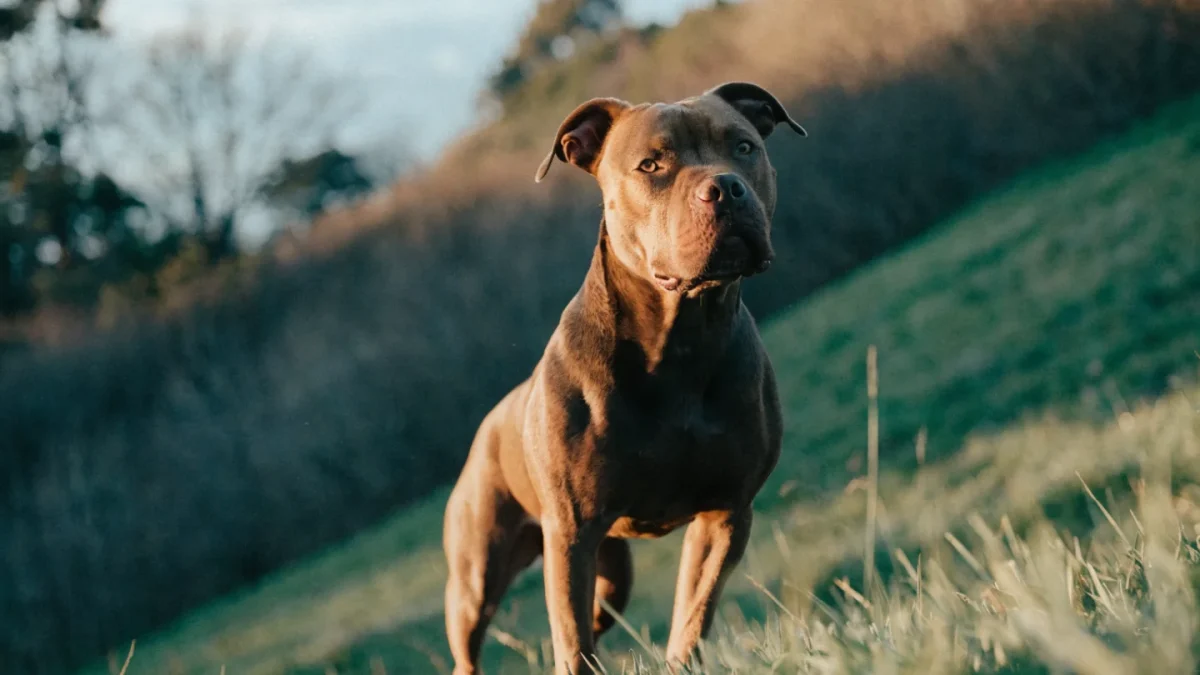
What do you actually know about this dog — beyond what you've heard?
That question matters more for the American Pit Bull Terrier than for almost any other breed I've written about, because the noise around this dog is so loud and so politically charged from both directions that the actual animal tends to disappear somewhere in the middle. The critics say it's a ticking time bomb engineered for violence. The advocates say it's a nanny dog, a hero breed, misunderstood and persecuted. Both positions are built more on narrative than on documentation, and both cause real harm — one to the dogs, one to the people who get them without understanding what they're actually dealing with.
The APBT is a medium-sized, athletically built dog with a specific history, specific behavioral tendencies, and specific ownership demands. It is not a lab retriever with a short coat. It is not a monster. It's a dog that was bred for a job that required intensity, pain tolerance, and extraordinary drive — and that heritage doesn't disappear because someone names it "Biscuit" and puts a bow on it. This american pit bull terrier breed guide covers the history, the temperament, the health picture, and the honest fit assessment. No advocacy. No fear-mongering. Just the documented facts and what they mean for someone considering this dog.
Origins and History
The American Pit Bull Terrier descends from crosses between Old English Bulldogs and various terrier breeds in early 19th-century Britain. The original purpose was functional: breeders wanted a dog that combined the bulldog's strength and grip with the terrier's agility and drive. These dogs were used initially for blood sports — bull-baiting and bear-baiting — and after those were banned in 1835 under the Cruelty to Animals Act, many were redirected toward dog fighting and ratting in pits, which gave rise to the "pit" in the name.
When British and Irish immigrants brought these dogs to North America in the mid-1800s, the breed's role shifted substantially. On farms and homesteads, they worked as catch dogs for semi-feral livestock, vermin controllers, and general-purpose working dogs. The breed diverged from its British ancestors as American breeders selected for a slightly larger, more versatile animal suited to agricultural work rather than pit sports.
The AKC recognized a version of the breed as the American Staffordshire Terrier in 1936, deliberately distancing it from the fighting heritage through the name change. The UKC continued registering the dogs under the original American Pit Bull Terrier name. Today, the APBT and the AmStaff are considered separate breeds by their respective registries, though they share substantial genetic overlap and many individual dogs are dual-registered.
The much-repeated claim that pit bulls were historically known as "nanny dogs" trusted to watch children is not supported by historical documentation. The phrase appears to originate from a 1971 interview in the New York Times with the president of the Staffordshire Bull Terrier Club of America, and it referred to Staffordshire Bull Terriers, not APBTs. While period photographs do show children alongside pit-type dogs — as they do with nearly every popular breed of the era — no evidence supports the existence of a recognized "nanny dog" designation. The breed's real history is compelling enough without embellishment.
Physical Characteristics
Size and Build
The APBT is a medium-sized dog, though there is considerable variation within the breed. Males typically stand 45 to 53 cm at the shoulder and weigh 16 to 27 kg. Females range from 43 to 50 cm and 14 to 23 kg. The UKC breed standard emphasizes proportion and athleticism over raw size — dogs should appear powerful but never bulky or cumbersome.
The build is defined by a broad, flat skull with pronounced cheek muscles, a deep chest that reaches roughly to the elbow, and a whip-like tail that tapers to a point. The jaw structure is strong but conforms to a standard scissors bite — the widely circulated claim about "locking jaws" is anatomically false. No canine breed possesses a locking jaw mechanism. APBT jaw structure is functionally identical to other breeds of similar head size.
Coat
The coat is short, stiff, and glossy. It lies close to the body and provides minimal insulation, which makes the breed poorly suited to extreme cold. Coat colors span nearly the entire canine spectrum: red, blue, fawn, black, brindle, white, and virtually any combination thereof. The only color not accepted by the UKC standard is merle, which indicates crossbreeding with other breeds.
Grooming demands are minimal. A weekly brushing with a rubber curry brush removes dead hair and distributes skin oils. Bathing every four to six weeks is sufficient unless the dog gets into something particularly objectionable.
Common Misidentification
This matters more for the APBT than perhaps any other breed. A 2015 study by Olson et al. published in The Veterinary Journal found that shelter staff visual identification of pit bull-type dogs had a mean sensitivity of only 50%. DNA breed signatures identified just 21% of the study dogs as pit bull-type, while shelter staff collectively labeled 52% as pit bull-type — meaning one in three dogs lacking any pit bull-type DNA were still labeled as such by at least one staff member. This misidentification problem significantly inflates bite statistics attributed to the breed and complicates breed-specific legislation enforcement.
The term "pit bull" is used colloquially to describe a physical type rather than a specific breed, encompassing APBTs, American Staffordshire Terriers, Staffordshire Bull Terriers, American Bullies, and any mixed-breed dog with a blocky head and muscular build. This taxonomic confusion underlies much of the statistical and legislative complexity surrounding the breed.
Temperament and Behavior
The Core Personality
The American Pit Bull Terrier, when bred and raised responsibly, is a dog of remarkable human affection. The breed's characteristic trait is an intense, almost overwhelming desire to please its primary handler. APBTs bond deeply, follow their people from room to room, and display physical affection with an enthusiasm that their muscular build makes hard to ignore. A 25 kg APBT that considers itself a lap dog is standard behavior, not an exception.
They are confident dogs with high pain tolerance — a trait that originated from their working history and one that has practical implications. An APBT may not show obvious signs of injury or illness the way more demonstrative breeds do. Owners need to be proactive about health monitoring rather than waiting for the dog to tell them something is wrong.
What Most People Get Wrong About This Breed
The most persistent misconception is that APBTs are inherently aggressive toward humans. The breed's historical development actually selected against human aggression. Dogs that were used in pit sports had to be handled by humans during and after high-arousal situations. Dogs that redirected aggression toward handlers were not bred. The result is a breed with an unusually high threshold for human-directed aggression.
The distinction between human-directed aggression and dog-directed aggression is critical, and failing to understand it is where most APBT ownership goes wrong. Many APBTs have significant dog-directed drive — a genetic predisposition toward confrontation with other dogs that varies by individual but is present in the breed at higher baseline rates than in many other breeds. This is not aggression born from fear or poor socialization, though both of those factors can compound it. It is an inherited behavioral tendency that must be managed, not trained away.
Responsible APBT ownership means acknowledging this trait honestly. Some individuals are fine with other dogs throughout their lives. Others develop selectivity as they mature, typically between one and three years of age. A dog that was social with other dogs as a puppy may become reactive as an adult. This is not a failure of the owner — it is a breed tendency that requires preparation and management.
Intelligence and Drive
APBTs are highly intelligent, tenacious, and work-oriented. They excel at tasks that require sustained physical effort and problem-solving. When that drive is channeled productively — through weight pulling, agility, obedience, or structured exercise — the result is an extraordinarily capable and focused partner. When it isn't channeled at all, the result is a strong, intelligent dog with nothing to do and the physical capacity to do significant damage to property and fencing while entertaining itself.
Health Profile
The American Pit Bull Terrier is a relatively healthy breed compared to many popular purebreds, benefiting from a broader genetic base and less extreme physical conformation. That said, several conditions occur at meaningful rates.
Hip Dysplasia
Hip dysplasia affects APBTs at moderate rates. The condition involves abnormal development of the hip joint, leading to progressive arthritis and pain. Screening parent dogs through standardized hip evaluation before breeding reduces but does not eliminate the risk. Maintaining lean body weight throughout the dog's life is one of the most effective management strategies.
Allergies and Skin Conditions
Skin issues are among the most common health complaints in the breed. APBTs are prone to environmental allergies (atopic dermatitis), food sensitivities, and demodex mange — particularly in young dogs whose immune systems are still developing. The short coat means skin conditions are visible early, which is actually an advantage for prompt treatment. Chronic skin allergies may require ongoing management throughout the dog's life.
Cranial Cruciate Ligament Disease
Cranial cruciate ligament tears affect athletic breeds at higher rates, and APBTs are no exception. The combination of muscular build, high activity level, and enthusiastic physical play creates significant joint stress. Surgical repair is typically necessary and expensive.
Thyroid Disease
Hypothyroidism occurs in the breed at rates worth noting. Symptoms include weight gain, lethargy, skin changes, and coat thinning. It is treatable with daily medication but requires lifelong management and periodic blood monitoring.
Cardiac Conditions
Congenital heart defects, particularly aortic stenosis, occur in the breed. Cardiac screening of breeding stock is recommended. Some forms are mild and require only monitoring; others are serious and life-limiting.
Lifespan
The average APBT lifespan is 12 to 14 years, which is solid for a medium-sized breed and notably longer than many breeds of comparable size and popularity. Well-managed individuals not uncommonly reach 15 years.
Exercise and Activity Needs
This is an athletic breed that needs substantial daily exercise — a minimum of 60 to 90 minutes of structured physical activity. Walking alone is insufficient for most individuals. The breed was built for explosive, sustained physical effort and needs activities that reflect that capability.
Effective options include flirt pole work, spring pole, weight pulling (with proper conditioning), hiking on varied terrain, swimming, and vigorous fetch sessions. Mental enrichment through puzzle toys, scent work, and training sessions is equally important. A physically tired APBT with no mental stimulation will still find ways to express its drive.
Puppies need exercise calibrated to their developmental stage. Forced repetitive exercise on hard surfaces stresses growing joints. Free play on soft ground, short structured walks, and age-appropriate training satisfy the puppy's needs without creating orthopedic problems later. The general guideline of five minutes of structured exercise per month of age, twice daily, is a reasonable framework.
APBTs have low cold tolerance due to their short, thin coat. Winter exercise sessions may require a fitted jacket in cold climates, and the dog should not be housed outdoors in cold weather.
Breed-Specific Legislation
Breed-specific legislation (BSL) is a reality that every prospective APBT owner must research thoroughly before acquiring the breed. Laws restricting or banning pit bull-type dogs exist in numerous jurisdictions worldwide. Some municipalities ban ownership outright. Others impose conditions — mandatory muzzling in public, special insurance requirements, mandatory sterilization, or secure fencing specifications.
The legal landscape is complex and changes frequently. Prospective owners should verify current regulations in their specific municipality, county or region, and country before bringing an APBT home. Rental housing presents additional challenges, as many landlords and property management companies maintain breed restriction lists regardless of local law. Homeowner's insurance policies may also exclude coverage for pit bull-type breeds or charge substantial surcharges.
This is not a commentary on whether BSL is effective or justified — the research on that question is mixed and ongoing. It is a practical reality that directly affects whether you can legally and practically own this breed where you live.
Socialization Requirements
Early, extensive, and ongoing socialization is more important for this breed than for most. The critical socialization window (roughly 3 to 16 weeks) sets the foundation, but socialization should not stop at 16 weeks — it should continue throughout the dog's life.
For APBTs specifically, socialization needs to accomplish two things: building confidence around novel situations, people, and environments, and establishing appropriate behavior patterns around other dogs. The second goal requires honest assessment as the dog matures. An APBT that tolerates other dogs at six months may develop selectivity at two years. Owners who assume early socialization has permanently resolved dog-directed concerns are often caught off guard.
Structured, controlled introductions to other dogs are more valuable than chaotic dog park environments. Many experienced APBT owners avoid dog parks entirely — not because their dogs are dangerous, but because the uncontrolled nature of those environments creates unnecessary risk for a breed with higher stakes if a confrontation occurs.
The Right Owner for This Breed
Here's my honest assessment. An American Pit Bull Terrier is the right dog for you if:
- You have experience with strong, driven dog breeds and are comfortable with physical management of a powerful animal
- You can provide 60 to 90 minutes of structured daily exercise that goes beyond leash walking
- You understand the difference between human-directed and dog-directed aggression and are prepared to manage the latter if it develops
- You have researched and confirmed that your jurisdiction, housing, and insurance situation allows APBT ownership
- You are prepared to be an ambassador for the breed — meaning your dog's behavior in public reflects well on a breed that already faces enormous scrutiny
- You won't leave this dog chained in a yard. That scenario is where APBT ownership goes wrong more than any other
An American Pit Bull Terrier is the wrong dog for you if:
- You want the breed for its tough appearance or as a status symbol
- You plan to take the dog to off-leash dog parks regularly and expect it to be fine with every dog it meets
- You are not prepared to maintain control of a strong, athletic dog in all public situations
- You live in an area with breed restrictions and plan to simply "not get caught"
- You have never owned a dog before and are not committed to working with an experienced trainer
- You are looking for a low-maintenance pet that requires minimal daily engagement
The American Pit Bull Terrier, in the right home, is one of the most loyal, athletic, and affectionate dogs you will ever encounter. In the wrong home, it is a breed whose physical capabilities and public perception magnify every management failure. Other large, powerful breeds that attract similar public scrutiny — the Rottweiler and the Cane Corso among them — face analogous stereotypes, and the pattern is always the same: the breed pays for the owner's failure. The breed deserves better than both its detractors and its irresponsible fans have given it. It deserves owners who deal in reality.
Frequently Asked Questions
Do American Pit Bull Terriers have locking jaws?
No. This is a persistent myth with no anatomical basis. The jaw structure of an American Pit Bull Terrier is functionally identical to that of any other breed of comparable head size. What APBTs do have is a strong bite, high pain tolerance, and a terrier-derived trait of holding and shaking when gripping — which creates the impression of a locked jaw but is behavioral, not mechanical. No veterinary or anatomical study has ever identified a locking mechanism in any canine breed.
Are pit bulls good with children?
APBTs are typically affectionate with children in their own family. Their high pain tolerance and patient disposition means they often tolerate the physical handling that comes with young children better than many breeds. However, no dog of any breed should be left unsupervised with young children. The APBT's size and strength mean that even accidental knocking or jumping can injure a small child. Supervision, teaching children appropriate interaction, and managing the dog's excitement level around kids are non-negotiable.
How do APBTs compare to American Staffordshire Terriers?
The two breeds share common ancestry and significant genetic overlap. The American Staffordshire Terrier is AKC-recognized and has been bred primarily for conformation showing since 1936, resulting in a somewhat stockier, heavier build. The APBT is UKC-recognized and maintains a broader range of working-type builds. Many individual dogs are dual-registered. The temperament differences are subtle and are more a product of specific breeding lines than breed-level distinctions. For practical ownership purposes, the considerations are similar.
What is the bite force of an American Pit Bull Terrier?
Bite force measurements vary significantly depending on methodology, individual dog size, and testing conditions. Claims of specific PSI figures circulating online — often in the range of 235 to 250 PSI — are based on estimated models using skull measurements and muscle mass rather than standardized live-bite testing under controlled conditions. Peer-reviewed canine bite force research remains limited in scope and methodology, and the widely cited rankings are not derived from a single standardized study comparing breeds under identical conditions. What is documented is that APBTs have strong bites relative to their size, as expected for a breed with well-developed jaw musculature. The fixation on bite force numbers is generally more useful as a fear-mongering tool than as meaningful breed information.
Do APBTs need to be the only pet in the household?
Not necessarily, but this requires individual assessment rather than breed-level assumptions. Many APBTs live peacefully with other dogs and even cats throughout their lives. Others develop dog selectivity as they mature, typically between ages one and three. Same-sex pairs are statistically more likely to develop conflict. The safest approach is to evaluate each dog as an individual, supervise multi-dog interactions, and have a management plan if selectivity develops. Never assume that a puppy's social behavior predicts its adult behavior with other animals.