

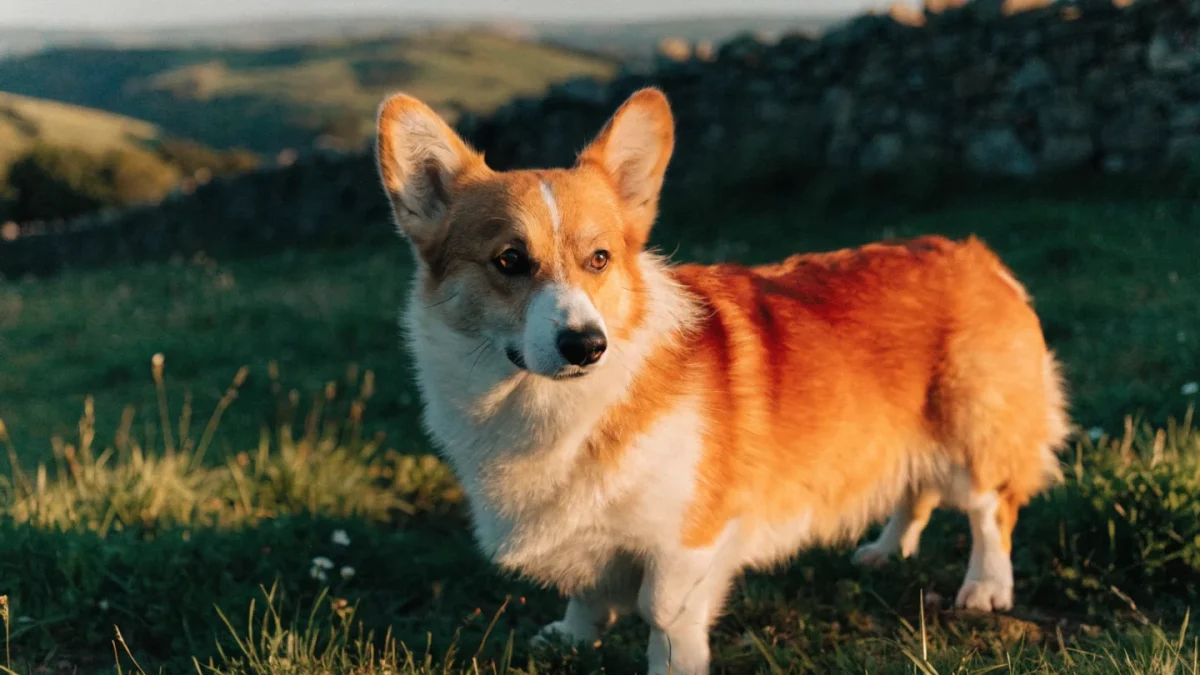
The Pembroke Welsh Corgi was never supposed to be cute. When Flemish weavers brought their small herding dogs to Pembrokeshire, Wales, around the 10th century, they needed a cattle dog low enough to dodge hooves and bold enough to nip the heels of animals ten times its size. The fact that these dogs also happen to have foxlike faces, oversized ears, and a perpetual grin is an accident of function, not fashion.
Standing just 25 to 30 cm at the shoulder and weighing between 10 and 14 kg, the Pembroke Welsh Corgi is among the smallest herding breeds recognized by major kennel organizations worldwide. But calling them a "small dog" misrepresents everything about how they operate. This is a working breed in a compact frame — fast, opinionated, surprisingly strong, and built to move livestock across rough terrain all day. If you want a complete pembroke welsh corgi breed guide that treats this breed as the serious working dog it actually is, rather than the internet meme it's become, you're in the right place.
The Pembroke's surge in global popularity over the past two decades has been both a blessing and a curse. More people love corgis than ever. Fewer people understand them.
Origins: Flemish Weavers and Welsh Pastures
The most widely accepted origin theory traces the Pembroke Welsh Corgi to the Flemish weavers who settled in Pembrokeshire around 1107 CE, during the reign of Henry I of England. These artisans brought small Spitz-type herding dogs from what is now Belgium — dogs that would become the foundation stock for the Pembroke we know today. You can read the full history of the Pembroke Welsh Corgi for the complete timeline.
Welsh folklore offers a more colorful version. According to legend, Pembrokes were gifts from woodland fairies — the markings on their coats supposedly trace the outline of a fairy saddle. It's a charming story. It tells you nothing useful about the breed's actual development, but it does illustrate how deeply embedded these dogs are in Welsh cultural identity.
The critical distinction that confuses many people: the Pembroke Welsh Corgi and the Cardigan Welsh Corgi are two separate breeds, not color variants of the same dog. They developed in different Welsh counties — Pembrokeshire and Cardiganshire — from different ancestral stock. Cardigans are older, heavier, and retain their long tails. Pembrokes are more compact, lighter-boned, and most are born with naturally short tails or are docked depending on regional regulations. The two breeds were shown together in Britain until the Kennel Club separated them in 1934, and they've been distinct breeds ever since.
Physical Characteristics
Size and Structure
The Pembroke's build is deceptive. Despite standing roughly 25 to 30 cm tall, a well-conditioned Pembroke is dense, muscular, and solidly built. The breed standard calls for a dog that is "low-set, strong, sturdily built and active, giving an impression of substance and stamina in a small space." That's an accurate description.
Males typically weigh 12 to 14 kg, females 10 to 13 kg. The body is moderately long relative to height, but not as elongated as often depicted in cartoons. The chest is deep, reaching between the forelegs, and the ribcage is well-sprung. The overall silhouette suggests a dog built for quick lateral movement — which is exactly what cattle herding demands.
The legs are short but not fragile. The forearms are slightly bowed to accommodate the broad chest, and the feet are oval and compact. This low center of gravity made the Pembroke remarkably effective at dodging kicks while working cattle.
Head and Expression
The head is foxlike — this comparison appears in virtually every breed standard for good reason. The skull is fairly wide and flat between the ears, tapering toward the eyes. The muzzle is moderately pointed but not snipey. Ears are erect, medium-sized, and slightly rounded at the tips. They're disproportionately large for the head, which contributes significantly to the breed's expressive appearance.
The eyes are medium-sized, oval, and set somewhat obliquely. Dark brown is standard, though blue or partially blue eyes occur in merle-patterned dogs (a color not accepted in Pembrokes by most breed standards). The overall expression should convey intelligence and alertness without anxiety.
Coat and Color
The double coat is medium length, with a thick, weather-resistant outer coat and a dense undercoat. Acceptable colors include red, sable, fawn, and black and tan — with or without white markings on the legs, chest, neck, muzzle, and as a blaze on the face. "Mismarks" (excessive white, white on the body) and "whitelies" (predominantly white dogs) occur but fall outside the breed standard.
The coat sheds. Heavily. Year-round, with two dramatic blowouts annually where the undercoat comes out in clumps. Anyone who tells you Pembrokes are moderate shedders either doesn't own one or has redefined what "moderate" means.
The Tail Question
Most Pembrokes have naturally short tails — a trait governed by a dominant gene mutation (the T-box gene). Some are born with full-length tails, and in countries where docking is practiced, these tails are typically shortened within the first few days of life. In countries where docking is banned, you'll see Pembrokes with full-length tails, and they look perfectly fine. The genetics behind DM risk and the natural bobtail involve some fascinating molecular biology if you want the full picture.
Temperament and Behavior
If the Labrador is the friendly neighbor who waves at everyone, the Pembroke Welsh Corgi is the neighborhood watch captain — friendly enough, but keeping an eye on things and not afraid to let you know when something is off. That corgi temperament runs deeper than most owners expect.
What Most People Get Wrong About This Breed
The biggest misconception is that Pembrokes are lap dogs. They're categorically not. They're herding dogs that happen to fit on your lap. The distinction matters enormously because it shapes every behavioral expectation.
Pembrokes are alert, vocal, bossy, and they have opinions about how the household should run. They'll herd children, guests, other pets, and your ankles if you move in a direction they haven't approved. This isn't aggression — it's instinct, bred into them over centuries. But it's instinct that requires management, redirection, and consistent boundaries.
The second misconception: "They're small, so they don't need much exercise." Wrong. Pembrokes were bred to cover miles of Welsh pastureland daily. A Pembroke with insufficient physical and mental stimulation becomes a barking, digging, furniture-shredding nightmare — not because it's a bad dog, but because it's a working dog with nothing to work on.
Intelligence and Trainability
Stanley Coren's assessments ranked the Pembroke Welsh Corgi 11th in working intelligence out of 138 breeds tested, placing them in the "excellent working dogs" category — dogs that learn new commands in 5 to 15 repetitions and obey first commands 85% of the time or better. They're quick learners with good problem-solving ability and long memories.
That intelligence has a downside. Pembrokes get bored easily, and a bored corgi is a creative corgi. They'll figure out how to open cabinets, defeat baby gates, and find food you thought was securely stored. They test boundaries regularly and will exploit any inconsistency in household rules. Training needs to be engaging, varied, and consistent across all family members.
Vocal Tendencies
Pembrokes bark. This is not a defect — it's a herding breed trait. Their original job required them to be vocal: barking at cattle to move them, alerting to predators, communicating with handlers across pastures. In a modern home, this translates to barking at the doorbell, barking at people walking past the window, barking at unfamiliar sounds, and occasionally barking at nothing you can identify.
Bark management through training is possible and necessary, but expecting a Pembroke to be a quiet dog is expecting it to be something it isn't.
Social Dynamics
With their families, Pembrokes are affectionate, loyal, and often comically devoted. They tend to bond closely with all household members rather than fixating on a single person. They're generally good with children, though their herding instinct means they may nip at running kids' heels — something that needs consistent correction from puppyhood.
With strangers, Pembrokes range from cautiously friendly to openly suspicious. They're better watchdogs than most people assume. With other dogs, they're typically confident and social but won't back down from a challenge despite their size — which can create problems with larger dogs that take exception to a small dog's attitude.
Health Profile
Pembroke Welsh Corgis have a distinct set of health predispositions that any prospective owner needs to understand clearly. Their unique body structure and genetic history create specific vulnerabilities.
Degenerative Myelopathy (DM)
This is the health issue that keeps corgi owners up at night — and rightly so. Degenerative myelopathy is a progressive neurological disease that affects the spinal cord, causing gradual hind-limb paralysis. It's been compared to amyotrophic lateral sclerosis (ALS) in humans, and both conditions involve the same gene mutation (SOD1).
The disease typically appears in dogs aged 8 to 14 years and progresses over 6 to 36 months. There is no cure, no effective treatment to halt progression, and no way to reverse damage once it begins. DNA testing can identify dogs that are carriers, at risk, or clear. Two copies of the mutated gene (homozygous) significantly increase risk, though not all homozygous dogs develop clinical symptoms — the 2009 PNAS study that first identified the SOD1 mutation, and the research that's followed it, both describe this as incomplete, age-related penetrance. Plenty of aged homozygous dogs never show a symptom. Nobody's pinned down one clean percentage across the breed; what's settled is that the genotype alone doesn't write the outcome.
Intervertebral Disc Disease (IVDD)
The Pembroke's long spine relative to its short legs creates mechanical vulnerability. Intervertebral disc disease — where spinal discs degenerate, bulge, or rupture — is more common in chondrodystrophic (short-legged) breeds. Symptoms range from pain and reluctance to move to partial or complete paralysis.
Weight management, avoiding excessive jumping (especially from furniture), and using ramps are practical preventive measures. Surgical intervention is sometimes necessary and can be effective if performed early.
Hip Dysplasia
Despite their small size, Pembrokes are susceptible to hip dysplasia. Their proportions may actually contribute to the risk, as the short-legged body structure alters load distribution across the joints. Screening parent dogs is important, and maintaining a lean body condition throughout life reduces the severity of symptoms if dysplasia is present.
Additional Health Concerns
- Von Willebrand's Disease (Type I): A bleeding disorder caused by deficient clotting factor. DNA testing identifies affected dogs and carriers.
- Progressive Retinal Atrophy (PRA): Inherited eye disease leading to progressive vision loss. DNA testing is available.
- Patent Ductus Arteriosus: A congenital heart defect that occurs at higher-than-average rates in the breed — well-documented enough in Pembrokes specifically that a dedicated genetic study went looking for the breed's causal mutation.
- Obesity: This cannot be overstated. Pembrokes gain weight easily, and excess weight on their elongated frame dramatically accelerates spinal and joint problems. A fat corgi isn't funny — it's a dog in accelerated structural decline.
Lifespan
The average Pembroke Welsh Corgi lifespan is approximately 12 to 13 years, though well-maintained dogs from health-tested lines can reach 14 to 15 years. The primary factors affecting longevity are DM onset, weight management, and spinal health.
Grooming Requirements
Coat Maintenance
The Pembroke's double coat requires consistent upkeep. Brush at minimum three times per week with a slicker brush and undercoat rake. During the biannual coat blows (spring and fall), daily brushing is the only way to stay ahead of the shedding. A deshedding tool can help remove loose undercoat, but aggressive use can damage the topcoat — work gently and systematically.
Bath every four to six weeks, or as needed if the dog gets into something foul. Pembrokes are low to the ground, which means belly and chest fur collects mud, dirt, and debris on every outdoor outing. A damp towel wipe-down after walks saves a lot of full baths.
Nails, Ears, and Teeth
Trim nails every two to three weeks. The Pembroke's compact feet need regular nail maintenance to prevent gait alteration. Clean ears weekly — those large, open ears collect debris and moisture. Dental care through regular brushing several times per week prevents the periodontal disease that's common across all breeds.
Exercise and Activity Requirements
Pembrokes need 45 to 60 minutes of purposeful exercise daily — and more is better if the activity is appropriate. These are dogs that were bred to work all day. A short leash walk doesn't touch their energy reserves.
Effective Activities
- Herding trials and instinct tests: If you have access, these tap directly into the breed's core purpose. Watching a Pembroke work livestock for the first time is often revelatory for owners who only knew the "cute internet dog."
- Agility: Pembrokes are surprisingly competitive in agility given their proportions. Their low center of gravity and quick turns are genuine advantages on a course.
- Structured walks and hikes: Keep terrain reasonable — extreme scrambling isn't ideal for short legs and long backs.
- Puzzle toys and scent work: Mental exhaustion is just as important as physical exercise for this breed. A 15-minute scent game can tire a Pembroke as effectively as a 30-minute walk.
- Fetch and retrieving games: Pembrokes generally enjoy retrieving, though some individuals are more interested in chasing than returning.
Exercise Precautions
Avoid activities that stress the spine: repetitive high jumping, launching off furniture, rough play with much larger dogs. Use ramps for getting on and off beds or couches if your Pembroke insists on furniture access. Keep puppies off stairs and away from jumping until skeletal development is complete — typically around 12 to 14 months.
Nutrition and Weight Management
This is the section where I need to be blunt. The single most controllable factor in a Pembroke Welsh Corgi's long-term health is body weight. Every extra gram on that elongated frame presses down on spinal discs and strains hip joints that may already be compromised.
A Pembroke at healthy weight has ribs you can easily feel without pressing, a visible waist when viewed from above, and a clear abdominal tuck from the side. If the body looks like a sausage from above — no waist, no tuck — the dog is overweight.
Feed measured meals, not free-feeding. Two meals daily for adults, three for puppies under six months. Use a kitchen scale to weigh food rather than eyeballing with a measuring cup. Treat calories count toward daily intake — and Pembrokes are highly food-motivated, which makes treats effective training tools but dangerous if unregulated. Adjust portions based on body condition, not feeding chart recommendations, which frequently overestimate.
Living Situation Compatibility
Pembrokes adapt well to various living spaces — apartments included — provided their exercise and mental stimulation needs are met. They're not kennel dogs or backyard dogs. They want to be with their people, participating in household life, ideally supervising everything.
A fenced yard is helpful but not essential. What's essential is an owner who's committed to daily structured activity, consistent training, and managing the breed's vocal tendencies in close-quarters living. Pembrokes can be excellent apartment dogs in the right hands and terrible ones in the wrong hands. The variable isn't the apartment — it's the owner.
Climate
The dense double coat handles cold weather comfortably. Heat is more challenging. Pembrokes are low to the ground, which means they absorb radiant heat from pavement and surfaces. In warm climates, exercise should be scheduled for early morning or evening, and access to shade and water is non-negotiable.
The Right Owner for a Pembroke Welsh Corgi
A Pembroke Welsh Corgi is the right dog for you if:
- You want a dog with genuine personality — opinions, humor, and all
- You can commit to daily exercise that goes beyond a casual walk
- You're comfortable with a vocal dog and willing to invest in bark management training
- You understand that herding instinct is hardwired and needs redirection, not punishment
- You're prepared to manage weight obsessively for the dog's structural health
- You can handle heavy shedding and regular grooming
- You want a companion that participates in family life, not one that waits quietly in the corner
A Pembroke Welsh Corgi is the wrong dog for you if:
- You want a quiet, unobtrusive pet
- You expect a small dog to behave like a small dog — Pembrokes don't know they're small
- You're not prepared for a dog that challenges boundaries and tests rules
- You prefer a low-maintenance grooming routine
- You can't commit to keeping the dog at a lean, healthy weight
- You want an aloof, independent breed that's content being left alone
The Pembroke Welsh Corgi is one of the most characterful breeds I've ever researched. They're funny, brave, clever, and deeply loyal. They're also stubborn, loud, sheddy, and prone to thinking they run the household. The owners who love them most are the ones who knew all of that going in.
Frequently Asked Questions
How much do Pembroke Welsh Corgis bark compared to other breeds?
Pembrokes are above-average barkers. As a herding breed, vocalization is part of their working toolkit, and that instinct carries into domestic life. They bark at doorbells, strangers, passing dogs, unusual sounds, and sometimes at perceived threats that don't exist. Consistent training can moderate the frequency and teach a "quiet" command, but expecting silence from a Pembroke is unrealistic. If barking is a dealbreaker, this breed is not a good match.
What's the difference between a Pembroke Welsh Corgi and a Cardigan Welsh Corgi?
They're separate breeds with different origins, not varieties of one breed. Pembrokes trace to Flemish Spitz-type dogs brought to Wales around the 10th to 12th century. Cardigans descend from the Teckel family of dogs (related to Dachshunds) and are the older breed. Physically, Cardigans are larger and heavier (14 to 17 kg vs 10 to 14 kg), have rounded ears versus the Pembroke's pointed ears, retain their long tails, and come in a wider range of colors including brindle and blue merle. Temperamentally, Cardigans tend to be slightly more reserved with strangers, while Pembrokes are typically more outgoing.
Are Pembroke Welsh Corgis good apartment dogs?
They can be, with significant caveats. The physical space isn't the problem — Pembrokes are small enough for apartment living. The challenges are noise (they bark), exercise needs (they require substantial daily activity), and shedding (you'll need to vacuum frequently). An apartment-dwelling Pembroke with a committed owner who provides daily structured exercise, mental stimulation, and bark training can thrive. A Pembroke in an apartment with an owner who expects a quiet, low-key pet will make everyone miserable — especially the neighbors.
How do I prevent back problems in my Pembroke Welsh Corgi?
Spinal health management starts with weight control — this is the single most impactful factor. Keep your Pembroke lean, with ribs easily felt and a visible waist. Use ramps instead of allowing jumping on and off furniture, couches, and beds. Avoid games that encourage repetitive jumping or twisting. Support the dog's full body (front and back) when lifting rather than picking up by the front legs. Provide moderate, consistent exercise rather than weekend warrior bursts of intense activity. None of these measures guarantee against intervertebral disc disease, but they meaningfully reduce risk.
Why are Pembroke Welsh Corgis so popular on the internet despite being a challenging breed?
Their appearance drives it — the short legs, large ears, foxlike face, and expressive eyes photograph and film extremely well. The "corgi butt" phenomenon, viral videos of corgis running, and the breed's association with the British royal family (Queen Elizabeth II kept Pembrokes from 1944 until her death in 2022, owning more than 30 during her reign) created a perfect storm of online appeal. The problem is that internet fame attracts owners drawn to the aesthetic without understanding the herding temperament, exercise demands, grooming commitment, and health management this breed requires. Impulse adoption based on social media is a real concern for this breed.