

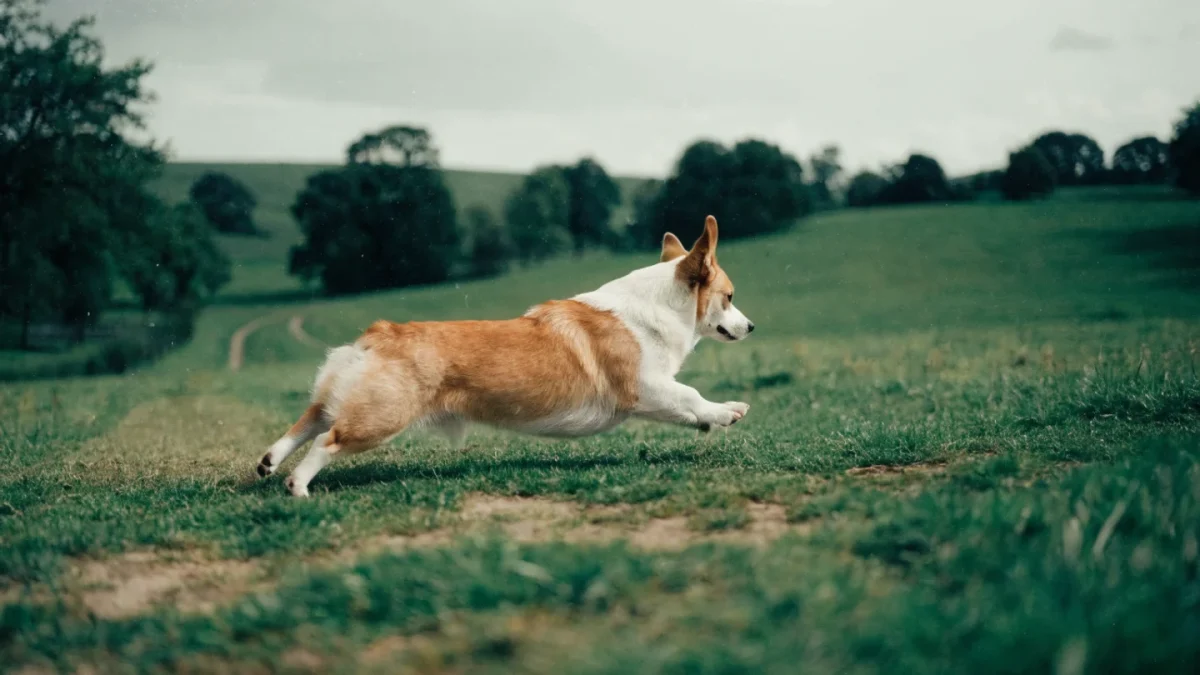
After ten years of writing about breeds, I can predict which misconceptions will follow a breed like a shadow — they track directly with popularity. The more famous a breed gets, the wider the gap between public perception and reality. The Pembroke Welsh Corgi, courtesy of its internet explosion and royal associations, has one of the widest gaps of any breed I cover.
These five misconceptions aren't harmless. They lead to mismatched adoptions, frustrated owners, and dogs surrendered to rescue because they dared to behave like the breed they actually are.
1. "Corgis Are Lap Dogs"
This is the misconception that does the most damage. People see a dog that weighs 10 to 14 kg, stands under 30 cm tall, and has an undeniably cute face, and they categorize it alongside Cavalier King Charles Spaniels and Maltese. The Pembroke Welsh Corgi is a herding dog. It was bred to move cattle by nipping at their heels, patrol pasture boundaries, and bark alerts across Welsh farmland.
Pembrokes will sit on your lap if you let them. They're affectionate dogs that enjoy physical closeness. But their behavioral profile — the bossiness, the energy, the need for structured activity, the relentless alertness — is nothing like a companion breed. The closest behavioral comparison is to a Border Collie or Australian Cattle Dog, not a Bichon Frise.
Treating a Pembroke as a lap dog creates a mismatch of expectations that's unfair to both owner and dog. The dog needs exercise, mental engagement, and herding outlets. The owner expected a relaxed companion. Nobody ends up happy.
2. "Small Dog, Small Exercise Needs"
This follows directly from the first misconception. The logic seems reasonable — smaller body, shorter legs, less exercise required. The logic is wrong.
Pembrokes were bred to cover miles of terrain daily. Their stamina is genuinely impressive for their size, and their energy reserves don't correlate with their stature. A Pembroke that gets a 15-minute stroll and then spends the rest of the day indoors will find outlets for that surplus energy, and those outlets will involve your furniture, your garden beds, and your neighbors' patience with the barking.
Forty-five to 60 minutes of purposeful daily activity — walking, playing, training, scent work — is the minimum. That's comparable to many mid-sized sporting breeds. The dog's legs are short. Its needs are not. The full breakdown of appropriate activities and spinal safety considerations is covered in the guide on pembroke welsh corgi exercise needs.
3. "Corgis Are Quiet Little Dogs"
I genuinely don't know where this one comes from, because anyone who has spent 10 minutes with a Pembroke knows better. Pembrokes are vocal dogs. Above-average vocal. They bark to alert, bark to demand, bark to express opinions, and bark at stimuli that most other breeds would ignore entirely.
This is a herding breed trait, not a behavioral problem. Their working ancestors needed to communicate across distances and direct livestock through vocal pressure. That same vocal toolkit, relocated to a suburban living room, becomes a noise management issue.
Training reduces unnecessary barking. It does not eliminate the breed's fundamental inclination to vocalize. Anyone who prioritizes a quiet household should look at the Pembroke Welsh Corgi temperament profile carefully before committing.
4. "Pembrokes and Cardigans Are the Same Breed"
This one has some understandable basis — both are Welsh, both are short-legged herding dogs, both are called corgis, and they were shown together in Britain until 1934. But they are separate breeds with different ancestral origins.
Cardigans descend from Teckel-type dogs (related to Dachshunds) brought to Wales by Celtic tribes around 1200 BCE. Pembrokes trace to Spitz-type dogs brought by Flemish weavers around 1107 CE — roughly two thousand years later. The breeds developed in adjacent counties from different genetic stock.
Physically, Cardigans are noticeably larger (14 to 17 kg vs 10 to 14 kg), have rounded ears instead of the Pembroke's pointed ears, come in a wider color range including brindle and blue merle, and always have full-length tails. Temperamentally, Cardigans tend to be slightly more reserved and less openly excitable than Pembrokes.
Confusing the two isn't a catastrophic error, but it matters for anyone researching breed fit. They have different temperament nuances, different size ranges, and different health profiles. Treating them as interchangeable ignores meaningful distinctions.
5. "The Internet Corgi Is the Real Corgi"
Social media has created a version of the Pembroke Welsh Corgi that exists nowhere in real life. The internet corgi is perpetually happy, always photogenic, effortlessly funny, and apparently requires no exercise, training, grooming, or veterinary attention. It exists in a curated 30-second clip that captures a single adorable moment from a 24-hour day.
The real corgi sheds enough fur to build a second dog, barks at the mail carrier every single day, herds your children into corners, and needs its weight monitored obsessively to protect its spine. The real corgi is also loyal, brave, wickedly smart, and genuinely hilarious to live with — but that complete picture doesn't fit in a video clip.
The problem isn't that people enjoy corgi content online. The problem is that content creates purchase impulse based on aesthetics rather than temperament, exercise needs, health realities, and grooming commitment. Breed-specific rescues have seen intake numbers climb in parallel with the breed's internet fame, and that's not a coincidence.
The Breed Deserves Better
Every one of these misconceptions boils down to the same root error: judging the Pembroke Welsh Corgi by what it looks like rather than what it is. It looks like a small, cute, manageable pet. It is a working herding dog with the intelligence, energy, and stubbornness that job demands.
The owners who love this breed most are the ones who researched honestly, expected the challenges, and chose the Pembroke specifically because those challenges appealed to them. For the full picture, start with the Pembroke Welsh Corgi breed guide.