

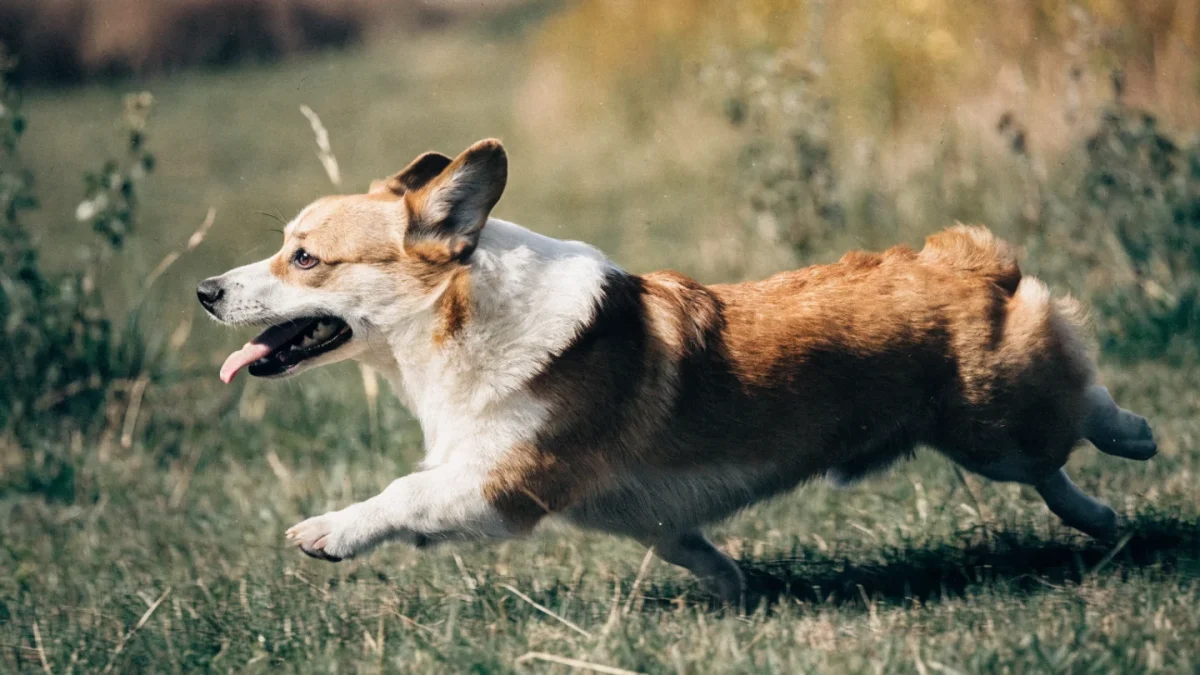
Before the internet decided the Pembroke Welsh Corgi was adorable, Welsh farmers already knew what it actually was: a cattle dog with the nerve of a breed three times its size and the stubbornness to match. That fundamental identity — herding dog first, companion second — explains nearly everything about the Pembroke Welsh Corgi temperament that surprises new owners.
I've spent a decade researching breed behaviors, and few breeds present as stark a contrast between public perception and lived reality as the Pembroke. The internet shows you the fluffy butt, the short legs, the smile. What it doesn't show is the 5:30 AM alarm barking, the relentless heel-nipping, or the dog that has figured out how to open your pantry for the third time this month.
If you're considering this breed, or already living with one and wondering what happened to the calm lapdog you expected, the temperament profile below should clarify things. For the full breed overview including health, grooming, and exercise, see the complete Pembroke Welsh Corgi breed guide.
Herding Instinct in a Domestic Setting
The Pembroke's temperament cannot be understood separately from its herding heritage. After centuries of selective breeding in Welsh pastureland, certain behavioral traits are hardwired, not trained.
Herding behavior in Pembrokes manifests as:
Heel nipping. The breed's original job was to move cattle by biting at their hocks — the low body dodging kicks while driving animals forward. In a modern home, this instinct redirects toward children, joggers, cyclists, other dogs, and guests who walk through the house. It's not aggression. It's instinct finding the nearest available target. The behavior is manageable through consistent redirection, but it never fully disappears.
Controlling movement. Pembrokes notice and react to movement. A child running across the living room, a cat darting through the kitchen, another dog playing in the yard — all of these can trigger herding responses. The Pembroke positions itself to control the direction of movement, often using body blocks and strategic barking alongside physical contact.
Perimeter awareness. A working herding dog monitors the boundaries of its flock. In a household, this translates to a dog that patrols the yard fence line, watches windows obsessively, and alerts to anything entering the perceived territory. This is why Pembrokes make surprisingly effective watchdogs despite their size.
Intelligence and Problem-Solving
Stanley Coren's working intelligence rankings placed the Pembroke Welsh Corgi 11th out of 138 breeds. That puts them in rarefied company — above the Australian Shepherd, ahead of the Miniature Schnauzer, just behind the Papillon and the Rottweiler. These dogs learn fast. Sometimes faster than their owners want them to.
The practical implications of high intelligence in a herding breed are significant. Pembrokes don't just learn commands — they learn patterns. They know what time you usually feed them, which drawer holds the treats, which family member is the softest touch for table scraps, and which rules get enforced consistently versus which ones have exploitable gaps.
This intelligence makes training both easier and harder. Easier because Pembrokes acquire new behaviors in surprisingly few repetitions. Harder because they bore quickly with repetitive drills, they question authority when they see an advantage in doing so, and they remember every inconsistency you've ever allowed. A Pembroke that learned it could get on the couch "just this once" six months ago will cite that precedent forever.
They are also creative problem-solvers. Corgi owners routinely report dogs that have learned to open latches, move objects to create stepping platforms, and coordinate with other household pets to access restricted areas. This isn't mischief — it's intelligence without a job.
Vocal Nature
Let's be direct about this: Pembrokes are loud dogs. They bark at stimuli that other breeds would ignore. They have a range of vocalizations — the alert bark, the demand bark, the frustrated bark, the "I see a squirrel" bark, and a distinctive yodel-like sound that some owners find endearing and others find maddening.
The barking serves a purpose in the breed's original context. A herding dog needs to communicate across distances, alert to predators, and direct livestock through vocal pressure. In a 70-square-meter apartment, that same vocal toolkit becomes a noise management challenge.
Training can reduce unnecessary barking. A "quiet" command, appropriate socialization to reduce novelty-based barking, and ensuring adequate exercise and mental stimulation all help. But training modifies the volume — it doesn't change the underlying wiring. A Pembroke that never barks is a Pembroke that's either ill or hasn't been awake long enough yet.
Social Dynamics
With Family
Pembrokes bond deeply with their entire household rather than selecting a single person. They're affectionate, often physically demonstrative — leaning against legs, following family members room to room, inserting themselves into every group activity. The phrase "velcro dog" applies, though "supervisory dog" might be more accurate. They don't just want to be near you. They want to monitor what you're doing and express opinions about it.
Separation tolerance varies by individual, but as a breed, Pembrokes do not handle prolonged isolation well. A Pembroke left alone for 8 to 10 hours daily without enrichment or company will develop stress behaviors — destructive chewing, excessive barking, and sometimes inappropriate elimination. This isn't a breed that waits patiently by the door. It's a breed that remodels your baseboards while you're gone.
With Children
Pembrokes and children can work well together with management. The breed's playfulness, sturdiness, and energy level align well with active kids. The problem, predictably, is herding. Running children trigger the heel-nip reflex, and while it rarely breaks skin, it frightens children and creates negative associations in both directions.
Teach children not to run and shriek around the dog (useful advice for any breed, frankly), and consistently redirect the dog's herding impulses. Supervision is mandatory with young children — not because Pembrokes are aggressive, but because a 12 kg dog with strong opinions and hard-wired nipping behavior needs a referee.
With Other Dogs
Pembrokes are generally confident and social with other dogs, but they carry themselves with an authority that belies their size. They don't defer to larger dogs automatically, which can create friction. A Pembroke that body-blocks, barks at, or attempts to herd a 40 kg German Shepherd is testing the patience of a dog with vastly more physical power.
Same-sex aggression is reported more frequently in intact males. Early and ongoing socialization helps, but owners should be realistic: a Pembroke's social style is assertive, not submissive, and not every dog appreciates being managed by a herding breed that weighs less than their head.
With Strangers
The Pembroke's response to strangers sits in the middle of the spectrum — neither the golden retriever's undiscriminating enthusiasm nor the Akita's reserved suspicion. Most Pembrokes are initially watchful, bark to announce the stranger's presence, and then warm up once they assess the situation. Some remain aloof with unfamiliar people indefinitely. Almost all will position themselves between their family and a stranger until satisfied there's no threat.
What Most People Get Wrong
The most damaging misconception about Pembroke Welsh Corgi temperament is the "small dog, small needs" assumption. People see the short legs and assume they're getting a compact, easygoing companion. What they're actually getting is a herding breed compressed into a smaller frame — with the energy, drive, intelligence, and stubbornness fully intact.
Compared to actual small companion breeds — Cavalier King Charles Spaniels, Maltese, Shih Tzus — the Pembroke's temperament has almost nothing in common. It's far closer to a Border Collie or Australian Cattle Dog in behavioral profile. The main difference is that a Border Collie on a farm has 200 acres to channel its drive. A Pembroke in a two-bedroom apartment has a couch cushion and your shoes.
The second misconception is that corgis are naturally funny or clownish. They're not performing for you. The behaviors that look humorous — the dramatic flops, the head tilts, the zooming around furniture — are expressions of a high-energy, emotionally expressive breed doing what comes naturally. The comedy is in the observer's interpretation, not the dog's intent.
Managing the Pembroke Temperament
The Pembroke temperament isn't a problem to be solved. It's a set of traits to be channeled. The owners who have the best relationships with their Pembrokes are the ones who respect the breed's intelligence, provide outlets for its energy and herding drive, and set clear, consistent boundaries without expecting the dog to become something it isn't.
Mental stimulation matters as much as physical exercise. Puzzle feeders, scent work, learning new skills, and structured games that engage the brain prevent the boredom that drives most nuisance behavior. A Pembroke with a job — even an artificial one like daily trick training or scent games — is a dramatically more pleasant housemate than one left to invent its own entertainment.
This is a breed that asks a lot of its owner and gives back proportionally. The Pembroke's loyalty, humor, courage, and sheer force of personality make it one of the most rewarding breeds to live with — for the right person. The key word is "right."