

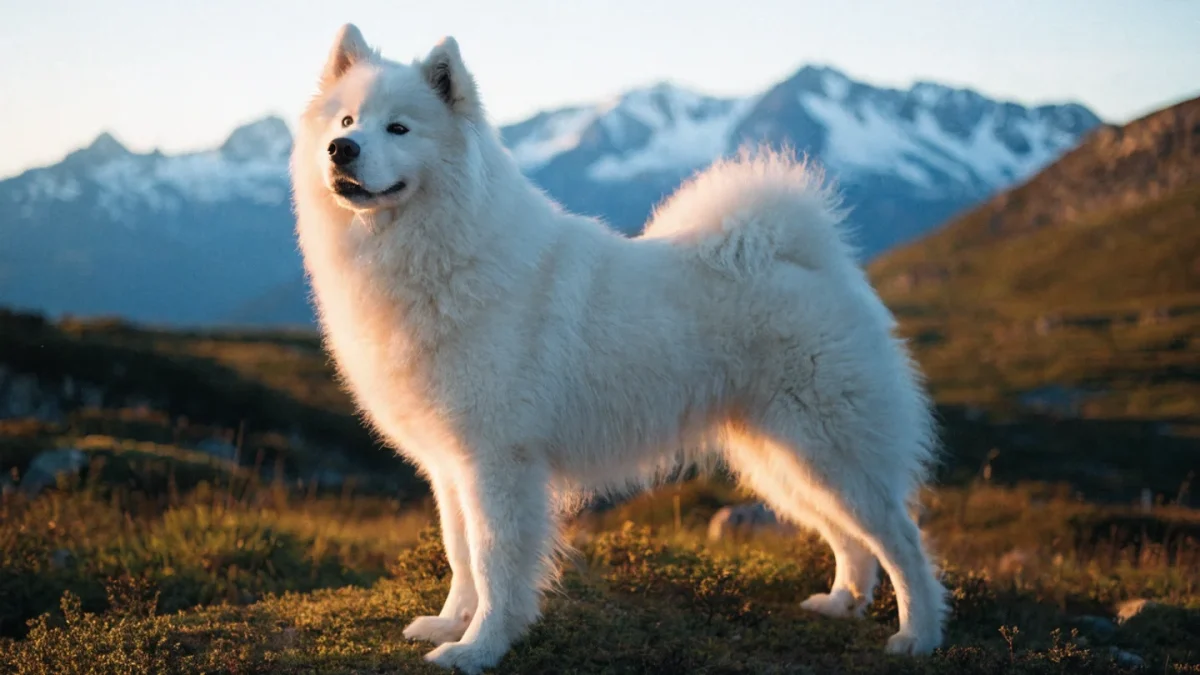
Every dog breed has an origin story, but the Samoyed's begins with something most breeds can't claim: the dogs slept inside the tents with their people. Three thousand years ago, the Samoyede — a semi-nomadic group in northwestern Siberia — bred these dogs for reindeer herding, sled work, and hunting. But at night, families brought the dogs into their chums (reindeer-hide tents) as living heaters for children. That arrangement wasn't sentimental. Nighttime temperatures in the Siberian tundra routinely dropped below minus 40 degrees. The dogs were thermal survival equipment. And that three-millennium partnership sleeping alongside humans is why the Samoyed you meet today still physically needs to be near people in a way that goes beyond ordinary canine attachment.
This samoyed breed guide covers everything that actually matters about the breed — the history most people don't know, the grooming commitment most people underestimate, the health realities most people ignore, and an honest assessment of whether this dog belongs in your life. If you're expecting a fluffy white dog that looks pretty and stays easy, you're reading the wrong breed.
Origins and Working Heritage
The Samoyede people lived on the Taimyr Peninsula and surrounding regions of northwestern Siberia, spanning from the White Sea coast to the Yenisei River. Their dogs served triple duty: herding reindeer across the tundra, pulling loaded sleds, and guarding camps against predators. A dog that couldn't do all three wasn't fed through winter. Natural selection in minus-50-degree conditions and centuries of functional breeding produced an animal that is remarkably hardy, cooperative with humans, and built to work in sustained cold.
Western explorers first brought Samoyeds to England in the late 1800s. Ernest Kilburn-Scott and his wife Clara imported several dogs starting around 1889 and established the first organized breeding program outside Siberia. The dogs they acquired came from various sources — some directly from the Samoyede people through trade, others from returned polar expeditions. Kilburn-Scott founded what would become the first Samoyed breed club in 1909, and the breed's British show career began in earnest.
The polar expedition connection cemented the breed's reputation. Fridtjof Nansen's 1893-1896 Fram expedition, Carsten Borchgrevink's 1898 Southern Cross expedition, and Ernest Shackleton's 1907-1909 Nimrod expedition all used Samoyed-type dogs. Roald Amundsen reportedly considered them but ultimately relied on Greenland dogs for his 1911 South Pole journey. Several expedition dogs made it back to England and entered the breeding population there — the foundation stock for the modern Western Samoyed traces partly to these polar survivors.
Physical Characteristics
Size and Build
Males stand 53 to 60 cm at the shoulder and weigh 20 to 30 kg. Females range from 48 to 53 cm and 16 to 20 kg. The breed is compact and muscular for its height — heavier than it looks, which surprises people who assume the coat is doing all the work. The body is slightly longer than tall, with a deep chest, well-sprung ribs, and a strong, level back.
If you compare a Samoyed's build to a Siberian Husky, the Samoyed is slightly stockier, broader in the chest, and carries considerably more coat. The Husky is leaner and more overtly built for speed. Both are spitz breeds designed for cold-weather work, but their working styles differed — the Husky was a distance runner, while the Samoyed was a multi-purpose herder-hauler-guardian.
The Coat
The double coat defines the breed. The outer coat is long, straight, and harsh-textured — it stands away from the body and has a silvery sheen that repels moisture. The dense, soft undercoat provides insulation against extreme cold. The overall effect is the characteristic "cloud-like" silhouette.
Coat color ranges from pure white to cream to biscuit (a warm beige tone). Most show standards accept all three, though pure white is the most common and most associated with the breed. The coat around the neck forms a pronounced ruff, especially in males, and the tail is heavily plumed and carried curled over the back.
About the shedding: it's extraordinary. Samoyeds shed their undercoat once or twice per year in a dramatic "blowout" where massive clumps of wool come loose over several weeks. Between blowouts, there's still daily shedding. The quantity of fur this breed produces is genuinely startling — many owners spin the shed undercoat into yarn, which is warmer than sheep's wool by weight. This isn't a quirky hobby. It's a practical response to the sheer volume of fiber.
The Samoyed Smile
The upturned corners of the mouth create the famous "Samoyed smile" — a breed characteristic, not an expression of mood. The lip structure evolved for a functional reason: upturned lips prevent drooling, and in extreme cold, drool freezes into icicles around the mouth, which damages tissue. The smile is anti-frostbite engineering. It also happens to make the breed one of the most photogenic dogs on earth, which has done wonders for its popularity and absolutely nothing for realistic ownership expectations.
Temperament and Behavior
If the Siberian Husky is the independent roommate who does what it wants and tolerates your presence, the Samoyed is the friend who physically cannot handle being in a different room than you. These dogs attach to their people with an intensity that is endearing for the first week and structurally demanding for the next 12 to 14 years.
For a deeper look at what living with this temperament actually looks like day to day, the Samoyed temperament article covers the bonding patterns, vocalization, and separation challenges in detail.
What Most People Get Wrong About This Breed
The misconception I encounter most often: "Samoyeds are just fluffy white huskies."
They're not. The temperament profiles are fundamentally different. Siberian Huskies are independent, often aloof, and famously difficult to recall off-leash because they simply don't prioritize their handler's wishes over their own agenda. Samoyeds are handler-oriented, eager to please by spitz standards, and genuinely distressed when separated from their people. A Husky left alone may escape and go exploring. A Samoyed left alone may destroy your house — not out of curiosity, but out of anxiety.
The other widespread mistake is assuming the white coat means "indoor decorative dog." The Samoyed is a working breed. It was bred to herd reindeer, pull heavy sleds across frozen terrain, and guard camps against wolves. The cotton-ball appearance conceals an athletic, strong-willed animal that needs a job, needs exercise, and needs mental engagement. Treating a Samoyed like a fashion accessory produces a neurotic, destructive, deeply unhappy dog.
Social Nature
Samoyeds are genuinely sociable with people, including strangers. They make poor guard dogs — most will greet an intruder with enthusiasm and a wagging tail. With other dogs, they're generally amiable but can be pushy during play, and same-sex aggression occurs in some individuals, particularly intact males.
The breed's pack instinct runs deep. They do best in households where someone is present most of the day. A Samoyed left alone for eight-plus hours regularly will develop separation anxiety behaviors: excessive barking, destructive chewing, escape attempts, and self-harm through excessive licking.
Vocalization
Samoyeds are vocal dogs. They bark, they howl, they produce a distinctive "woo-woo" vocalization that sits somewhere between a bark and a howl. Some individuals develop elaborate "talking" behaviors — extended vocalizations that owners swear sound conversational. The breed is not quiet. If noise sensitivity is a factor in your living situation, this matters.
Health Profile
The Samoyed is a relatively healthy breed compared to many purebreds of similar size, but it carries several specific conditions that prospective owners need to understand clearly.
Hereditary Glomerulopathy
This is the breed's signature genetic health concern. Samoyed hereditary glomerulopathy (SHG) is a kidney disease caused by a defect in the gene encoding type IV collagen, which is essential for the structure of the glomerular basement membrane — the kidney's filtration system. The condition is X-linked, meaning males are more severely affected than females. Affected males typically develop renal failure between 3 and 15 months of age. Carrier females may show mild proteinuria (protein in urine) but often live normal lifespans.
A DNA test exists for the COL4A5 mutation responsible for SHG. For a deeper discussion of this condition and the genetics behind the white coat, see the article on Samoyed genetics. Any breeding program that doesn't test for SHG is gambling with puppy lives.
Hip Dysplasia
Hip dysplasia affects Samoyeds at a moderate rate. Screening through standardized evaluation programs is standard practice for responsible breeders. The condition ranges from mild (manageable with weight control and exercise modification) to severe (requiring surgical intervention). Environmental factors — growth rate, diet, and exercise on developing joints during puppyhood — interact with genetic predisposition.
Other Health Concerns
- Progressive retinal atrophy (PRA): Genetic eye disease leading to progressive vision loss. DNA testing identifies carriers and affected dogs. Multiple forms exist in the breed.
- Diabetes mellitus: Samoyeds have a higher incidence of diabetes than many breeds. Multiple veterinary studies have identified the breed among those with elevated diabetes prevalence in dogs. The condition requires lifelong insulin management.
- Hypothyroidism: Underactive thyroid is fairly common and manageable with daily medication. Weight gain, lethargy, and coat changes are typical early signs.
- Pulmonic stenosis: A congenital heart defect involving narrowing of the pulmonary valve. Cardiac screening of breeding stock helps reduce prevalence.
- Sebaceous adenitis: An inflammatory skin condition that destroys sebaceous glands, causing scaling and hair loss. More common in this breed than most.
Lifespan
The average Samoyed lifespan is 12 to 14 years — solidly above average for a dog of this size. Some individuals reach 15 or 16. The breed's relative longevity compared to other medium-to-large breeds is one of its genuine strengths, likely reflecting the genetic diversity preserved through its ancient origins and the less extreme selective pressures compared to breeds shaped primarily by modern show standards.
Grooming Requirements
If you want a low-maintenance coat, the Samoyed is the wrong breed by a margin so wide it's almost comedic. This is one of the most grooming-intensive breeds in existence.
Coat Maintenance
Plan for thorough brushing sessions three to four times per week minimum. During the biannual undercoat blowout — which lasts two to three weeks each time — daily brushing becomes mandatory. You'll need a quality undercoat rake, a slicker brush, and a long-toothed metal comb. The areas behind the ears, under the legs, and around the "pants" (rear feathering) mat fastest and need the most attention.
Bathing every four to eight weeks is typical. The coat must be thoroughly dried after bathing — a damp Samoyed undercoat promotes hot spots and fungal skin issues. A forced-air dryer designed for dogs is essentially required equipment, not a luxury item.
What Happens When You Skip Grooming
Neglected Samoyed coats mat to the skin within weeks. Severe matting traps moisture against the skin, creating painful sores, fungal infections, and parasite infestations. A matted Samoyed is a suffering Samoyed. If you can't commit to the grooming schedule, this breed isn't an option — that's not a suggestion, it's a welfare statement.
Never shave a Samoyed. The double coat regulates temperature in both heat and cold. Shaving removes the insulation system and increases the risk of sunburn and overheating. The coat often grows back with altered texture — more undercoat, less protective outer coat — and may never fully recover.
Nails, Ears, and Teeth
Nail trimming every two to three weeks. Ear checks weekly — the erect ears provide better air circulation than floppy-eared breeds, so infections are less common but still possible. Dental care several times per week through brushing or appropriate dental maintenance.
Exercise and Activity Needs
A Samoyed needs 60 to 90 minutes of daily exercise. This is a working breed built for sustained physical effort in harsh conditions. A casual daily walk is a warm-up, not a workout.
Effective Activities
- Hiking and trail walks: The breed's endurance and surefootedness make it a natural trail companion. They handle varied terrain well and maintain energy over long distances.
- Pulling sports: Skijoring, bikejoring, and recreational mushing tap into the breed's sled-pulling heritage. Many Samoyeds take to harness work immediately — it's in their DNA.
- Herding and agility: Structured activities that combine physical movement with mental problem-solving suit the breed well.
- Free play with other dogs: Samoyeds are generally social players and benefit from off-leash interaction in safe, enclosed areas.
Heat Sensitivity
Despite the insulating properties of the double coat, Samoyeds are heat-sensitive. This breed was engineered for minus-40-degree conditions, not summer humidity. Exercise should be limited to cooler parts of the day in warm climates. Access to shade, fresh water, and cooling surfaces is essential. Swimming is excellent warm-weather exercise — many Samoyeds enjoy water, though the breed's enthusiasm for it varies more than in dedicated water retrievers.
Nutrition Fundamentals
Samoyeds are food-motivated but typically not to the obsessive degree seen in Labrador or Golden Retrievers. Measured meals twice daily for adults work well. Puppies need three meals per day until approximately six months, then transition to two.
Weight Management
Maintaining healthy weight is critical for this breed given the hip dysplasia predisposition. A Samoyed at proper weight has a visible waist when viewed from above and ribs that are easily felt through the coat. The dense coat makes visual weight assessment difficult — run your hands along the ribcage regularly rather than relying on appearance alone.
Caloric needs vary by age, activity level, and individual metabolism. An average moderately active adult Samoyed typically requires 1,000 to 1,500 calories per day, but this varies substantially per individual. Work with a veterinary professional rather than relying on package feeding guidelines.
Training Approach
Samoyeds are intelligent but not biddable in the way that retrievers or herding breeds are. They learn quickly — the question is whether they decide to comply. The breed has a streak of spitz independence that surfaces as selective hearing, creative problem-solving (often involving escape or food acquisition), and a general attitude of "I understand what you want; let me think about whether that works for me."
Positive reinforcement methods are the only productive approach. Samoyeds respond well to food rewards, verbal praise, and play. Harsh corrections produce stubbornness, avoidance, or anxiety — never compliance. Short, varied training sessions (10 to 15 minutes) with high reward rates maintain engagement. Repetitive drills bore the breed quickly.
Key Priorities
- Recall: Critical for a breed with herding instinct and curiosity. Off-leash reliability is achievable but takes consistent work.
- Impulse control: "Leave it" and "wait" for a dog that investigates everything.
- Settle training: Teaching calm indoor behavior — a Samoyed that can't settle becomes a pacing, vocalizing shadow.
- Leash manners: A 25 kg dog bred to pull sleds will pull on leash by default. Teach loose-leash walking early.
Living Situation Compatibility
Space
Samoyeds can adapt to apartments if — and this is a major qualifier — exercise needs are fully met. They aren't particularly destructive indoors when properly exercised and mentally stimulated. But they need their people present. A spacious house where the dog is left alone ten hours a day is worse than a small apartment with a work-from-home owner.
Access to a securely fenced yard is beneficial but not essential. Emphasis on "securely fenced" — Samoyeds are capable diggers and can be creative escape artists when motivated by boredom or separation distress.
Climate
The ideal Samoyed climate is cold. The breed thrives in winter conditions and genuinely enjoys snow. Warm and hot climates require deliberate management — air conditioning, adjusted exercise schedules, and vigilance for heat stress signs. People in hot regions do keep Samoyeds successfully, but it demands more effort and awareness than in temperate or cold climates.
Multi-Pet Households
Generally compatible with other dogs, especially when raised together. Cat compatibility varies by individual — the breed's prey drive is moderate, and many Samoyeds coexist peacefully with cats after proper introduction. Small animals like rabbits or hamsters are a riskier proposition.
The Right Owner for This Breed
A Samoyed is right for you if:
- You're home most of the day or can arrange for the dog not to be alone for extended periods
- You're genuinely willing to commit to 3-4 grooming sessions per week, every week, for the dog's entire life
- You have 60 to 90 minutes daily for real exercise and don't mind adjusting for weather
- You can tolerate — truly tolerate — white fur on everything you own, including clothes you just washed
- You want a dog that's intensely bonded to you, follows you everywhere, and vocalizes its opinions regularly
- You're financially prepared for breed-specific health screening and potential issues
A Samoyed is wrong for you if:
- You work long hours away from home with no dog care plan
- You consider grooming a minor occasional task rather than a serious ongoing commitment
- You want a quiet dog or live in a noise-sensitive environment
- You prioritize a clean, fur-free home
- You expect the dog to be content alone in a yard
- You're drawn to the breed purely for the white-fluffy aesthetic without understanding the working dog underneath
The Samoyed is one of the oldest and most genetically intact dog breeds on earth. It spent three thousand years as a functional partner to nomadic people who depended on their dogs for survival. That heritage produced an animal that is hardy, people-oriented, and deeply social — but also demanding, vocal, and grooming-intensive in ways that catch unprepared owners off guard. The breed deserves an owner who respects what it is, not just what it looks like.
Frequently Asked Questions
Are Samoyeds hypoallergenic?
No dog breed is truly hypoallergenic — this is a marketing term, not a medical classification. Samoyeds produce less of the Can f 1 protein (the primary dog allergen) than some breeds, and their coat tends to hold dander close to the skin rather than dispersing it into the air. Some allergy sufferers report fewer reactions around Samoyeds than around other double-coated breeds. However, individual allergic responses vary enormously, and spending extended time with the specific dog before committing is the only reliable test. The heavy shedding means there will be abundant fur in your environment regardless.
How much does a Samoyed shed compared to other breeds?
Heavy. Samoyeds rank among the highest-shedding breeds, comparable to Alaskan Malamutes and significantly more than Siberian Huskies (which are themselves heavy shedders). The biannual undercoat blowout produces volumes of wool that genuinely astonish first-time owners. Between blowouts, daily shedding continues at a level most people would describe as considerable. If you're comparing to a Golden Retriever's shedding and thinking it can't be that much worse — it is.
Can Samoyeds live in hot climates?
Yes, with deliberate management. The double coat provides some insulation against heat, but the breed was designed for arctic conditions and is genuinely uncomfortable in sustained heat and humidity. Air conditioning is functionally required, not optional. Exercise must be restricted to early morning or evening during warm months. Owners in hot climates need to monitor closely for heat stress — excessive panting, drooling, lethargy, or disorientation. Many Samoyeds live healthy lives in temperate and warm regions, but it requires more effort than in cold climates.
Do Samoyeds get along with cats?
Many do, particularly when introduced to cats during puppyhood. The breed's prey drive is moderate and individually variable — some Samoyeds completely ignore cats, while others find the chase instinct difficult to suppress. Proper introduction with controlled exposure and positive reinforcement is essential. Adult Samoyeds introduced to cats for the first time are less predictable than puppies raised with them. No guarantees exist regardless of breed generalizations; individual temperament always matters more.
How long do Samoyeds typically live?
The average Samoyed lifespan is 12 to 14 years, with some individuals reaching 15 or 16. This is above average for a dog of this size — medium-to-large breeds often average 10 to 12 years. The breed's relative longevity is one of its genuine health advantages, though individual lifespan varies based on genetics, diet, exercise, veterinary care, and the presence or absence of hereditary conditions like glomerulopathy.