

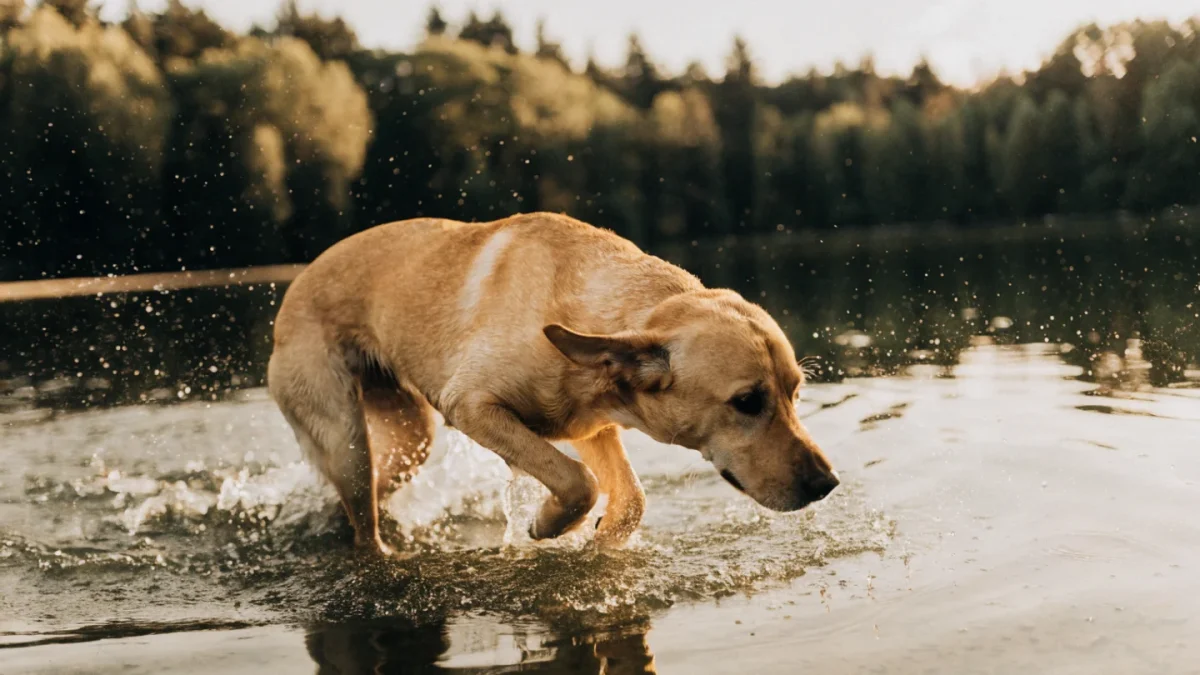
The labrador retriever wasn't originally called a labrador, and it didn't come from Labrador. The breed descends from the St. John's water dog of Newfoundland — a smaller, shorter-coated working dog that fishermen used to haul nets and retrieve escaped cod in the icy North Atlantic during the early 1800s. English aristocrats visiting Newfoundland brought these dogs back to Britain, where selective breeding transformed them into the retriever we recognize today. The name "Labrador" was applied by the Earl of Malmesbury around 1887 to distinguish them from the larger Newfoundland breed, and the misnomer stuck permanently.
Labrador retrievers are medium-large sporting dogs bred for water retrieval and endurance work, known for their high energy, intense food motivation, and deeply social temperament. They need 60 to 90 minutes of structured daily exercise, shed year-round from a dense double coat, and carry breed-specific health risks including hip dysplasia, elbow dysplasia, and a genetic predisposition to obesity. This labrador retriever breed guide covers everything that actually matters — the history most people get wrong, the health realities breeders don't always mention, and an honest look at whether this dog fits your household.
Labs have held the top popularity spot in multiple countries for decades running. That kind of demand has consequences. It means tremendous variation in breeding quality, a wide spread in temperament and health outcomes, and a whole industry of myths that need correcting.
Labrador Retriever Breed Guide: The Real History
The St. John's water dog — the Lab's direct ancestor — was a distinct type by the late 1700s in Newfoundland. These were compact, short-coated dogs with white chest markings, bred by fishing communities who needed a working partner that could tolerate freezing water, swim powerfully, and cooperate with humans on boats all day. They were emphatically not pets. They were tools of a trade, and their temperament reflected the demands of the job: biddable, tireless, and unflappable around noise and chaos.
British sportsmen began importing St. John's water dogs in the 1820s and 1830s. The second Earl of Malmesbury was among the earliest, and his breeding program at Heron Court became foundational. The third Earl continued the work and coined the "Labrador" name in a letter to the sixth Duke of Buccleuch in 1887. The Buccleuch family's parallel breeding program in Scotland eventually merged bloodlines with the Malmesbury dogs, establishing the core genetic base of the modern breed.
Here's a detail that often gets lost: the St. John's water dog went extinct. Newfoundland's sheep protection laws and dog taxes in the late 1800s, combined with a British quarantine act in 1895, effectively cut off the supply of foundation stock. The labrador retriever survived only because those early British breeding programs had already established self-sustaining lines. If the timing had been off by a decade, this breed might not exist.
The Kennel Club in Britain recognized the labrador retriever in 1903. Early breed standards emphasized working ability above appearance — a priority that has shifted over time, creating the split between field and show lines that defines the breed today.
Physical Characteristics
Size and Build
Male labradors typically stand 57 to 62 cm at the shoulder and weigh between 29 and 36 kg. Females range from 55 to 60 cm and 25 to 32 kg. The breed standard describes a short-coupled, athletic body with a broad skull, strong jaws, and a medium-length muzzle. The overall impression should be of a solidly built dog that still looks capable of a full day's work in the field.
The reality is that many pet-line labs today are significantly heavier than those numbers. A 40+ kg labrador is common in households, and while some of that comes from show-line breeding for heavier bone, much of it is simply overfeeding. More on that in the health section — it's the breed's single biggest welfare issue.
The Two Types
If you line up a field-bred lab next to a show-bred lab, you might question whether they're the same breed. Field labs — sometimes called "American type" in some regions, though the distinction exists worldwide — are taller, leaner, narrower-headed, and built for speed and stamina. Their muzzles are longer and their energy levels are substantially higher.
Show labs — sometimes called "English type" — carry heavier bone, broader heads, thicker necks, and a stockier build. They tend to be calmer indoors, though "calmer" is relative. Neither type is more correct than the other. They reflect decades of breeding for different purposes: one for competitive field work, the other for conformation showing and companion life.
If you're considering a lab, the type matters as much as the breed. A field-line lab in a low-exercise household is a recipe for destroyed furniture.
Coat and Color
The labrador's double coat is short, dense, and remarkably weather-resistant. The outer coat is straight and somewhat coarse. The undercoat is soft and thick — it's what kept those Newfoundland dogs functional in near-freezing water. This coat sheds. Heavily. Year-round, with two major blowouts seasonally.
Three coat colors are recognized: black, yellow, and chocolate. Black was the original dominant color and remains the most common. Yellow ranges from pale cream to deep fox-red. Chocolate labs were historically culled from litters (breeders considered the color a fault) and only gained acceptance in the mid-twentieth century.
A 2018 VetCompass study published in Canine Genetics and Epidemiology (McGreevy et al.) found that chocolate labradors had a significantly shorter median lifespan — 10.7 years compared to 12.1 years for non-chocolate labs. The suspected cause is a genetic bottleneck: breeding specifically for the chocolate color required pairing two recessive gene carriers, reducing the overall genetic diversity in chocolate lines. This doesn't mean chocolate labs are unhealthy by default, but it's a statistical reality that prospective owners should understand.
The "otter tail" is a defining breed feature: thick at the base, tapering toward the tip, covered in the same dense short coat, without feathering. It functions as a rudder when swimming. If a labrador's tail has long feathering, there's likely some cross-breeding in the recent pedigree.
Temperament and Behavior
What Most People Get Wrong About Labrador Temperament
The biggest misconception about labradors is that they're "easy" dogs. They're friendly, yes. They're trainable, absolutely. But "easy" implies low-maintenance, and labs are anything but.
A young labrador — under age three — is a demolition machine fueled by boundless enthusiasm and zero impulse control. They chew. They jump on people. They counter-surf. They steal food with the precision of a professional pickpocket. They greet every stranger like a long-lost relative. This isn't bad behavior in the traditional sense — it's a high-drive working breed doing exactly what its genetics push it to do, without the structured outlet those genetics demand.
The breeds people compare labs to are often far calmer. If the golden retriever is the eager-to-please valedictorian, the labrador is the class clown who aces every test but can't stay in his seat. The intelligence is there. The willingness is there. The self-regulation is not — and that has to come from consistent training and sufficient physical activity.
Social Drive
Labs are profoundly social dogs. They don't just tolerate people — they actively seek human contact, physical proximity, and involvement in whatever you're doing. This makes them outstanding family companions when their needs are met. It also makes them prone to separation anxiety, destructive behavior when isolated, and an almost pathological inability to be left alone in a yard.
This breed was developed to work alongside humans in close partnership, all day, every day. The modern expectation that they'll be content with a twenty-minute walk and eight hours alone in a house is fundamentally incompatible with their wiring.
Food Motivation
Labrador retrievers are, to put it plainly, obsessed with food. This isn't anecdotal — it's genetic. A 2016 study by Raffan et al. in Cell Metabolism identified a 14 base-pair deletion in the POMC gene that disrupts hunger signaling — roughly 22% of labradors carry at least one copy. Dogs with this variant have measurably increased food motivation and are significantly more prone to obesity.
This genetic quirk makes labs extraordinarily easy to train with food rewards. It also means they will eat anything — edible or not — if given the opportunity. Garbage bins, shoes, socks, toys, rocks. Intestinal blockages from ingested foreign objects are a genuine emergency risk with this breed. Secure your trash, keep counters clear, and accept that food management is a permanent part of lab ownership.
Exercise and Activity Requirements
A healthy adult labrador needs 60 to 90 minutes of exercise daily, and that's the minimum. Field-line labs often need more. This isn't leisurely walking — it means swimming, retrieving, running, structured play, or training sessions that engage both body and brain.
Puppies and Adolescents
Puppy exercise needs careful management. The general guideline is five minutes of structured exercise per month of age, twice daily, until the growth plates close — typically around 12 to 18 months. Over-exercising a growing lab can contribute to joint problems later in life.
That said, puppies still need mental stimulation. Puzzle feeders, short training sessions, controlled play, and socialization outings are essential. A bored lab puppy will find its own entertainment, and you won't like its choices.
Adults
Swimming is the ideal exercise for labradors. The breed was built for it, and water work engages the entire body without stressing joints. Retrieving games — on land or in water — satisfy the breed's working instinct. Hiking, jogging, and agility work all suit the lab's athleticism.
Under-exercised labs develop a predictable set of problems: excessive barking, chewing, digging, hyperactivity indoors, and pulling on leash. These aren't training failures. They're energy management failures. Increase the exercise before adjusting anything else.
Labs typically slow down around age eight or nine, but many retain retrieving drive well into old age. Adjust intensity, not frequency — shorter swims and slower walks keep an aging lab engaged without overstressing joints.
Health: What Every Owner Needs to Know
Labs are generally robust, but the breed carries specific health predispositions that require proactive management.
Hip and Elbow Dysplasia
Both conditions involve malformation of the joint, leading to arthritis, pain, and reduced mobility. According to OFA data spanning 1974 to 2015, hip dysplasia affects approximately 11.5% of labradors, with elbow dysplasia at 10.2% — though true population prevalence is likely higher, since owners of clearly affected dogs often skip formal evaluation. These are polygenic conditions influenced by both genetics and environment. Maintaining a lean body weight during growth significantly reduces the expression of dysplasia even in genetically predisposed dogs.
Health screening of breeding stock through radiographic evaluation is standard practice in responsible breeding programs worldwide. Ask about the parents' joint scores before committing to a puppy. This is non-negotiable.
Obesity
This is the labrador's most common and most preventable health problem. The combination of POMC gene variants, food motivation, and owner overfeeding creates a perfect storm. Veterinary surveys consistently rank labs among the most obesity-prone breeds — the Association for Pet Obesity Prevention's 2022 survey found 59% of all dogs in the United States classified as overweight or obese, and labradors, with their genetic predisposition, are disproportionately represented in that figure.
Obesity in labs isn't cosmetic — it directly accelerates joint disease, increases cancer risk, and shortens life. The landmark Purina Life Span Study (Kealy et al., 2002, Journal of the American Veterinary Medical Association) followed 48 labradors from seven litters over their entire lives, pairing littermates by sex and weight — the lean-fed group lived a median of 13.0 years versus 11.2 years for the control group, a difference of 1.8 years.
You should be able to feel your lab's ribs easily with light pressure. If you can't, the dog is too heavy. Measure food portions. Restrict treats. Resist the pleading eyes. You're adding years to the dog's life.
Other Key Health Concerns
Progressive retinal atrophy (PRA) causes gradual vision loss and eventual blindness — DNA testing identifies carriers, and responsible programs test for the prcd-PRA variant before breeding. Exercise-Induced Collapse (EIC) is an autosomal recessive condition causing muscle weakness after intense exertion; a DNA test exists and carriers show no symptoms but can produce affected offspring.
Ear infections are common due to floppy ears and water exposure — chronic cases often indicate underlying allergies rather than simple hygiene issues. Cancer remains a leading cause of death in the breed, with lymphoma, mast cell tumors, and hemangiosarcoma most frequently reported.
Grooming and Coat Maintenance
If dog hair on your clothes and furniture bothers you, do not get a labrador. The undercoat blows out twice a year — clumps of soft fur come out in handfuls — and between those events, there's daily shedding that coats everything. Weekly brushing with an undercoat rake or rubber curry brush removes loose hair before it hits your floor. During blowouts, increase to daily brushing for two to three weeks.
Bathing is needed only when dirty or smelly — every four to eight weeks. Over-bathing strips the coat's natural water-resistant oils. Nails need trimming every two to three weeks. Ears deserve weekly inspection, especially for dogs that swim regularly — the floppy ear structure traps moisture and creates an ideal environment for infections.
Nutrition and Feeding
You cannot free-feed a labrador. Measured meals — typically two per day for adults — are essential. A moderately active adult lab needs roughly 1,200 to 1,600 calories daily, but adjust based on body condition, not the feeding guide on the bag. Those guides are designed for the average dog, and the average lab eats more than it should.
Treat management matters because food motivation is simultaneously the breed's greatest training asset and greatest health liability. Use small, low-calorie treats for training and deduct their calories from the daily meal portion. Avoid table scraps — this breed will learn to beg with devastating effectiveness.
Puppies need a large-breed growth formula with controlled calcium and phosphorus to support steady bone development. Transition to adult food at 12 to 14 months. Senior dogs — eight years and older — benefit from reduced-calorie formulas with joint-supportive nutrients.
Training a Labrador Retriever
The labrador's combination of food motivation, social drive, and working heritage makes it one of the most trainable breeds available. They respond enthusiastically to positive reinforcement, learn quickly, and retain commands well. This is why they dominate service dog, search-and-rescue, and detection work globally.
But trainability and trained are not the same thing. An untrained lab is a disaster. The same qualities that make them excel — enthusiasm, energy, oral fixation, social intensity — become liabilities without structured guidance.
Start socialization between 8 and 16 weeks with exposure to different people, environments, surfaces, sounds, and other animals. Bite inhibition is critical — labs are mouthy by nature, bred to carry things in their mouths. Impulse control commands like "leave it," "wait," and "settle" are survival skills for a breed that wants everything, immediately, all the time.
The three universal training challenges with labs: pulling on leash (begin loose-leash training in puppyhood), counter-surfing (management plus a strong "leave it" — expecting willpower alone is asking the dog to override a genetic imperative), and jumping on people (endearing in a puppy, dangerous in a 35 kg adult — train four-on-the-floor and enforce it with everyone).
Living With a Labrador: Practical Realities
Labs adapt to various living situations, but they are not calm dogs — at least not until maturity around age three or four. A house with a securely fenced yard is ideal. Apartment living is possible with a committed owner, but it requires genuine discipline. And the yard itself is not exercise. A lab left alone in a yard will dig, bark at neighbors, eat landscaping, and wait by the door.
Labs are outstanding with children when properly trained and socialized — their aggression threshold is among the lowest of any breed, and their playfulness matches kids' energy well. The caveat: an untrained adolescent lab can knock a toddler flat with sheer exuberance.
The average labrador lifespan is 10 to 13 years, with lean dogs on the higher end. This is a decade-plus commitment that includes puppyhood chaos, adolescent testing, adult maintenance, and senior care with likely joint management. One thing people miss about the coat: the dense undercoat that insulates against cold also traps heat. Labs handle warm temperatures less well than many people assume — exercise in high heat requires early-morning or evening outings and constant water access.
What Most People Get Wrong About This Breed
The labrador's popularity has created a mythology that doesn't match reality. Here are the corrections.
"Labs are great starter dogs." They're great dogs. They are not low-maintenance. A first-time owner who understands the commitments can succeed. One who chose a lab because it seemed "easy" is in for a rude awakening.
"They don't need much grooming because they have short hair." Short hair does not mean low shedding. Labs shed more than many long-coated breeds. No dematting or professional trims needed, but the volume of loose hair is relentless.
"Chocolate labs are dumber or more hyper." Coat color does not determine temperament or intelligence. This myth persists because chocolate labs were historically less common in working lines and more prevalent in pet-bred lines with less emphasis on temperament selection.
"Labs are naturally well-behaved." Labs are naturally biddable, which is different. They want to cooperate, but cooperation requires structure. Without training, their default behaviors — jumping, mouthing, pulling, stealing food — are exactly the behaviors most owners find problematic.
Frequently Asked Questions
How much exercise does a labrador retriever need daily?
A healthy adult labrador needs a minimum of 60 to 90 minutes of active exercise per day. This should include a mix of physical activity — walking, swimming, retrieving — and mental stimulation through training sessions or puzzle toys. Field-line labs and young adults may need closer to two hours. Under-exercised labs reliably develop destructive behaviors.
Do labrador retrievers shed a lot?
Yes. Labradors shed heavily year-round due to their dense double coat, with two major seasonal shedding events in spring and fall. Weekly brushing helps manage loose hair, and daily brushing is necessary during seasonal coat blowouts. No amount of grooming eliminates shedding entirely — it's an inherent feature of the breed's coat type.
What health problems are labrador retrievers prone to?
The most significant health concerns are hip dysplasia, elbow dysplasia, obesity, progressive retinal atrophy, exercise-induced collapse, and various cancers including lymphoma. Obesity is the most common and most preventable — labs are consistently identified as one of the most obesity-prone breeds in veterinary surveys, with genetic factors like the POMC deletion compounding the risk. Proactive health screening of breeding stock and maintaining lean body weight throughout life are the most effective risk-reduction strategies.
Are labrador retrievers good family dogs?
Labs are excellent family dogs for active households that can meet their exercise and training needs. They have one of the lowest aggression thresholds among breeds, high tolerance for handling, and genuinely enjoy children's company. The caveat is that untrained adolescent labs are large, strong, and exuberant enough to accidentally injure small children through sheer enthusiasm.
What is the difference between English and American labrador retrievers?
These are informal terms — not officially recognized breed distinctions — that describe two divergent breeding philosophies. "English" (show-type) labs are stockier, broader-headed, and generally calmer. "American" (field-type) labs are leaner, taller, and significantly higher-energy with stronger working drives. Both are labrador retrievers. The distinction matters because temperament and energy level vary substantially between the two types.
The Right Owner for This Breed
I'll be straightforward. The labrador retriever is not the right dog for everyone, despite being marketed that way by its sheer popularity.
The right owner is active — genuinely active, not "I'll start exercising once I get a dog" active. You need to already have the habit of daily physical activity because the dog will demand it regardless of your motivation on any given day. Swimming access is a significant bonus. A yard is helpful but not a substitute for engagement.
The right owner understands that food management is a lifelong commitment with this breed. You'll measure meals, limit treats, resist begging, and monitor body condition for the dog's entire life. If you're the type who shows love through feeding, you'll need to find other ways to express it.
The right owner values training and is willing to invest time in it, especially during the first two years. Labs reward training effort generously — they learn fast and enjoy the process. But they also punish training neglect with an equally impressive array of problematic behaviors.
The right owner has time. Labs are social dogs who suffer in isolation. If your lifestyle involves long work hours with the dog home alone, you'll need to arrange daycare, dog walking, or companionship in some form. A lonely lab is a destructive lab.
And the right owner accepts hair. Everywhere. Always. That part doesn't change.
If all of that sounds like you, a labrador will reward your commitment with one of the most loyal, enthusiastic, and genuinely joyful partnerships available in the dog world. If the golden retriever is the polished overachiever, the lab is the tireless best friend who drags you off the couch and into the lake — and you'll be grateful for it.