

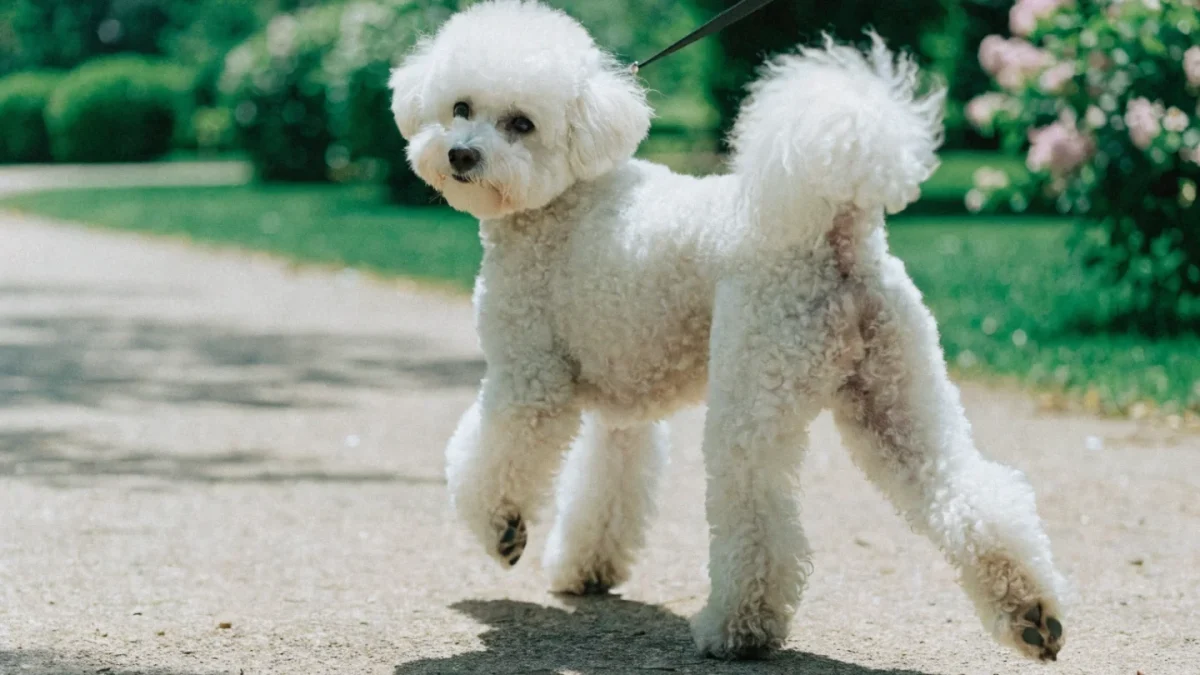
People choose Bichon Frises for sensible reasons: small size, cheerful disposition, low shedding, adaptable to apartment living, good with children and other pets. All of those things are true. What often gets lost in the appeal is what the breed demands in return — a grooming commitment that rivals breeds three times its size, a need for human presence that borders on dependency, and a personality that, while delightful, is not passive.
The Bichon Frise is an excellent dog. It is not an easy dog. The distinction matters, and it's the reason breed-specific rescues stay busy with surrendered dogs whose owners expected less work than the breed actually requires.
The Grooming Reality
This is the commitment that catches the most owners off guard. A Bichon Frise's coat does not shed in the conventional sense — dead hair stays trapped in the coat rather than falling onto your furniture. That's the good news. The consequence is that the coat mats aggressively if not brushed regularly, and professional grooming on a four-to-six-week cycle is not optional.
Brushing should happen a minimum of three to four times per week — daily is better. The coat tangles behind the ears, under the legs, and around the hindquarters. A session with a slicker brush and a metal comb takes 10 to 15 minutes when done regularly. Skip a week, and you'll spend an hour working through mats. Skip two weeks, and the mats may require cutting out, which ruins the coat's appearance.
Professional grooming for a Bichon Frise — bath, blow-dry, trim, nail clip, ear cleaning — takes one to two hours and costs accordingly. This is a recurring expense for the life of the dog, typically 12 to 15 years. If the grooming cost or time commitment gives you pause, this is not the breed for you. The coat doesn't become optional, and neglecting it causes skin problems, discomfort, and eventual health issues.
The Bichon Frise breed guide covers coat care specifics. The headline for this section is that low-shedding and low-maintenance are entirely different things. The Bichon's coat sheds less than most breeds. It demands more maintenance than most breeds. Both facts are simultaneously true.
The Separation Anxiety Question
Bichon Frises were bred as companion dogs. Not retrievers, not herders, not terriers with a job to do independently — companions. Their entire breeding history selected for dogs that wanted to be near people, all the time, as their primary function.
That heritage means the breed tolerates isolation poorly. A Bichon left alone for eight to ten hours daily will likely develop separation anxiety, which manifests as destructive behavior, excessive barking, house-soiling (in an otherwise house-trained dog), and self-directed behaviors like excessive licking.
The Bichon temperament is built around human attachment. If your household has someone home most of the day, or if you can arrange doggy daycare or midday visits, the breed thrives. If the dog will spend the majority of each day alone, a Bichon Frise is a poor match — not because the breed can't be alone for any period, but because the cumulative effect of daily long-duration isolation creates a miserable dog.
The Allergy Consideration
Bichon Frises appear on every list of breeds recommended for people with allergies. That recommendation comes with a qualifier that's often dropped: no dog breed is truly hypoallergenic. The proteins that trigger allergic reactions are found in dander, saliva, and urine — not in fur itself. Bichons produce these allergens like every other dog.
What Bichons produce less of is airborne hair carrying dander through the environment. The coat's growth pattern — continuous growth with minimal shedding — means less dander distribution around the home compared to heavy-shedding breeds. Many allergy sufferers find they react less to Bichons than to shedding breeds. Others find no difference.
If allergies are your primary motivation for choosing this breed, spend time with a Bichon before committing. Visit a breeder or a foster home and spend several hours in the environment. Your reaction (or lack thereof) is more reliable than any breed recommendation.
The Noise Factor
Bichons are alert, responsive dogs that vocalize more readily than many owners anticipate. They bark at doorbells, visitors, unusual sounds, passing dogs, squirrels, and sometimes at nothing identifiable. The bark is high-pitched and carries well — a relevant consideration for apartment living, despite the breed's otherwise excellent apartment compatibility.
Barking can be managed through training and adequate exercise, but it cannot be eliminated entirely. A Bichon will always alert to its environment. If you need a quiet dog, or if your living situation requires minimal noise, this trait deserves serious weight in your decision.
Living Situation Compatibility
The Bichon Frise's strongest practical advantage is its adaptability. The breed does well in apartments, houses, urban settings, and suburban environments. Its small size (typically 5 to 7 kilograms) makes it portable, manageable in small spaces, and welcome in many rental situations that restrict larger breeds.
The breed is generally good with children, other dogs, and cats. Its size makes it physically vulnerable to rough handling by very young children, and supervision is necessary. Bichons that are accidentally stepped on, dropped, or squeezed too hard may develop fear-based behaviors that persist.
The Health Landscape
Owners considering small white companion breeds alongside the Bichon should note that the Maltese covers similar territory in temperament and size with a somewhat different coat structure and health profile — the Maltese complete breed guide offers a direct point of comparison.
Bichon Frises are relatively long-lived, with an average lifespan of 12 to 15 years. Breed-specific health predispositions include patellar luxation, bladder stones, allergic skin conditions, and dental disease. None of these are inevitably severe, but all require ongoing attention and veterinary monitoring. The dental predisposition in particular demands proactive care — regular brushing and professional cleanings — that many small-dog owners neglect.
The Right Owner
A Bichon Frise is right for you if you genuinely enjoy grooming or are willing to invest in professional grooming on a regular schedule, spend significant time at home or can provide the dog with daytime companionship, want a cheerful, sociable, adaptable dog that is genuinely happy to be with you, accept that low-shedding means high-maintenance coat care, can tolerate a moderate amount of barking, and are prepared for a 12-to-15-year commitment to a dog that will center its entire emotional life around you.
A Bichon Frise is wrong for you if you're away from home most of the day without arrangements for the dog, don't want to deal with regular grooming obligations, prefer a quiet, independent dog that doesn't require constant social interaction, expect a zero-maintenance pet that happens to be cute, or are choosing the breed solely on the basis of the allergy claim without verifying your own reaction.
The Bichon Frise gives genuine, unmistakable joy. It also asks for genuine, consistent care. When those two things match, the relationship is one of the most rewarding in the companion-dog world. When they don't, both parties suffer.