

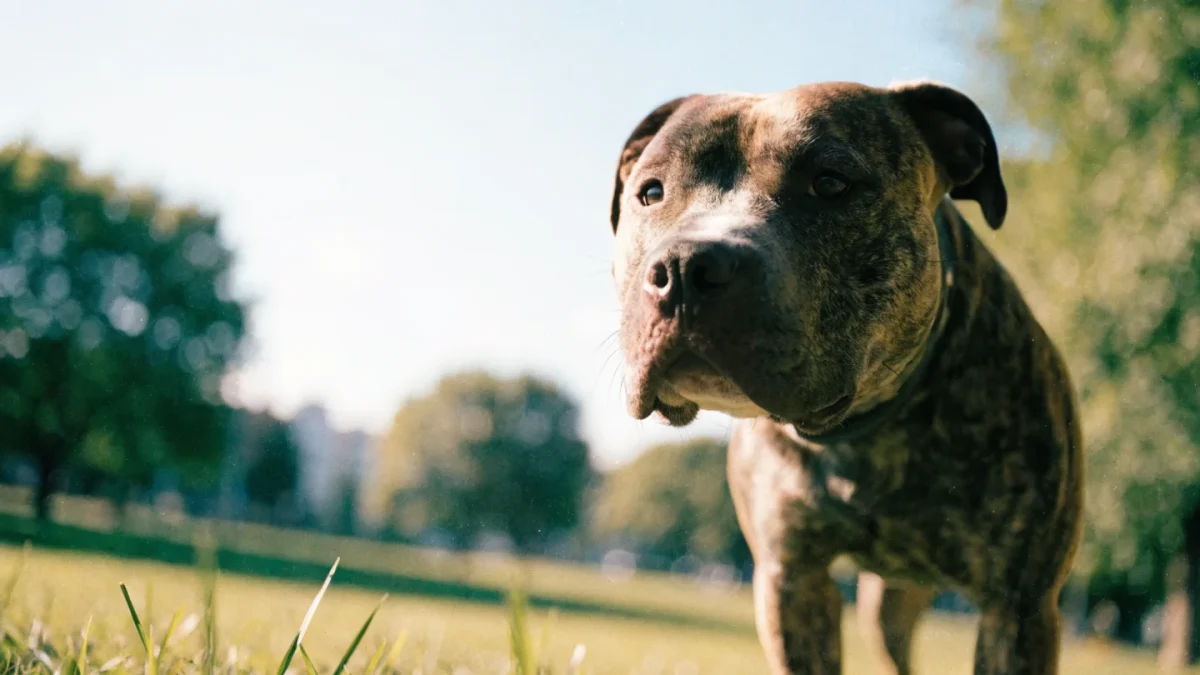
"Pit bull" is not a breed. That statement is not an opinion about these dogs' temperaments or capabilities or worthiness as companions — it's a genetic and taxonomic fact that the entire conversation about pit bull DNA testing fails to acknowledge. When someone sends a cheek swab to a commercial testing company hoping to find out if their dog "is a pit bull," they're asking a question that doesn't have a biological answer, because no single genetic lineage called "pit bull" exists in the database.
What does exist are several distinct breeds — the American Pit Bull Terrier, the American Staffordshire Terrier, the Staffordshire Bull Terrier — that share common ancestry in 19th-century bull-and-terrier crosses and happen to share enough physical traits that animal control officers, shelter staff, and neighbors have been collapsing them into a single label for decades. The DNA tests are chasing a category that was invented by human perception, not by selective breeding. That's the core problem. Everything else flows from it.
The science on this is not subtle. Multiple peer-reviewed studies have shown that visual breed identification of dogs labeled "pit bull" in shelters disagrees with DNA results at rates that should alarm anyone using visual ID to make decisions about housing, insurance, or legislation.
Understanding pit bull genetics DNA testing breed identification isn't optional breed trivia. It's central to the ongoing legal, public safety, and welfare conversations that surround these dogs.
"Pit Bull" Is Not a Breed
This is the starting point, and it trips up almost everyone who hasn't studied the subject.
"Pit bull" is a colloquial term applied to several distinct breeds and, more commonly, to any muscular, short-coated, broad-headed mixed-breed dog that fits a general visual profile. The breeds most commonly included under the pit bull umbrella are:
- American Pit Bull Terrier (APBT) — recognized by the United Kennel Club since 1898, not recognized by all registries worldwide
- American Staffordshire Terrier (AmStaff) — a closely related breed with a separate registry history
- Staffordshire Bull Terrier — a smaller, distinct breed with British origins
- American Bully — a more recently developed breed selected for a stockier build
These breeds share historical roots but have diverged through decades of separate breeding programs. Genetically, they are distinguishable. Visually, they overlap considerably — and they overlap even more with dozens of mixed-breed combinations that produce dogs with similar physical characteristics.
The breed's history traces how a single functional type splintered into multiple registry breeds. Understanding that fragmented history is essential to understanding why the genetics are complicated.
Why Visual Identification Fails
The physical traits associated with "pit bull" — broad head, muscular body, short coat, medium build — are not controlled by a single gene or a small set of genes. They're polygenic traits influenced by many genetic loci, and they appear in dogs with widely varied genetic backgrounds.
A dog that looks like a pit bull may be a purebred APBT, a Lab-boxer mix, a mastiff-hound combination, or a complex multi-breed mix with no pit bull-type ancestry whatsoever. The muscular build and broad head that trigger the "pit bull" identification in human observers can emerge from genetic combinations that have nothing to do with pit bull-type breeds.
Multiple peer-reviewed studies have quantified this problem. Multiple peer-reviewed studies confirm this pattern. Olson et al. (2015) in The Veterinary Journal found that shelter staff visual identification of pit bull-type dogs had a mean sensitivity of just 50%, and one in three dogs with no pit bull-type DNA were still labeled as pit bull by at least one assessor. The error rate is not marginal — it's fundamental. In practical terms, a substantial number of dogs treated as "pit bulls" by legal systems, insurance companies, and housing policies carry no pit bull-type DNA.
What DNA Tests Actually Measure
Commercial canine DNA tests work by comparing a dog's genetic markers against reference panels of known purebred dogs. The major testing platforms use panels of 250 to 350+ breeds and varieties. When a test returns results like "45% American Staffordshire Terrier, 30% Labrador Retriever, 25% Boxer," it means the dog's genetic markers match those reference populations at those approximate proportions.
The accuracy of these tests depends on several factors:
Reference panel quality. A test can only identify breeds that are in its reference database. If the database's American Pit Bull Terrier reference sample is small or narrowly sourced, results for APBT identification will be less reliable.
APBT and AmStaff overlap. The American Pit Bull Terrier and the American Staffordshire Terrier share extensive genetic overlap because they were historically the same population. Some dogs registered as APBTs and AmStaffs have identical pedigrees listed in different registries. Modern DNA testing platforms have increased genetic resolution substantially — Wisdom Panel and Embark now analyze hundreds of thousands of markers and can distinguish the two breeds in purebred dogs. However, the genetic overlap remains significant because the breeds descend from the same historical population and were separated primarily by registry politics rather than genetic divergence. For mixed-breed dogs with partial APBT or AmStaff ancestry, the distinction remains challenging, and results may assign ancestry to one or the other with limited confidence.
Mixed-breed complexity. The more breeds in a dog's background, the harder it is to parse precise percentages. A dog that's one-quarter APBT from a grandparent may or may not trigger a pit bull-type identification depending on which genetic markers it inherited from that grandparent.
Trait genes versus breed ancestry. DNA tests identify breed ancestry, not physical traits. A dog can be 50% APBT and look nothing like one if it inherited most of its physically visible traits from the other parent. Conversely, a dog with no APBT ancestry can look strikingly pit bull-like.
The Legislation Problem
Breed-specific legislation relies on breed identification. If breed identification is unreliable — and the genetic evidence strongly suggests it is — then the enforcement mechanism of these laws has a fundamental accuracy problem.
Dogs are classified as "pit bulls" for legal purposes based on visual assessment, often by animal control officers with no genetic testing. The complete breed guide discusses the broader context of breed-specific legislation. From a genetics perspective, the core issue is straightforward: you cannot reliably enforce a breed-based law when the breed in question is not a single genetic entity and visual identification doesn't correlate well with actual genetic ancestry.
Some jurisdictions have begun requiring or accepting DNA testing as part of breed determination. This is an improvement over pure visual assessment, but it introduces its own complications — including the APBT/AmStaff overlap problem and the question of what percentage of pit bull-type ancestry triggers legal classification.
What This Means for Owners
If you own a dog that's been labeled a pit bull — by a shelter, a veterinarian, or a neighbor — DNA testing can tell you what the dog actually is. The result may confirm pit bull-type ancestry, reveal it to be minimal or absent, or show a mix that's more complex than anyone guessed.
A DNA test doesn't change your dog's behavior, temperament, or the life you share with it. But it provides factual information in a space that runs on assumptions. In jurisdictions with breed-specific laws, a DNA test showing no pit bull-type ancestry has practical legal value. In any context, knowing your dog's actual genetic background improves your understanding of breed-related health predispositions and behavioral tendencies — the American Pit Bull Terrier temperament profile covers what to expect from dogs with confirmed APBT ancestry.
The science is clear on one point: the label "pit bull" as applied by visual assessment is not a reliable indicator of genetic heritage. What you see is not necessarily what you've got.