

In the coal mines of early industrial England, a good ratting terrier wasn't a pet — it was an economic necessity. Rats destroyed grain stores, spread disease, and contaminated food supplies. A single skilled terrier could kill dozens of rats in minutes, and organized rat-killing competitions in the 1800s regularly recorded individual dogs dispatching over 100 rats in under an hour. The most famous ratting dog on record, a Bull Terrier named Jacko, reportedly killed 60 rats in two minutes and 42 seconds at a London rat pit in 1862. That's the heritage behind every terrier that tears apart a squeaky toy in your living room.
Terrier breeds were forged in the working landscapes of the British Isles — farms, mines, estates, and fields — where their job was to find and kill vermin. The work demanded a very specific set of traits: courage out of all proportion to body size, explosive energy in short bursts, an absolute refusal to quit, and the physical ability to pursue prey into tight underground spaces. Those traits defined the terrier group then, and they define it now.
The Terrier Personality
If there's one behavioral constant across the terrier group, it's this: terriers do not believe they are small. A 5 kg Cairn Terrier approaches the world with the same self-assured swagger as a 30 kg Airedale. This temperament — bold, opinionated, physically fearless — is the group's most defining characteristic and, depending on your perspective, either its greatest appeal or its most exhausting quality.
Tenacity. Once a terrier decides it wants something, it commits fully. This was essential for work that involved following prey underground into narrow, dark tunnels where the dog couldn't see its handler and had to rely entirely on its own judgment. That independence is deeply wired and shows up daily in terriers that ignore recalls, refuse to abandon a digging project, or engage in battles of will with their owners over seemingly trivial things.
Prey drive. Terriers were bred to hunt and kill small animals. This drive is intense, reflexive, and extremely difficult to override with training. Squirrels, rabbits, cats (in some cases), and small household pets trigger the chase-grab-shake sequence that was essential for their original work. Terrier owners who also keep small pets need to manage this reality rather than assume training will eliminate it.
Dog-to-dog dynamics. Many terriers have a complicated relationship with other dogs. They were often bred to work alone or in pairs, not in large cooperative packs, and same-sex aggression is common across several terrier breeds. This doesn't mean all terriers are dog-aggressive — individual temperament and socialization matter enormously — but the tendency toward selectivity with other dogs is a real group-level pattern.
Vocalization. Terriers bark. Many bark a lot. This was functional — a dog underground needed to signal its location to handlers on the surface. In domestic life, the barking becomes a management challenge. West Highland White Terriers, Miniature Schnauzers, and Fox Terriers are among the most vocal terrier breeds.
Types of Terriers
The group divides into several functional subtypes:
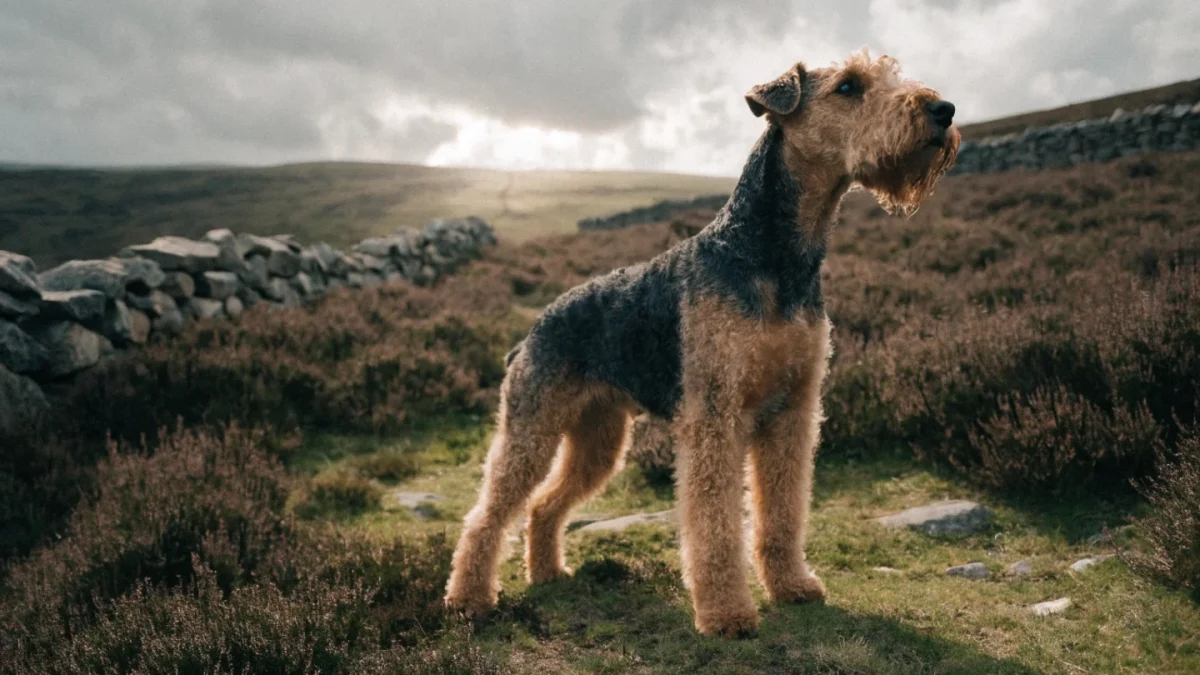
Long-legged terriers — Airedale Terrier, Irish Terrier, Wire Fox Terrier, Lakeland Terrier — were developed for fox and otter hunting across open terrain. They're typically more athletic and require more exercise than their shorter-legged relatives. The Airedale, at 50-60 cm and 23-30 kg, is the largest terrier and was originally called the "King of Terriers" for its versatility — it served as a hunting, guarding, and even military messenger dog.
Short-legged terriers — Cairn Terrier, Scottish Terrier, West Highland White Terrier, Dandie Dinmont Terrier — were built to go to ground after burrowing prey. Their compact builds and short, powerful legs let them navigate underground tunnels. These breeds tend to be more independent and less physically demanding than long-legged terriers, but their personality is no less intense.
Bull-type terriers — Bull Terrier, Staffordshire Bull Terrier, American Staffordshire Terrier — descend from crosses between bulldogs and terriers in the early 1800s, originally for blood sports. Modern bull-type terriers are powerful, athletic dogs with strong prey drive and variable dog-to-dog tolerance. They tend to be more physically affectionate with people than other terrier subtypes.
Companion terriers — Yorkshire Terrier, Silky Terrier, Toy Fox Terrier — were refined from working terrier stock into smaller companion breeds. Don't let the "companion" label fool you: these breeds retain the terrier temperament in miniature. A Yorkshire Terrier will challenge a dog ten times its size with absolute conviction. The Yorkshire Terrier complete breed guide covers the full history of this transformation from mill ratter to parlor dog.
Coat and Grooming
Terrier coats deserve special attention because many require a grooming technique unique to the group: hand-stripping.
Wire-coated terriers — Airedales, Wire Fox Terriers, Lakeland Terriers, Border Terriers, and others — have a double coat with a harsh, wiry outer layer and a soft undercoat. The traditional grooming method is hand-stripping: manually pulling dead outer coat hairs to maintain the correct texture, color, and weather resistance.
Clipping produces a softer, duller coat that loses the wiry texture terrier breeds are known for. For pet owners, clipping is simpler and adequate. For show dogs, hand-stripping is required. The choice doesn't affect the dog's health — it's primarily an aesthetic decision.
Smooth-coated terriers (Bull Terrier, Staffordshire Bull Terrier) need minimal grooming. Silky-coated terriers (Yorkshire Terrier, Silky Terrier) require regular brushing and trimming to prevent matting.
Health Patterns in the Terrier Group
As a group, terriers are generally robust and long-lived — many terrier breeds routinely reach 12 to 15 years. Their working heritage selected for physical toughness, and that genetic legacy benefits the group's overall health profile.
However, several conditions appear across multiple terrier breeds:
Skin allergies and atopic dermatitis are widespread across the group, particularly in West Highland White Terriers, Bull Terriers, and Staffordshire Bull Terriers. Chronic skin conditions require ongoing management and can significantly affect quality of life.
Patellar luxation — slipping kneecap — is common in smaller terriers, including Yorkshire Terriers, Norwich Terriers, and Cairn Terriers. Severity ranges from occasional mild lameness to surgical cases.
Lens luxation is a painful eye condition where the lens detaches within the eye. It occurs at elevated rates in several terrier breeds, including Jack Russell Terriers, Miniature Bull Terriers, and Sealyham Terriers. A DNA test is available for the most common genetic form.
Scottie cramp is a condition specific to the Scottish Terrier, causing episodes of muscle stiffness during excitement or exercise. While not painful, it's a notable breed-specific concern.
Bladder cancer (transitional cell carcinoma) occurs at significantly elevated rates in Scottish Terriers compared to the general dog population — research out of Purdue's comparative oncology program puts the risk 18 to 20 times higher than in other breeds, which is why the university runs ongoing screening programs specifically for the breed.
Living With a Terrier
Terriers are not for everyone, and the people they're not for include anyone who expects effortless obedience, a dog that ignores squirrels, or a pet that gets along with every dog it meets. Terriers are for people who appreciate personality — dogs that have opinions, express those opinions freely, and will negotiate every boundary you set.
Training a terrier is possible and essential, but it looks different from training a herding breed. Where a Border Collie wants to please you, a terrier wants to know what's in it for them. Positive reinforcement works well because terriers are food-motivated and enjoy games, but sessions need to stay short and engaging. A bored terrier stops cooperating. A frustrated terrier becomes creative in ways you won't enjoy.
For the right owner, a terrier is one of the most entertaining, characterful, and genuinely fun dogs you can live with. They're the comedians of the dog breed world — except they don't know they're being funny, which makes them even funnier.
Frequently Asked Questions
Are terriers good with children?
It depends heavily on the specific breed and individual dog. Many terriers — Soft Coated Wheaten Terriers, Bull Terriers, Staffordshire Bull Terriers — can be wonderful with children when properly socialized. However, terriers have lower tolerance for rough handling than many sporting or herding breeds, and their high energy can overwhelm very young children. Some smaller terriers (Yorkshire Terriers, Cairn Terriers) are fragile enough that they're better suited to families with older children who understand how to interact gently.
Why are terriers so hard to train?
They're not actually hard to train — they're hard to motivate with traditional methods. Terriers were bred to make independent decisions underground, out of sight and hearing of their handler. They don't have the innate desire to defer to human authority that herding and sporting breeds possess. Training succeeds when it's engaging, reward-based, and respects the terrier's need for autonomy. Harsh corrections typically make terrier behavior worse, not better.
Do terriers get along with cats?
Many terriers have high prey drive that can make coexistence with cats challenging, particularly if the cat runs (which triggers the chase instinct). That said, terriers raised with cats from puppyhood often learn to coexist peacefully — they may even bond with the household cat while still chasing unfamiliar cats outdoors. Individual temperament matters more than breed generalization here, but managing the introduction carefully and maintaining realistic expectations is important.