

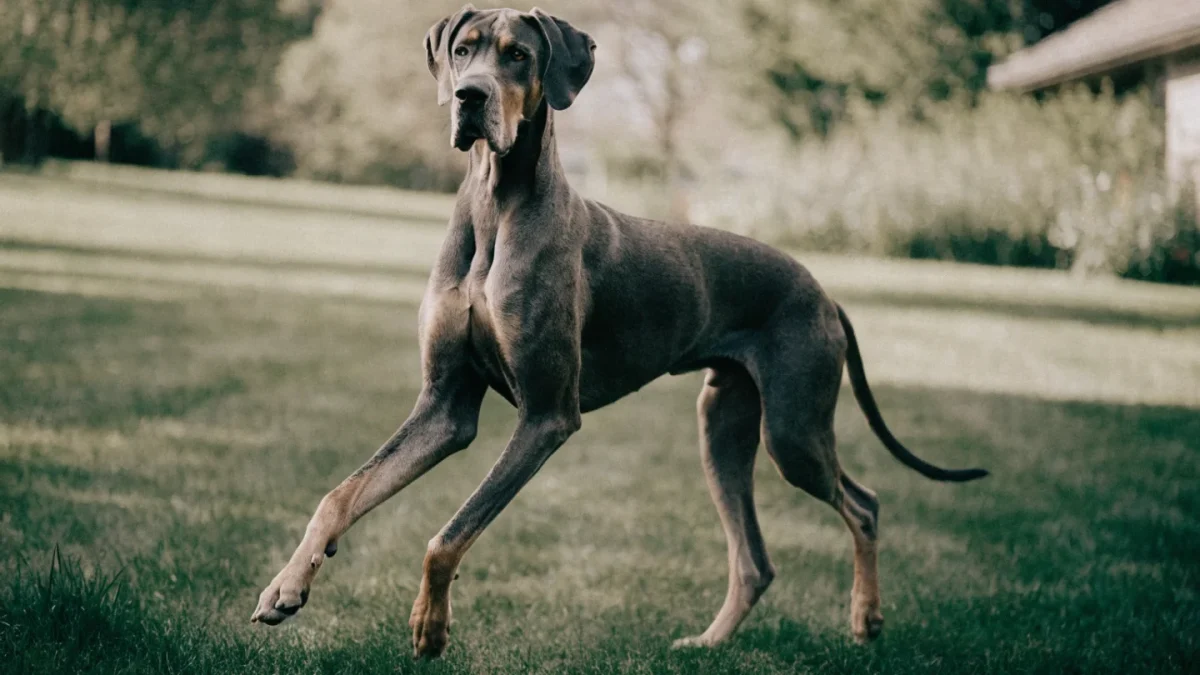
The Great Dane was originally built to chase wild boar through German forests in short, explosive bursts — not to jog five miles on pavement. That distinction between sprinter and endurance athlete explains nearly everything about great dane exercise needs and saves owners from one of the most common mistakes with this breed: overexercising a dog whose joints and cardiovascular system were never designed for sustained high-impact activity.
Adult Exercise Requirements
A healthy adult Great Dane typically needs 30 to 60 minutes of moderate exercise per day. Two walks of 20 to 30 minutes each, combined with some yard play or a brief training session, satisfies most adults. The intensity should be moderate — a brisk walk, not a run. Many adult Great Danes make this abundantly clear by slowing down after about 15 minutes of walking and communicating through body language that they'd prefer to go home and reclaim their spot on the couch.
This moderate requirement surprises people who assume the tallest breed must need the most exercise. The reality is the opposite. Great Danes carry enormous weight on joints that are already under genetic stress. Their deep chests and cardiovascular systems are suited for anaerobic bursts, not aerobic endurance. Pushing a Great Dane into long-distance running, extended fetch sessions, or hours of hiking creates orthopedic and cardiac risk without matching the breed's natural activity pattern.
That said, understimulated Great Danes will find ways to entertain themselves. At their height, counters, tables, and shelves are all within easy reach. A bored Great Dane can clear a kitchen counter in a single pass. Mental stimulation through puzzle feeders, scent work, and short training sessions often does more to prevent destructive behavior than additional physical exercise.
Puppy Exercise: The Most Critical Phase
Exercise management during the Great Dane's growth phase — from birth to roughly 18 months — is one of the most consequential decisions an owner makes. Great Dane puppies grow at a staggering rate, adding substantial weight to a skeletal system that isn't finished developing. Growth plates remain open well past the age when the puppy looks physically mature, and repetitive impact on those open plates is a documented risk factor for developmental orthopedic diseases.
The five-minutes-per-month-of-age guideline provides a practical starting framework. A four-month-old puppy gets two 20-minute structured exercise sessions per day. A six-month-old gets two 30-minute sessions. This refers to structured activity like leash walks — not free play, which is self-regulating and generally safe on soft surfaces.
Activities to avoid during the growth phase include running on hard surfaces (pavement and concrete), repetitive jumping, forced stair climbing, and extended fetch on hard ground. Free play in a grassy yard where the puppy sets its own pace and rests when tired is appropriate and healthy. The goal is protecting developing joints without creating a sedentary puppy that has no outlet for normal energy.
The Bloat Precaution
Great Danes have one of the highest rates of gastric dilatation-volvulus (bloat/GDV) of any breed. This life-threatening condition is linked to several risk factors, and exercise timing is among them. The standard precaution is to avoid vigorous exercise within an hour before and after meals. This means structuring the daily schedule so that walks and play sessions don't coincide with feeding times. It's a simple habit that addresses a genuine risk.
Water intake during and after exercise also warrants attention. A Great Dane that drinks large volumes of water rapidly after exercise is at elevated bloat risk. Offering water in smaller amounts over a longer period reduces the chance of rapid stomach distension.
Senior Exercise Adjustments
Great Danes age earlier than most breeds. By age six or seven, many show signs of reduced mobility — stiffness after rest, reluctance to jump into vehicles, and shorter tolerance for walks. Temperament doesn't change much with age, but physical capacity does.
Senior Great Danes benefit from shorter, more frequent walks rather than longer single outings. Swimming, where available, is excellent low-impact exercise that maintains muscle mass without joint stress. Maintaining lean body condition becomes even more critical as the dog ages — every excess kilogram amplifies the strain on deteriorating joints.
Joint supplements containing glucosamine and chondroitin are commonly used in giant breeds, though the scientific evidence for their efficacy varies by study and formulation. Discuss supplementation with a veterinary professional rather than self-prescribing.
What Good Exercise Looks Like
The best exercise routine for a Great Dane balances physical activity with mental engagement while respecting the breed's physical limitations. A typical day might include a 25-minute morning walk at a moderate pace, a 15-minute yard play session in the afternoon, and a 10-minute scent game or training session in the evening. Adjust based on your individual dog's energy level, age, and health status.
The dogs that do best are the ones whose owners understand a fundamental truth about this breed: Great Danes need enough activity to stay fit and mentally healthy, but their bodies were not built to be athletes. Respecting that boundary protects the joints, the heart, and the quality of the years you have together.