

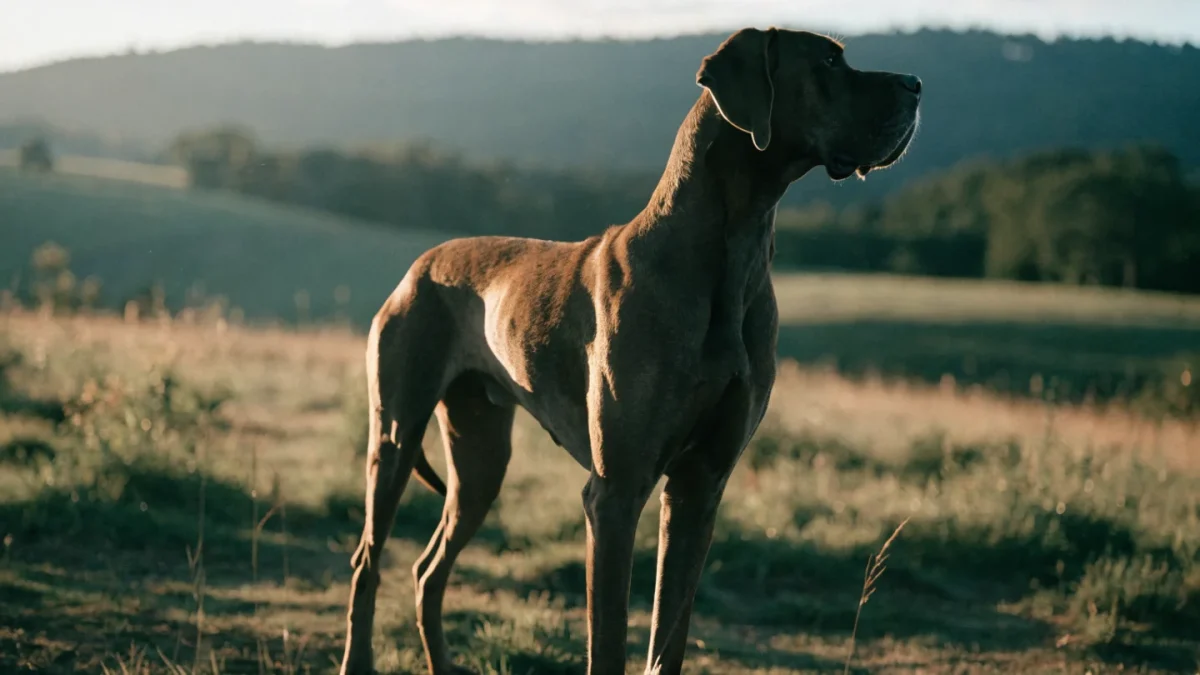
Before Scooby-Doo made them lovable goofballs and before Marmaduke turned them into punchlines, Great Danes were killing wild boar in the forests of northern Germany. These were lean, aggressive hunting dogs bred from crosses of English Mastiffs and Irish Wolfhounds during the 1500s, armored in boar-hunting gear and expected to pin a 200 kg animal by the ears until their handlers arrived. The breed sitting on your couch today descends from those dogs. That transformation from boar killer to couch potato may be the most dramatic temperament shift in domestic dog history.
Great Danes are giant-breed dogs — the tallest of all recognized breeds when measured at the shoulder. They're known for a gentle, affectionate temperament that contradicts their physical presence, a short single-layer coat that simplifies grooming, and a lifespan that remains one of the breed's most painful realities. If you're looking for a great dane breed guide built on facts rather than sentiment, this covers origins, health, temperament, grooming, and an honest assessment of who should actually own one.
The breed's popularity endures for obvious reasons: few dogs combine this size with this temperament. But that combination comes with trade-offs that too many first-time giant-breed owners discover too late.
Origins and Historical Development
The name "Great Dane" is one of the great misnomers in dog breeding. The breed has no meaningful connection to Denmark. The French naturalist Georges-Louis Leclerc, Comte de Buffon, encountered the dog during travels in the 1700s and called it "Grand Danois" — likely confusing its origin or simply assigning a name that stuck. The Germans, who actually developed the breed, call it Deutsche Dogge — the German Mastiff.
The breed's working roots go back to at least the 16th century, when German nobility crossed large Mastiff-type dogs with Greyhounds and Irish Wolfhounds to produce a dog fast enough to chase boar and powerful enough to hold it. By the 1600s, these Kammerhunde (chamber dogs) had transitioned from the hunting field to the bedchamber — quite literally sleeping alongside their aristocratic owners in German estates, wearing gilded collars.
Germany declared the Deutsche Dogge its national breed in 1876, and the first breed standard was written in Berlin in 1880. The breed spread across Europe and to North America throughout the late 19th century, with the first breed club in the United States forming in 1889.
The transformation from working hunter to companion happened gradually over three centuries, but the last hundred years have accelerated it dramatically. Modern Great Danes are taller and heavier than their ancestors, with broader chests, more refined heads, and — critically — a significantly shorter working drive. The temperament shift was intentional. Breeders selected for calm, sociable dogs that functioned well in domestic settings, and they largely succeeded.
Physical Characteristics
Size and Build
This is where Great Danes separate from every other breed. Males typically stand 76 to 86 cm at the shoulder and weigh 54 to 82 kg. Females range from 71 to 81 cm and 45 to 59 kg. The breed holds the record for the tallest dog ever documented: a Great Dane named Zeus from Otsego, Michigan, measured 111.8 cm (44 inches) at the shoulder when verified by Guinness World Records on October 4, 2011.
The body is long, muscular, and surprisingly elegant for its mass. The profile should show a rectangular build — distinctly longer than tall, with a deep chest that reaches to the elbow and a tucked abdomen. The head is long and narrow relative to body size, with a pronounced stop and a square, deep muzzle. The overall impression should be power combined with grace, not bulk.
Coat and Colors
The coat is short, dense, and smooth — a single layer with no undercoat. This simplifies grooming considerably compared to double-coated breeds, but it also means Great Danes have minimal insulation in cold weather.
Great Danes come in six recognized color patterns, and the genetics behind them are more complex than most owners realize. Fawn (golden with a black mask) and brindle (golden base with black chevron striping) are the most common. Black, blue (steel gray), harlequin (white base with irregular black patches), and mantle (black with white markings resembling a blanket) complete the standard palette. The merle gene creates the harlequin pattern but carries serious health implications when inherited from both parents — double merle puppies face high rates of deafness and vision impairment.
Growth Rate
Great Dane puppies grow at a rate that defies belief. A puppy that weighs roughly 500 grams at birth can reach 45 kg by six months. This explosive growth phase — from birth to about 18 months — is one of the most medically critical periods in the breed. Nutrition during this window directly impacts skeletal development, and overfeeding or supplementing with calcium during rapid growth is a documented risk factor for developmental orthopedic diseases including hypertrophic osteodystrophy (HOD) and osteochondritis dissecans (OCD).
Temperament and Behavior
If the German Shepherd is the serious professional and the Labrador is the enthusiastic extrovert, the Great Dane is the mellow roommate who takes up the entire sofa but never argues about anything. They're profoundly calm dogs for their size — patient, affectionate, and surprisingly sensitive to their owner's emotional state.
What Most People Get Wrong About This Breed
The most common misconception: "Great Danes need huge amounts of space and exercise."
They don't. Despite being the tallest breed, Great Danes have moderate exercise needs and relatively low indoor energy levels. They're sprinters, not marathon runners. A 30- to 45-minute walk and some play time satisfies most adults. What they need more than acreage is proximity to their people. A Great Dane in a large backyard with an absent owner is far worse off than a Great Dane in a reasonable apartment with a present, attentive human.
The second misconception: "They're aggressive because they look intimidating."
The modern Great Dane has been selectively bred away from aggression for well over a century. Temperament surveys consistently rank them among the least aggressive large breeds toward both humans and other dogs. Their visual deterrent effect is real — few people will test a dog that can look them in the eye while standing on all fours — but the dog behind that appearance is almost always gentle, sometimes to a fault.
Social and Emotional Traits
Great Danes bond deeply with their families and are notably good with children — not because they're impervious to rough handling, but because their threshold for reactivity is genuinely high. They tend to absorb chaos rather than contribute to it. That said, a puppy or adolescent Great Dane is still learning body awareness, and a 50 kg adolescent that doesn't understand its own dimensions will knock small children down unintentionally.
Separation anxiety is a real concern in this breed. Great Danes were literally bred to sleep in their owners' bedrooms. Five centuries of that selection pressure doesn't vanish. Many Great Danes struggle with being left alone for extended periods, developing destructive behaviors, vocalization, or stress-related gastrointestinal issues.
Health Profile
The health section of any giant-breed guide is where honesty matters most, and Great Danes require a particularly unflinching discussion.
Dilated Cardiomyopathy (DCM)
DCM is the breed's most serious health threat. The heart muscle weakens and enlarges, reducing its ability to pump blood effectively. Studies estimate that DCM affects a significant proportion of Great Danes. A UK screening study of 107 client-owned Great Danes found a prevalence of 35.6%, and a separate study of 103 apparently healthy Great Danes over four years old reported a prevalence of 35.9%. Broader meta-analyses place the range between 11.8% and 35.6% depending on population and methodology. The condition often progresses silently until arrhythmia or congestive heart failure develops. Annual cardiac screening — ideally via echocardiogram and Holter monitoring — is strongly recommended starting at age two.
Gastric Dilatation-Volvulus (Bloat/GDV)
Great Danes have one of the highest rates of gastric dilatation-volvulus of any breed. GDV occurs when the stomach fills with gas and rotates on its axis, cutting off blood supply. It is a life-threatening emergency that can kill within hours. Deep-chested breeds are anatomically predisposed, and Great Danes are the textbook example of that anatomy. Prophylactic gastropexy — a surgical procedure that tacks the stomach to the abdominal wall to prevent rotation — is routinely discussed with Great Dane owners and is often performed during spay or neuter surgery.
Orthopedic Issues
Hip dysplasia affects Great Danes at rates consistent with other giant breeds. Wobblers syndrome (cervical spondylomyelopathy) — a compression of the spinal cord in the neck region — is disproportionately common in Great Danes and Dobermans. Symptoms include an unsteady, wobbling gait in the hind legs and can progress to significant neurological impairment.
Other Health Concerns
- Hypothyroidism: Underactive thyroid, manageable with daily medication but requiring lifelong monitoring and blood work.
- Osteosarcoma: Bone cancer occurs at elevated rates in giant breeds, typically affecting the long bones of the legs. Prognosis is generally poor.
- Cataracts and entropion: Eye conditions that occur with moderate frequency in the breed.
- Happy tail syndrome: Not a joke name. Great Danes wag their tails with enough force to cause repeated injury against walls and furniture, resulting in chronic wounds that can be difficult to heal.
Lifespan
The average Great Dane lifespan is 7 to 10 years — one of the shortest of any breed. The inverse relationship between body size and longevity in dogs is well-documented, and Great Danes sit at the extreme end of that curve. Some individuals reach 11 or 12, but planning around a 7- to 10-year window is realistic. This is not a minor detail. Anyone considering a Great Dane needs to accept that their time together will likely be shorter than with most other breeds.
Grooming Requirements
The short, single-layer coat makes Great Danes one of the simpler breeds to groom — a welcome trade-off given the complexity of everything else about giant-breed ownership.
Coat Care
Weekly brushing with a rubber curry brush or soft bristle brush removes loose hair and distributes skin oils. Great Danes do shed — the short hairs embed in furniture and clothing — but the volume is moderate compared to double-coated breeds. Shedding increases modestly in spring and fall.
Bathing every six to eight weeks is typical, though the logistics of bathing a dog this size are worth considering. A walk-in shower or an elevated tub designed for large dogs saves significant effort compared to fighting with a standard bathtub. Use a mild shampoo — the breed's skin can be sensitive, and harsh products cause dryness and irritation.
Nails, Ears, and Dental
Nail trimming every two to three weeks is critical. At this body weight, overgrown nails alter gait mechanics and stress the already-vulnerable joints. Great Danes with natural (uncropped) ears need regular cleaning — the folded ear flap traps moisture. Dental care follows the standard protocol: brushing several times weekly, supplemented with appropriate dental chews.
Drool Management
Let's address this honestly. Great Danes drool. Not all of them drool equally — dogs with tighter lip structure drool less — but many produce a notable amount of saliva, particularly around mealtimes, after drinking, or during exercise. Keeping a towel accessible is a practical reality, not a joke. The drool itself is harmless but can stain fabric and accumulate on walls at head height.
Exercise and Activity Needs
Great Danes need less exercise than most people assume. Adults typically require 30 to 60 minutes of moderate daily exercise — walking, light jogging, or play sessions. They're built for short bursts of speed, not sustained endurance.
Critical Exercise Restrictions for Puppies
Exercise management during growth is arguably the single most important husbandry decision for Great Dane puppies. Forced exercise on growing joints — including running on hard surfaces, jumping, and extended leash walks — can cause or worsen developmental orthopedic conditions. The five-minutes-per-month-of-age guideline is a reasonable starting framework. Free play on soft surfaces is safer than structured exercise during the rapid growth phase from birth to 18 months.
Adult Exercise
Adult Great Danes benefit from two moderate walks per day and access to a safe area for off-leash play. Despite their size, many Great Danes become couch-oriented adults whose enthusiasm for exercise peaks during the first ten minutes of a walk and declines steadily from there. Mental stimulation through scent work, puzzle toys, or gentle training sessions complements physical exercise well.
Avoid intense exercise within an hour before or after meals — this is a bloat precaution that should be taken seriously with any deep-chested breed.
Nutrition Fundamentals
Feeding a Great Dane is not simply feeding a large dog. Giant-breed nutrition has specific requirements, particularly during growth, that differ meaningfully from standard large-breed protocols.
Puppy Nutrition
Great Dane puppies should be fed a diet formulated specifically for giant-breed or large-breed puppies. The critical difference is controlled calcium and phosphorus levels — excess calcium during rapid growth disrupts normal bone development and contributes to developmental orthopedic disease. Protein quality matters, but the old advice to restrict protein in giant-breed puppies has been largely discredited. Controlled caloric density and mineral balance are what matter most.
Adult Feeding
Adults typically eat 6 to 10 cups of food daily, divided into at least two meals. Multiple smaller meals reduce the volume of food in the stomach at any given time, which is a practical bloat-risk reduction strategy. Caloric needs vary significantly based on activity level, metabolism, and individual build.
Maintaining lean body condition is particularly important in this breed. Every excess kilogram puts additional strain on joints and the cardiovascular system — both of which are already under breed-specific genetic pressure. Ribs should be easily felt with light pressure, and the waist should be visible from above.
Living Situation Compatibility
Space Requirements
Great Danes don't need as much space as you'd think, but they need more thoughtful space. A small apartment can work if the dog gets adequate outdoor exercise, but consider practical details: can the dog turn around in your hallway? Can it lie down without blocking the entire kitchen? Is your furniture sturdy enough? Standard coffee tables become hazards when a wagging tail clears everything off them.
Stairs deserve specific mention. Giant-breed puppies should avoid stairs during the growth phase to protect developing joints. Older Great Danes with arthritis or Wobblers may lose the ability to navigate stairs safely. If your home has stairs as the only access to essential areas, that's a genuine long-term consideration.
Climate
The single-layer coat provides poor insulation. Great Danes are cold-sensitive and often need protection in winter — a well-fitted coat for outdoor walks in cold weather is practical, not ridiculous. Heat tolerance is moderate; avoid strenuous exercise in hot conditions and ensure access to shade and water.
The Right Owner for This Breed
A Great Dane is the right dog for you if:
- You have indoor space where a dog this size can move comfortably, and furniture you can accept being bumped, drooled on, and leaned against
- You're financially prepared for giant-breed veterinary costs — larger doses of medications, specialized surgical needs, cardiac screening protocols, and a statistically compressed lifespan that may include expensive end-of-life care
- You want a calm, affectionate companion that will follow you from room to room and ideally sleep touching some part of you
- You can commit to careful nutrition management during puppyhood and lean body condition throughout life
- You understand that 7 to 10 years is the realistic expectation, and you're willing to give everything you have during that window
- You don't need a dog that does well alone — Great Danes want their person, consistently and constantly
A Great Dane is the wrong dog for you if:
- You want a running partner, hiking companion, or high-endurance athlete
- You're not prepared for the emotional reality of a short lifespan
- Giant-breed veterinary costs would strain your budget
- You're away from home for long hours without a care plan
- You want a guard dog that will actually confront threats — most Great Danes look the part but don't play it
- You're uncomfortable with drool, counter-surfing from a dog that can reach the back of any counter, and an animal that genuinely does not understand its own size
Great Danes compress an enormous amount of love into a shorter-than-average life. The people who do best with this breed are the ones who go in knowing exactly what that means — and decide the trade-off is worth it anyway.
Frequently Asked Questions
How big do Great Danes actually get?
Males typically stand 76 to 86 cm (30 to 34 inches) at the shoulder and weigh 54 to 82 kg (120 to 180 pounds). Females are slightly smaller at 71 to 81 cm and 45 to 59 kg. Individual variation is considerable — some males exceed 90 cm, particularly from lines bred for size. Great Danes continue filling out muscularly until about age two, even after reaching their full height at roughly 18 months.
Are Great Danes good apartment dogs?
Better than most people expect. Great Danes have moderate exercise needs and relatively low indoor energy levels — many adults spend a significant portion of the day sleeping. The key requirements are adequate daily walks, proximity to their owner, and enough physical space that the dog can lie down, turn around, and move between rooms without difficulty. The bigger challenge in apartments is often practical: elevator access, neighbor comfort with a giant breed, and lease restrictions.
Why do Great Danes have such short lifespans?
The inverse relationship between body size and lifespan in dogs is one of the most consistent patterns in canine biology. Larger dogs age faster at the cellular level — they grow more rapidly, which is associated with higher rates of age-related diseases including cancer and cardiac conditions. Great Danes, as one of the tallest and heaviest breeds, sit at the extreme end of this curve. Dilated cardiomyopathy, bloat, and osteosarcoma are the primary life-limiting conditions in the breed. Research into the genetics of body size and aging in dogs is active but has not yet produced interventions that meaningfully extend giant-breed lifespan.
Do Great Danes drool a lot?
It varies by individual and head structure. Great Danes with looser, more pendulous lips (called "flews") drool more than those with tighter lip structure. Drool production increases around mealtimes, after drinking water, during exercise, and in hot weather. Some Great Danes produce minimal drool; others are prolific. If you're considering the breed, visit adult dogs of the lines you're interested in and observe their drool levels firsthand. Once you've committed, keep towels in every room and accept that some surfaces will need regular wiping.
What is the difference between a Great Dane and other giant breeds like Mastiffs or Irish Wolfhounds?
The simplest distinction is build and purpose. Great Danes are tall, lean, and athletic — originally sprint hunters that chased boar. English Mastiffs are shorter, heavier, and more heavily muscled — bred as guard dogs and war dogs. Irish Wolfhounds are tall and rough-coated — bred to course wolves and large game over long distances. Temperament differs as well: Great Danes tend toward calm affection, Mastiffs toward stoic protectiveness, and Wolfhounds toward quiet independence. All three are giant breeds with shorter-than-average lifespans, but the day-to-day experience of living with each is genuinely different.