

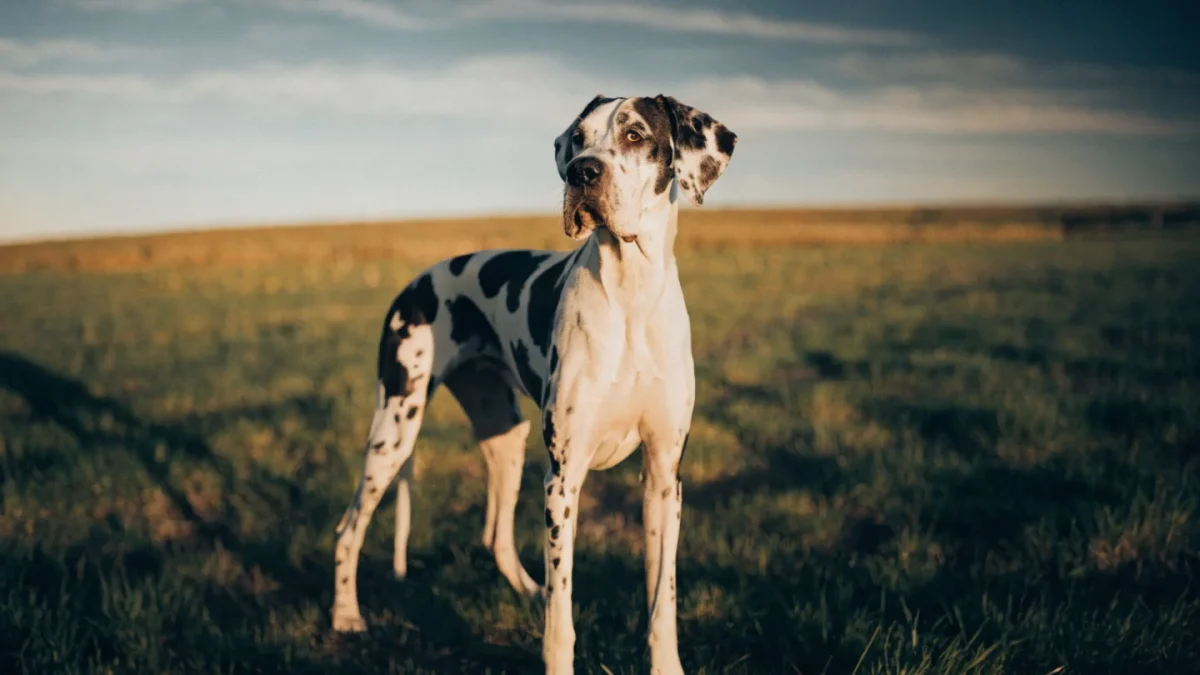
The Great Dane is one of the few breeds where color genetics are not just a cosmetic curiosity but a genuine welfare issue. A misunderstanding of how the merle gene works has produced puppies with preventable deafness and blindness — and continues to do so in breeding programs that prioritize color over health.
Understanding great dane genetics merle color patterns requires a working knowledge of how pigment genes interact, why certain crosses produce predictable health risks, and what drives the enormous size variation within the breed.
The Six Recognized Colors
Great Dane breed standards recognize six color patterns, organized into three breeding families that, traditionally, should not be crossed with each other to maintain genetic predictability.
Fawn family: Fawn (golden yellow with a black mask) and brindle (golden base with black chevron striping). The fawn base is produced by the agouti signaling protein gene, with the black mask determined by MC1R. Both colors are traditionally bred together.
Harlequin family: Harlequin (white base with irregular black patches), mantle (black with white blanket markings), and merle (gray base with darker patches). This family involves the most complex genetics and the highest welfare stakes.
Blue and black family: Blue (steel gray, caused by the dilution gene MLPH acting on black pigment) and black (solid). Traditionally bred together.
Crossing between families can produce non-standard colors and unpredictable combinations that complicate breeding outcomes.
The Merle Gene and Its Consequences
The merle gene (located on the PMEL17, also called SILV, gene) creates random areas of diluted pigment across the coat, producing the irregular gray-and-dark-patches pattern typical of merle Great Danes. In the breed's history, this gene was incorporated deliberately to produce the striking harlequin pattern — which requires one copy of the merle gene plus a separate modifier gene (the harlequin gene, identified on chromosome 9) that removes the gray diluted areas, leaving only white and black.
A single copy of the merle gene (heterozygous merle) is generally safe from a health perspective. The dog has normal hearing and vision, with the merle pattern affecting coat color but not sensory organ development.
The problem arises when two merle-carrying dogs are bred together. Basic Mendelian genetics predicts that 25% of the resulting puppies will inherit two copies of the merle gene — double merle, or homozygous merle. These puppies have severely disrupted pigment distribution that extends beyond the coat to the inner ear and eyes.
Double Merle Health Effects
Double merle Great Danes are predominantly white with minimal or no pigmented patches. The absence of normal pigment in the inner ear's stria vascularis causes congenital sensorineural deafness — partial or complete — in a large percentage of double merle puppies. A 2009 study published in the Journal of Veterinary Internal Medicine by George Strain found that approximately 25% of double merle dogs tested (10% unilateral, 15% bilateral) were deaf via BAER testing, though rates vary by breed and study methodology, and some breed-specific analyses have reported higher percentages when partial hearing loss is included.
Vision impairment is also common. Double merle dogs may have abnormally small eyes (microphthalmia), misshapen pupils, iris abnormalities, and other structural defects that range from mild visual impairment to functional blindness.
These outcomes are predictable and preventable. A merle-to-merle cross will, on average, produce 25% double merle puppies per litter. Responsible breeding avoids this cross entirely. The availability of DNA testing for the merle gene means there is no reason for this cross to happen accidentally in a planned breeding program.
Size Genetics
Great Dane size is polygenic — multiple genes each contributing a small effect, interacting with nutrition and environment during growth. Research has identified IGF1 (insulin-like growth factor 1) as strongly associated with body size variation across dog breeds — a landmark 2007 study in Science found that a single IGF1 haplotype accounts for a major portion of body size difference between small and large breeds, and subsequent work identified six to seven genetic loci (including IGF1 and IGF1R) that together explain roughly half the variance in body size across breeds. Males range from 76 to 86 cm at the shoulder, with some exceeding 90 cm.
The breed's rapid growth — from roughly 500 grams at birth to 45 kg by six months — places extreme demands on skeletal development. Overfeeding during this phase, particularly excess calcium, is a known risk factor for developmental orthopedic diseases. The genetics create the growth potential; nutrition determines whether that growth is healthy or pathological.
Color-Linked Health Beyond Merle
The Great Dane breed guide covers the breed's major health issues in detail, but several health concerns have direct genetic links to color.
Blue Great Danes carry the dilution gene (MLPH), and some develop color dilution alopecia (CDA) — a condition where abnormal melanin granules damage hair follicles, causing hair loss in diluted-color areas. Not all blue dogs are affected, but the predisposition is directly linked to the dilution genetics.
Harlequin-patterned dogs can carry the piebald gene at its extreme white expression. Like extreme merle, extreme white piebald is associated with elevated deafness risk due to insufficient inner ear pigment. The interaction between harlequin, merle, and piebald genes creates a situation where coat color, hearing, and vision share linked pigment pathways.
Why Color Genetics Matter for Owners
You don't need to be a geneticist to make informed decisions, but you should understand the basics. If you're considering a Great Dane from the harlequin or merle color family, ask whether the breeder tested both parents for the merle gene before breeding. If neither parent was tested, or if both parents carry merle, the litter may include double merle puppies with avoidable health impairments.
If you're offered a predominantly white Great Dane puppy, ask specifically about hearing and vision testing. A BAER test (brainstem auditory evoked response) can objectively assess hearing in puppies as young as five weeks. Any reputable source producing harlequin-family litters should be willing to discuss — and ideally perform — this testing.
The genetics of this breed are beautiful when managed responsibly and harmful when ignored. Understanding the connection between color and health is part of understanding the breed itself.