

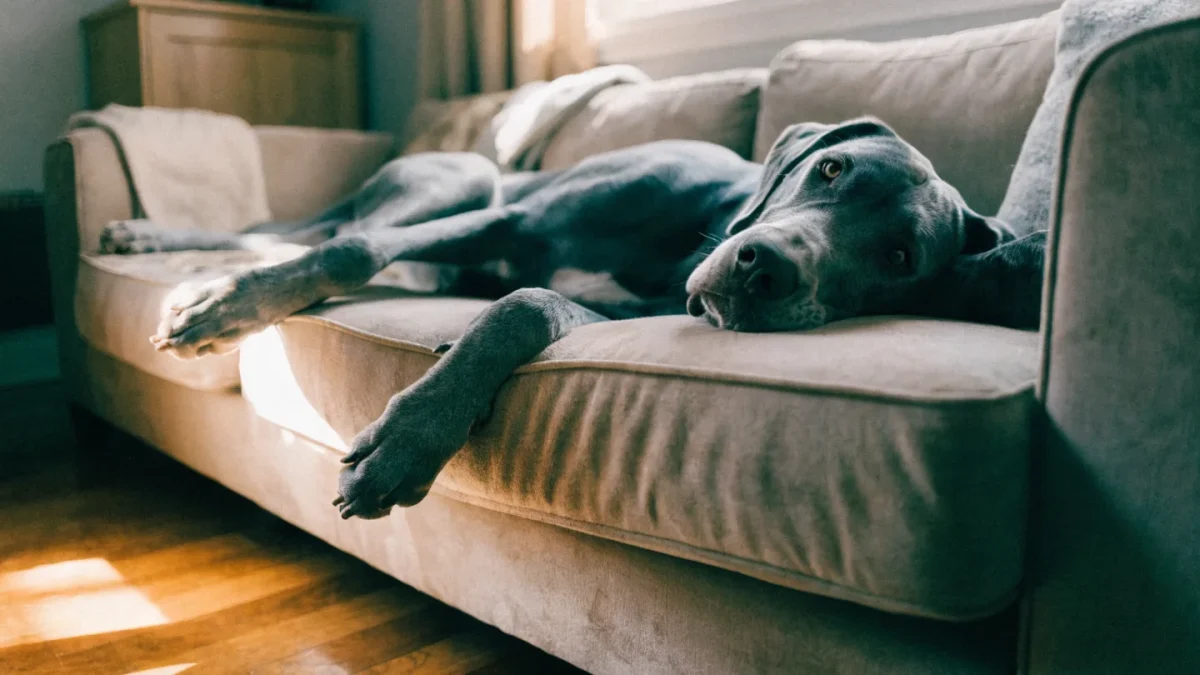
In 17th-century Germany, Great Danes slept in the bedrooms of the aristocracy. Not in the corner — in the bed. These Kammerhunde, or "chamber dogs," wore gilded collars and served as personal bodyguards to German nobility, spending their nights pressed against the people they protected. Three hundred years later, very little has changed about where a Great Dane wants to sleep. The bedroom has just become more democratic.
Understanding great dane temperament personality means understanding a breed shaped by centuries of deliberate selection for two contradictory traits: physical intimidation and emotional gentleness. The result is a dog that looks like it could clear a room but would rather lean against your legs and sigh contentedly.
The Core Disposition
Great Danes are, at their foundation, calm dogs. Not lazy — calm. There's an important distinction. A lazy dog doesn't care what happens around it. A calm dog processes its environment without reacting to every stimulus. Great Danes observe. They watch visitors arrive, assess the situation, and — in most cases — return to whatever comfortable surface they were occupying.
This composure extends to their interactions with other animals. Great Danes generally coexist well with other dogs, including much smaller ones, though individual temperament varies. They tend to be tolerant rather than playful in multi-dog households. Some Great Danes develop strong play relationships with other dogs; many prefer the company of their humans over canine companionship.
With strangers, the breed typically falls somewhere between welcoming and indifferent. The deeply social, everyone-is-my-best-friend greeting style you see in Labrador Retrievers or Golden Retrievers isn't standard here. Most Great Danes acknowledge visitors politely, accept petting if offered, and don't pursue attention aggressively. A smaller subset is genuinely reserved with unfamiliar people — not aggressive, but clearly selective about who earns their engagement.
The Lap Dog Paradox
The breed's most defining behavioral trait is the complete disconnect between physical size and personal space awareness. Great Danes genuinely do not understand that they are large. A 70 kg dog that attempts to sit in your lap, leans its full weight against your legs while you're standing, or tries to squeeze onto a chair clearly designed for a human is not misbehaving. It is expressing the same contact-seeking behavior that was bred into the Kammerhunde centuries ago.
This isn't just amusing — it's informative. The intensity of physical closeness Great Danes seek tells you something real about their emotional architecture. These are dogs that regulate their own stress and comfort through contact with their person. Remove that contact consistently, and stress behaviors emerge.
Great Danes with Children
The breed's patience with children is genuine and well-documented through temperament assessments across multiple decades. Their pain tolerance is high, their reactivity threshold is elevated, and their general approach to children is one of benign tolerance shading into actual affection.
The risks come from physics, not temperament. A Great Dane puppy at five months may already weigh 25 kg and has no understanding of its own momentum. An excited adolescent Great Dane will knock a small child over without malice or even awareness that it happened. Wagging tails at child-face height is another practical reality. Supervision is always necessary — not because the dog is dangerous, but because the dog is enormous and still learning where its body ends and the world begins.
Older, settled Great Danes are often remarkably gentle with small children. They seem to recognize the size difference and moderate their behavior accordingly, lying down to interact rather than standing over a small person. Whether this is trained behavior, instinct, or simply the natural outcome of a calm disposition is debatable. The practical result is the same.
Separation Anxiety: The Breed's Emotional Vulnerability
This is the temperament trait that catches first-time owners off guard most frequently. Great Danes are prone to separation anxiety at rates higher than many other breeds, and the consequences in a dog this size are significant.
A Great Dane experiencing separation distress doesn't just whine — it can destroy doors, walls, crates, and furniture. The physical power behind the anxiety means that confinement strategies that work for smaller breeds often fail or create dangerous situations. Broken teeth from crate bars, lacerations from damaged crate panels, and destroyed door frames are not uncommon reports from owners of Great Danes with untreated separation anxiety.
Prevention starts early. Gradual, positive exposure to alone time during puppyhood builds tolerance. Sudden isolation after weeks of constant togetherness — common when owners return to work after an adoption period — often triggers the first episode. If separation anxiety develops, it requires a structured desensitization protocol, often with professional guidance.
Energy Levels and Activity Preferences
The breed's energy curve is distinctive. Great Dane puppies and adolescents (roughly 6 to 18 months) can be surprisingly energetic and ungainly — large, exuberant, and physically uncoordinated in ways that cause household damage without any destructive intent. This phase passes. By age two to three, most Great Danes settle into a moderate energy pattern: enthusiastic about walks and play sessions but equally enthusiastic about extended naps on comfortable surfaces.
Adult Great Danes typically need 30 to 60 minutes of daily exercise. Many are content with less, though understimulated dogs will find their own entertainment — and counter-surfing, garbage investigation, and rearranging household items are all within easy reach at this height.
Mental stimulation matters more than physical exhaustion for this breed. Puzzle feeders, scent games, and short training sessions satisfy their cognitive needs without stressing joints that carry significant weight.
What Most People Get Wrong
The misconception I encounter most often about Great Dane temperament is that they make good guard dogs.
They look like guard dogs. They are not guard dogs. The visual deterrent is real — most people will not approach a property when a 80 cm dog is standing in the yard. But if someone does approach, the majority of modern Great Danes will investigate with curiosity, not aggression. They were bred away from aggression deliberately and successfully. Some individuals retain a stronger protective instinct than others, but relying on a Great Dane to actively defend property or people is unrealistic for most dogs in the breed.
The second misconception is that their calm adult demeanor means they're calm puppies. Great Dane puppies are, to put it plainly, a lot. They grow faster than they learn spatial awareness, they mouth everything within reach (which, given their height, includes kitchen counters by four months), and they experience fear periods that can produce reactive behaviors in a dog that will soon be too large to physically manage easily. The calm, regal Great Dane that most people picture is an adult. Getting there requires patience, consistent socialization, and a willingness to live with a large, goofy adolescent for a year or more.
Frequently Asked Questions
Are Great Danes aggressive toward other dogs?
Great Danes as a breed have low aggression rates toward both humans and other dogs. Temperament testing and behavioral surveys consistently rank them among the least aggressive large and giant breeds. Individual exceptions exist — poor socialization, fear-based reactivity, and medical conditions can produce aggressive behaviors in any breed — but the breed disposition is strongly away from aggression. Same-sex aggression is occasionally reported, typically between intact males, but this is not a breed-defining trait.
How do Great Danes handle being left alone during a workday?
With varying degrees of difficulty. Great Danes form intense bonds with their people and are predisposed to separation anxiety. An adult Great Dane that has been gradually conditioned to alone time can typically handle 4 to 6 hours, though this varies by individual. Longer absences benefit from a midday visit, a dog walker, or a companion animal. Puppies and adolescents should not be left alone for extended periods during the critical socialization window. Crating a Great Dane requires a crate large enough for the dog to stand, turn, and lie down comfortably — and even then, crating is not appropriate for dogs showing separation distress, as the confined panic can cause injury.
Do Great Danes get along with cats?
Many do, particularly when introduced to cats during puppyhood. The breed's prey drive is generally low to moderate, and their calm temperament lends itself to peaceful coexistence. The primary risk during introduction is the size difference — an enthusiastic Great Dane attempting to play with a cat can cause unintentional injury. Slow, supervised introductions are essential. Some individual Great Danes have higher prey drive and may never be trustworthy with small animals, so assess the specific dog rather than relying on breed generalizations.